1. ArchDaily
  2. Kenneth Frampton

Kenneth Frampton: The Latest Architecture and News

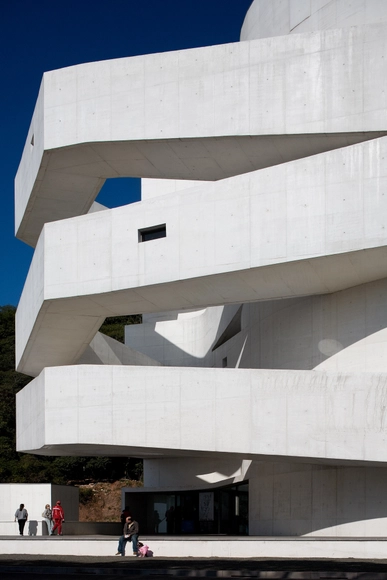
Photos of Álvaro Siza's Fundação Iberê Camargo, by Fernando Guerra

 “A painter is a magician that immobilizes time.”  - Iberê Camargo

The Fundação Iberê Camargo, which received a Golden Lion at the 2002 Venice Biennale of Architecture, is Portuguese architect Álvaro Siza's first project in Brazil. It serves as an architectural exemplar not only for the city of Porto Alegre, but also for the entire country of Brazil. Defined by Siza as "quasi-arquitecture" -- with careful explorations of light, texture, movement and space--the building cultivates a direct relationship between the viewer and the artwork, and, in turn, allows visitors to richly come into contact with Iberê's (one of the great names of twentieth-century Brazilian art) work.

"Architects don't invent anything, they just transform reality." - Álvaro Siza

The first in Brazil to use white concrete--seen around the entire exterior-- the building does not use any bricks. The visitor is guided through a trajectory of descent throughout the building via ramps in the nine exhibition halls. The monolith is supported by massive slabs, pillars and beams. No detail escaped the hands of the architect; the furniture and signage were also designed by Siza. 

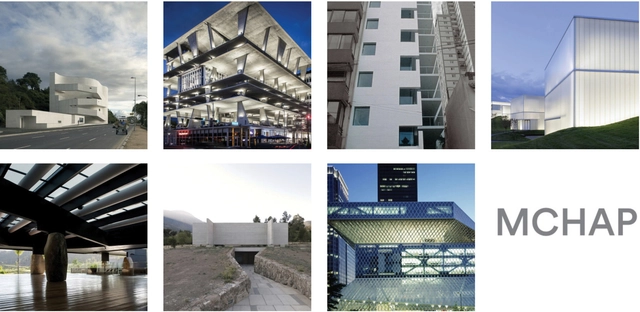
Last week, the project was nominated as one of seven finalists in the Mies Crown Hall Americas Prize (MCHAP). Now in its first edition, and with a distinguished jury (Francisco Liernur, Sarah Whiting, Wiel Arets, Dominique Perrault, e Kenneth Frampton), the MCHAP recognizes exceptional architecture built in the first 13 years of the 21st century.

With this news, we are presenting an extensive set of photos of this important project, realized and generously shared by one of the world's most important architecture photographers: Fernando Guerra of FG+SG - Últimas reportagens.

Story written by Joanna Helm for ArchDaily Brasil. Translated by Becky Quintal.

Scroll to see Guerra's beautiful images of the Fundação Iberê Camargo:
Kenneth Frampton: What is Architecture?

We caught up with Kenneth Frampton earlier this week at the event to announce the finalists of the Mies Crown Hall Americas Prize (MCHAP) in Santiago, Chile. Beyond asking him about the MCHAP jury's selection process, we took a moment to ask our classic ArchDaily question: what is architecture? Listen to his answer in the video above, or read the transcript of his answer after the break.

MCHAP Recognizes OMA, Holl, HdM as Finalists for Most Outstanding Projects in the Americas

The (MCHAP) has just announced the seven finalists - drawn from a shortlist of 36 projects - at an event in Santiago, Chile.

To determine the finalists, the five jury members - Francisco Liernur, Sarah Whiting, Wiel Arets, Dominique Perrault, and Kenneth Frampton - spent the last twelve days visiting projects, speaking with the architects, users and owners of the spaces, and entering into intense debate among each other.

As jury member Dominique Perrault noted, “There’s a lot of means by which to evaluate projects - models, drawings, images - but we took all opportunities to test the quality of the architecture. In the end, only by visiting can you sense the ‘touch of god’ - the presence of the building itself in the context.”

The resulting finalists show tremendous variety - in terms of scale, place, typology, program, materials, etc. - making the task of choosing a winner all the more challenging. See all seven finalists, as well as a video of Kenneth Frampton discussing the selection process, after the break.

The Berlage Archive: Rem Koolhaas + Kenneth Frampton (1998)

Subscriber Access | 
The Berlage Archive: Rem Koolhaas + Kenneth Frampton (1998) - Image 1 of 4

Kenneth Frampton wins Lifetime Achievement Award at Lisbon Triennale

The academic and critic Kenneth Frampton, who in the 1980s was instrumental in disseminating Portuguese architecture, as well as the idea of "critical regionalism," around the world, has won the third ever Lisbon Triennale Millenium BCP Lifetime Achievement Award, which distinguishes a person or practice whose work and ideas have been influential and continue to have a profound effect on architectural thinking and practice today.

"It is an excellent ending to this year's triennale, to give the Career Award to someone who has devoted his life to thought and architectural culture, demonstrating once again that architecture does not live only as built works," says André Tavares, director of the Architect's Journal and coordinator of the publisher Dafne.

A Country of Cities: A Manifesto for an Urban America

Last monday, Columbia University's Avery Hall was buzzing. 

The Graduate School of Architecture, Planning and Preservation (GSAPP) hosted a highly attended event that welcomed respected academics and professionals from architecture and real estate to what the dean, Mark Wigley, warned might take the form a a celebrity roast. Vishaan Chakrabarti, a partner at SHoP Architects and director of the Center for Urban Real Estate at Columbia, was on deck to deliver an abridged, more "urban version" of a longer lecture on his new book, A Country of Cities: A Manifesto for an Urban America. Proceeding the twenty minute lecture, an "A-list" panel of architects and historians - that included Kenneth Frampton, Gwendolyn Wright, Bernard Tschumi, Laurie Hawkinson and Reinhold Martin - lined up to discuss Chakrabarti's work.