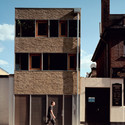
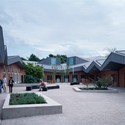
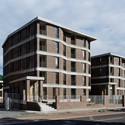
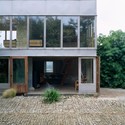
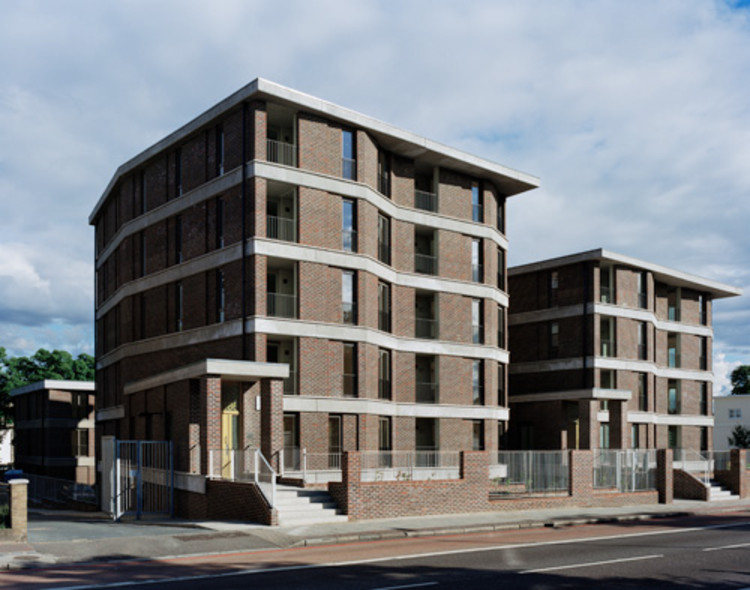
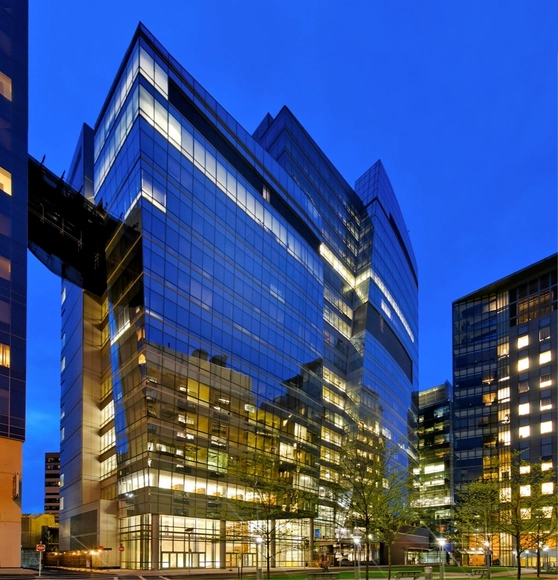
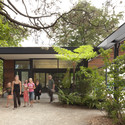
We are sharing with you an interview of architect Tony Fretton of Tony Fretton Architects conducted by Hugo Oliveira, as seen in Jornal Arquitectos. Prior to founding his firm in 1982, Fretton was Principal Designer at Arup Associates. He is deeply committed to architectural education and has experience teaching worldwide, from the Architectural Association School of Architecture in London to Harvard University in Cambridge. He currently serves as a Professor of Architectural Design and Interiors at TU Delft in the Netherlands.
The Economist featured an interview with Michael Pawlyn discussing sustainable architecture inspired by nature. Michael Pawlyn is known for his passionate investigations of the unique, efficient structures of natural organisms and how they may translate through design. Biomimicry has been an important topic amongst the innovators and educators who are learning from the 3.8 billion years invested into the design of our natural world.
The shell of an abalone is “twice as strong as the toughest man-made ceramic.”
The future potential to build and realize the concepts of the human mind lie just there, within the potential of the human mind. For years the architectural world has been struggling to keep up with the ability of pen-to-paper and the recent advents in NURB surface computer modeling, algorithmic and parametric architecture. This in-return has led to the building and technology industry playing catch-up with the recent advances in 3D architectural visualizations. In fact, as computer-aided design invaded these practices in the 1980s, radically transforming their generative foundations and productive capacities, architecture found itself most out-of-step and least alert, immersed in ideological and tautological debates and adrift in a realm of referents severed from material production.
Conceived and promoted by the Ferrara Faculty of Architecture, Italy, with the financial support of the Fassa Bortolo company, the aim of the International Award for Sustainable Architecture, now in its ninth edition, is to contribute to the research of a system of development in the building sector. This represents one of the fields of human activity with the greatest impact on the environment, that is more sustainable than our current model, which has lead to a state of deterioration and pollution, bringing us to the verge of a global crisis of the Earth’s entire ecological system.
At the Second Exhibition Forum on Architecture, Landscape Architecture and Garden Art last week in Moscow, the project Green River Project Brateevo has been awarded with the Russian National Award on Landscape Architecture. The project, designed byOKRA landscape architects, is a joint cooperation between Russia and the Netherlands. Supported by the Dutch Government, the Department for Natural Resource Management and Environmental Protection of Moscow and the Dutch Government Service for Land and Water management (DLG), are working together with the Dutch consultancy OKRA landscape architects, the Russian consultancy Ampir landscape architects and the Research and Design Institute for the Master Plan of Moscow on the development and exchange of ideas for a sustainable cityscape. Objective is to develop a toolkit for sustainable green development as an integral part of urban redevelopment. More images and project description after the break.
We recently had the opportunity to interviewgmp architekten founding partner, Meinhard von Gerkan. Born in 1935 in Riga/Latvia, Gerkan completed his architectural studies in 1964 at the Carolo Wilhelmina Technical University in Braunschweig. In 1965 he co-founded with Volkwin Marg, von Gerkan, Marg and partners. They have completed together over 260 buildings, among them the Berlin-Tegel Airport (competition, 1st place 1965, built in 1970-75), the Berlin Central Station, Villa Guna, Christ Pavilion, and the Lingang New City, been recognized nationally and internationally for their designs and competition proposals.
We are sharing with you an interview of british architect Jonathan Sergison of Sergison Bates architects conducted by Hugo Oliveir, as seen in Jornal Arquitectos. Sergison, prior to the founding of his firm in 1996 with partner Stephen Bates, gained professional experience working for David Chipperfield and Tony Fretton. Currently he serves as a Professor of Architectural Design at the Accademia di Architettura in Mendrisio, Switzerland.
An increasing trend towards sustainable construction within the building industry has resulted in a steady stream of “green” products into the marketplace. It is not uncommon to see products labeled with numerous claims that are certified by previously unheard of governing bodies. Industry leaders recently gathered in Toronto at Greenbuild to focus on avenues to increase the transparency of such claims made in the marketplace, and develop an integrated information source to reduce confusion and increase reliability.
An additional music room or a performance hall for schools, a pleasant social space for residential apartments or a self-sufficient housing for the homeless. The “Bird’s Nest”, designed by Onat Öktem, Ziya Imren and Zeynep Öktem, can adopt itself both in content and in size to where it “perches”. By placing two-meter long units side by side, the “Bird Nest” can be elongated to the desired dimensions. Their concept was selected as Special Mention: Director’s Choice for the 2011 d3 Natural Systems international architectural design competition. More images and project description after the break.
A few months ago I had the chance to meet Steven Holl, whose work I admire. I think that he has been able to innovate and challenge programs as we used to know them, and experiment with materials and structures, while sticking to what really matters in architecture: space, context and light.
The aim of the sustainable residential complex, designed by Morfearch, is not only the production of new buildings able to satisfy living space requests, but the will to offer public services to the new settlement and open to the “outer” population. The project area, crossed north to south by divergent paths, generates trapezoidal spaces that become the generating principle of the different parts of the whole complex: every secondary parcel is indeed composed by different size tanks, 30 to 120cm high, open to different uses, materials, and patterns: green areas, water, paved spaces, vegetation and gardens, available for residents with a leisure, but also social, function. More images and architects’ description after the break.
Business and interior architecture students of Woodbury University present: 2011 ADVANCING SUSTAINABILITY – BUSINESS + DESIGN SYMPOSIUM Saturday, October 29, 2011, 10:30-5:30. This year’s symposium will focus on sustainability within the scope of business and design.
The metropolitan area of Los Angeles is facing many environmental, infrastructural and socio-economical challenges in the 21st century. In order to address these, different sustainable concepts and technologies are being developed and successfully implemented. Despite the existence of such solutions, the process of rethinking the world requires time and persistence. More information on the event after the break.
The AIA has issued a “comprehensive look yet at the built environment’s role in economic recovery, highlighting six specific policy steps that will generate jobs and help grow the American economy.” Coming on the eve of President Obama’s major jobs initiative, the report cites George Mason University economist Stephen J. Miller in arguing that every $1 million in new construction spending supports “28.5 full-time, year-round-equivalent jobs.”
Miller and the AIA blame tight credit markets blocking potential progress in this area. The publication, “The Built Environment’s Role in the Recovery,” is issued with this problem in mind. “We’re putting these recommendations forward now because it’s time for the Administration and Congress to get real about creating an environment in which people are willing to lend and borrow,” said AIA President Clark Manus, FAIA, quoted in a recent AIA press release. “When credit flows to worthy projects, it unleashes the job creation potential of the American economy.”