1. ArchDaily
  2. Informal Neighborhood

Informal Neighborhood: The Latest Architecture and News

The Public Kitchen: How Asian Markets Turn Eating Into Civic Life

Subscriber Access | 
Audio available

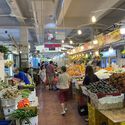
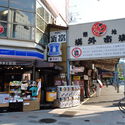
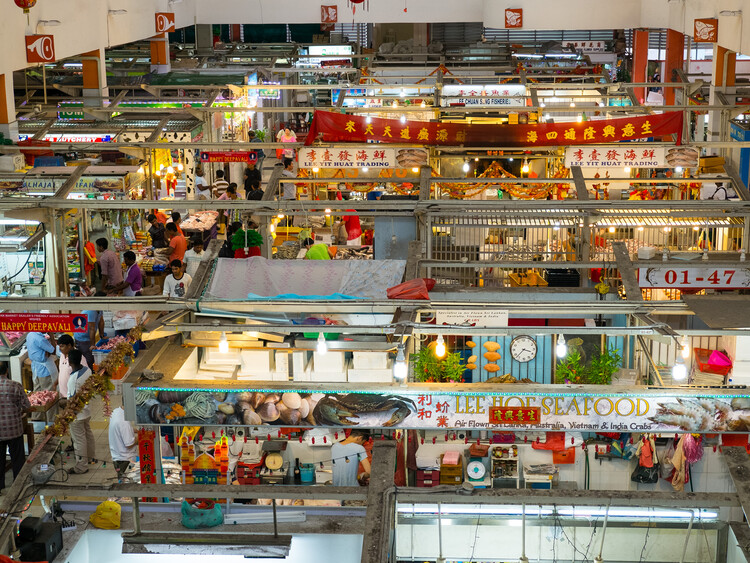
In many Asian cities, eating has never belonged entirely to the private home. It spills into markets, hawker centers, street stalls, and wholesale districts embedded within larger buildings or areas. These are places where the city exchanges information and watches other people pass through. They are not restaurants in the conventional sense, nor are they simply markets. In some way, their vibrancy and usage reflect the society's conditions at that moment. They are public kitchens: shared infrastructures where domestic routines are partially transferred into collective space.

Hong Kong's Municipal Services Buildings and curbside dining are where food is understood not only as culture, but as urban organization. The cooked-food center in the city folds eating into a larger civic machine of wet markets, libraries, and sports halls. The dai pai dong and street-side table, meanwhile, transform the curb into a temporary dining room. Looking beyond Hong Kong, similar questions emerge across the region. How do cities make room for social eating? Where does cooking happen when domestic space is limited? What kind of architecture supports the mess and heat of everyday food?


The Public Kitchen: How Asian Markets Turn Eating Into Civic Life - Image 1 of 4The Public Kitchen: How Asian Markets Turn Eating Into Civic Life - Image 2 of 4The Public Kitchen: How Asian Markets Turn Eating Into Civic Life - Image 3 of 4The Public Kitchen: How Asian Markets Turn Eating Into Civic Life - Image 4 of 4The Public Kitchen: How Asian Markets Turn Eating Into Civic Life - More Images+ 12

UN-Habitat Launches “My Neighborhood,” a Practical Guide for Achieving Sustainable Urban Spaces

The UN-Habitat Urban Lab has published “My Neighborhood,” a publication that offers a checklist of urban design principles aimed at creating more sustainable and resilient cities. Containing actions that are applicable at the neighborhood scale, the guide strives to present an integrated approach that responds to key sectors such as transportation, local urban initiatives, housing, public spaces, utilities, and more.

Winners of the UIA 2030 Award Announced: Acknowledging Architects' Contributions to the Sustainable Development Goals

Today, at the eleventh session of the World Urban Forum in Katowice, Poland, the International Union of Architects (UIA), together with the UN-HABITAT, have announced the laureates of the UIA 2030 Award. Seeking to acknowledge the contributions of architects to the UN 2030 Agenda for Sustainable Development and New Urban Agenda through built interventions that demonstrate design quality and alignment with the UN Sustainable Development Goals (SDGs), this first edition of a biennial awards program, selected winning projects from Germany, Hong Kong, Argentina, Bangladesh, and China, from 125 submitted projects in 40 countries.

Organized under six categories: Open Category, Improving Energy Efficiency, Adequate, Safe & Affordable Housing, Participatory, Land-Use Efficient & Inclusive Planning, Access to Green & Public Space, and Utilizing Local Materials, the jurors picked a winner per section, yet were unable to identify an overall winner in the open category and chose instead to recognize six projects as Highly Commended, honoring in total 5 laureates and 15 commendations.

Winners of the UIA 2030 Award Announced: Acknowledging Architects' Contributions to the Sustainable Development Goals - Image 1 of 4Winners of the UIA 2030 Award Announced: Acknowledging Architects' Contributions to the Sustainable Development Goals - Image 2 of 4Winners of the UIA 2030 Award Announced: Acknowledging Architects' Contributions to the Sustainable Development Goals - Image 3 of 4Winners of the UIA 2030 Award Announced: Acknowledging Architects' Contributions to the Sustainable Development Goals - Image 4 of 4Winners of the UIA 2030 Award Announced: Acknowledging Architects' Contributions to the Sustainable Development Goals - More Images+ 17

Ecological Design: Strategies to Protect Latin America and the Caribbean's Vulnerable Cities in the Face of Climate Change

Subscriber Access | 

Throughout the world's cities, in the midst of current and projected crises-- environmental, health, economic, and otherwise--one question looms: How can we prepare our urban centers' most vulnerable sectors?

Current data paints a bleak picture of cities and the impact of climate change. With urban populations skyrocketing as people around the globe seek opportunities for a better life in the world's urban centers, cities have become gluttons for energy and other resources while simultaneously producing more emissions than ever before. On top of this, 3 out of 5 cities are at high risk for natural disasters.