1. ArchDaily
  2. future living

future living: The Latest Architecture and News

The Ecological Footprint of Data Centers: The Downpour of a Digital Future

Subscriber Access | 

This article is the winning entry of the Epistle Writing Prize 2024, an annual competition dedicated to recognizing outstanding writing on design, architecture, and the environment.

We might be in the age of the digital cloud - however celestial or ethereal it may appear to be - but it is not only incontrovertibly material but also a powerful ecological force. In present times, data centers are mammoth powerhouses of modern information, communication, and technology industries with giant servers that store and process data. While their proliferation is in a sense, a consequence of our consumption patterns, and as the global demand for the digital grows, so does the data center footprint.
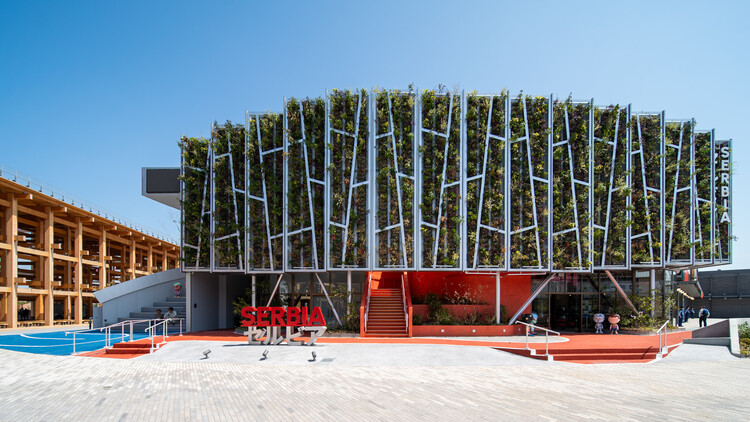
Aleatek Studio Designs the Serbia Pavilion at Expo 2025 Osaka

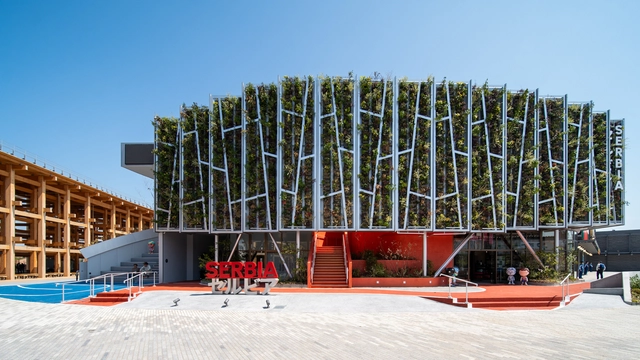
The Serbian Pavilion at Expo Osaka 2025 emerges as a compelling example of sustainable architecture infused with cultural storytelling, seamlessly integrating cutting-edge technology and emotional resonance. Designed by Aleatek Studio, the pavilion takes inspiration from Belgrade's protected Ratno Ostrvo (Great War Island) to realize the concept of a "Floating Forest." It stands out as the only Expo pavilion featuring a living façade, with over 95% of its materials recyclable and 80% intended for reuse in future construction. The design strategy also aligns with the theme "Play for humanity" of the upcoming Specialised Expo 2027 to be held in Belgrade.

Aleatek Studio Designs the Serbia Pavilion at Expo 2025 Osaka - Image 1 of 4Aleatek Studio Designs the Serbia Pavilion at Expo 2025 Osaka - Image 2 of 4Aleatek Studio Designs the Serbia Pavilion at Expo 2025 Osaka - Image 3 of 4Aleatek Studio Designs the Serbia Pavilion at Expo 2025 Osaka - Image 4 of 4Aleatek Studio Designs the Serbia Pavilion at Expo 2025 Osaka - More Images+ 17

Are For-Profit Developments Consistent With the Values of a Public University?

This article was originally published on Common Edge.

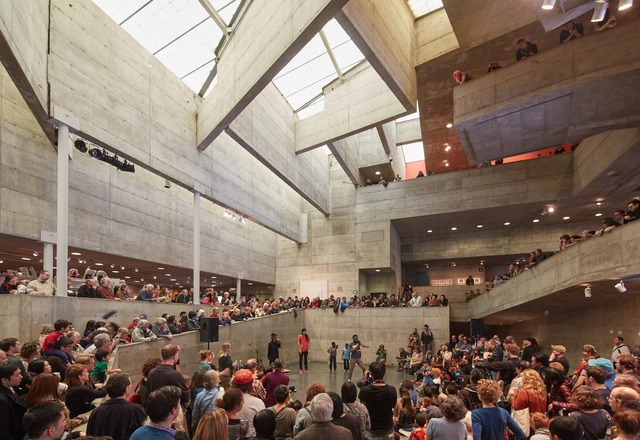
I am by no means an expert on public-private partnerships. But for about 10 years, as the University of California Berkeley’s campus planner and then campus architect, I watched these developments play out in higher education—sometimes from a front-row seat, sometimes as a participant. During that time, this strategy, promoted with great enthusiasm and optimism, was touted as the answer to whatever problem arose. And yet the definition of a public-private partnership was slippery. The concept itself seemed to be all things for all people, depending on what was needed, who was recommending it, and what equivalents (if any) existed outside the university. The bandwagon continues to play today, making it ever more important to nail down the pros and cons of this development strategy, not only for colleges and universities, but for all public decision-making.

Are For-Profit Developments Consistent With the Values of a Public University? - Image 1 of 4Are For-Profit Developments Consistent With the Values of a Public University? - Image 2 of 4Are For-Profit Developments Consistent With the Values of a Public University? - Image 3 of 4Are For-Profit Developments Consistent With the Values of a Public University? - Image 4 of 4Are For-Profit Developments Consistent With the Values of a Public University? - More Images