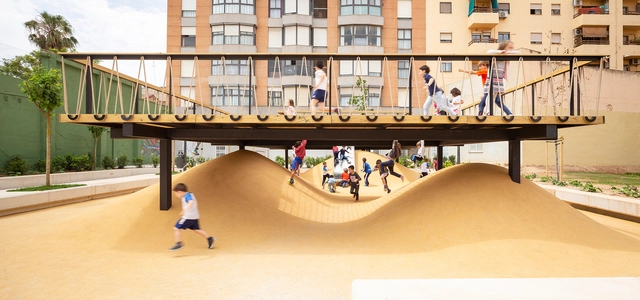
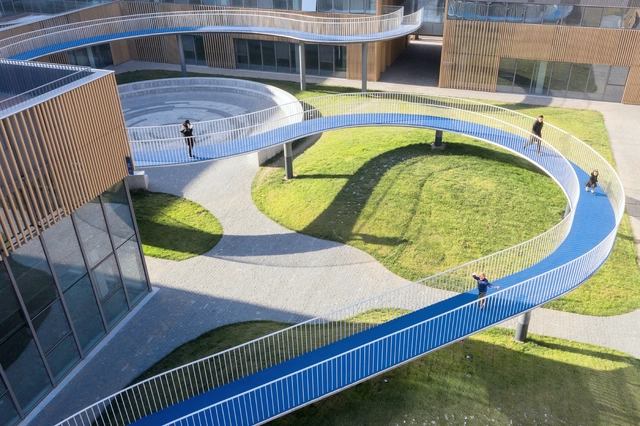
Play extends beyond its recreational dimension, unfolding as a social act that encourages children to learn, interact, be creative, and engage with their spatial context. As Johan Huizinga notes in Homo Ludens, it is a fundamental element of culture, where kids form bonds and explore ways of coexisting. When the architecture of play spaces excludes certain bodies or modes of participation, the collective experience becomes fragmented and loses part of its meaning. Designing with inclusion in mind, therefore, means recognizing that the actual value of play lies in its potential to be shared by everyone.
https://www.archdaily.com/1033205/inclusive-playgrounds-every-body-can-play-through-architectureEnrique Tovar
When addressing accessibility in architecture, codes set the baseline, while design defines the ceiling. Although numerous guidelines exist, creating spaces for everyone goes beyond mere adherence to standards. It requires a deep understanding of the environment and a broad perspective, recognizing that what we design will be used by people with diverse bodies, abilities, and conditions far beyond those traditionally considered typical users.
Furthermore, designing environments poses the challenge of inclusivity, ensuring that individuals who do not fit the standard profile—such as people with disabilities, pregnant women, those using assistive devices, and individuals of varying ages, body types, etc—are not excluded. The principles of Universal Design, established in 1997 by the NC State University College of Design and led by Ronald L. Mace, offer a transformative perspective in this context. This approach influences various design fields, including the built environment, products, and communications. When applied to architecture, it fosters the creation of spaces that work for everyone, minimizing the need for adaptations or specialized design.
https://www.archdaily.com/1019661/how-do-the-7-principles-of-universal-design-help-us-create-better-architectureEnrique Tovar
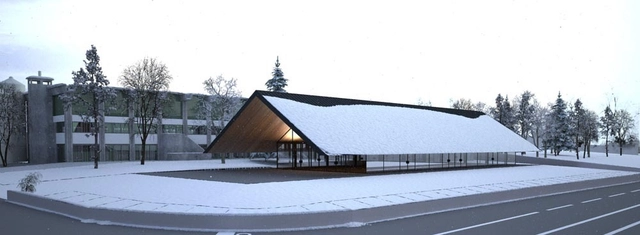
Milan studio Piuarch unveiled their design for the new Latteria Sociale Valtellina cooperative dairy in the Italian Alps. The competition, commissioned by the Latteria, sought to renovate the old building and expand it to include a sales outlet, restaurant, conference room and small museum. Piuarch's winning design builds on the economic and historic context of the area and surrounding landscape.