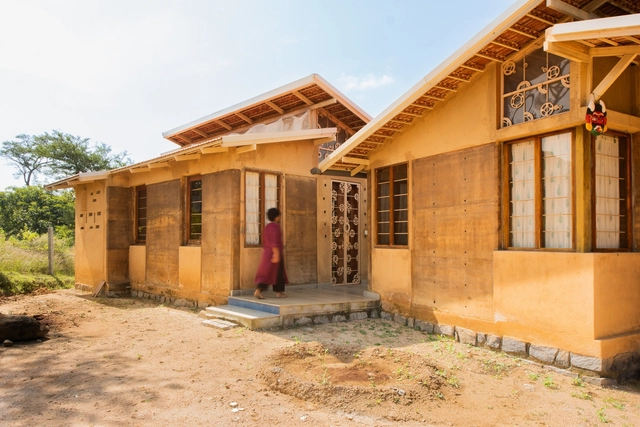
In recent years, India has seen a resurgence of interest in natural building materials, a movement driven by escalating environmental concerns and a growing desire to revive traditional lifestyles. From the busy streets of Mumbai to the serene villages of Kerala, architects, builders, and communities are coming together to experiment with the potential of earth, bamboo, lime, and other organic materials in shaping contextually relevant structures that also embody India's contemporary ideals. The shift towards using natural materials and other vernacular resources reflects a movement towards sustainability and a deeper connection with nature.
Lithuania's architectural narrative is a mosaic of diverse influences and styles, representing its historical evolution, cultural heritage, and resilience through changing times. Despite a focus on traditional craftsmanship, functional minimalism, and sustainable materials, the country's design language has been profoundly influenced by its geopolitical position and historical events, resulting in a blend of styles from different periods. A key factor that cuts across all expressions, however, is Lithuanian architecture's seamless connection with its natural surroundings.
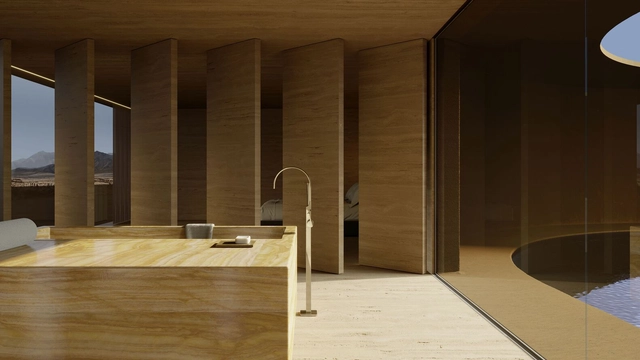
Inspiring applications of the MEM collection in architectural settings inspired by AI. Image Courtesy of Dornbracht
In addition to contributing to the functionality of the space, bathroom fittings underlie the overall aesthetics of a chosen design style. Within their technical features –as well as the possible materials, finishes, and styles–, fittings play a role in both the visual appeal of a space, while also focusing on comfort and user experience. This is part of Dornbracht's continuous re-imagination of bathrooms as living spaces, in which the brand seeks to create innovative solutions based on proportion, precision, progressiveness, performance, and personality.
Among Dornbracht’s series, the MEM collection includes a complete selection of minimalist bathroom fittings for washstands, showers, and tubs. In collaboration with ethical design brand Nature Squared and Italian craft manufacturer Glass Design, the collection’s original design has been enriched with versatile new features for customizing bathrooms. These features are created through the combination of high-quality materials with sustainable craftsmanship and the incorporation of futuristic artistic crystal glass.
Indians have traditionally lived close to the earth, their cultures shaped by symbiotic relationships with ecosystems. Indian arts and crafts strongly rely on nature for its form, philosophy, and existence. Native landscapes aroused the artistic sensibilities of resident communities, evolving craft practices that met utilitarian and ritualistic needs. The intersectionality of ecology and culture is evident through ancestral forms of craft.
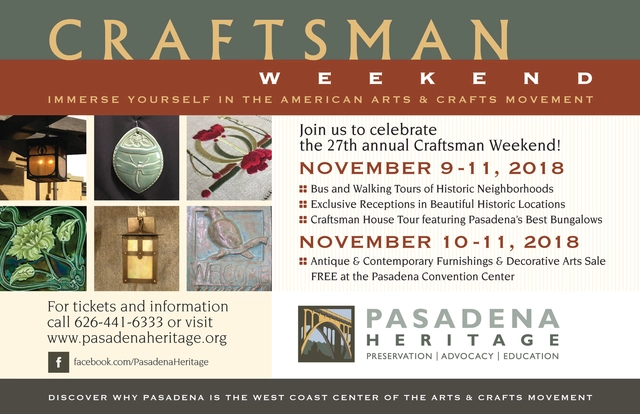
In its 27th year, Pasadena Heritage will present the Annual Craftsman Weekend on November 9-11, 2018. The weekend will feature house tours of notable Craftsman properties, along with bus and walking tours of the surrounding neighborhoods. Other events scheduled include a 'Show and Sale' with exhibitors of antique and contemporary furniture and decorative arts, a silent auction, workshops, and presentations. In addition, Pasadena Heritage will be offering exclusive receptions at historic locations throughout the weekend.
Download the information related to this event here.
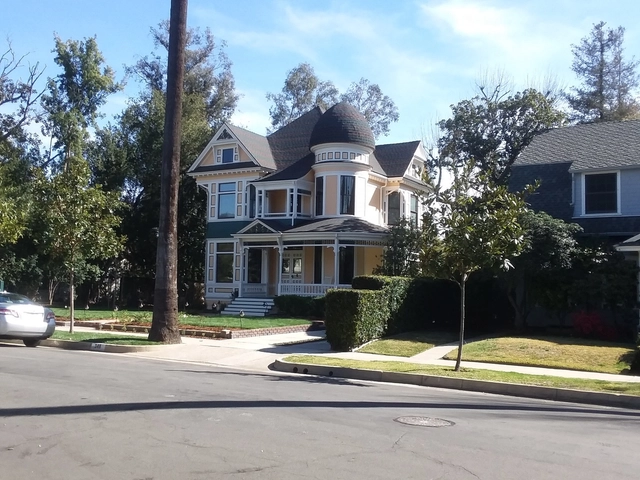
The Governor Markham Landmark District is one of the oldest neighborhoods in the City of Pasadena, and residences included in the District parallel Pasadena’s growth from incorporation as a city in 1886. Ninety-four percent of the homes were constructed between 1891 and 1933. This area became an official Landmark District in 2005 and was listed on the National Register of Historic Places in 2012, nominated by Pasadena Heritage.
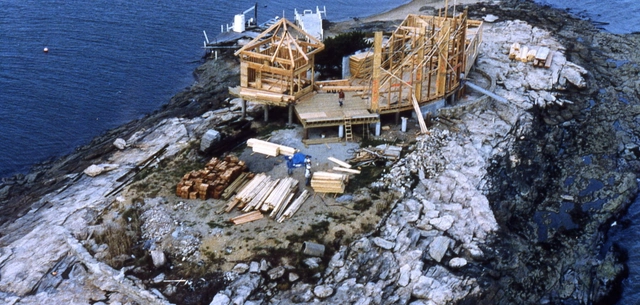
The construction site for a house (designed by the author), located on one of the Thimble Islands, off the coast of Connecticut, circa 1990. Image Courtesy of Duo Dickinson
Truth be told, many architects I know are a little uneasy about their lack of building knowledge. Since architecture without construction is largely a graphic arts exercise, this is either deeply ironic or grimly paradoxical. To bridge this yawning gap, architects today typically hire a slew of consultants—roof, skin, curtain wall, interior, sustainability, preservation—who join the growing influence of software-driven structural and mechanical engineers to absorb much of what architects once assumed they could handle.
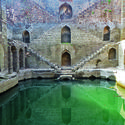
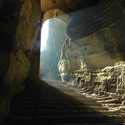
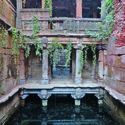
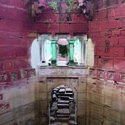
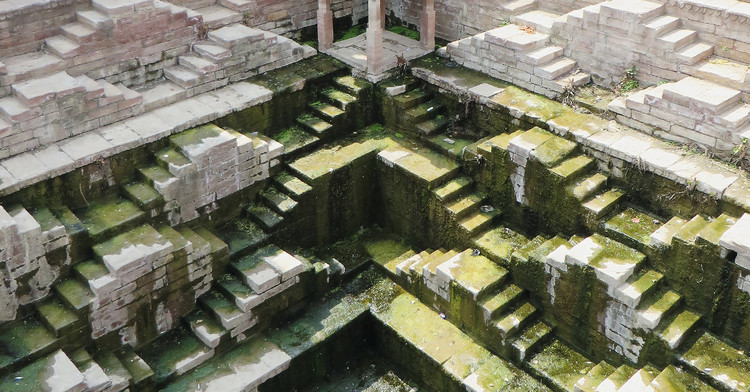
Thirty years ago, on my first visit to India, I glanced over an ordinary wall. The ground fell away and was replaced by an elaborate, man-made chasm the length and depth of which I couldn’t fathom. It was disorienting and even transgressive; we are, after all, conditioned to look up at architecture, not down into it, and I had no clue as to what I was looking at. Descending into the subterranean space only augmented the disorientation, with telescoping views and ornate, towering columns that paraded five stories into the earth. At the bottom, above-ground noises became hushed, harsh light had dimmed, and the intense mid-day heat cooled considerably. It was like stepping into another world.
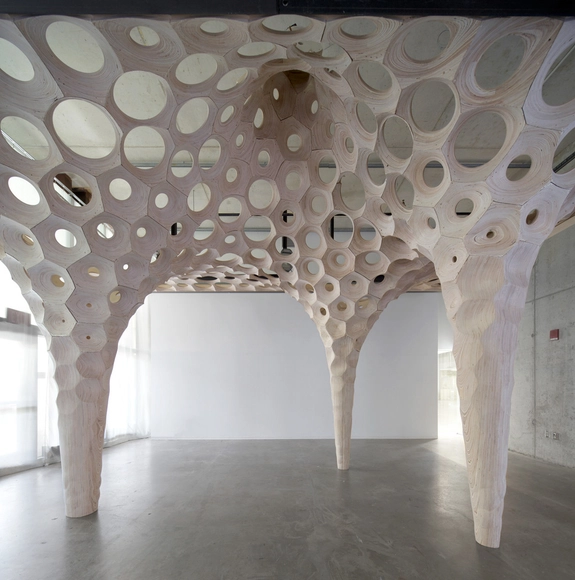
La Voûte de LeFevre sculpture. Image Courtesy of Matter Design
Craftsmanship is one of those topics which it seems almost everyone has a strong opinion. But while many lament the fact that traditional craft practices have been in decline since the industrial revolution, today a new generation of architects and designers have set about redefining and updating the notion of craft to include the most modern design and fabrication techniques around. In this article, originally published on Autodesk's Redshift publication as "5 Ways Architects and Postdigital Artisans Are Modernizing Craftsmanship," Jeff Link explores some of the traits that connect these pioneers to the craftsmen and women of a bygone era.
Craftsmanship in the digital age is hard to define. For some, craftsmanship evokes a purity of style, a preference for the handmade over the machine. For others, it recalls the Craftsman architecture of early-20th-century homes: overhung gabled rooflines, wide sheltered porches, detailed handiwork, and an ineffable Norman Rockwell sense of bygone Americana.
But regardless of one’s intuitive understanding of the term, the notion of craftmanship is evolving. Increasingly, the age-old knowledge of woodcarvers, masons, and other craftspeople is embedded in an intelligent design process using geometric computer models and machine fabrication to develop new crafts and architectural métiers—from gravity-defying furniture assemblies to complex workflows for robotic automatons. These innovations have helped place architects alongside craftsmen at the center of a revival in “maker” culture, which, for example, is in vivid display in handmade marketplaces such as Folksy and Etsy.
So what exactly is digital craft? And what does it look like in the work of top designers? Here, innovative architects identify five things postdigital artisans are doing to transform craftsmanship.
https://www.archdaily.com/781960/5-ways-architects-are-redefining-craftsmanship-for-a-postdigital-ageJeff Link
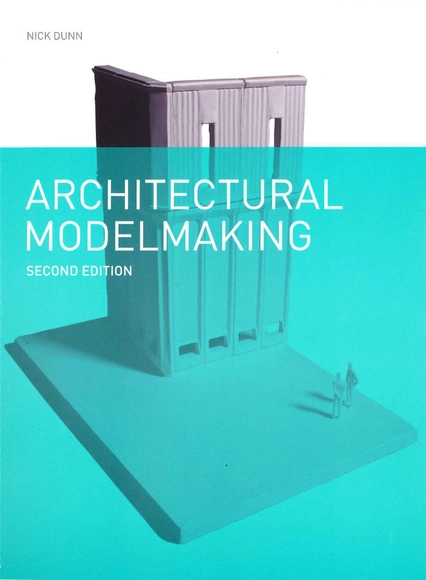
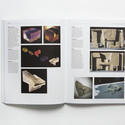
Why do we make models? From sketch maquettes and detail tests to diagrammatic and presentation models, the discipline of physically crafting ideas to scale is fundamental to the architect's design process. For architect and educator Nick Dunn, architectural models ultimately "enable the designer to investigate, revise and further refine ideas in increasing detail until such a point that the project's design is sufficiently consolidated to be constructed." In Dunn's second edition of his practical guide and homage to the architectural model, the significance and versatility of this medium is expertly visualised and analysed in a collection of images, explanations, and case studies.
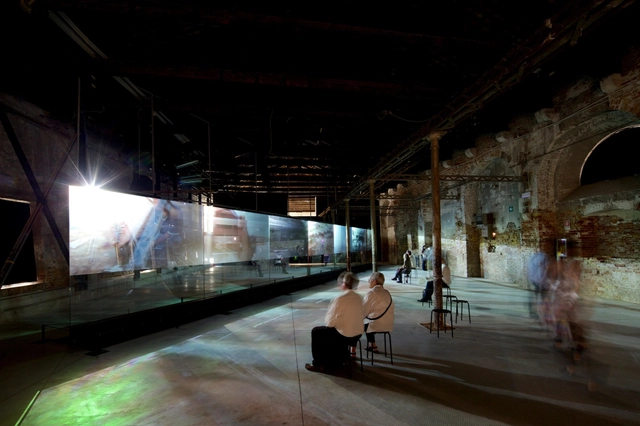
At its debut at the Venice Architecture Biennale 2014, Indonesia offers a peek into the country’s past 100 years of architectural history in its pavilion: “Craftsmanship: Material Consciousness.” Moving images projected onto glass panels tell Indonesia’s story through the development of six materials, traced over time: wood, stone, brick, steel, concrete and bamboo. See images of the pavilion and enjoy a statement from the curators after the break.
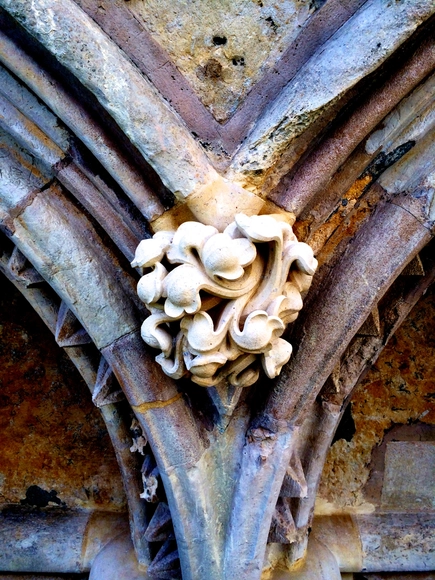
In an age when 1:1 3D printed buildings are becoming ever more commonplace from the Netherlands to China, it's important to pause and assess the existing built fabric of our cities, towns and villages. If we want to maintain and preserve them whilst protecting the inherent craft imbued in their construction, the importance of nurturing and promoting these skills should be recognised.
In the UK, the Heritage Skills Hub(HSH) push to see "traditional building skills, conservation, restoration and responsible retrofit" included within all mainstream built environment courses. In a recent conversation with Cathie Clarke, CEO of the HSH, we discussed the obstacles faced by an organisation dedicated to conserving and teaching skills like stonemasonry, roof thatching, glass making, traditional brick construction to a new generation.








.gif?1504720547)