1. ArchDaily
  2. Clothing

Clothing: The Latest Architecture and News

Pink as a Design Tool: Atmosphere, Identity, and Experimentation in Interior Design

Subscriber Access | 

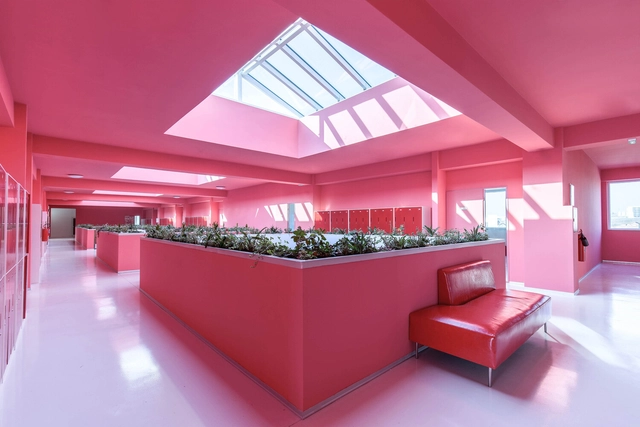
In recent years, pink has evolved beyond its traditional associations to become a sophisticated and versatile element in architecture and interior design. Defined by a broad spectrum of shades, pink encompasses both warm and cool tones, ranging from pure red tints (R) to blends with yellow (Y80R, Y90R) or blue (R10B, R20B, R30B), as classified by the Natural Color System (NCS). While difficult to define by a single shade, this color balances vibrancy and softness, making it adaptable across different materials and contexts. As pink continues to gain prominence in contemporary interiors, its role extends beyond being a mere color choice—it is a design strategy. The recent transition from the bold, playful pinks of the "Barbiecore" trend to softer, powdery hues seen in fashion and design in 2025 fashion collections, highlights the color's adaptability. Its presence in Pantone's 2025 color palettes, also reinforces its appeal across disciplines. When applied thoughtfully, pink can transform spaces, making them feel inviting, expansive, or timeless.

Pink as a Design Tool: Atmosphere, Identity, and Experimentation in Interior Design - Image 2 of 4Pink as a Design Tool: Atmosphere, Identity, and Experimentation in Interior Design - Image 4 of 4Pink as a Design Tool: Atmosphere, Identity, and Experimentation in Interior Design - Image 1 of 4Pink as a Design Tool: Atmosphere, Identity, and Experimentation in Interior Design - Image 5 of 4Pink as a Design Tool: Atmosphere, Identity, and Experimentation in Interior Design - More Images+ 7

Does Form Follow Fashion? Viktoria Lytra's Montages Keep Iconic Architecture In Vogue

Does Form Follow Fashion? Viktoria Lytra's Montages Keep Iconic Architecture In Vogue - Image 6 of 4
Pleats till now were considered to be garments’ element. However, pleating in architecture creates unconventional forms such as the Reggio Emilia train station in Italy designed by the famous architect Santiago Calatrava. Image Courtesy of Viktoria Al. Lytra

Greek architect Viktoria Lytra has created a set of images exploring the relationship and interaction between architecture and fashion. FormFollowsFashion investigates the common purpose of architecture fashion, to create shelter for the human body, placing aesthetic as a common factor in novel approaches to the design of clothes and buildings.

Lytra’s series features various movements and styles, such as minimalism, deconstructivism, and postmodernism, playing on common geometric characteristics such as folks, pleats, curves, prints, and twists.