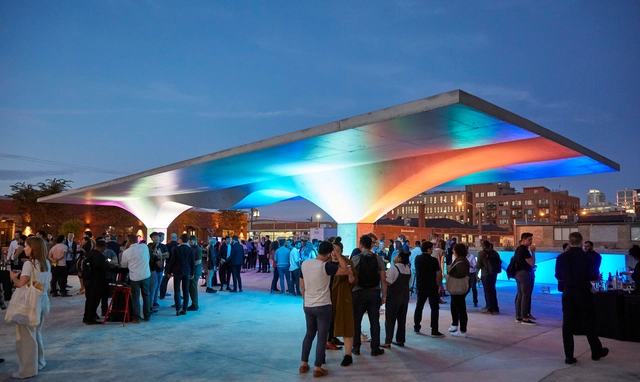
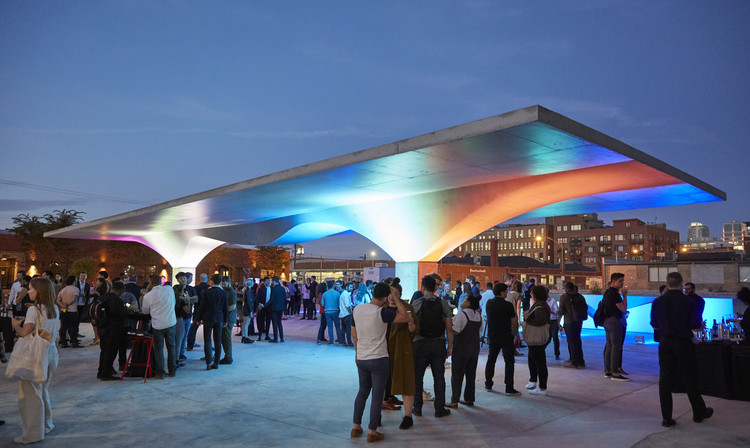
Architecture practice Skidmore, Owings & Merrill (SOM) have designed a concrete pavilion for the 2019 Chicago Architecture Biennial. Today, the practice is unveiling the work of its interdisciplinary practice with Stereoform Slab, a to-scale prototype of a future building system made using advanced robotic fabrication techniques. The project is simultaneously an activation and an exhibition that illustrates a design method that reduces the carbon footprint of concrete construction.
The Chicago Architecture Biennial has released its cultural agenda for this year’s edition of the international exhibition. Held in the Chicago Cultural Center and all over the city, from the 19th of September 2019 till the 5th of January 2020, this edition under the theme of: ... And Other Such Stories, is going to be curated by the artistic director Yesomi Umolu, the executive director Todd Palmer and co-curated by Sepake Angiama and Paulo Tavares.
The Chicago Architecture Biennial has announced more than 40 citywide partner sites and organizations for the festival’s 2019 edition. Cultural organizations from across the city, such as the Art Institute of Chicago and Navy Pier, will be activated by independent programming in coordination with the Biennial, resulting in “a citywide exploration of architecture, space, the environment, history, and community.”
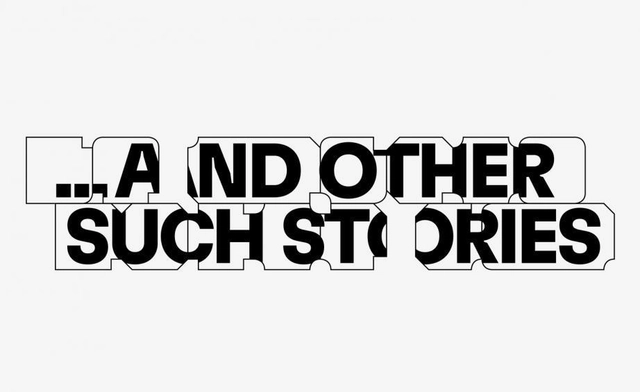
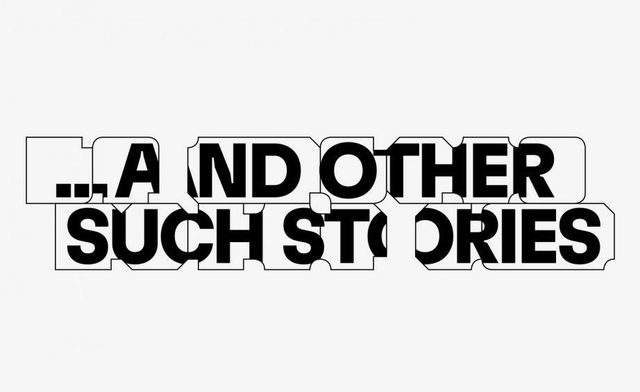
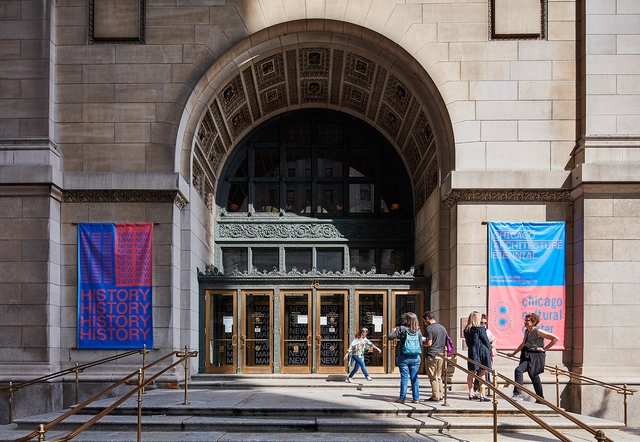
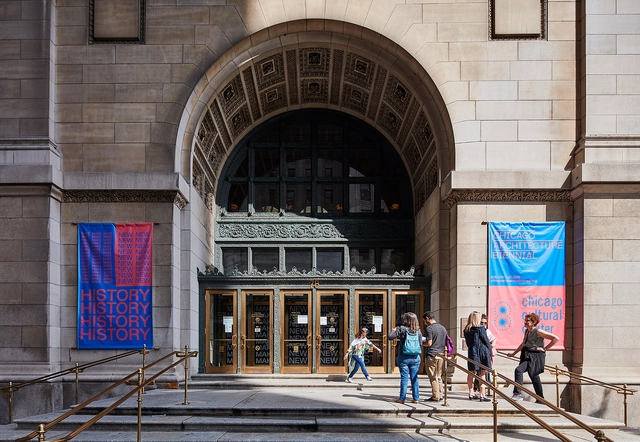
The new graphic identity of the 2019 Chicago Architecture Biennial. by LA-based ELLA. Image Courtesy of Chicago Architecture Biennial
The third Chicago Architecture Biennial will occur from September 19, 2019, to January 5, 2020, and yesterday the first group of contributors to the 2019 edition and publication was announced. This year’s theme, “...and other such stories,” will bring together a multi-faceted and international exploration of architecture and the built environment. Newly commissioned projects for the Biennial will highlight issues including public housing, social justice, and the appropriation and preservation of the natural environment.
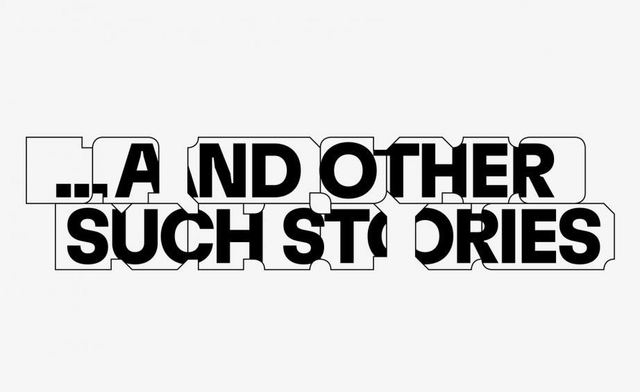
The new graphic identity of the 2019 Chicago Architecture Biennial. by LA-based ELLA. Image Courtesy of Chicago Architecture Biennial
The curatorial team of the Chicago Architecture Biennial has announced the theme of the third edition of the event, to be titled "...and other such stories". The intentionally-broad theme proposes an investigation of architecture / the built environment not just as a form, but as a culmination of the conditions that shape it. ...and other such stories is a collaborative effort between Artistic Director Yesomi Umolu and co-curators Sepake Angiama (a curator focused on education) and Paulo Tavares (a Brazilian architect and academic).
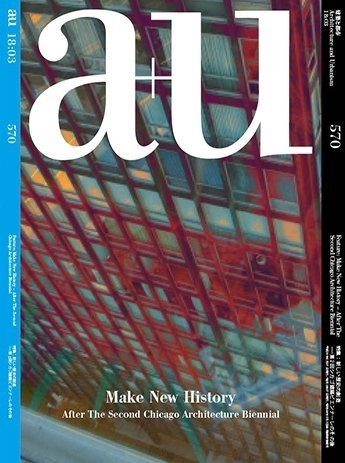
This issue focuses on the second edition of the annual Chicago Architecture Biennial, 2017, that featured the participation of 140 artists from 20 countries, under the theme Make New History. Guest edited by Sharon Johnson and Mark Lee, Artistic Directors of the Biennial, the first part looks back on the Biennial through a conversation with architectural historian, Michael Hays. The second part introduces built work and projects selected with reference to the exhibition's theme by the guest editors and participating architects.
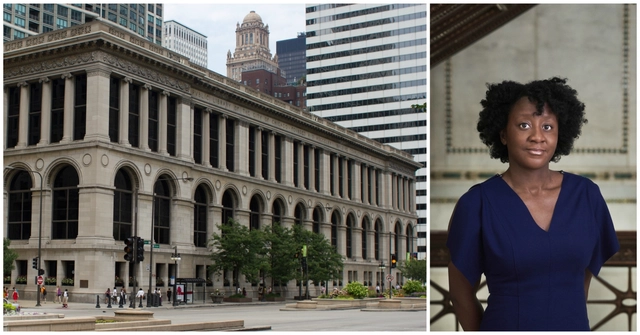
The Chicago Architecture Biennial has announced the appointment of curator and educator Sepake Angiama and architect and urbanist Paulo Tavares to the curatorial team for the event’s 2019 edition.
The new appointees will combine with Artistic Director Yesomi Umolu to lead the curation of the 2019 event, bringing expertise in research architecture and discursive practices.
https://www.archdaily.com/894627/chicago-architecture-biennial-appoints-sepake-angiama-and-paulo-tavares-as-2019-co-curatorsNiall Patrick Walsh
Currently holding the position of Exhibitions Curator at the Reva and David Logan Center for the Arts at the University of Chicago, Umolu draws from her background in architectural design and curatorial studies in creating exhibitions that explore the politics of the built environment. Recent projects include Kapwani Kiwanga: The sum and its parts, The Land Grant: Forest Law, and The Museum of Non Participation: The New Deal.
Chicago Mayor Rahm Emanuel has announced the figures for the 2017 Chicago Architecture Biennial, which closed its four month run on Sunday, January 7th.
The second edition of the event, helmed by Artistic Director Sharon Johnston and Mark Lee, was able to match the success of the inaugural edition, seeing 554,866 visitors from around the world.
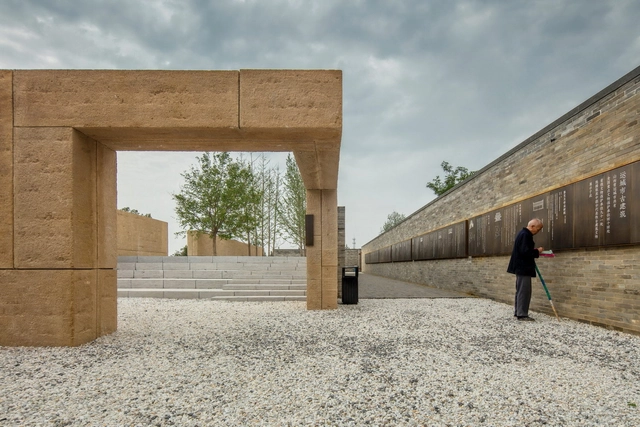
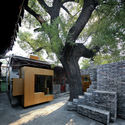
Five Dragons Temple in Shanxi Province, designed by URBANUS. Image by Yang Chaoying
This article was originally published on the blog of the Chicago Architecture Biennial, the largest platform for contemporary architecture in North America. The 2017 Biennial, entitled Make New History, will be free and open to the public between September 16, 2017 and January 6, 2018.
When we think of contemporary architecture in China, we often refer to the megaprojects by international architecture studios that tend to get covered most in the design media. From OMA’s CCTV Headquarters and Shenzhen Stock Exchange to the recently completed Tianjin Binhai Library by MVRDV and Poly International Plaza by SOM, these projects dominate urban skylines at a singular scale that suggests they were built to impress.
Beyond individual buildings, China’s mega-architecture boom is rapidly developing entirely new cities, a process designed to relieve the country’s principal metropolitan areas of their high density, while offering new prototypes for urban life. These highly branded environments are prompting displacement – as a form of rural exodus – and social stress throughout the country, while also ignoring the legacy of traditional Chinese architecture in urban centers.
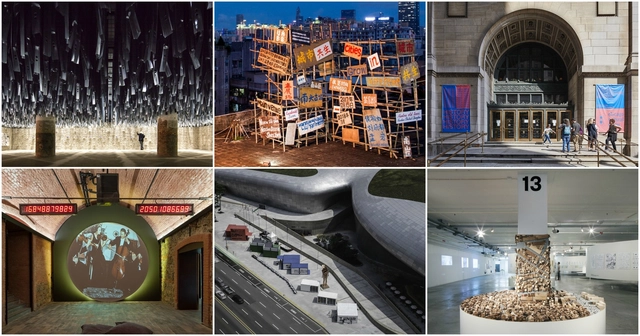
Venice? Chicago? Lisbon? Seoul? Architecture biennials, biennales, triennials, and triennales have become a vital part of the culture of modern architecture. Every two or three years, they debut new ideas, discuss popular topics, and showcase the best of what is happening in the field for both today and tomorrow. But, with the proliferation of these events in countries around the world, they can be tough to keep track of. How many are there, and when are they? ArchDaily has you covered. Below we have compiled what we believe is a comprehensive list showing the what, where, and when of the world's architecture and design biennials, triennials, and a handful of the larger yearly events. We've also included some more in-depth descriptions of a handful that have (in recent years at least) proven themselves to be big names.
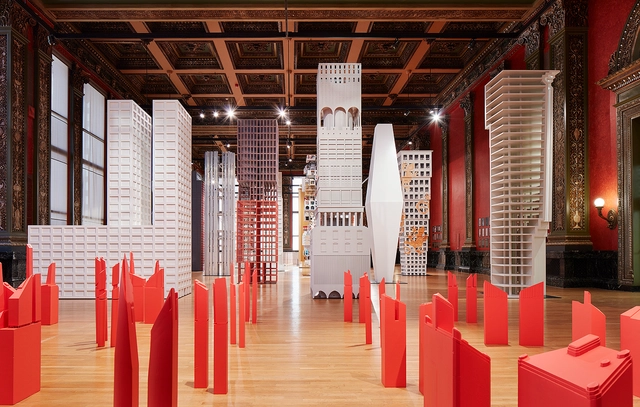
While architecture exhibitions have a tendency to be drab affairs with poorly displayed poster boards and reams of intellectualized text spouting pseudo-complex ideas, the Chicago Architecture Biennial stands out for its undeniable sense of playfulness. From its central HQ to the fringe performance events, this exhibition is bright, fun and Instagram-ready.
Chicago, like Venice, is blessed when it comes to architecture, making the city an ideal home for a recurring architecture show. The importance of this year’s iteration, the second after its inaugural event in 2015 (thus confirming its status as an actual “Biennial”), is clear. And the curators, Sharon Johnston and Mark Lee from LA-based practice Johnston Marklee, seem determined to grab people’s attention.
The Museum of Contemporary Art Chicago presents the first-ever museum exhibition of breakout Chicago artist Amanda Williams, featuring a new addition to her highly acclaimed project, Color(ed) Theory, which debuted at the first Chicago Architecture Biennial. The bright, monochromatic houses painted as part of Color(ed) Theory bring attention to the overwhelming number of vacancies on Chicago’s South Side, reflecting Williams’ perspective that architecture serves as a microcosm for larger social issues. Together with new works such as A Dream or Substance, a Beamer, a Necklace or Freedom? -- where Williams invited Englewood-based collaborators to gild a room in imitation gold leaf in the same proportion of a Chicago lot, and then sealed off the room with just a small gap for viewing the gleaming interior -- Williams’ solo debut creates an experience that comments on race, class, and urban space. Chicago Works: Amanda Williamsis organized by MCA Curatorial Assistant Grace Deveney and is on view from July 18 to December 31, 2017.
When it comes to tall building design, it’s often the structural system where the most groundbreaking innovations are made. Premiering this week in partnership with the Chicago Architecture Biennial is a new exhibition highlighting the innovative structural systems of an architecture firm that has completed their fair share of tall buildings: SOM.
Titled SOM: Engineering x [Art + Architecture], the exhibition uncovers the concepts and forms of the firm’s greatest achievements, including revolutionary tall buildings such as the John Hancock Building, the Willis Tower and the current world’s tallest building, the Burj Khalifa. The exhibition reveals the research and thought processes through a range of media: hand-drawn sketches, interactive sculpture, immersive video, and most notably, a lineup of models at 1:500 showing the structural skeletons of 30 significant projects.
Today SO-IL, in collaboration with Ana Prvački, debuted L’air pour air on the occasion of the press preview of the second edition of the Chicago Architecture Biennial. The performance explores the art of performing behind a filter in an age where many cities suffer from the environmental impact of human habitation. Described as "part installation and part musical performance," the creators have drawn inspiration from abundant plant life and the interconnectedness of people and nature.
https://www.archdaily.com/879646/so-il-with-ana-prvacki-debut-musical-spatial-performance-at-2017-chicago-architecture-biennialAD Editorial Team
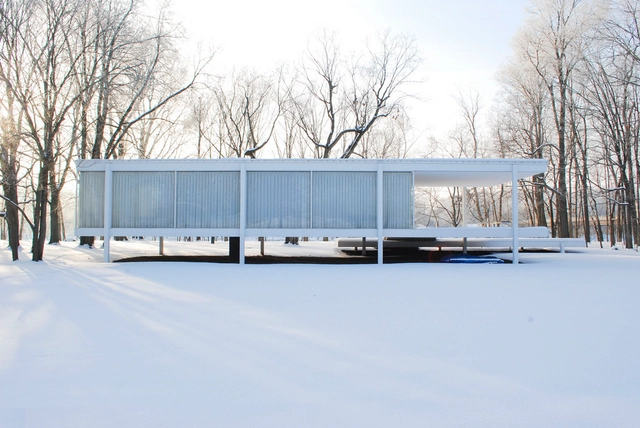
Farnsworth House. Image Courtesy of Flickr CC user Jonathan Rieke. (Licensed under CC BY-NC 2.0)
The Chicago Architecture Biennial and it's artistic directors, Johnston Marklee, have revealed a collection of Special Projects designed to harness the curatorial vision of the event—entitled Make New History—and bring it to a number of significant landmarks in the city and in it's surrounding area. Featuring a SO-IL and Ana Prvački collaboration, a Francois Perrin installation, a new performance artwork by Gerard & Kelly at the Farnsworth House, photographs by James Welling, and films by Gerard & Kelly, the projects will inhabit some Chicago's greatest "architectural gems."
https://www.archdaily.com/876117/chicago-architecture-biennial-special-projects-to-inhabit-a-series-of-architectural-landmarksAD Editorial Team
Two months before the much-anticipated opening of the Chicago Architecture Biennal, this video collaboration between Berlin-based PLANE–SITE and Chicago-based Spirit of Space offers an insight into what is to come this fall. The first video of the series delves into the core message that curators Mark Lee and Sharon Johnston of Johnston Marklee have established as the groundwork for contributions from over 100 international participants. One of the youngest biennials in the architectural scene, the Chicago Architecture Biennial is only in its second edition and is still defining the unique and independent traits that will help it stand out from other similar events.
The series from PLANE–SITE and Spirit of Space will unravel some of the Biennial's main themes, and delve into its program, reporting on such projects as the reinterpretations for Howells & Hood’s 1925 Tribune Tower; 3D responses to historical images of building interiors; a labyrinth of galleries that will host larger installations; and some of the biennial's anchor sites across the city of Chicago.
https://www.archdaily.com/876061/johnston-marklee-explain-what-matters-for-this-years-chicago-architecture-biennialAD Editorial Team
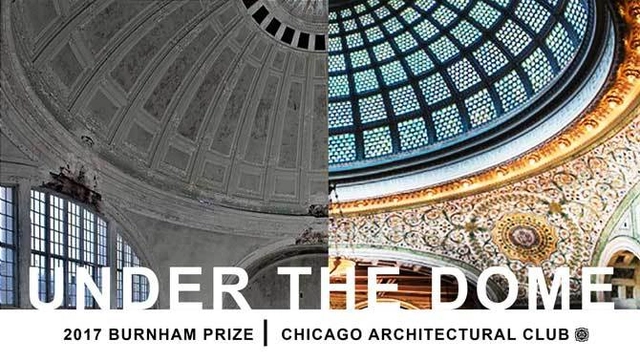
In response to this year’s Chicago Architecture Biennial prompting Make New History, the Chicago Architectural Club is pleased to announce the 2017 Burnham Prize Competition: Under the Dome. In partnership with the Chicago Architecture Biennial, a call for entries for the Burnham Prize is taking place with submissions due August 18th.
_Dave_Burk___SOM_(2).jpg?1568925232 "Courtesy of Dave Burk | SOM")
_Dave_Burk___SOM_(1).jpg?1568925214 "Courtesy of Dave Burk | SOM")
_Dave_Burk___SOM_(3).jpg?1568925283 "Courtesy of Dave Burk | SOM")
_Dave_Burk___SOM_(4).jpg?1568925324 "Courtesy of Dave Burk | SOM")



_0002.jpg?1549394735 "Paulo Tavares, photographed by Gabriel Ribeiro. Image Courtesy of Chicago Architecture Biennial")


.jpg?1513724004)


.jpg?1505510121&format=webp&width=640&height=580)
.jpg?1505510260 "© Laurian Ghinitoiu")
.jpg?1505510187 "© Laurian Ghinitoiu")
.jpg?1505510144 "© Laurian Ghinitoiu")
.jpg?1505510136 "© Laurian Ghinitoiu")
.jpg?1505510121)
.jpg?1505399498&format=webp&width=640&height=580)