

Architecture theorist, historian, and curator Beatriz Colomina talks about our discipline and its difficulty to accept the work as the result of a collaborative effort. When asked about sexism and gender issues within architecture, Colomina broadens the discussion and tackles the historical myth of architecture as the product of one single, brilliant - and always masculine - mind. A fiction that has obscured the role of a number of women, and whole teams, committed to the design process.
Beatriz Colomina: The Latest Architecture and News
Beatriz Colomina on Gender, Collaborative Work, and Disease in Architecture
https://www.archdaily.com/928848/beatriz-colomina-on-gender-collaborative-work-and-disease-in-architectureRomullo Baratto
The Robin Evans Lecture 2019: Beatriz Colomina

The city is not what it used to be. What is private and what is public has become completely blurred. We can no longer think of distinct spaces for work, play, domesticity, and rest. We are living in a 24/7 culture. Industrialisation brought with it the eight-hour shift and the radical separation between the home and the office or factory, between rest and work, night and day. Post-industrialisation collapses work back into the home and takes it further into the bedroom and into the bed itself. Networked electronic technologies have removed any limit to what can be done in bed. Millions of dispersed beds are taking over from concentrated office buildings. The boudoir is defeating the tower. This lecture explores the new role of the bed as the epicentre of labour, post-labour and love in the age of social media
https://www.archdaily.com/926957/the-robin-evans-lecture-2019-beatriz-colominaRene Submissions
Introducing GSAPP Conversations' Inaugural Episode: "Exhibition Models"
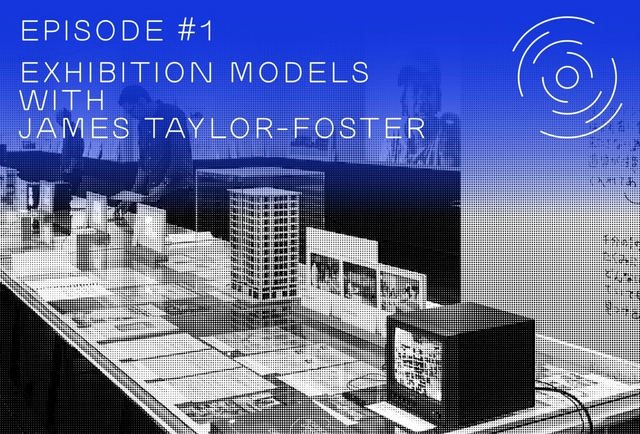
We are pleased to announce a new content partnership between ArchDaily and Columbia University's Graduate School of Architecture, Planning and Preservation (GSAPP) in New York City.
GSAPP Conversations is a podcast series designed to offer a window onto the expanding field of contemporary architectural practice. Each episode pivots around discussions on current projects, research, and obsessions of a diverse group of invited guests at Columbia, from both emerging and well-established practices. Usually hosted by the Dean of the GSAPP, Amale Andraos, the conversations also feature the school's influential faculty and alumni and give students the opportunity to engage architects on issues of concern to the next generation.

https://www.archdaily.com/806013/introducing-columbia-gsapp-conversations-inaugural-architecture-podcast-exhibition-models-james-taylor-fosterJames Taylor-Foster
After "Are We Human?" – Beatriz Colomina and Mark Wigley Discuss the Istanbul Manifesto

With Are We Human—the exhibition of the 3rd Istanbul Design Biennial, which ran for one month at the end of 2016—curators Beatriz Colomina and Mark Wigley were researching the fundamental notion of ‘design’. Their historic, cultural and conceptual exploration attempted to unravel the various programs and ambitions behind a (mainly) market driven inventiveness, which is presented as progress. This pushed the notion of design and the biennale as a format beyond their established definitions.


https://www.archdaily.com/805727/after-are-we-human-wigley-istanbul-manifestoArjen Oosterman
8 Short Architectural Texts You Need To Know





Update: We've added links to help you find these books for purchase and, in 5 of 8 cases, tracked down a way you can read them online for free!
Quality over quantity, so the saying goes. With so many concepts floating around the architectural profession, it can be difficult to keep up with all the ideas which you're expected to know. But in architecture and elsewhere, the most memorable ideas are often the ones that can be condensed textually: “form follows function,” “less is more,” “less is a bore.” Though slightly longer than three words, the following lists a selection of texts that don’t take too long to read, but impart long-lasting lessons, offering you the opportunity to fill gaps in your knowledge quickly and efficiently. Covering everything from loos to Adolf Loos, the public to the domestic, and color to phenomenology, read on for eight texts to place on your reading list:
https://www.archdaily.com/799077/8-short-architectural-texts-you-need-to-knowSharon Lam
Complete Collection of Participants and Projects for the 2016 Istanbul Design Biennial Revealed

As the month-long 3rd Istanbul Design Biennial draws near, the Istanbul Foundation for Culture and Arts (İKSV) have revealed a full list of projects and participants. Curated by Beatriz Colomina and Mark Wigley, the biennial—which is titled Are We Human? The Design of the Species: 2 seconds, 2 days, 2 years, 200 years, 200,000 years—will revolve around one pressing provocation: that design itself needs to be redesigned.
Presenting more than 70 projects from five continents by designers, architects, artists, theorists, choreographers, filmmakers, historians, archaeologists, scientists, laboratories, institutes and NGOs, the exhibitions will be spatialized by Andrés Jaque and the Office for Political Innovation and spread across five main venues – the Galata Greek Primary School, Studio-X Istanbul and Depo in Karaköy, Alt Art Space in Bomonti, and the Istanbul Archaeological Museums in Sultanahmet. The work of a dense array of international writers, video makers, and designer researchers will also be presented online.
https://www.archdaily.com/796581/participants-projects-2016-3rd-istanbul-design-biennial-are-we-human-revealedAD Editorial Team
Details About Colomina and Wigley's 3rd Istanbul Design Biennial—"Are We Human?"—Revealed

The 3rd Istanbul Design Biennial, which will officially open on the 22nd October 2016 and last for four weeks, will ask the question: Are We Human? Encompassing a wide range of ideas related to The Design of the Species, from timeframes of 2 Seconds to 2 Days, 2 Years, 200 Years and 200,000 Years, the international show will revolve around one pressing provocation: that design itself needs to be redesigned. It will do so by exploring the intimate relationship between the concepts of "design" and "humanity."
Five primary venues—the Galata Greek Primary School, Studio-X Istanbul and Depo in Karaköy, Alt in Bomonti, and the Istanbul Archaeological Museums in Sultanahmet—will house more than 70 projects by designers, architects, artists, historians, archaeologists and scientists from thirteen countries. In order to "rethink design from the very beginning of humanity," the Biennial will be organised into four overlapping “clouds” of projects: Designing the Body, Designing the Planet, Designing Life, and Designing Time.





https://www.archdaily.com/793761/details-revealed-beatriz-colomina-mark-wigley-3rd-third-istanbul-design-biennial-turkey-are-we-humanJames Taylor-Foster
Beatriz Colomina on the Correlation Between Playboy and Architecture
Beatriz Colomina, Professor of Architecture at Princeton, recently gave an interview to Architect Magazine on the current exhibition of her thesis—“Playboy Architecture 1953-1979”—at the Elmhurst Museum in Chicago. Her interest in the correlation between Playboy and architecture began nearly thirty years ago with her exploration on the role of gender and architecture in the work of Adolf Loos and Le Corbusier. From there, she began to observe numerous parallels between Playboy and the world of design.
https://www.archdaily.com/788525/beatriz-colomina-on-the-correlation-between-playboy-and-architectureKaley Overstreet
Beatriz Colomina and Mark Wigley, Curators of the 2016 Istanbul Design Biennial, Discuss "The Design of the Species"
_023-b.jpg?1457451333)
"Design always presents itself as serving the human," state Beatriz Colomina and Mark Wigley, "but its real ambition is to redesign the human." Their curatorial statement for the 3rd Istanbul Design Biennial, which will open later this year and is themed around the title Are We Human? The Design of the Species: 2 Seconds, 2 Days, 2 Years, 200 Years, 200,000 Years, brims with reflective and often prescient statements such as this. All that will be encompassed by this Biennial, they say, will revolve around one pressing provocation: that design itself needs to be redesigned.
If one thing is certain, this Biennial will not come off as a 'trade show'. Wigley (New Zealand) and Colomina (Spain)—both Professors of Architecture at US institutions (Columbia and Princeton, respectively), theorists, writers, and critics—have exerted a profound influence on architectural discourse and pedagogy over the course of their careers. This Biennial, on the other hand, serves as their first formal foray into the world of 'design' – a field which few architects actively engage with.
In this exclusive interview with ArchDaily the curators discuss their intentions, criticise the traditional 'Biennial' model, and describe how they—alongside Andrés Jaque and the Office for Political Innovation—intend to spatialise the show against the backdrop of Istanbul – one of the great nexus of the world. Here, they also formally announce the launch of an Open Call for two-minute films.
https://www.archdaily.com/783398/beatriz-colomina-and-mark-wigley-curators-of-the-3rd-istanbul-design-biennial-discuss-the-design-of-the-speciesJames Taylor-Foster
Colomina and Wigley Announce Theme For 2016 Istanbul Design Biennial: "Are We Human?"
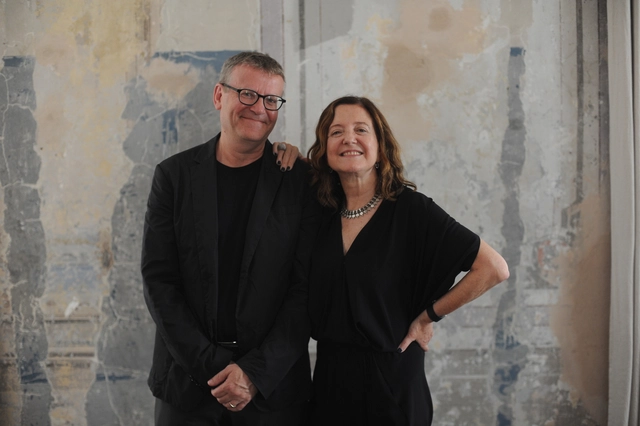
At a media meeting this morning at the Istanbul Archaeological Museums Library, the curators of the 3rd Istanbul Design Biennial Beatriz Colomina and Mark Wigley announced the theme of next year's event, titled “ARE WE HUMAN?: The Design of the Species: 2 seconds, 2 days, 2 years, 200 years, 200,000 years.” The event, which will be held from October 22nd to December 4th next year, is intended to combine elements of both media documentary and archaeological project and according to the curators "will explore the intimate relationship between the concepts of 'design' and 'human.'"
https://www.archdaily.com/778095/colomina-and-wigley-announce-theme-for-2016-istanbul-design-biennial-are-we-humanRory Stott
Radical Pedagogies: Reconstructing Architectural Education

This is the third edition of “Radical Pedagogies” exhibition. Earlier versions of this show were presented at the 3rd Lisbon Architecture Triennale (2013) and the 14th Venice Biennale of Architecture, curated by Rem Koolhaas (2014), where it was awarded a Special Mention. For the occasion of its presentation in Warsaw, the exhibition opens up new directions and a new density of global interconnections. Eastern Europe, Africa, East Asia and Australasia become the protagonists, opening new insights into pedagogical experimentation after 1945.



https://www.archdaily.com/775060/radical-pedagogies-reconstructing-architectural-educationRene Submissions
Beatriz Colomina And Mark Wigley Appointed As Curators Of The 2016 Istanbul Design Biennial

The Istanbul Foundation for Culture and Arts have announced that internationally renowned architectural historian and theorist Beatriz Colomina and architectural historian, theorist, and critic Mark Wigley will curate the 3rd Istanbul Design Biennial to be held in the summer of 2016. Colomina, a Professor of Architecture at Princeton University and curator of the recent Radical Pedagogies: Architectural Education in a Time of Disciplinary Instability exhibition (Lisbon Triennale, 2013; Venice Biennale 2014) will join Wigley, Professor and Dean Emeritus of Columbia University's GSAPP and renowned writer and curator, in helping to cement the biennial's international reputation.
https://www.archdaily.com/636239/beatriz-colomina-and-mark-wigley-appointed-as-curators-of-the-2016-istanbul-design-biennialJames Taylor-Foster
Venice Biennale 2014: Radical Pedagogies, Exhibit Design by Amunátegui Valdés Architects

Last year I saw Beatriz Colomina present Radical Pedagogies, a research project that she led together with PhD students at Princeton University School of Architecture. Radical Pedagogies focuses on schools and programs from around the world that emerged postwar, strongly tied to social changes of the time. The material produced over three years of seminars, interviews and archive digging shows a compelling story of the ways that "architectural pedagogy" have impacted today's architecture education.
Invited to the Monditalia section of the Venice Biennale, Radical Pedagogies paints a global picture while focusing on some of the strong Italian influences of these new movements—such as Lina Bo Bardi in Brazil and Aldo Rossi in Argentina—in an interactive exhibit that includes augmented reality content by dpr-barcelona.
The exhibition was awarded a Special Mention, cited by the jury for "highlight[ing] the emergence of new poles of architectural thinking in the current world and mak[ing] these accessible as a living archive. The research project is part of an ongoing global project that shows that knowledge is produced and develops in a networked way beyond national borders and national identities."
We wanted to show our readers more about this project, but focusing on the physical armature of the exhibit, a dimension that is often ignored from a technical point of view. That's why we asked Chilean practice Amunátegui Valdés Architects to share the architectural details of the Radical Pedagogies: Action - Reaction - Interaction exhibit and construction. Read more after the break.
https://www.archdaily.com/518281/venice-biennale-2014-radical-pedagogies-exhibit-design-by-amunategui-valdes-architectsDavid Basulto