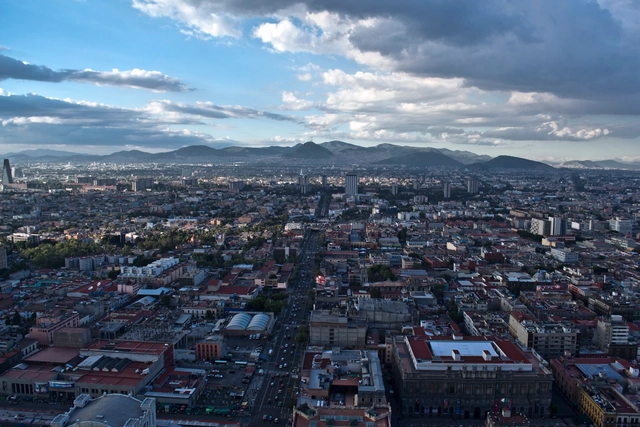
Though the idea of a vacation in Mexico usually brings to mind images of margaritas on white-sand beaches, it seems the country is slowly but surely gaining recognition in other aspects as well. Among the most populated urban cities in Latin America and the world – not to mention The New York Times' number one "Place to Go in 2016" – Mexico City offers a particular cultural diversity evident both in its traditions and in its architecture. Considering it's the main tourist, educational, cultural, economic and political center of Mexico, it makes sense that it's the perfect scenario for the social encounters of its multicultural inhabitants and tourists.
The sites of architectural interest alone are worth the visit, with prehispanic, classic, modern and contemporary examples ranging from Juan O'Gorman and Luis Barragán to Felix Candela and David Chipperfield. Add to that the fact that its gastronomic scene has garnered much praise and attention in recent years, and you've got a perfect combo. Below is a carefully curated list of 30 sites that every architect should know and visit.
It can sometimes feel as if the world is divided into two camps: those who do not listen to podcasts (probably because they don’t know what a podcast is) and those who listen to podcasts, love podcasts, and keep badgering their friends for recommendations so they can start listening to even more.
Unlike other media, it’s notoriously difficult to discover and share podcasts – even more so if you’re looking for a podcast on a niche subject like architecture, design or urbanism. To help you in your hour of need, Metropolis’Vanessa Quirk (author of Guide to Podcasting) and ArchDaily’sJames Taylor-Foster(whose silvery tones you may have heard on various architecture and design audio stories) have come together to compile this list of eleven podcasts you should subscribe to.
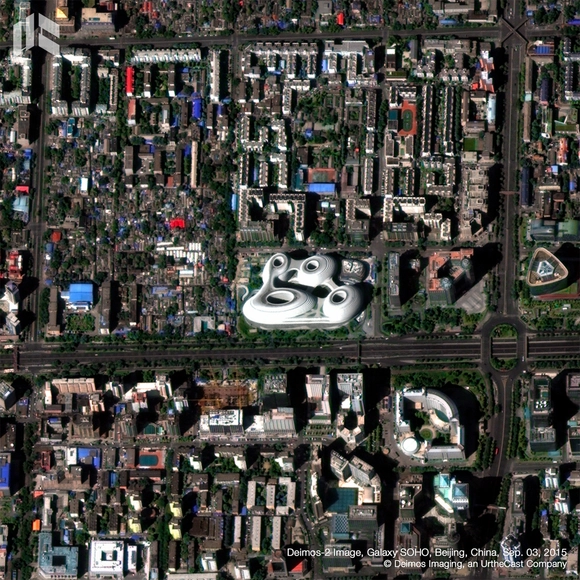
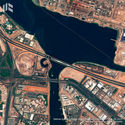
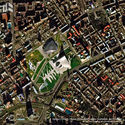
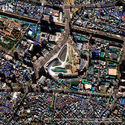
Hadid's untimely death left a fascinating and inspiring legacy. Meanwhile her firm, Zaha Hadid Architects, continues to work on nearly a hundred projects worldwide. To remember her legacy, Spanish company Deimos Imaging has shared a series of photographs focusing on Hadid's work in five countries.
The images were captured by the Deimos-2 satellite, which was launched in 2014 and designed for very high-resolution Earth observation applications, providing multispectral images of just 75 centimeters per pixel. Hadid's incredible works take on a new dimension when you contemplate their proportions from the sky—or rather, from a satellite.
Courtesy of Flicker User Andreas Levers, Creative Commons
Amongst many things, Europe is known for some of the world’s most bicycle-friendly cities, offering safe and convenient travel routes for its two-wheeled commuters. Berlin, however, does not sit high on this list, but in an effort to address this, a new plan for a system of bicycle “superhighways” is undergoing implementation, incentivising cycling as an efficient means of transport.
Studies commissioned by Berlin’s Senate Department for the Environment, Transport, and Climate Protection looked into 30 possible bike paths, covering stretches of at least 5km. Of these, 12 have been selected as future superhighways, intended to be completely separated from other vehicles on the road.
https://www.archdaily.com/866846/this-system-of-superhighways-creates-a-more-bicycle-friendly-berlinOsman Bari
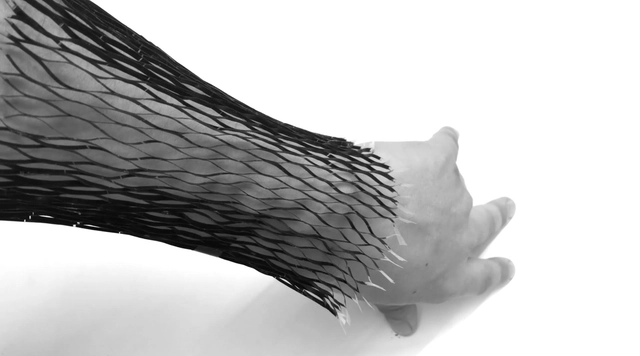
Researchers at MIT’s Self-Assembly Lab have recently developed an adaptable material that reacts in response to changes in heat. Known as Heat-Active Auxetics, the material functions in a similar manner to the pores on human skin, tightening and loosening based on exposure to various temperatures.
Contrary to most common materials, which tend to thin out while being pulled or stretched, this technology expands in all directions instead and completely shrinks when compressed. This provides insulation in colder conditions and added airflow and ventilation when it is warmer, all depending on the material’s porosity.
https://www.archdaily.com/806490/mits-new-intelligent-material-writhes-and-curls-to-changes-in-heatOsman Bari
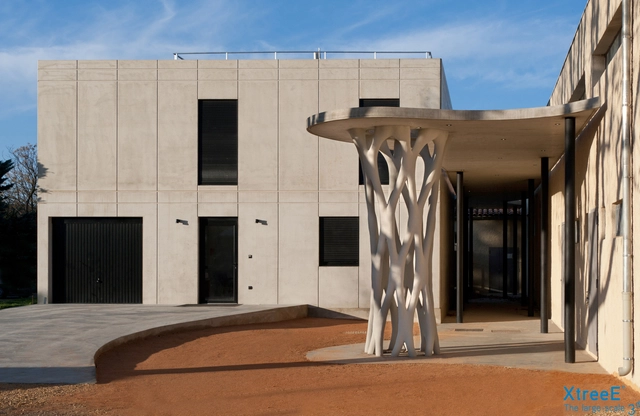
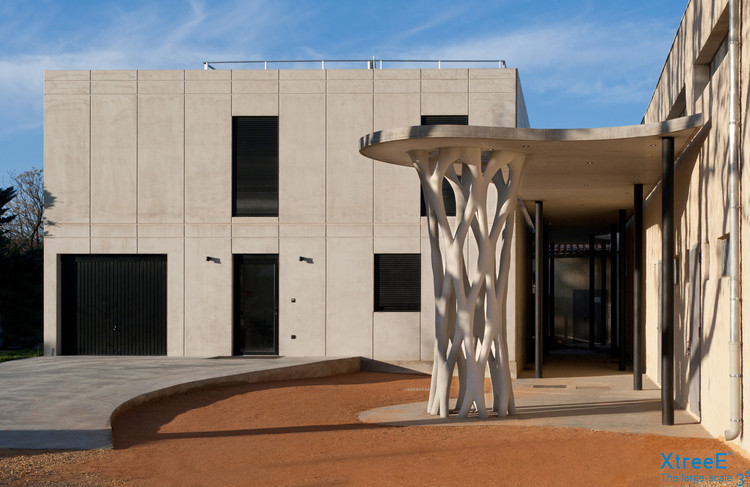
While large-scale 3D printing for architecture continues to be a busy area of research, France-based company XtreeE has been using 3D printed concrete in projects since 2015. Their latest creation is an organic truss-style support structure for a preschool playground in Aix-en-Provence.
One of the main difficulties encountered by students when looking for a job is dealing with a lack of professional experience. This fact is a paradox since people who apply for a trainee position have often never worked in the chosen area. Therefore, it is vital to invest in education and also to know the cultural diversity that’s available. Below we have 10 tips that serve as guidelines for students who want to build up their CV and get through the interview processes:
The skylines of modern China are punctuated by architecture that amazes, inspires, and awes. Many of these towering structures are the work of the Beijing-based experimental practice MAD Architects, led by Ma Yansong.
People often ask what 'MAD' stands for; sometimes, I explain it stands for MA Design, but I like MAD (adjective) Architects better. It sounds like a group of architects with an attitude towards design and practice. I think it is important to practice architecture with an attitude, to be critical and sensitive to the issues and challenges in our world.
Good architects have always designed with tactile sensations in mind, from the rich wood grain on a bannister, to the thick, shaggy carpet at a daycare center. It’s an effective way to engage all the senses, connecting the eye, hand, and mind in ways that create richer environments.
But one architecture professor at the University of Michigan in Ann Arbor is working on a tactile architecture-for-autism environment that does much more than offer visitors a pleasing and diverse haptic experience: It’s a form of therapy for kids like 7-year-old daughter Ara, who has autism spectrum disorder (ASD).
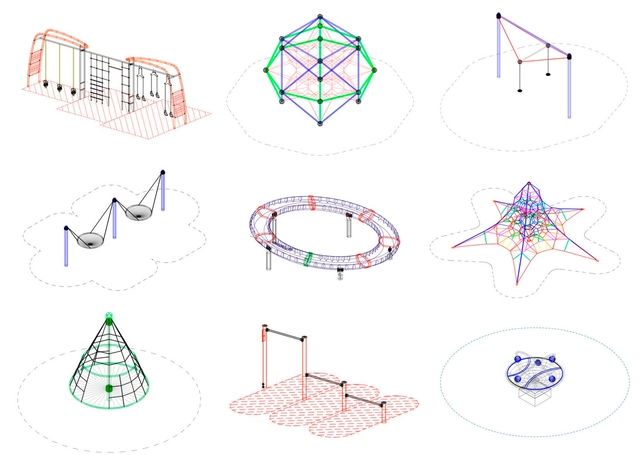
With the aim of supporting the design work of our readers, the company UrbanPlay has shared with us a series of files in .DWG format for different models of children's games, playgrounds, and equipment for public space. Files can be downloaded directly in this article and include 2D and 3D files.
Wall thickness, color, scale, solar dynamic, spaces built with a subtle metaphor immersed around the meaning of life, seem to be elements found throughout all of Luis Barragán's architecture. Elements of an enduring legacy, away from the ephemeral world of fashion, textiles and haute couture; however, it’s the search for the heightening of the senses, present in the architecture of Barragán, that inspired designers to put the name of the architect on catwalks and the world of apparel.
Transcending his architecture to a particular line of design, major names in the clothing industry have used the mystical language of Barragán. A language in which fashion manages to live a furtive beauty in geometry, color, texture, but especially a totally emotional search.
Check out 10 labels whose collections have been partially inspired by Barragán's work and ideas .
Stories have a way of clinging to places, charging buildings and spaces with an effect only perceptible to those who know what they once staged. Film is the most visual storytelling medium, and their environments often play memorable and vital roles in creating the movie's character and identity. The popularity of film tourism is testament to this phenomena. While the bulk of film tourism stems from blockbuster movies and their exposure and celebrity, the blog Filmap takes a more humble approach in highlighting the stories of everyday places.
For the past three years, the blog has laboriously tracked the locations of hundreds of movie scenes using Google Streetview, pairing stripped-back street views right next to their cinematographic counterparts. The resulting contrast elevates the everyday while also grounding fiction to our very streets, a reminder of the built environment’s role as a vessel of imagination.
A selection of Filmap’s posts are shared below – how many movies can you recognize from their real-life settings alone?
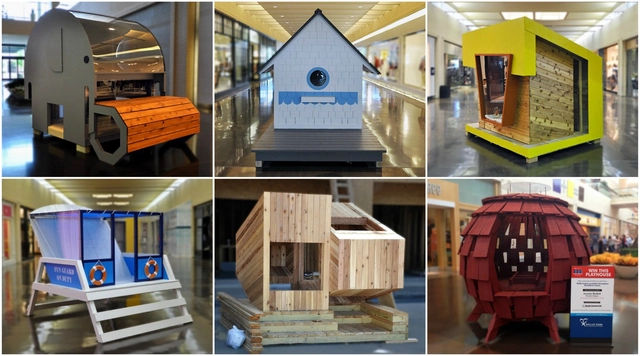
Have you ever thought of designing a house that is 8-foot cubed? It's unlikely, unless you've been involved in Dallas CASA’s event “Parade of Playhouses.” For 25 years, the association has asked architects, designers and builders to conceive, construct, and donate playhouses to raise funds for abused and neglected children. Each year, the playhouses are displayed in Northpark Mall – Dallas’ main “cultural centre” – where people can buy $5 raffle tickets to win one of the playhouses exhibited.
Architect Bob Borson conceived his first two playhouses for Dallas CASA in 2009, before starting his popular blog Life of an Architect and subsequently launching “The Life of An Architect Design Competition.” The idea came in 2010 when a great number of architects suffered from the economic crisis. As Borson explains: “I could have a playhouse design competition open to other architects so that they could remain connected to the architectural profession.” This also required Borson to raise money and find builders to construct the designs. “I have always covered all the expenses so that the competition would remain free to enter – the playhouses were for charity and it seemed like the right thing to do,” reflected Borson.
LYCS Architecture has released designs for Hangzhou NO.2 School of Future Sci-Tech City, a kindergarten, primary and secondary school complex in Hangzhou, Zhejiang, China. Encompassing 44,900 square meters, the design takes inspiration from a child’s drawing of his ideal school – a small town filled with child-scaled spaces and “happy” streets. The complex is broken up into 15 gabled volumes, which gradually increase in size and scale to accommodate the range of student ages.
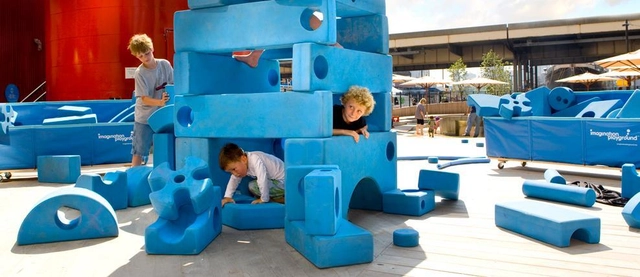
Image: Imagination Playground, New York, the Rockwell Group. Photo credit: Chris Amaral.
Kick start your playful summer with a panel discussion about the impact of design on childhood development! Inspired by BSA Space’s new exhibition, Extraordinary Playscapes, an array of unique panelists will consider ways to prevent barriers of play in urban areas. The conversation will delve into how play is related to design, psychology, parenting, architecture, and development while highlighting the role of designers in a more playful future. After the talk, participants will enjoy light refreshments and exclusive access to the exhibition.
Join Michael Laris and Missy Benson ASLA of Playworld as they explore the design processes of two very different urban play solutions: PlayCubes (originally designed by Richard Dattner FAIA in 1969) and PlayForm7, both featured as part of Extraordinary Playscapes, currently on view at BSA Space.
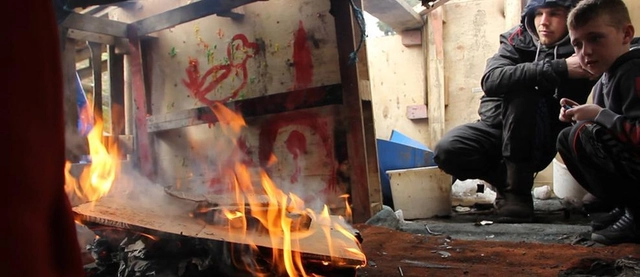
Featured in Extraordinary Playscapes, the summer exhibition at BSA Space, The Plas Madoc Adventure Playground in Northern Wales is one of the world’s newest adventure playgrounds. Fondly known as "The Land," it employs some of the play movement’s oldest "junk" philosophies.This new documentary explores a place where old tires and dumpster detritus take the place of swing sets and slides, and is “a must-see for anyone interested in play work, or play, period.” (Amy Fusselman, "Savage Park”)















.gif?1470677526)