Good architects have always designed with tactile sensations in mind, from the rich wood grain on a bannister, to the thick, shaggy carpet at a daycare center. It’s an effective way to engage all the senses, connecting the eye, hand, and mind in ways that create richer environments.
But one architecture professor at the University of Michigan in Ann Arbor is working on a tactile architecture-for-autism environment that does much more than offer visitors a pleasing and diverse haptic experience: It’s a form of therapy for kids like 7-year-old daughter Ara, who has autism spectrum disorder (ASD).
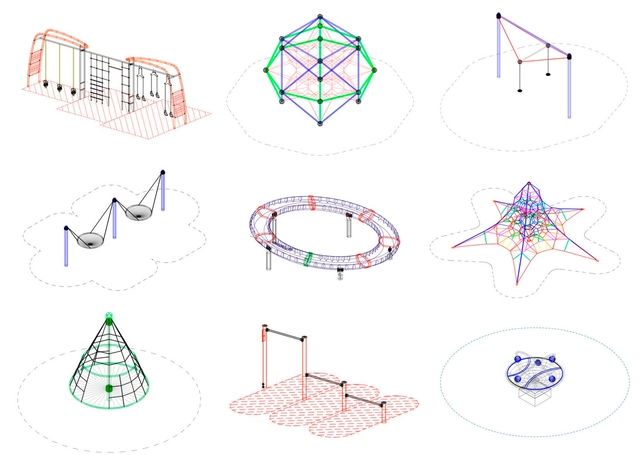
With the aim of supporting the design work of our readers, the company UrbanPlay has shared with us a series of files in .DWG format for different models of children's games, playgrounds, and equipment for public space. Files can be downloaded directly in this article and include 2D and 3D files.
Wall thickness, color, scale, solar dynamic, spaces built with a subtle metaphor immersed around the meaning of life, seem to be elements found throughout all of Luis Barragán's architecture. Elements of an enduring legacy, away from the ephemeral world of fashion, textiles and haute couture; however, it’s the search for the heightening of the senses, present in the architecture of Barragán, that inspired designers to put the name of the architect on catwalks and the world of apparel.
Transcending his architecture to a particular line of design, major names in the clothing industry have used the mystical language of Barragán. A language in which fashion manages to live a furtive beauty in geometry, color, texture, but especially a totally emotional search.
Check out 10 labels whose collections have been partially inspired by Barragán's work and ideas .
Stories have a way of clinging to places, charging buildings and spaces with an effect only perceptible to those who know what they once staged. Film is the most visual storytelling medium, and their environments often play memorable and vital roles in creating the movie's character and identity. The popularity of film tourism is testament to this phenomena. While the bulk of film tourism stems from blockbuster movies and their exposure and celebrity, the blog Filmap takes a more humble approach in highlighting the stories of everyday places.
For the past three years, the blog has laboriously tracked the locations of hundreds of movie scenes using Google Streetview, pairing stripped-back street views right next to their cinematographic counterparts. The resulting contrast elevates the everyday while also grounding fiction to our very streets, a reminder of the built environment’s role as a vessel of imagination.
A selection of Filmap’s posts are shared below – how many movies can you recognize from their real-life settings alone?
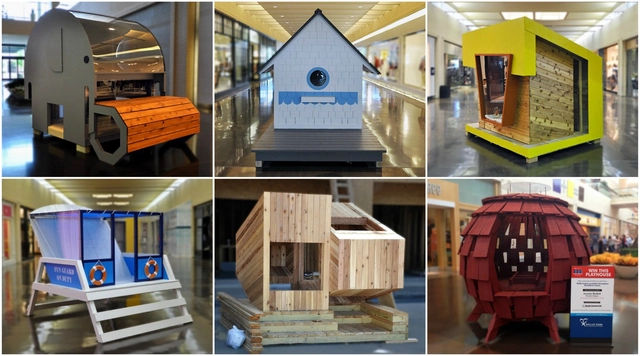
Have you ever thought of designing a house that is 8-foot cubed? It's unlikely, unless you've been involved in Dallas CASA’s event “Parade of Playhouses.” For 25 years, the association has asked architects, designers and builders to conceive, construct, and donate playhouses to raise funds for abused and neglected children. Each year, the playhouses are displayed in Northpark Mall – Dallas’ main “cultural centre” – where people can buy $5 raffle tickets to win one of the playhouses exhibited.
Architect Bob Borson conceived his first two playhouses for Dallas CASA in 2009, before starting his popular blog Life of an Architect and subsequently launching “The Life of An Architect Design Competition.” The idea came in 2010 when a great number of architects suffered from the economic crisis. As Borson explains: “I could have a playhouse design competition open to other architects so that they could remain connected to the architectural profession.” This also required Borson to raise money and find builders to construct the designs. “I have always covered all the expenses so that the competition would remain free to enter – the playhouses were for charity and it seemed like the right thing to do,” reflected Borson.
LYCS Architecture has released designs for Hangzhou NO.2 School of Future Sci-Tech City, a kindergarten, primary and secondary school complex in Hangzhou, Zhejiang, China. Encompassing 44,900 square meters, the design takes inspiration from a child’s drawing of his ideal school – a small town filled with child-scaled spaces and “happy” streets. The complex is broken up into 15 gabled volumes, which gradually increase in size and scale to accommodate the range of student ages.
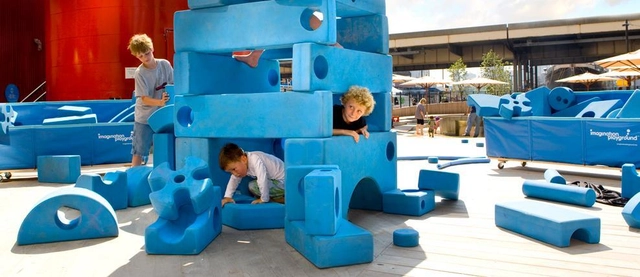
Image: Imagination Playground, New York, the Rockwell Group. Photo credit: Chris Amaral.
Kick start your playful summer with a panel discussion about the impact of design on childhood development! Inspired by BSA Space’s new exhibition, Extraordinary Playscapes, an array of unique panelists will consider ways to prevent barriers of play in urban areas. The conversation will delve into how play is related to design, psychology, parenting, architecture, and development while highlighting the role of designers in a more playful future. After the talk, participants will enjoy light refreshments and exclusive access to the exhibition.
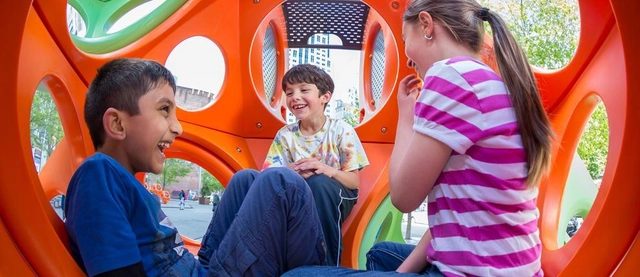
Join Michael Laris and Missy Benson ASLA of Playworld as they explore the design processes of two very different urban play solutions: PlayCubes (originally designed by Richard Dattner FAIA in 1969) and PlayForm7, both featured as part of Extraordinary Playscapes, currently on view at BSA Space.
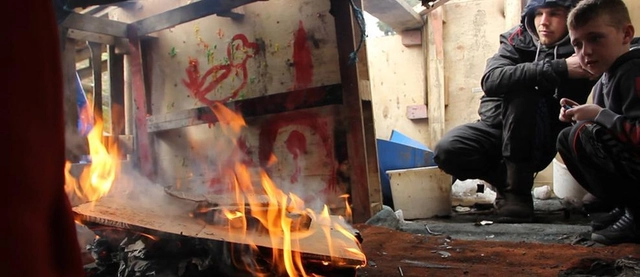
Featured in Extraordinary Playscapes, the summer exhibition at BSA Space, The Plas Madoc Adventure Playground in Northern Wales is one of the world’s newest adventure playgrounds. Fondly known as "The Land," it employs some of the play movement’s oldest "junk" philosophies.This new documentary explores a place where old tires and dumpster detritus take the place of swing sets and slides, and is “a must-see for anyone interested in play work, or play, period.” (Amy Fusselman, "Savage Park”)
The Dutch Structuralist architect Aldo van Eyck left his mark in Amsterdam – not only in the form of buildings but also, perhaps surprisingly, in the form of urban playgrounds. Over the course of his career he created a network of more than 700 playgrounds throughout the capital. Today, only a handful of these remain intact. A special publication, compiled by Denisa Kollarova and Anna van Lingen, revisits the seventeen remaining Van Eyck playgrounds in Amsterdam’s city centre. The following extract from the book seeks to introduce the project, and describe its urgency.
We live in an era in which there are not many carefully constructed playgrounds. We don’t like what we see. Have we—city decision makers, architects, designers, parents, friends —forgotten to be critical?
As an architect, no matter how much support you have got, you always feel you are fighting by yourself. – Zhang Ke
The recent turning point experienced by the Chinese economy will probably be treated in future studies as the sign of a new coming era in China. The slowest growth rate in 25 years has already caused profound echoes in the architectural field. As one of the three Chinese participants in the central exhibition, “Reporting from the Front,” at the 2016 Venice Architecture Biennale, in this interview architect Zhang Ke discusses his insight into the architectural front line in China, reflecting on architects’ social responsibilities and his vision of tomorrow’s Chinese architecture.
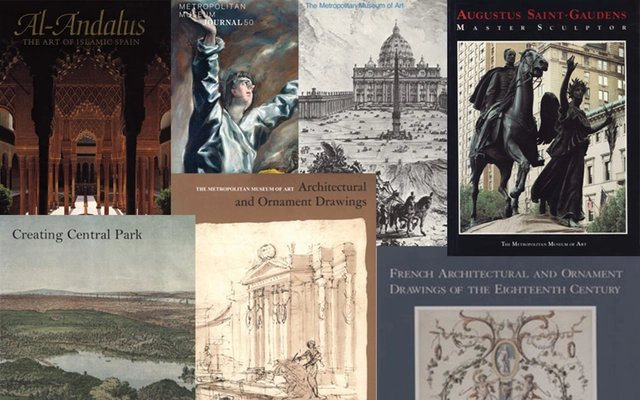
MetPublications is a portal to The Met’s online publishing program, containing more than 1,500 books and other publications from the museum from the last fifty years. It includes descriptions for most titles as well as information on the author, publication reviews, and links to other similar titles.
The contents of many publications can be viewed online or downloaded in a PDF format. Readers can also search for works of art from The Met’s past collections. New titles are frequently added, expanding the online catalog.
Check out some of the architecture-related publications below and find more at the MetPublications Portal, here.
Image: The Pulse Park, Denmark, CEBRA. Photo by Mikkel Frost.
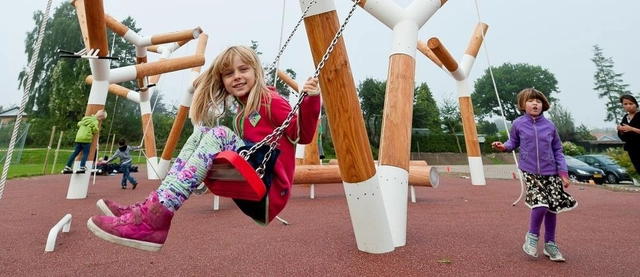
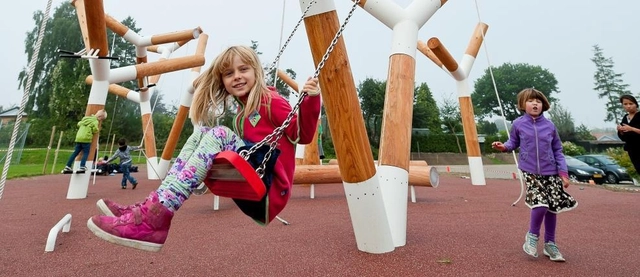
Playgrounds are spaces where children and adults can have fun together. They also play an important role in the development of social and problem-solving skills. Explore the way playground design can improve the quality of life for children and families through a tour of the exhibition Extraordinary Playscapes and then design and build the perfect playscape for your neighborhood.
This program is in partnership with Design Museum Boston.
Image: The Pulse Park, Denmark, CEBRA. Photo by Mikkel Frost .
By examining the history and science of play—including 40 notable examples of playground design by international leading experts—this exhibition will explore how designers translate play objectives into innovative environments. Curated by Design Museum Boston, the exhibition highlights include public programs with playscape design experts, workshops for adults and children, and a Playground Passport that will promote play spaces in the neighborhoods of Boston.
Plan Selva (Jungle Plan) -- a project to build modular schools in Amazonian villages -- was selected as the focal point of the Peruvian pavilion at the 2016 Venice Biennale. In light of this, we take a look at the work of two other organizations that have been carrying out major projects in the country's largest natural region: ConstruyeIdentidad, which creates innovative projects using traditional materials and techniques and an exchange of ideas between students, professionals and the community; and Semillas, an organization that designs educational spaces used as areas of communication between indigenous communities, promoting the development of these relationships and exchanges through participatory processes.
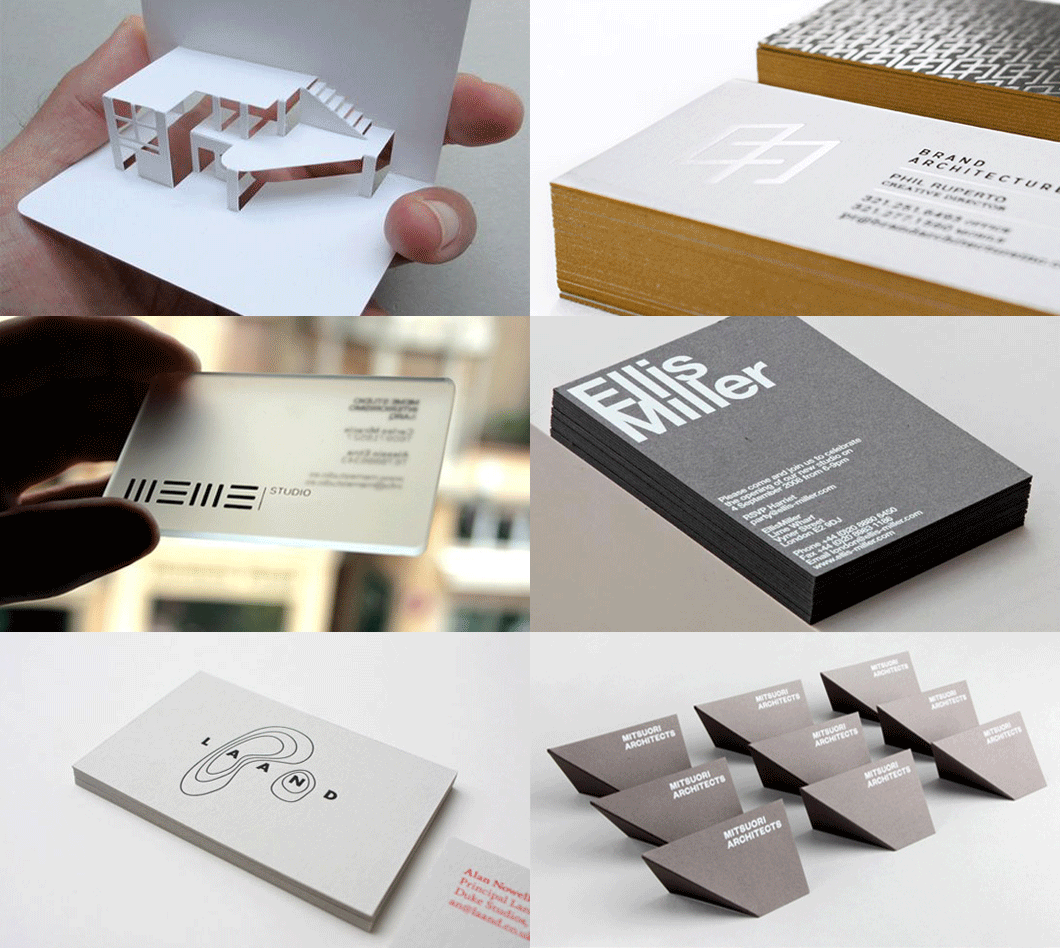
Establishing professional contacts in architecture – and well, in any field, really – has changed dramatically in the last decade, passing from the paper world to the virtual realm. However, small details can still make a big difference when it comes to captivating a potential new client or establishing a new partnership -- and these details aren’t unique to the virtual world.
Among these smaller, but powerful, details is the business card. Timeless and effective, the impact that a business card can have when meeting someone new cannot be overlooked. While simple, monochrome cards with muted prints are well liked among architects, exploring new forms, unusual materials and bold colors can result in a unique card that will leave a lasting impression on the person who receives it.
Below we’ve compiled some examples of cards that can serve as inspiration for architects, engineers, designers, landscapers and urbanists:
Gregory Kloehn, an artist, construction contractor, and plumber based in Oakland, California, has created miniature homes for the homeless in his community. Inspired by a book he compiled of pictures of the structures that homeless people had constructed on the streets, Kloehn used his creative skills to build them miniature homes. He told NationSwell, “I really just ripped a page out of the homeless peoples’ book, their own game plan.” His first completed home was given to a couple he had become friendly with while photographing for his book. The home came complete with a bottle of champagne to celebrate.
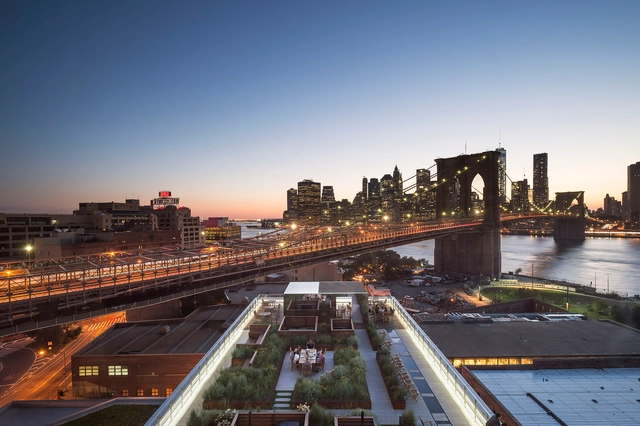
James Corner Field Operations has completed a nearly 6,000 square foot rooftop garden located in the heart of the DUMBO neighborhood in Brooklyn. The garden is located on top of a seventeen-story apartment complex designed by Leeser Architecture and developed by Two Trees Management. The Dock Street Rooftop Terrace allows residents to view the panoramic scenery of the Brooklyn Bridge, Manhattan Bridge, East River, and Manhattan Skyline.






.gif?1470677526)







.jpg?1462728830 "Micro-Hutong. Image © Zhang Mingming")
.jpg?1462728774 "Micro-Hutong. Image © Shengliang Su")