With ever-expanding traveling exhibitions attracting over 35,000 yearly visitors from around the globe, the Aspen Art Museum (AAM) has outgrown their cozy 9,000 square foot facility in which they have called home since their established in 1979. Japanese architect Shigeru Ban has been commissioned to design the new museum, being the first museum he has constructed in the U.S. The project is set for completion in August 2014. Continue reading for more information.
London-based United Visual Artists (UVA) has brought Sou Fujimoto’s “cloud-like” Serpentine Pavilion to life with an “electrical storm” of LEDs. With the intention of making the architecture “breathe” from within, UVA seamlessly integrated a network of LED lights into the latticed, 20mm steel pole structure that mimics the natural forms of an electric storm. In addition, carefully conducted auditory effects further enhance the experience, transforming Fujimoto’s “radical pavilion” into an electrified geometric cloud.
Videos
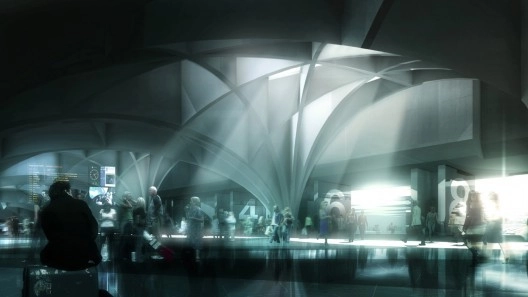
Oslo Central Station. Architecture: Space Group, www.spacegroup.no. Credit: Luxigon, www.luxigon.com.
In recent years the use of CAD and simulation programs has resulted in a new understanding of light in architecture. The drawing board and its lamp have given way to the self-illuminating monitor. The result is that concepts in architecture are now made of light from the very first mouse click. In the visualisation process, luminous space now predominates.
However, this begs the question: has the luminous impression (part and parcel of the perfect, rendered setting) become more important than the engineering or architectural concept itself? With the improved interplay of shades, contrast, and brilliance, can lighting actually obscure the point of a realistic simulation?
Portland State University’s School of Architecture has announced the launch of its new Center for Public Interest Design, a research center that aims to investigate and utilize the power of design to make social, economic and environmental change in disadvantaged communities worldwide. The Center is the first of its kind in the nation.
Daniel Libeskind has been selected among two other renowned artists to design the Ohio Statehouse Holocaust Memorial in Columbus. The 18-foot tall memorial brushed stainless-steel memorial will be punctuated by the six-pointed Star of David and accompanied by a 40-foot walkway with words etched in limestone.
According to Business Insider and a number of other real estate development outlets, the "Dream Hub" project in Seoul Korea that drew designs from internationally renowned architects including Daniel Libeskind -designer of the master plan - MVRDV, Dominique Perrault, BIG, REX, KPF and Tange Associates is on the verge of collapse. The Yongsan Development Corporation reportedly defaulted on a major loan repayment, citing difficulties in raising funds due to the real estate slump since the 2008 global financial crisis. The collapse of the project is still speculative, as it is unclear how the next round of loans that are to mature in June will fare.
The $28 billion real estate "Dream Hub" project was to develop 56-acres in central Seoul into a modern business hub. In its planning it included shopping malls, hotels, department store, apartment blocks, and mixed-use office towers. Follow us after the break for a recap of the projects that were planned for this development.
Light matters, a monthly column on light and space, is written by Thomas Schielke. Based in Germany, he is fascinated by architectural lighting, has published numerous articles and co-authored the book „Light Perspectives“.
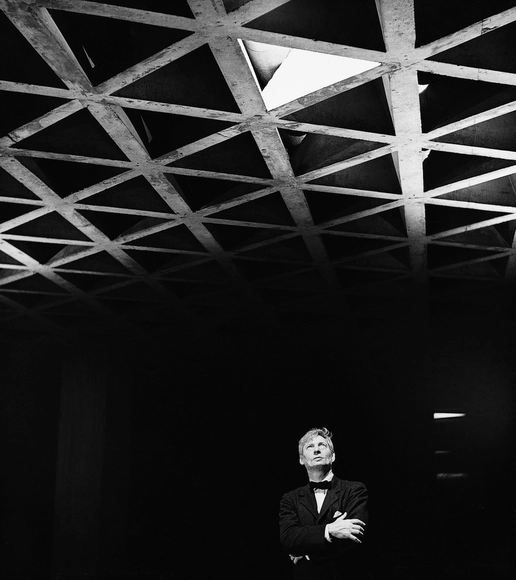
Does shadow have the power to give form to architecture? The increasing number of transparent buildings and LED installations would enforce the impression that light has eliminated the relevance of shadow. But to answer that question, let’s look back to a master of light whose architecture was shaped by shadow: Louis Kahn.
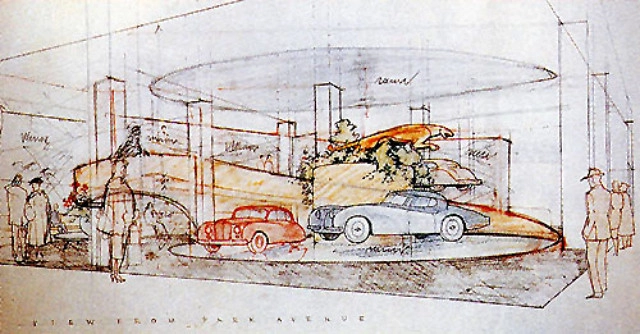
Frank Lloyd Wright’s drawing for the Hoffman Show Room (courtesy the Frank Lloyd Wright Foundation) via Hyperallergic.com
In late March, one of the few Frank Lloyd Wright designs in New York City was demolished quietly at 430 Park Avenue. This seldom-noticed interior retail space was home to the Hoffman Auto Showroom for over five decades and just as it was considered for preservation by the Landmark Preservation Commission, the owners of the building applied for its demolition. For many people, this may seem like an act of corporate greed or "corporate vandalism" and it may be so, but the landmark designation for interior spaces applies strictly to public space only according to NYC's landmark laws.
So was this space ever anything more than private property? And aside from having been designed by one of America's most famous architects, did the design have "special historical, architectural or cultural significance"?
We have already written about the dauntingly high rates of unemployment that are awaiting architecture-degree graduates in the profession these days. But a recent survey conducted by the AIA/NCARB Internship and Career Survey reveals an optimistic view of job growth and job placement in the two years since the "intense economic contraction" of 2010. The AIA writes, "emerging professionals have begun experiencing a rebound, with higher employment levels, more young designers getting licensed, and any remaining unemployment becoming, in most cases, mercifully short".
Throughout history, people have spent a great deal of time pondering what the future holds. Scientific discovery, technological innovation - along with rebellious androids, zombies, flying cars, hover crafts, visiting aliens - have been consistently used as stereotypes that emerge in predictions for our imagined future. And while Hollywood was busy exploring dystopian scenarios of this near-future, architects were composing utopian images of an optimistic vision for cities. Architects have built careers upon predicting what cities can potentially become - developing forms, functions, plans and visions of possibilities in the social, political, economic and cultural realms through architecture. In 1962, Mayor Robert Wagner of NYC predicted a culturally diverse, economically viable, global city for New York in 2012. In 1988, Los Angeles Times Magazine gave its 25-year forecast for Los Angeles in 2013, predicting what a life for a family would be like, filled with robots, electric cars, smart houses and an abundance of video-conferencing. Find out how their predictions fared after the break.
The Dwight D. Eisenhower Memorial saga continues, as Rep. Rob Bishop (R-Utah) proposed legislation that would forego Frank Gehry’s controversial design and eliminate federal funding. Although Bishop’s radical bill would save $100 million in future funding, it ignores any possibility of compromise.
After reviewing hundreds of projects submitted by New York City-based architects and firms, a jury of twelve eminent architects, landscape architects, educators, critics, and planners convened by the Center for Architecture in New York has selected 42 thoughtfully considered projects for the 2013 AIANY Chapter’s Design Awards. From small installations to large-scale projects, each awarded submission spanned a breadth of innovative ideas in a large variety of design solutions for projects throughout the world.
Winning projects received either a “honor” or “merit” award in four different categories: architecture, interiors, projects and urban planning. All will be on view at a Center for Architecture exhibition designed by Kokoro & Moi, from April 18th through May 31st.
Join us after for the complete list of winning projects.
Despite NYC's recent bout with nature, Mayor Bloomberg is undeterred from developing housing along NYC's long stretch of waterfront, taking into account that proper measures are taken for storm and flooding mitigation. The latest in large scale developments comes to Hunter's Point South in the neighborhood of Long Island City in Queens. The first of such a scale since the 1970s development of Co-Op City in the Bronx, plans will include two phases of design and construction. The first phase, designed by SHoP Architects with Ismael Leyva Architects will bring two residential towers with 925 permanently affordable apartments, 17,000 square feet of retail space, infrastructural installations, a five-acre waterfront park, and a 1,100-seat school.
Join us after the break for more on this large scale development in Long Island City.
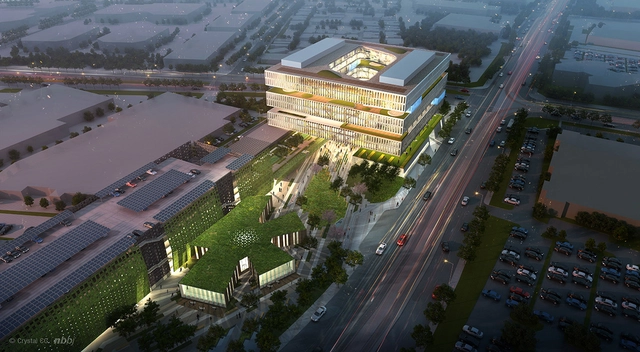
NBBJ's design for the new Samsung Headquarters in Silicon Valley will become one of the new buildings to relieve the the city of its dull, nondescript two-story office architecture that dominates the landscape and introduce a new culture of office environments with a little push from the architecture itself. According to the LA Times by Chris O'Brien this architectural endeavor is just one move to establish ground in the rivalry between Samsung and Apple, whose highly anticipated spaceship-like Foster + Partners-designed Cupertino Campus has made waves in the design community. Technologically innovative and influential companies like Samsung, Apple, Google, Facebook, and Nvidia have engaged in a cultural shift of the work environment to create a hospitable and creative community for its employees. The architecture of the campuses and offices introduced by each of these companies reflect the goals of an innovative business model that engages its employees in an innovative work environment that fosters collaboration and creativity.
See how the new Samsung Headquarters innovates office building design after the break.
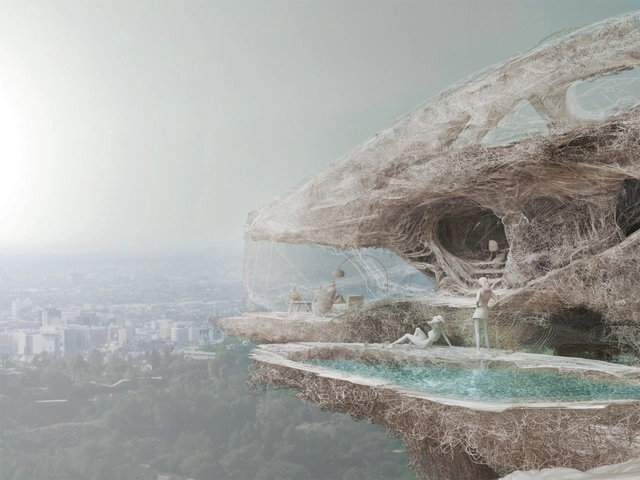
3-D printing technology has made immense leaps in the last few years as equipment and specialized programming has been refined to produced fully occupiable and usable spaces. In previous articles, ArchDaily has discussed the numerous advances in 3-D printing technology and their potential applications. 3d-printed dwellings on the moon made of sand via D-Shape, full-scale rooms via the KamerMaker and a personal printer for your kids called the MakerBot are just some speculative and experimental prototypes that have emerged from extensive research and development. The designers of the next experiment in 3-D printing is design group, Softkill Design, which includes Nicholette Chan, Gilles Retsin, Aaron Silver, and Sophia Tang within the Architectural Association School's Design Research Lab at the 'behavioral matter' studio of Robert Stuart-Smith. Last year Softkill Design completed ProtoHouse 1.0, a high-resolution prototype of a house printed at 1:33 scale. Research prototypes were generously supported by Materialise.
More details on the technology and images of ProtoHouse1.0 after the break.
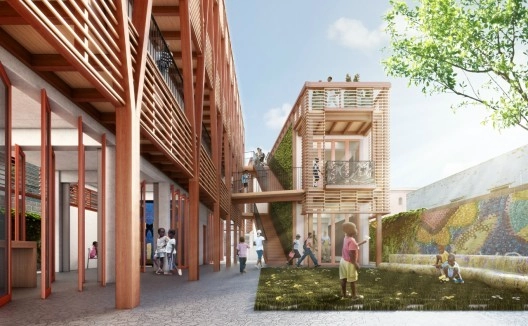
Haiti Orphanage and Children's Center HOK and USHBC Partners
The AIA has appointed green-building leader Mary Ann Lazarus, FAIA, to a consulting position as a Resident Fellow. In this position, Lazarus will help guide and influence a program heavily based in sustainability and health as the AIA implements its ten-year pledge to the Decade of Design: Global Urban Solutions Challenge, a Clinton Global Initiative Commitment to Action. The purpose of the commitment is to document, envision and implement solutions that leverage the design of urban environments through research, community participation, and design frameworks. It is a commitment based in the interest of public health with special attention to the use of natural, economic, and human resources.
More about Mary Ann Lazarus's work and future at the AIA after the break.