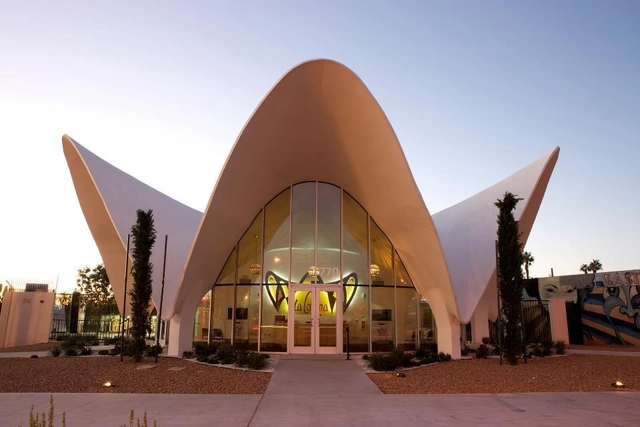
Kimberly Dowdell, 2019-2020 NOMA National President, recently issued a statement on behalf of the National Organization of Minority Architects on the nature of NOMA's advocacy and mission. Her words follow protests seeking justice for the killing of Minneapolis resident George Floyd in the United States.
My decision to study architecture was a naive one, made after having taken several vocational tests I found on Google. When I found out it was one of the toughest courses in Brazilian public universities, I thought about giving up. But I was already hooked by the history of architecture and its social role.
However, nothing is perfect. Architecture and Urban Planning is one of the most elite courses in the most renowned Brazilian universities, something that is reflected outside of the classroom as well. The architects went on to serve the rich, casting aside the needs of the cities and the poor.
Mabel O. Wilson, Bryony Roberts, and the Marching Cobras of New York, Marching On, 2017–18. Commissioned by Storefront for Art and Architecture, exhibition at Storefront for Art and Architecture, supported by the National Endowment for the Arts, the Graham Foundation, and the LMCC. Photo: Jenica Heintzelman.
“The center of architecture is shifting and cannot hold,” writes guest editor Bryony Roberts in Log 48: Expanding Modes of Practice. This moment of change, in which issues of inequity and intersectionality are coming to the fore, represents “an invitation to think differently, a chance to reask the questions that haunted the 20th century.” To that end, Roberts conducted a series of interviews with experimental architects exploring new forms of practice, including this conversation with Mabel O. Wilson.
Mabel O. Wilson is a scholar and designer who has become a leading voice in discussions on space, politics, and memory in black America. She is the Nancy and George Rupp Professor of Architecture at Columbia University, as well as a professor in African American and African Diasporic Studies and the associate director of the Institute for Research in African American Studies. Her books include Begin with the Past: Building the National Museum of African American History and Culture and Negro Building: Black Americans in the World of Fairs and Museums. Her interdisciplinary practice Studio & is part of the architectural team that designed the Memorial to Enslaved African American Laborers at the University of Virginia. She is also a founding member of Who Builds Your Architecture? (WBYA), a collective that advocates for fair labor practices on building sites worldwide. We talked at an outdoor cafe near Columbia on one of the last warm days in fall 2019.
https://www.archdaily.com/940496/radical-repair-log-48-in-conversation-with-mabel-o-wilsonBryony Roberts
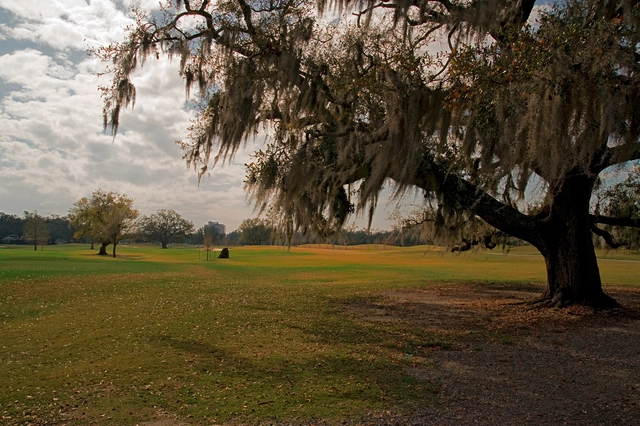
Audubon Park golf course, where Joseph Bartholomew first caddied. Image via Shutterstock
In 1979, the Pontchartrain Park golf course was renamed the Joseph M. Bartholomew, Sr. Municipal Golf Course by the City of New Orleans. While perhaps not the ‘catchiest’ of title changes, the event was a posthumous chapter in the legacy of one of the most celebrated golf course architects of his time. Joseph Bartholomew (1888-1971) began life as an African-American in racially-segregated Louisiana only 23 years after the end of the American Civil War; fought in large part over the legality of African American slavery. But his life, chronicled in the latest New York Times’ Overlooked series, would see him reach the pinnacles of golf course architecture, and design nationally-celebrated landscapes that Bartholomew, because of his race, was himself not allowed to play on.
https://www.archdaily.com/933703/once-racially-discriminated-from-his-own-architecture-joseph-bartholomew-is-overlooked-no-moreNiall Patrick Walsh
New Standards curatorial team Kristo Vesikansa (left), Laura Berger and Philip Tidwell in front of a Puutalo house in the Jollas district of Helsinki. Photo Juuso Westerlund. Image Courtesy of Archinfo Finland
Archinfo Finland has announced the theme and curatorial team for the Pavilion of Finland at the 17th International Architecture Exhibition of the 2020 Venice Biennale. Entitled New Standards, the exhibition conceived by Laura Berger, Philip Tidwell, and Kristo Vesikansa will explore Finland’s timber industry.
For years, there has been a lack of diversity in the field of architecture. Whether attrition numbers have been due to the lack of available information about promotion paths, firm hiring practices, or architects seeking out new career opportunities, this profession is one that has historically been stagnant in its representation. However, there is good news on this subject, as the National Council of Architecture Registration Boards (NCARB) revealed new data which shows that the profession is becoming more diverse and that the proportion of women staying in their careers is increasing.
According to NCARB's recently published By The Numbers report,although equity and diversity in the profession have been improving in recent years, data shows that attrition along the path to licensure remains much higher for non-white individuals. “NCARB has spent the past several years updating and aligning our programs to remove unnecessary burdens while maintaining the rigor needed to protect the public,” said NCARB CEO Michael Armstrong. “A key area for us to address is identifying how pinch points along the path to licensure may vary for candidates from different backgrounds.”
In this third episode of GSAPP Conversations, Columbia GSAPP Associate Professor Mabel O. Wilson speaks with Sharon Sutton about the publication of her new book, When Ivory Towers Were Black, which tells the story of how an unparalleled cohort of ethnic minority students earned degrees from Columbia University’s School of Architecture (GSAPP) during a time of fierce struggles to open the ivory tower to ethnic minority students.
La Concha Motel, Las Vegas, 1961. Image Courtesy of The AIA
Yesterday, the American Institute of Architects (AIA) announced that they had awarded the 2017 Gold Medal to Paul Revere Williams. Despite the manic production rate of his five-decade-long career, those not familiar with the architecture of Hollywood’s early years might be forgiven for not recognizing Williams’ name. But he is notable for having designed around 3,000 buildings, for being “the architect to the stars” including, among many others, Frank Sinatra... and for being the first black member of the AIA.





ArchinfoFinland.jpg?1576139638&format=webp&width=640&height=580)
ELKA.jpg?1576139754 "Workmen carry a frame panel for a Puutalo house in northern Colombia where some 1,500 houses were constructed from 1955 to 1957 as dwellings for workers. These Puutalo homes can still be found throughout the Simón Bolívar neighborhood of Barranquilla today. Photo from 1956.. Image © ELKA")
ELKA.jpg?1576139683 "Stacks of pre-cut material stand ready and waiting for assembly in northern Colombia in 1956. Some 1,500 houses were constructed in the town of Barranquilla from 1955 to 1957 as dwellings for workers. These Puutalo homes can still be found throughout the Simón Bolívar neighborhood today.. Image © ELKA")
ELKA.jpg?1576140648 "A Puutalo house in Australia sits among a group of tall palm trees in the early 1950s.. Image © ELKA")
ELKA.jpg?1576139623 "A draughtsman finishes work on a sheet of drawings in the early 1950s at the Helsinki office of the Puutalo company.. Image © ELKA")
ArchinfoFinland.jpg?1576139638)

.jpg?1529938742)