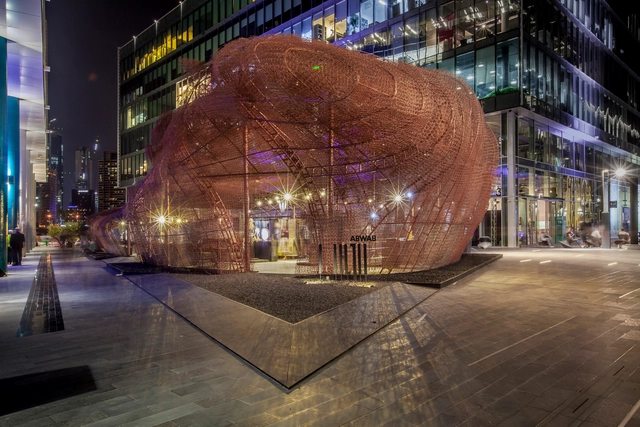
Recycling has long been an entry point into sustainable design. It's personal, achieved at a micro scale where individuals can reduce waste and preserve energy. But between resource shortages, environmental habitat loss and the global climate crisis, there has been a shift in daily practices towards more circular thinking. Increasingly, the need to sustain life is part of a continuous process of production, resorption, and recycling where waste becomes the input for production.
Repurposing a building is not a simple task. Not only does it require keen sensitivity to identify and acknowledge the historical value of pre-existing elements – thereby deciding what will endure over time and what will be replaced by new features, consistent with the current program – but it is also a strategy that pushes the boundaries of design and embraces issues such as sustainability and resource efficiency. After all, we are speaking of recycling a structure, or parts of it, and this impacts both design and the environment.
https://www.archdaily.com/943419/recycling-buildings-10-adaptive-reuse-projects-in-portugalEquipe ArchDaily Brasil
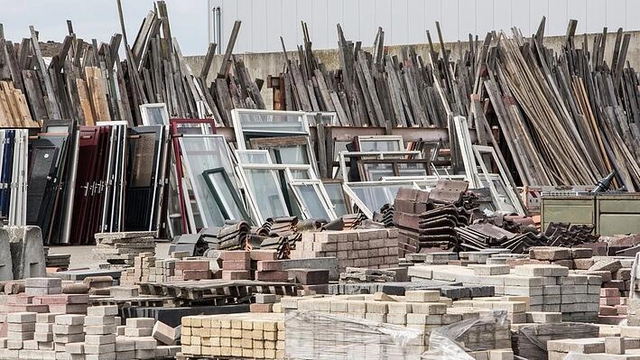
Stockyard of recycled building materials waiting for reuse . Image Courtesy of NY Engineers
“Out with the old and in with the new,”....or so they say. In the United States, a cloud of dust and debris paired with a wrecking ball and bulldozer tends to represent signs of forward progress, innovation, economic activity, and the hope for a better future through architectural design.
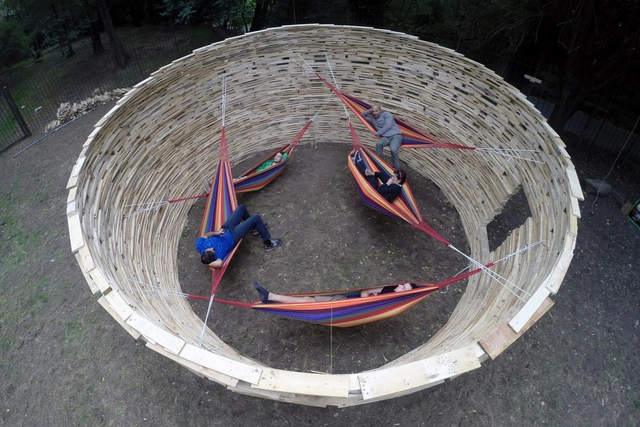
Commonly used as storage support for products in supermarket stocks and fairs, pallets are versatile. After their primary function has been discarded, the reuse of pallets for other purposes is increasingly common, collaborating to the reduction of the amount of waste discarded, especially as raw material for the creation of furniture and decks. However, going beyond the commonly highlighted DIY furniture tutorials on youtube, these structures are gaining ground as the main element in the construction of ephemeral architecture, such as small pavilions and urban installations. In fact, these small pieces can be stacked and united together in different ways and patterns.
When reflecting on recycling, sustainability, measures to take, and innovative technological solutions, one cannot help but think that there are also familiar approaches that should be taken into consideration. In fact, when examining the impact of the built environment on the climate, one notes that in many countries, 80% of the buildings that will exist in 2050 have already been built. The most effective form of sustainability may, therefore, be saving energy by eliminating or minimizing new constructions, and by avoiding the demolition of existing structures.
Recycled and reused materials continue to grow as a more attractive alternative in the construction field. They are at most times a coveted sustainable substitute to conventional building materials, offering a financially resourceful solution when appropriately sourced and implemented. Aside from saving up on raw material costs, establishing recycling facilities or factories might present a good opportunity to generate jobs within a local setting (collecting, handling). The recycling process might also be used as a gateway to lower energy consumption, with some plants eventually generating their own power through specific material transformation techniques (Heat generated power).
Some researchers define the Anthropocene as beginning at the Industrial Revolution. Others identify it with the explosion of the first nuclear bomb, and others with the advent of agriculture. Regarding the precise timeline, there is not yet a scientific consensus. But the notion that human activities have been generating changes with planetary repercussions, whether in the temperature of the Earth, in biomes, or in ecosystems, is one that has become increasingly popular. The anthropocene would be a new geological era marked by the impact of human action on planet Earth. This acknowledgement of human impact is particularly disturbing if we consider that if the entire history of the Earth were condensed in 24 hours, humans would only appear in the last 20 seconds. Whether in the massive extraction of natural resources or in the carbon release from vehicles and industries, it is well known that a large part of the fault lies with construction activities, especially in the production of solid waste due to waste and demolition. In Brazil, for example, civil construction waste can represent between 50% and 70% of the mass of solid urban waste [1]. Many will end up being discarded irregularly or thrown in landfills to be buried indefinitely.
Recycling and upcycling of materials and structures have become more and more popular in architecture as alternatives to the production of components in construction, typically associated with increased energy consumption and high levels of pollutants released into the atmosphere. The main difference between these two methods is that, while the former uses a certain amount of energy to process the material before it is reused, the latter does not require this process, but rather reuses it just as it was discarded.
The concept of Design for Disassembly (DfD for short) gained increasing traction in recent years, as it addresses the growing concern around the high consumption of resources and low recycling rate within the construction industry. The following article details on the method and features guidelines for a design process that facilitates the dismantlement of future buildings, with the scope of providing a better understanding of this principle within the broader framework of the current practice and circular economy.
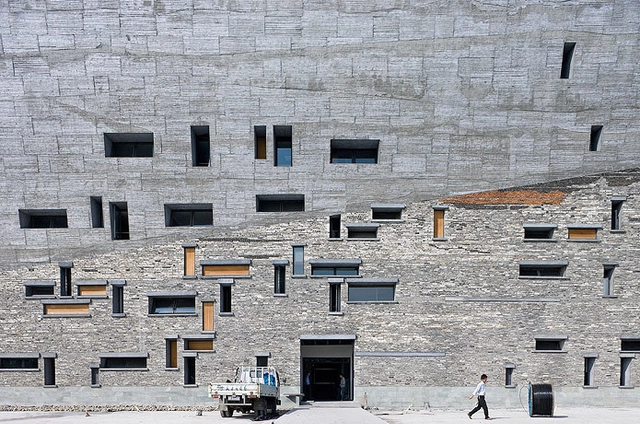
Amateur Architecture Studio, Ningbo History Museum, 2008. . Image Courtesy of Louisiana
Over the past two centuries, cities in China have multiplied and expanded on a large scale, under accelerated urbanization. Mass demolition of the old city fabric, occurring everywhere, is leaving industrial debris and fragmented cultural artifacts buried forever, under shiny new skyscrapers. As old Chinese cities are collapsing and new urban centers are outspreading, a part of the city was lost, the old demolished landscape. Wang Shu and Lu Wenyu, the first Chinese citizens to win the Pritzker Architecture Prize, responded to this past-present relation by working with recycled materials and traditional know-how. In the following, we explore some of this couple's renowned works such as Ningbo History Museum, Ningbo (2008), Xiangshan Campus of China Academy of Art, Hangzhou (2004), and Ningbo Contemporary Art Museum (2005), to examine his humanistic approach to the city.
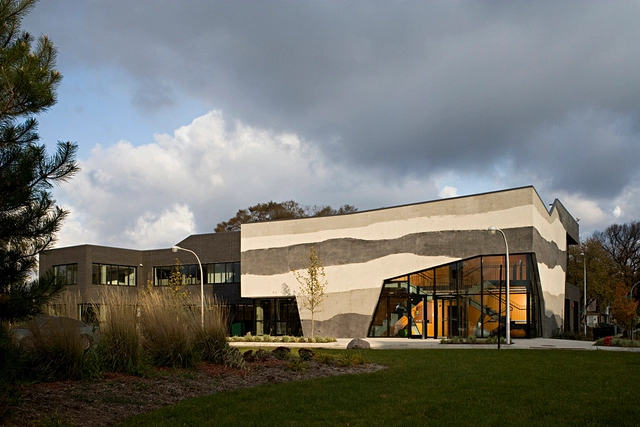
SOS Children’s Villages Lavezzorio Community Center / Studio Gang. Image Cortesia de Studio Gang
Having been utilized as early as the Roman era in buildings of almost every scale, it is almost impossible to think of a building that does not have at least one concrete element. In fact, it is the most widely used construction material in the world, due to its versatility, resistance, ease of handling, accessibility, aesthetics, and other factors. At the same time, its manufacture is also one of the main polluters in the atmosphere, mainly due to the fact that the cement industry emits around 8% of all global emissions of carbon dioxide (CO2).
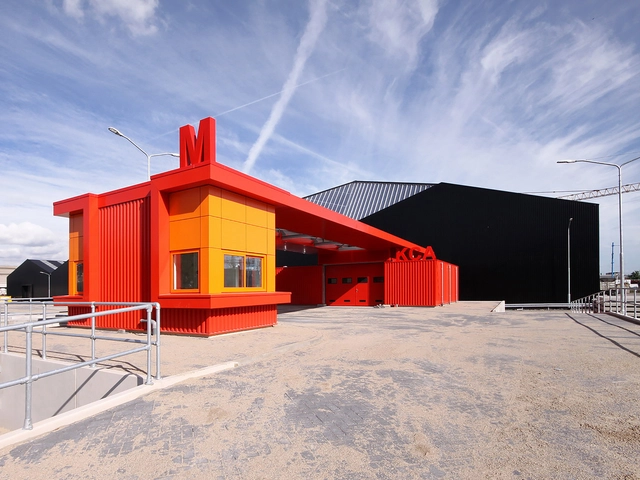
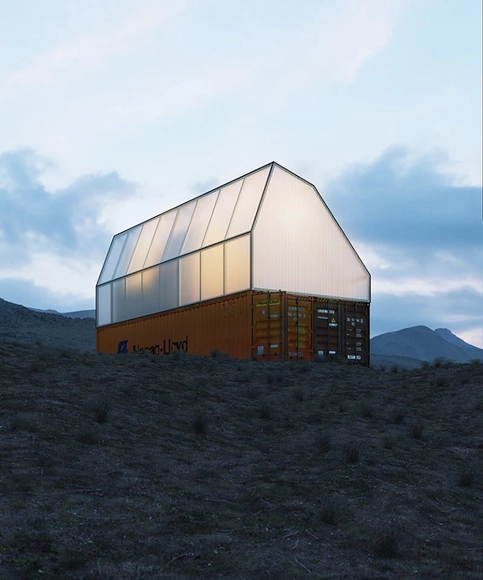
TRS Studio has unveiled their design for a social project in the Callao region of Peru. The single-family module is based on a cargo container, constructed with strong materials emitting a low cost, and low environmental impact. The project is founded on community participation, improving the quality of health and housing in the Pesquero II settlement through sustainable materials.
https://www.archdaily.com/917257/trs-studio-converts-shipping-container-into-single-family-moduleNiall Patrick Walsh
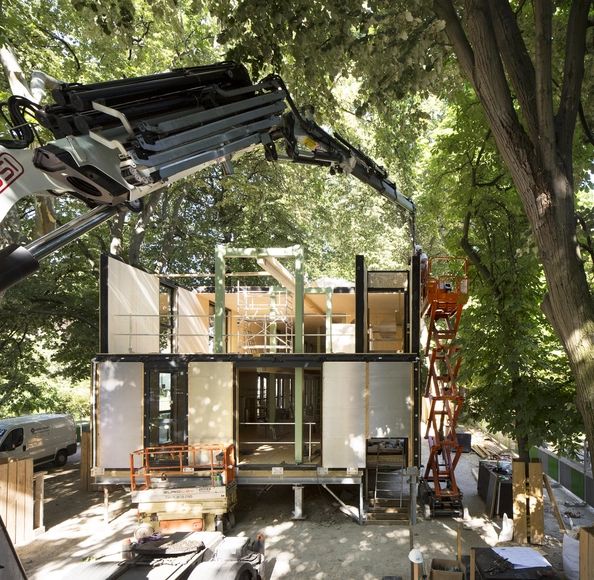
Brazilian startup SysHaus, in partnership with architect Arthur Casas, developed a project of sustainable, smart homes that are ready in half the time of other pre-fab works. The startup project, specializing in high-end real estate, is made only of pieces of recycled materials, such as aluminum and MDF. In addition, the house does not produce waste or wastewater.
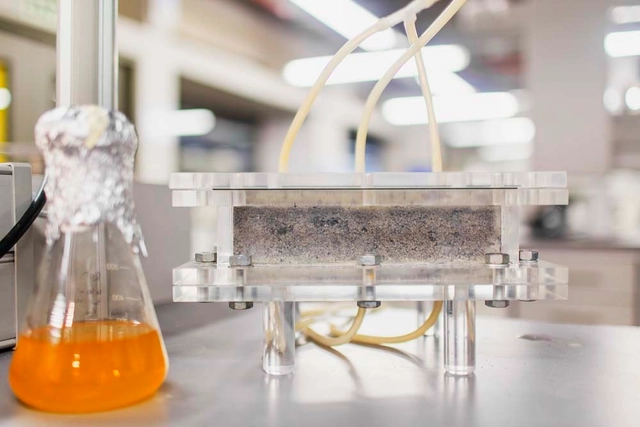
Some years ago, researchers in the United States previously tested the concept of using synthetic urine-based substances to fabricate building materials. However, new research conducted by Masters student Suzanne Lambert at the University of Cape Town, South Africa, puts forth a zero-waste process of producing urine-based bricks by using collected human urine for the first time.
When it comes to sustainability, the Netherlands has always been at the forefront. In recent news, Zwolle, one of the country's "greenest cities," implemented the world's first bicycle lane composed of post-consumer waste that would normally be discarded or incinerated.
Construction of house made of recycled plastic bricks.. Image Courtesy of Conceptos Plásticos
Ten years ago when Colombian Fernando Llanos tried to build his own house in Cundinamarca, he realized that moving the materials from Bogota was going to be very difficult. After mulling it over, he decided to build his house out of plastic, and after a series of trials and errors, he ended up meeting architect Óscar Méndez, who developed his thesis on the same subject, and together they founded the company Conceptos Plásticos (Plastic Concepts) in 2011.




.jpg?1537110386&format=webp&width=640&height=580)