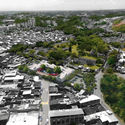
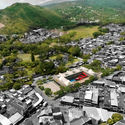
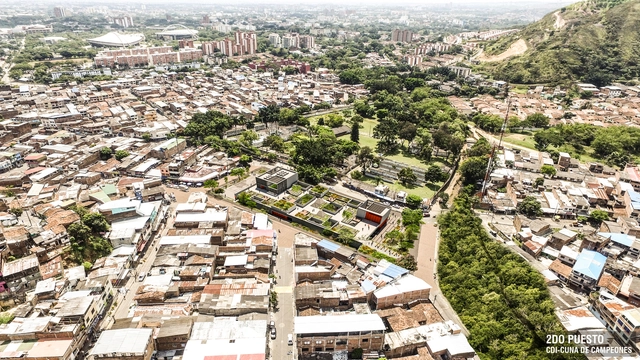
Vista aérea do Rio Cocó no Núcleo Esportivo. Image Cortesia de Base Urbana + COTA760
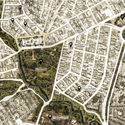
Text description provided by the architects. The following proposal was the winning entry in the National Ideas Competition for Cocó Park in Fortaleza, Ceará. Spanning 1,080 hectares of environmental conservation area cutting through the city, alongside 50 hectares of project area, it is the fourth largest urban park in Brazil. Consequently, it carries the responsibility of promoting the preservation and regeneration of an important mangrove forest, while serving the public as urban infrastructure for socio-cultural, economic, and environmental initiatives. The design proposes comprehensive solutions to integrate the 17 intervention areas requested in the competition with the rest of the conservation zone and its relationship with the surrounding city, fostering a symbiosis between park use and environmental preservation.
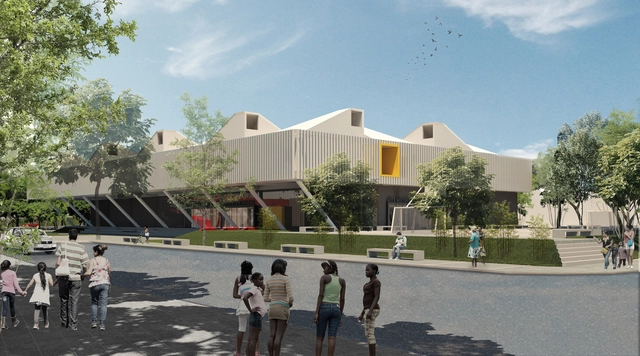
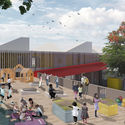
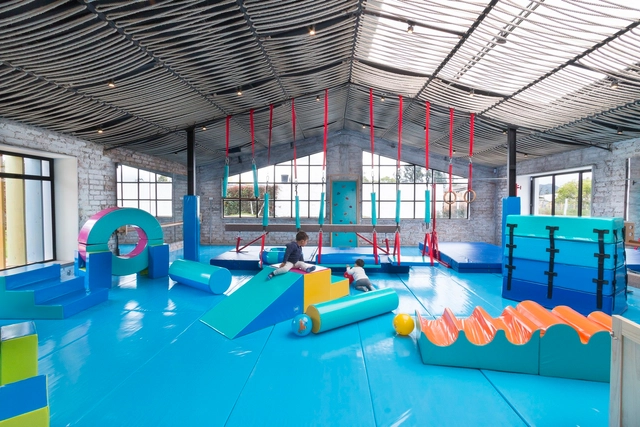
"This project is an opportunity to showcase education as a constructive act," states the winning team regarding the CDI, whose program will focus on physical activity to contribute to psychosocial development, while also integrating values and life skills, prioritizing the promotion of holistic development, collaborative work, and creativity.
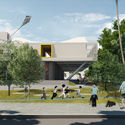
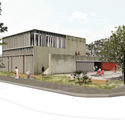
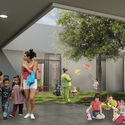
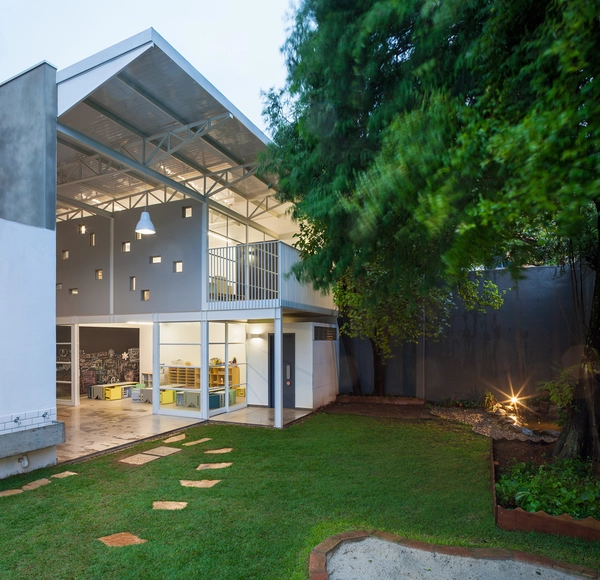
The CDI will focus on physical activity to foster psychosocial development, alongside the instillation of values and life skills, prioritizing the promotion of holistic development, collaborative work, and creativity. All of these elements are made visible through the center's architectural design, which features infrastructure tailored to continuously encourage play, exploration, and skill-building—critical aspects of early childhood that will allow children to explore their potential to become great athletes.
Organized by the Colegio de Arquitectos de Mendoza, the competition sought proposals to transform the city's former Zoological Park into an Ecopark. The objective was to reflect the paradigm shift in our relationship with animals, flora, and the environment at large, while also respecting the historic heritage of the site, both in terms of its immediate context and the elements that have shaped its built landscape over time.
The jury awarded first prize to Guillermo Lesch, Leticia Alfaro, and Santiago Belozerkovski, alongside collaborators Axel Tanner, Camila Erbin, and Pablo Vilas. Read on to explore the complete project below.





.jpg?1522295973&format=webp&width=640&height=580)
.jpg?1522290875 "© Nico Saieh")
.jpg?1522295504 "© Nico Saieh")
.jpg?1522289294 "© Nico Saieh")
.jpg?1522295536 "© Nico Saieh")
.jpg?1522295973)

































.jpg?1543460192)
.jpg?1543460363)
.jpg?1543460327)
.jpg?1543460253)
.jpg?1543460277)