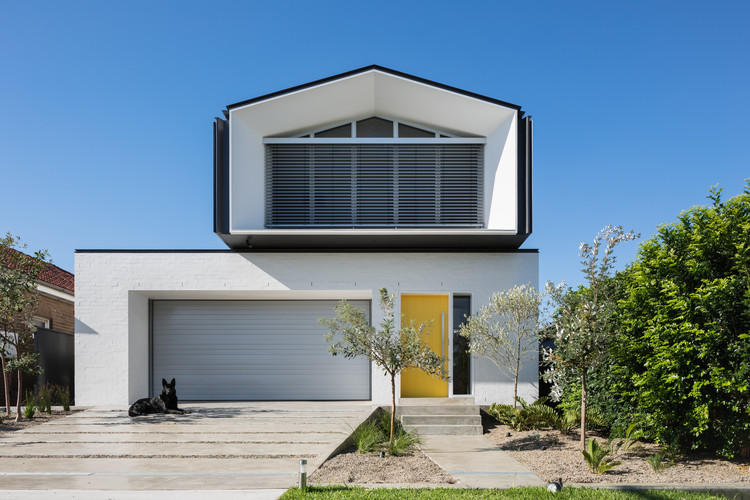
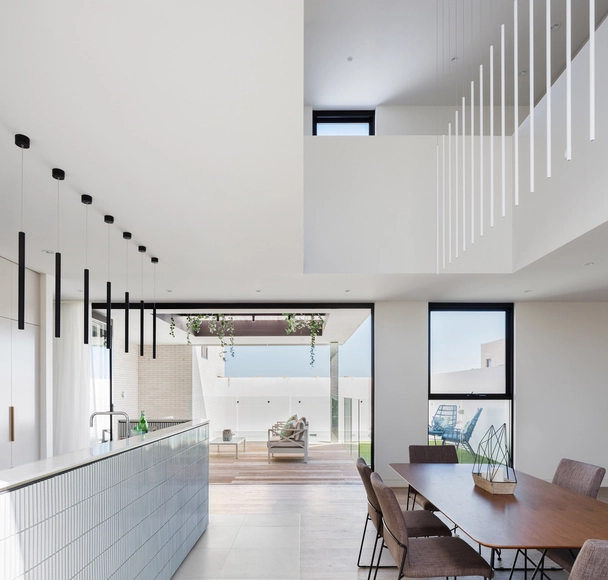
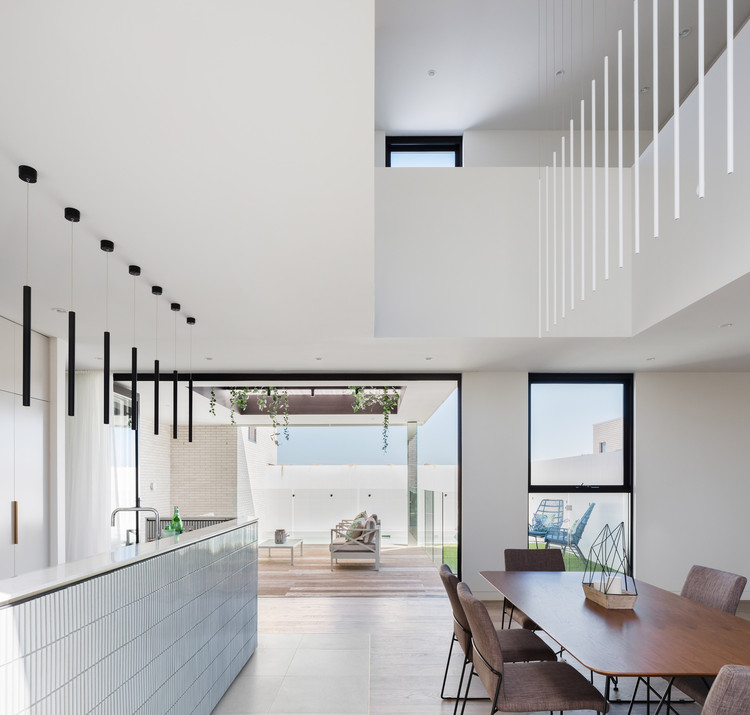
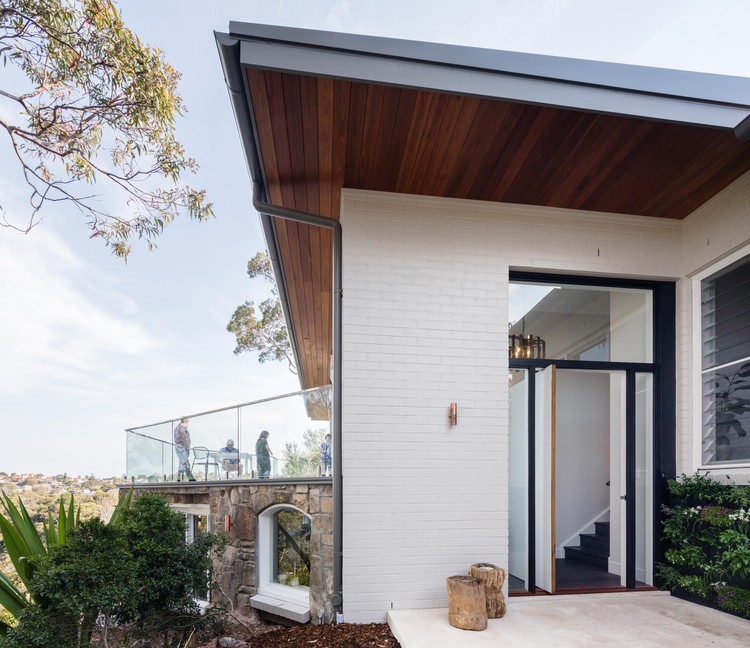
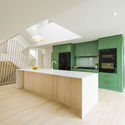
A monochrome environment is a space in which most architectural elements are of a single color. Although it is common for architects to design black or white monochromatic spaces due to its neutrality, it is possible to use almost any color to design a space, taking advantage of their infinite tones, undertones, and shades.
In 2018, the UN released an article stating that 55% of the world’s population already lived in urban areas, predicting that by 2050 this percentage would reach 68%. This trend toward greater urbanization carries with it several implications regarding environmental degradation and social inequality. According to National Geographic, urban growth increases air pollution, endangers animal populations, promotes the loss of urban tree cover, and heightens the likelihood of environmental catastrophes such as flash flooding. These health hazards and catastrophic phenomena may be more likely to impact poorer populations, as larger cities tend to demonstrate higher rates of economic inequality and uncontrolled growth tends to produce unequal distributions of space, services, and opportunities.
To mitigate these negative effects of urbanization, designers are increasingly prioritizing sustainability and the maximization of available space – allowing more people to occupy less space with a smaller footprint.
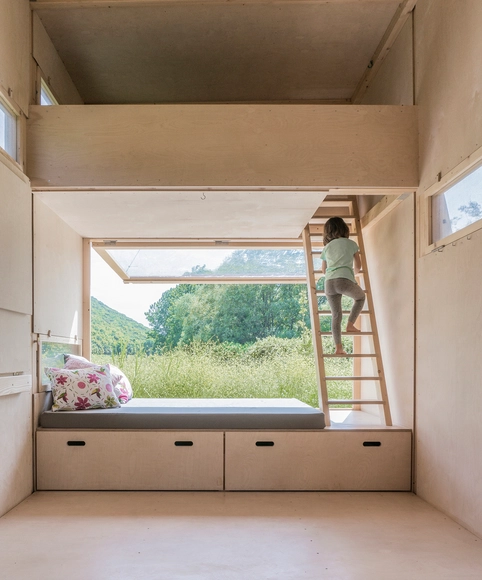
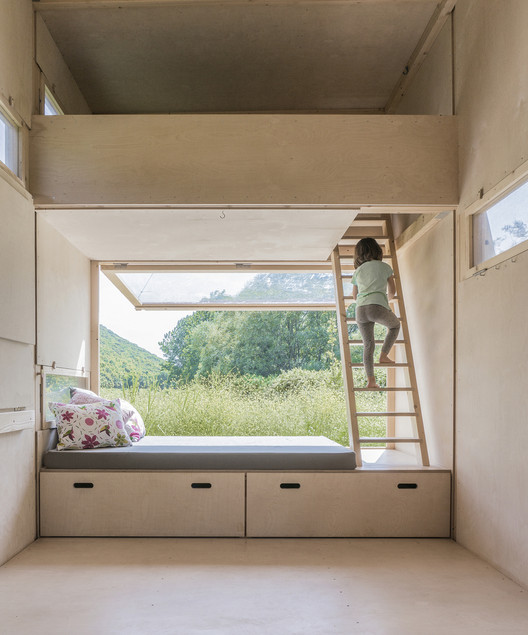
Cabin on the Border / SO? Architecture&Ideas. Image Cortesía de SO?
Dense cities mean small homes. With more and more frequency we are forced to adapt to spaces within which some elements simply do not fit. As architects, these restrictions actually provide us with opportunities and remind us that our goal is to give precise solutions to specific problems. Designing with infinite number square meters and/or an unlimited budget is practically unheard of.
What's the key to accommodating everything? Let's review some effective storage solutions for minimum, tight spaces.
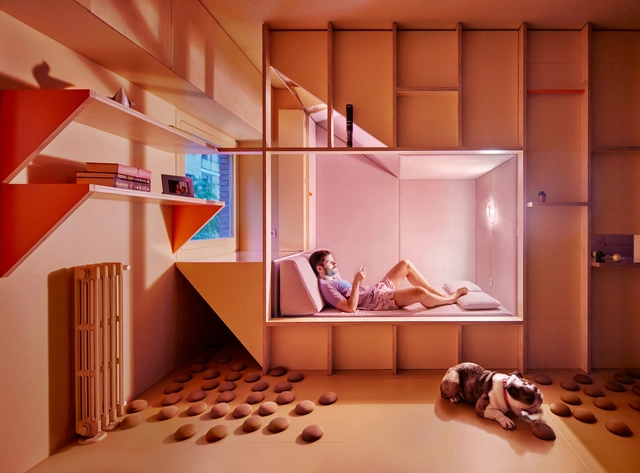
Un chico, su bulldog, un huerto y la casa que comparten / HUSOS. Image
It's very likely that you are reading this text in an interior space with the lights on. For most people, modern living entails spending most of the day in closed rooms, bathed in a sum of artificial and natural lights. Yet while artificial light has afforded mankind incalculable possibilities, it has also caused some confusion in our bodies, which have evolved for thousands of years to respond to the stimuli of sunlight in the day and darkness at night. This responsiveness to natural light is called the circadian rhythm or cycle, and describes the 24-hour biological cycle of almost all living beings. Circadian rhythms are primarily influenced by light reception, but temperature and other stimuli also play a role in the process.
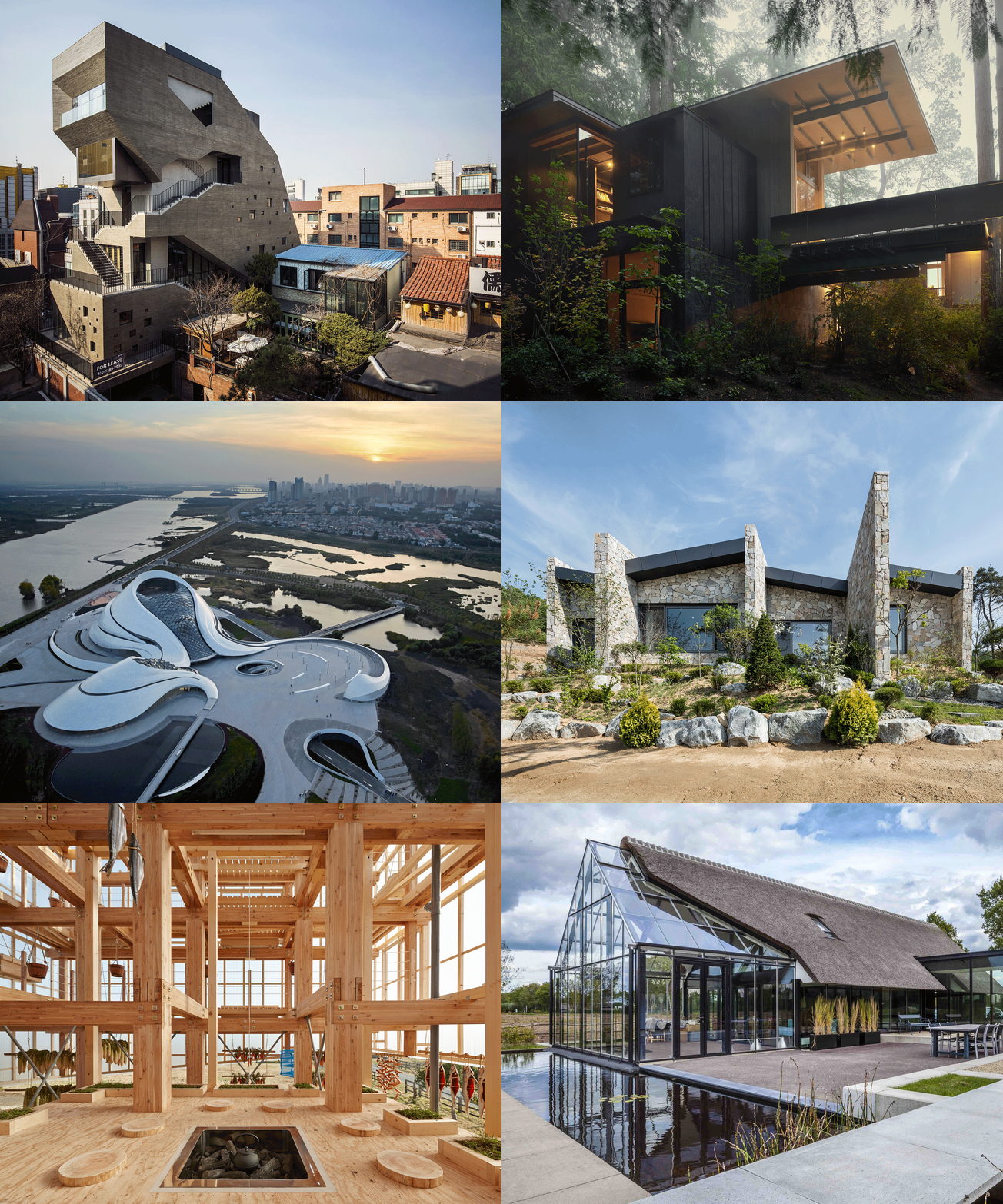
This August 19th is World Photo Day, which celebrates photography on the anniversary of the day on which France bought the patent for the daguerreotype, one of the earliest photographic processes, and released it to the world for free in 1839. At ArchDaily, we understand the importance of photography in architecture—not only as a tool for recording designs, but also as a discipline that many of us enjoy. To celebrate the occasion, we decided to reveal the most popular images ever published on ArchDaily, as selected by you, our readers. Using data gathered from My ArchDaily, we have ranked the 100 most-saved images from our database; read on to see them.
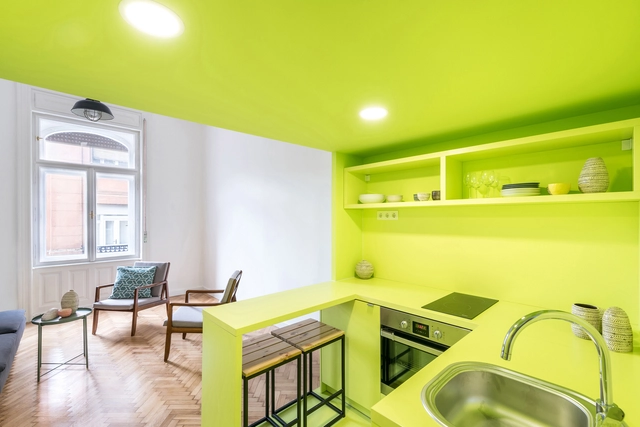
.jpg?1591644193 "Tetrys 607 Apartament / CR2 Arquitetura. Image © Cris Farhat")







.jpg?1583859382&format=webp&width=640&height=580)


.jpg?1583859382)

.jpg?1552337492&format=webp&width=230&height=230&crop=true)








.jpg?1553485976&format=webp&width=640&height=580)
.jpg?1553485931&format=webp&width=230&height=230&crop=true)
.jpg?1553485889&format=webp&width=230&height=230&crop=true)
.jpg?1553485798&format=webp&width=230&height=230&crop=true)
.jpg?1553485858&format=webp&width=230&height=230&crop=true)
.jpg?1553485976)