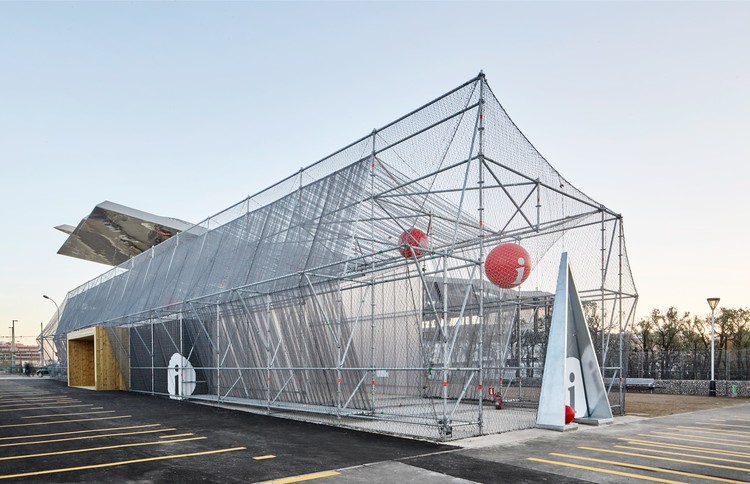
-
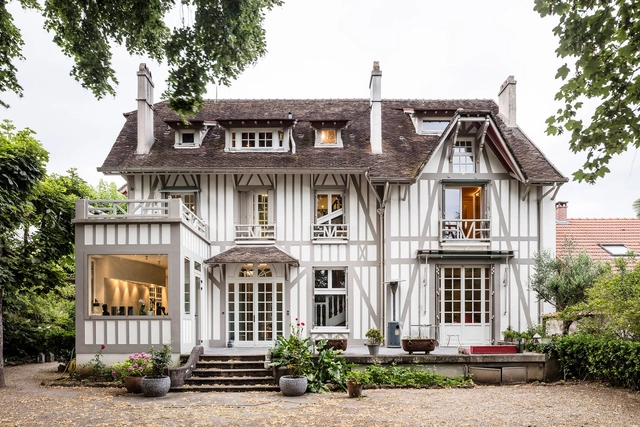
Architects: FLEXOARQUITECTURA
- Area: 170 m²
- Year: 2016
-
Manufacturers: Aïllaments Pedret, In & Out, Mosaics Planas, Passi Disseny




.jpg?1484713680&format=webp&width=640&height=580)
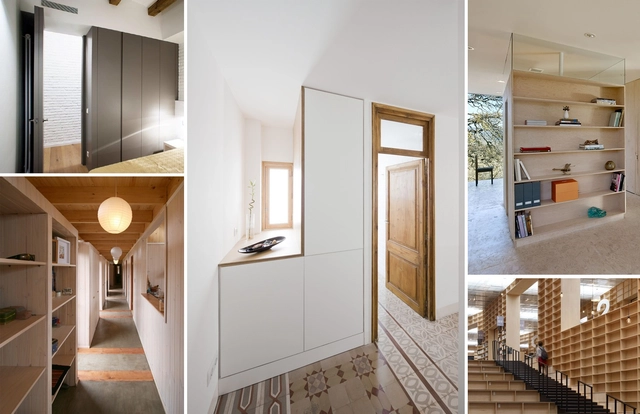
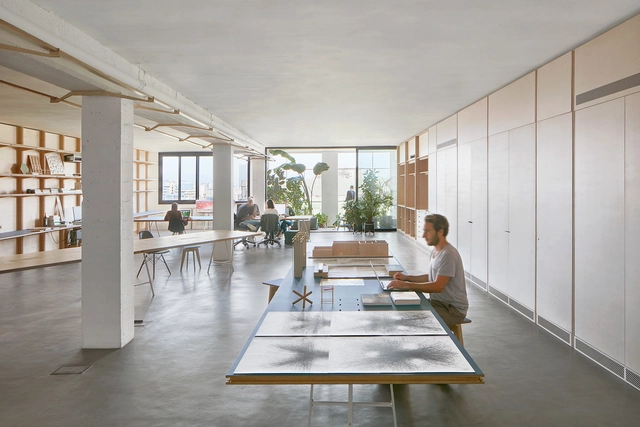
One of the hallmarks of architectural sensibility is a clean, clutter-free space – "a place for everything and everything in its place." Every project requires some element where things can be neatly stored away, whether it be books, kitchen appliances, or entire furniture pieces. Solutions for these storage needs can range from invisible and out of the way, to stunning, textural centerpieces – either way adding necessary functionality to our most-used spaces.
Check out this selection of ten brilliant storage spaces.


Observing the architectural landscape today it’s clear that the type of work which is currently ascendant, particularly among young practices, is very different to what came before the financial crisis of 2008. But what, exactly, does that architectural landscape look like? In an essay titled “Well into the 21st Century” in the latest issue of El Croquis, Alejandro Zaera-Polo outlined a 21st-century taxonomy of architecture, attempting to define and categorize the various new forms of practice that have grown in popularity in the years since—and as a political response to—the economic crisis.
The categories defined by Zaera-Polo encompass seven broad political positions: The “Activists,” who reject architecture’s dependence on market forces by operating largely outside the market, with a focus on community building projects, direct engagement with construction, and non-conventional funding strategies; then there are the “Populists,” whose work is calibrated to reconnect with the populace thanks to a media-friendly, diagrammatic approach to architectural form; next are the “New Historicists,” whose riposte to the “end of history” hailed by neoliberalism is an embrace of historically-informed design; the “Skeptics,” whose existential response to the collapse of the system is in part a return to postmodern critical discourse and in part an exploration of contingency and playfulness through an architecture of artificial materials and bright colors; the “Material Fundamentalists,” who returned to a tactile and virtuoso use of materials in response to the visual spectacle of pre-crash architecture; practitioners of “Austerity Chic,” a kind of architectural “normcore” (to borrow a term from fashion) which focuses primarily on the production process, and resulting performance, of architecture; and finally the “Techno-Critical,” a group of practices largely producing speculative architecture, whose work builds upon but also remains critical of the data-driven parametricism of their predecessors.
As a follow-up to that essay, Zaera-Polo and Guillermo Fernandez-Abascal set out to apply the newly-defined categories to the emerging practices of today with a nuanced “political compass” diagram. They invited practices to respond to their categorization in order to unveil the complex interdependencies and self-image of these political stances. For the first time, here ArchDaily publishes the results of that exercise.
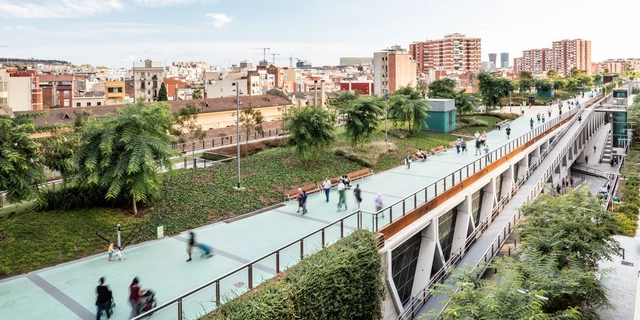
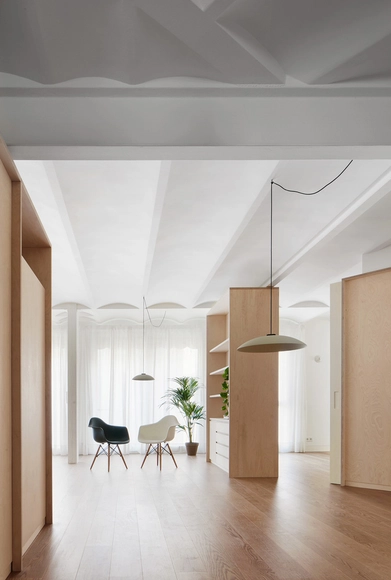
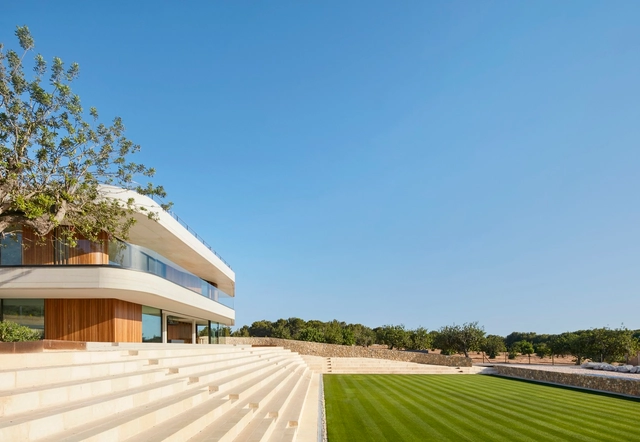
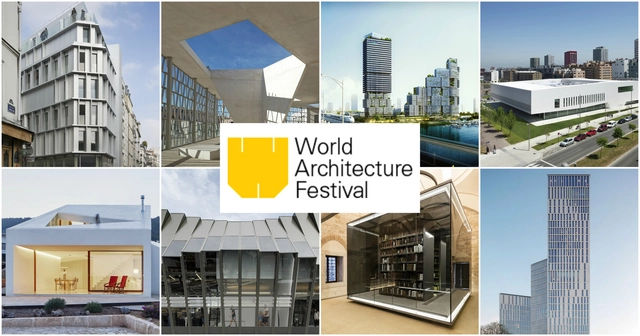
Fourteen projects have been announced as category winners of the The World Architecture Festival’s (WAF) 2016 awards on Day 1 of the festival. Winners in 32 categories will be named over the first two days of the conference, and will then go on to compete for the title of the World Building of the Year 2016, to be announced on Friday.
The world’s largest architectural awards program, the 2016 WAF Awards consisted of 343 projects from 58 countries around the world. Finalists projects will be invited to present their project live at the festival to a "super jury" that includes Kai-Uwe Bergmann (BIG), Louisa Hutton (Sauerbruch Hutton), David Chipperfield, Ole Scheeren, and ArchDaily's co-founder and Editor-in-Chief David Basulto, who will determine the grand prize winner.
You can check out the full shortlist here, and see which built and future projects took home awards after the break.




.jpg?1484713437&format=webp&width=230&height=230&crop=true)
.jpg?1484713500&format=webp&width=230&height=230&crop=true)
.jpg?1484713547&format=webp&width=230&height=230&crop=true)
.jpg?1484713568&format=webp&width=230&height=230&crop=true)
.jpg?1484713680)