João Morgado

BROWSE ALL FROM THIS PHOTOGRAPHER HERE

More Than Parking: 12 Projects to Reclaim Urban Space

Subscriber Access | 

Marginalized in architectural discourse and often dismissed as purely functional, parking garages remain among the most ubiquitous structures in the urban landscape. Designed to accommodate the needs of private vehicles, they occupy central locations, shape skylines, and consume considerable resources, yet rarely receive the same attention — or architectural care — as cultural institutions, schools, or housing. Despite their prevalence, these buildings tend to fade into the background of daily life, treated as infrastructural necessities rather than as design opportunities.
This is beginning to change. As urban mobility undergoes profound transformations — from the decline of car ownership to the rise of electric vehicles and shared transport systems — the role of parking infrastructure is being redefined. Architects and planners are reimagining garages as adaptable frameworks that integrate public space, ecological functions, and mixed-use programs. These new approaches challenge the perception of parking as a residual typology and instead position it as a civic structure with the potential to support more inclusive, flexible, and sustainable urban models.
More Than Parking: 12 Projects to Reclaim Urban Space - More Images+ 26

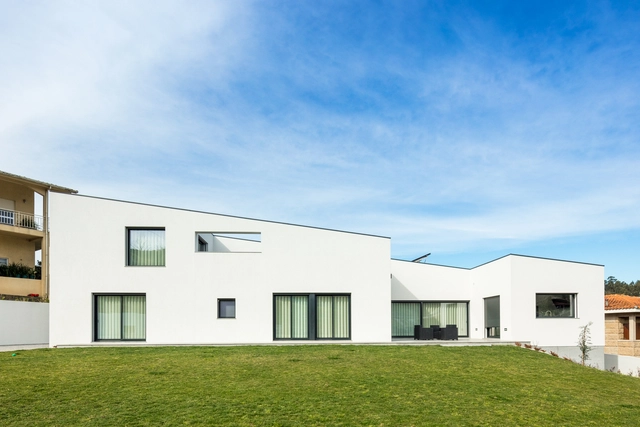
PPA House / NØ ARQ

PPA House / NØ ARQ - More Images+ 37

Trofa, Portugal
  • Architects: NØ ARQ
  • Area Area of this architecture project Area:  384
  • Year Completion year of this architecture project Year:  2023

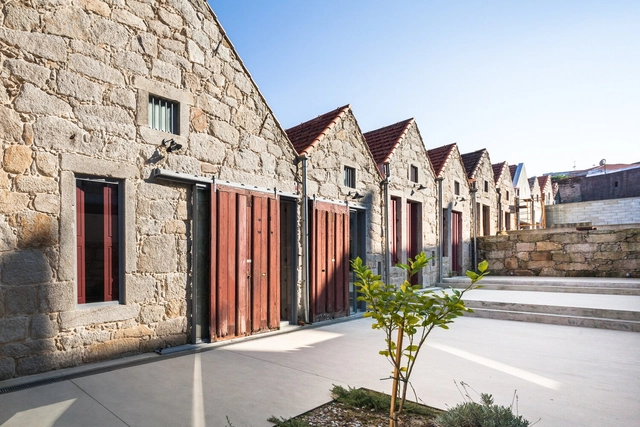
Adega Menin Wine Company / Arnaldo + João Pimentel Barbosa

Adega Menin Wine Company / Arnaldo + João Pimentel Barbosa - More Images+ 36

Gouvinhas, Portugal

Talking Machines Museum / UMA Collective

Talking Machines Museum / UMA Collective - More Images+ 27

Alcobaça, Portugal
  • Architects: UMA Collective
  • Area Area of this architecture project Area:  4521 ft²
  • Year Completion year of this architecture project Year:  2024

International High-Rise Award 2024/25: Discover the 31 Nominated Projects

Deutsches Architekturmuseum (DAM) has announced the International High-Rise Award 2024/25. Selected from more than 1,000 new high-rises worldwide dating from the past two years, the nominated projects are located in 13 counties from 5 continents. In autumn, the five finalists will be announced, followed by the winner announcement scheduled for November 12, 2024. The main objective of the award is to highlight good practices in the ongoing trend of mixed-use high-rises.

With the increase in the construction of high-rises, special features such as the introduction of greenery in the design, unusual shapes, or the construction of clusters of towers, have become the new normal. DAM’s research this year also shows a growing eco-awareness, as the focus in high-rise construction is increasingly on the use of existing buildings. While the majority of tall buildings continue to be erected in China, followed by the USA, Australia, and Singapore have emerged as new hubs of high-rise architecture.

International High-Rise Award 2024/25: Discover the 31 Nominated Projects - More Images+ 29

How to Size the Optimal Kitchen Island: 5 Essential Tips

A correctly sized kitchen island is more than just a functional architectural element—it's a key component of kitchen design. Beyond its primary functions, a well-sized kitchen island can serve as a versatile space adaptable to various household needs by enhancing workflow efficiency, providing additional storage, fostering social interaction, and contributing to the overall space aesthetics.

Whether utilized as a breakfast bar for quick meals, a study area for children's homework, or a hub for entertaining guests, its flexibility enhances the functionality and livability of any kitchen environment. Determining the appropriate size for a kitchen island, however, demands a meticulous approach, blending spatial considerations, workflow requirements, and design sensibilities.

How to Size the Optimal Kitchen Island: 5 Essential Tips - More Images+ 6

2024 Color of the Year Picks Unveiled by Paint Leaders Such as Benjamin Moore and Sherwin Williams

The year 2024 brings forth an intriguing array of Color of the Year selections from renowned paint manufacturers, each offering a unique perspective on the hues that will influence our living spaces. Striving to capture the moods and aspirations of the coming year, color experts have veered towards soft and calming shades, hoping to bring a sense of serenity to counter the hectic and tumulus passing year. Countering the bold color chosen by Pantone in 2023 as their previous Color of the Year, Benjamin Moore embraces a softly saturated and nuanced shade, AkzoNobel emphasizes calmness and stability, Sherwin Williams aims to inspire mindfulness, Graham & Brown fosters warmth and tranquility, and C2 Paint focuses on freshness and sustainability.

2024 Color of the Year Picks Unveiled by Paint Leaders Such as Benjamin Moore and Sherwin Williams - More Images+ 2

Boavista House / Topos Atelier de Arquitectura

Boavista House / Topos Atelier de Arquitectura - More Images+ 32

Porto, Portugal
  • Area Area of this architecture project Area:  630
  • Year Completion year of this architecture project Year:  2022
  • Manufacturers Brands with products used in this architecture project
    Manufacturers:  AutoDesk, OTIIMA, ACO Drainage, Margres, Compac, +25

How to Apply the Monochrome Technique in Architecture? Examples in Mexico

One way to employ color is through monochrome, a design technique that involves using a single tone or color in a space. In architecture, monochrome is a powerful tool where different shades can be created through the play of lights and shadows, generating spaces that offer unique experiences to their inhabitants.

How to Build a Backyard Pool? Types and Features

Subscriber Access | 

Designer pools bring status to luxury homes and five-star hospitality spaces. But adding the cooling, calming, energizing, and environmental benefits of a hyper-local water body to a residence can far outweigh the cost of installation. With a range of long- and short-term landscaping options possible, meanwhile, luxury is available, whatever the budget.

Most pools are built below ground to retain unobstructed visuals above. While all in-ground pools start off the same way – with excavation, then connecting the plumbing and filtration systems – the main difference is in the construction of the pool’s basin. The simplest and quickest method is to lower a pre-fabricated reinforced plastic pool or pre-cast concrete basin into the cavity, before connecting the pipework and backfilling the recess with sand. But this is only suitable for off-the-shelf pools with simple geometries. In order to make the most efficient use of all available space, bespoke pool shapes and sizes are best achieved by pouring or spraying concrete into a rebar or timber frame.

How to Build a Backyard Pool? Types and Features - More Images+ 19

Maximizing Space with Mezzanine Levels in Offices and Homes

Subscriber Access | 

At first, adding a mezzanine floor to a layout either seems like a complete waste of good floorspace or a clumsy attempt to squeeze two stories into one – like wearing skinny jeans after Christmas – both spaces end up feeling constricted and uncomfortable.

But whether the intermediate-level floor is achieved by addition – erecting an extra level in a high-ceilinged room, or by subtraction – removing part of the floor to connect with the one below, mezzanines are a relatively simple way to dramatically change and improve how we use and interact with our existing environments.

The Clay Pavillion / Alvaro Siza + BAAQ'

The Clay Pavillion / Alvaro Siza + BAAQ' - More Images+ 39

Puerto Escondido, Mexico
  • Architects: Alvaro Siza, BAAQ'
  • Area Area of this architecture project Area:  140
  • Year Completion year of this architecture project Year:  2017

Evergreen Design Elements that Define Contemporary Interiors: 7 Features that Last the Test of Time

When it comes to forward-thinking interior design, adaptability, and timelessness are two key factors that can guarantee a home will look just as current years from now as it does today. One interior style that makes use of them more than any other is: contemporary. By borrowing elements from several prominent styles and combining them into a harmonic whole, contemporary interiors stay current even as trends move on. But what are the components that remain constant even with this ever-changing fashion? We explore seven evergreen design elements that define contemporary interiors.

Evergreen Design Elements that Define Contemporary Interiors: 7 Features that Last the Test of Time - More Images+ 45

House in Macieira / Nelson Resende Arquitecto

House in Macieira / Nelson Resende Arquitecto - More Images+ 35

OSB Panels in Interiors: From a Humble Material to a Design Feature

Subscriber Access | 

From its outer skin to its structural framing system, a building is made out of many layers. Just like a human body, many of those layers – which tend to be the most crucial, functional components – remain unseen by the public, covered with aesthetic features. Among all the hidden elements, all buildings include sheathing, the outer casing that construction crews place to serve several key purposes: protect the floor, walls, roofs and ceilings, fortify the structure against internal and external forces, and cover the entire framework, giving the building a solid shape.

Wood is the most common material for sheathing, with Oriented strand board (OSB) panels usually being the top choice. Why? Made by compressing and gluing cross-oriented strands of wood together with heat-cured adhesives, OSB boards are lightweight, flexible, strong, versatile and fully recyclable. They also stand out by resisting deflection, warping and distortion, apart from offering some thermal and acoustic insulation. However, besides their good performance and mechanical properties, OSB is especially known for being cheaper than other alternatives, drastically saving both costs and time. In fact, this structural panel can be $3 to $5 less expensive than plywood, which explains why it is often considered its low-cost substitute.

Entrance Buildings - Solar das Bouças / Topos Atelier de Arquitectura

Entrance Buildings - Solar das Bouças / Topos Atelier de Arquitectura - More Images+ 15

  • Area Area of this architecture project Area:  252
  • Year Completion year of this architecture project Year:  2021
  • Manufacturers Brands with products used in this architecture project
    Manufacturers:  AutoDesk, Eaton, Knauf, Pladur, Sanindusa

611 West 56th Street Tower / Álvaro Siza Vieira

611 West 56th Street Tower / Álvaro Siza Vieira - Exterior Photography, Apartments
© João Morgado

611 West 56th Street Tower / Álvaro Siza Vieira - More Images+ 29

Nova Iorque, United States
  • Area Area of this architecture project Area:  172000 ft²
  • Year Completion year of this architecture project Year:  2022

Álvaro Siza Completes First Skyscraper in New York City, the 611 West 56th Street

Álvaro Siza Completes First Skyscraper in New York City, the 611 West 56th Street - Featured Image
© João Morgado

Manhattan's dense landscape has just received another skyscraper, this time designed by a Portuguese Pritzker Prize Winner. At 137 meters high and with 35 floors, 611 West 56th Street, Álvaro Siza's first building in New York, was just completed, on the outside. The luxury apartment complex, which is also Siza's first work in the United States, has several facilities for its residents, such as a swimming pool, a spa, a gym, a playground for children and rooms for events.

Álvaro Siza Completes First Skyscraper in New York City, the 611 West 56th Street - More Images+ 20