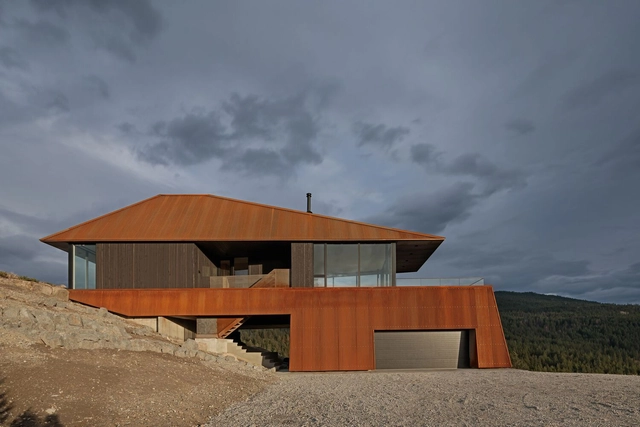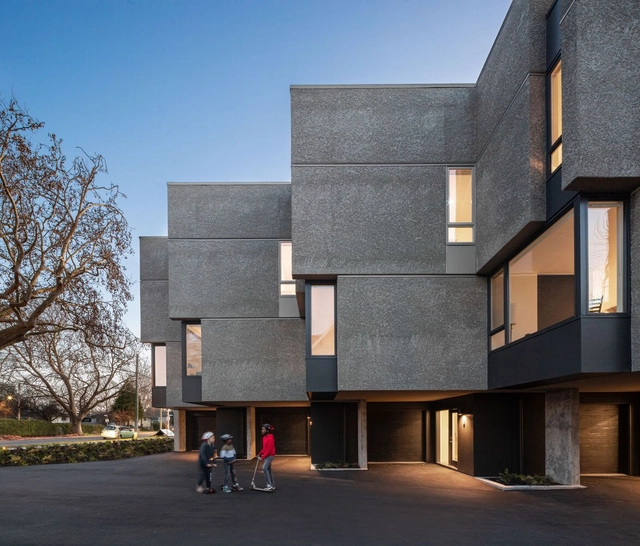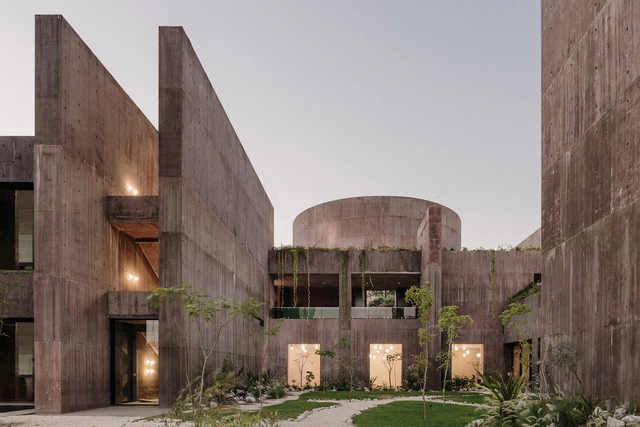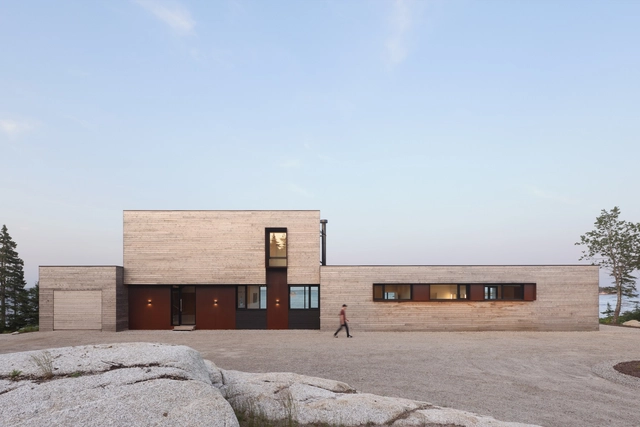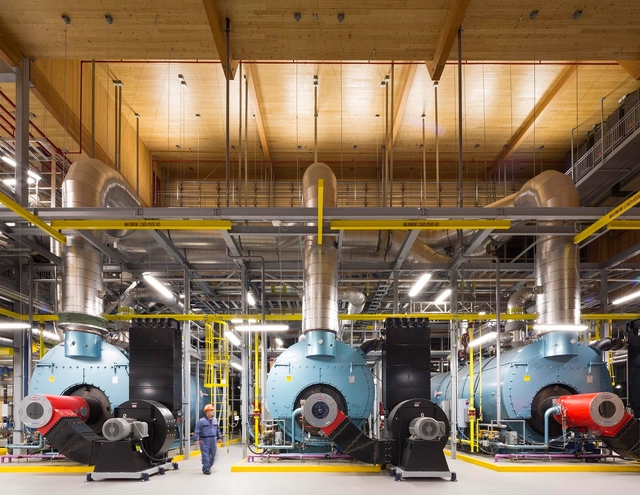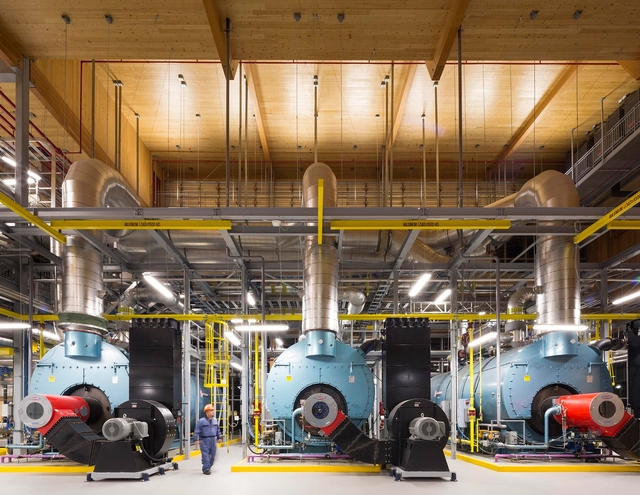
Industrial buildings are perhaps the ultimate exemplification of Louis Sullivan's famous adage: form follows function. They are typically functional, efficient, fast to build, and unornamented. Consequently, studying the industrial heritage of cities and countries allows us to understand the materials, technologies, and local construction traditions of each era, while reflecting on the industrial past. This quickly brings to mind England's red-brick factories, as well as the skylights used to flood production floors with natural light, among many other typical solutions. Today, steel frames and precast concrete structures are the most widely used due to their combination of construction efficiency, cost-effectiveness, and capacity for large spans. Typically, these industrial warehouses are also characterized by being extremely cold and impersonal, in addition to carrying a substantial carbon footprint. However, Canada's experience in recent years stands out. In this country, timber buildings for industrial programs are gaining increasing acceptance.