Chris Miele

BROWSE ALL FROM THIS PHOTOGRAPHER HERE

The Inheritance Problem: Urban Planning and Community Engagement in U.S. Cities

Subscriber Access | 

Urban planning is often confused with adjacent disciplines: urban design, environmental policy, civic strategy, local politics, or data analytics. Moreover, the overlap in training and responsibilities between planning and urban practices makes the field difficult to define clearly. In practice, it is often easier to recognize the consequences of bad planning than to articulate the outcomes of good planning. When planning is working well for residents, it should disappear altogether. It should remove friction from daily life so that people would not think to credit a discipline at all. At its core, urban planning is the relationship people have with their environments, and when that relationship is functioning, the mechanics of housing, transportation, affordability, access, and inclusion should feel ordinary and expected.

This has not always been the lived experiences of planning practices, and in many places, it still is not. Urban planning has historically served as an instrument of division, used to segregate, exclude, and erase communities under the language of progress and order. Zoning maps, infrastructure investment, and land-use decisions are expressions of who holds power and that history is embedded in the boundaries that continue to organize cities around the world. It is embedded socially, as well as physically, in the assumption that participation in planning requires expertise or formal training that most residents lack.

The Inheritance Problem: Urban Planning and Community Engagement in U.S. Cities - More Images+ 13

Lessons from Los Angeles: The United States' Path to Regulating Accessory Dwelling Units

Subscriber Access | 

Cities in the US are embracing Accessory Dwelling Units (ADUs) to address the nationwide housing crisis. Often built on existing single-family home lots, ADUs offer an affordable option for increasing housing availability in established neighborhoods. However, like any new housing development, effective regulations are critical for widespread adoption. Los Angeles has emerged as a testing ground in using ADUs to address its housing shortage, providing valuable insights for other cities. The city's experience underlines the challenges of establishing regulations, while also promoting the benefits of ADUs as an affordable housing solution.

Lessons from Los Angeles: The United States' Path to Regulating Accessory Dwelling Units - More Images+ 3

MAGNET Restaurant / Undecorated

MAGNET Restaurant / Undecorated - More Images+ 21

  • Architects: Undecorated
  • Area Area of this architecture project Area:  8650
  • Year Completion year of this architecture project Year:  2019
  • Manufacturers Brands with products used in this architecture project
    Manufacturers:  AutoDesk, Adobe Systems Incorporated, Alboco, BJ Construction, Beech Ovens, +5

6 Projects in Brazil, Mexico, Peru, and USA Selected as Finalists for the 2018 Mies Crown Hall Americas Prize

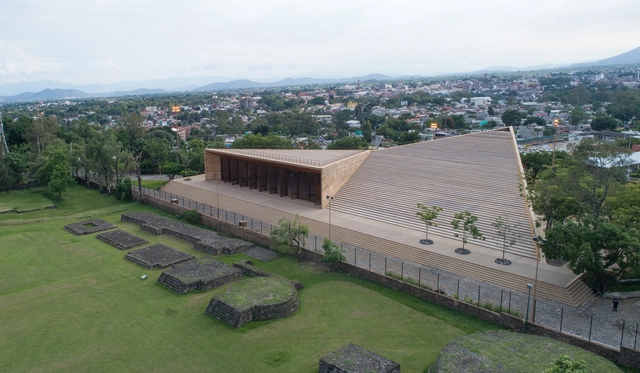
Minutes ago in Detroit, Director Dirk Denison and 2018 MCHAP Jury Chair Ricky Burdett announced the six finalists of the 2018 edition of the Mies Crown Hall America Prize. Selected from a longer list of 31 projects announced earlier this summer in Venice, these outstanding works of architecture will compete for the top honor, the MCHAP Award, which will be announced in October. The authors of the winning award will take home $50,000 to fund research and a publication and will be recognized as the MCHAP Chair in IIT’s College of Architecture.

The six finalist buildings were completed between January 2016 and December 2017. The descriptive texts, provided by the MCHAP jury, celebrate the merits of each individual project.

True North / EC3

True North / EC3 - More Images+ 27