-
Architects: Coop Arquitectura, VRTICAL
- Area: 800 m²


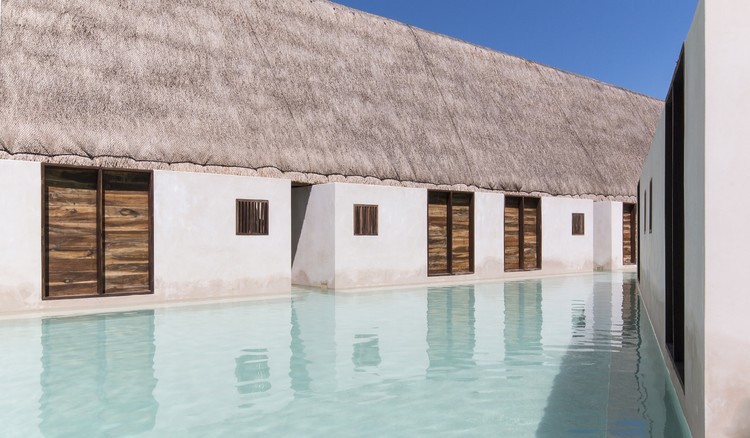
An island is, by definition, a piece of land entirely surrounded by water; in this sense, the element of water serves as a limit, a boundary, and, at the same time, a place.
Hotel Punta Caliza, designed by Estudio Macías Peredo Arquitectos, employs these very concepts so that this naturally salty, aquamarine liquid itself becomes an island—acting as both center and surface, bounded by the built structure to form a cohesive whole that surrounds, contains, and shapes the water.

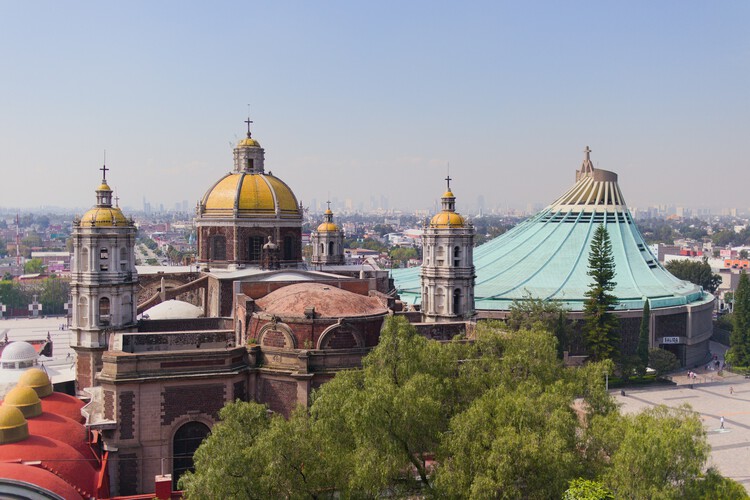
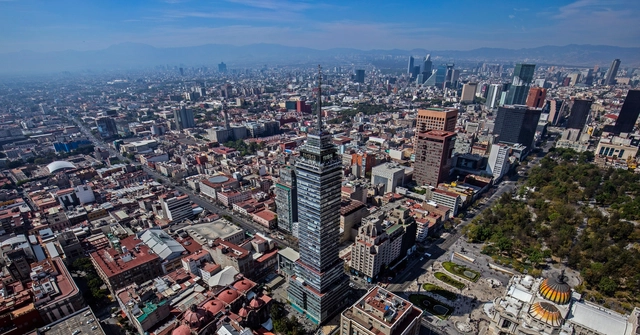
Mexico City is a sprawling metropolis of layered temporalities, where architecture operates as a continuous negotiation between deep-seated history and intense urban mutation. Built over the aquatic traces of Tenochtitlan, the city's fabric is an ongoing dialogue between eras: the monumental scale of the Pre-Hispanic Templo Mayor and the Viceroyalty architecture of the Catedral Metropolitana coexist with the modern and contemporary impulses that define its skyline. This dense juxtaposition creates a unique urban canvas where sacred geography, colonial imposition, and 20th-century ambition intersect.
The mid-century marked a definitive era of experimentation, forging a Mexican Modernism that masterfully synthesized international structural rationalism with local identity and materiality. This synthesis is epitomized by the sweeping, plastic integration of art and architecture at the Ciudad Universitaria, the structural poetry of Félix Candela's hyper-parabolic shells, and the raw, monumental brutalism of Teodoro González de León and Abraham Zabludovsky. Parallel to this, the intimate, introspective mastery of Luis Barragán and Juan O'Gorman redefined domestic space, experimenting with light, vernacular color, and tectonic honesty to create spaces of profound spatial stillness.

Thousands of years ago, a chain of volcanoes and hills formed a valley that became home to five lakes. According to indigenous mythology, this area served as a key reference point for the founding of the ancient Tenochtitlan, marked by the signal of an eagle perched on a cactus, devouring a snake. At the height of its splendor, the city was organized within an intricate system of causeways, many of which still serve as main thoroughfares, along with canals connecting the five water bodies. Over time, events such as colonization, independence, revolution, and modernization transformed its structure and name, leading to what is known today as Mexico City.
From the pre-Columbian period of the Americas –during which cultures such as the Olmec, Maya, Purepecha, and Mexica (Aztec) thrived– to the modern era where architecture has been influenced by social movements and even natural disasters, Mexican architecture showcases a valuable architectural expression, with its own unique voice and distinctive characteristics. Nobel Literature Laureate Octavio Paz argued that architecture is an incorruptible witness to history. Likewise, the materials used to shape it have acted as protagonists of that history, enduring in many cases over time and evolving thanks to the generations of architects who have contributed to it, from different perspectives.
To trace a timeline, it is possible to take as a starting point pre-Hispanic architecture, which exhibited a diversity of nuances due to Mexico's vast territorial extension. This allowed diverse cultures to find their niche and develop their characteristic architectural styles. Subsequently, the era of Spanish colonization, which itself drew influence from Islamic architecture, represented a noteworthy turning point in architectural development. This phase endured until the advent of Mexican Independence in the 19th century. In turn, this marked the initiation of social and cultural movements, both during and after the Mexican Revolution in the early 20th century.

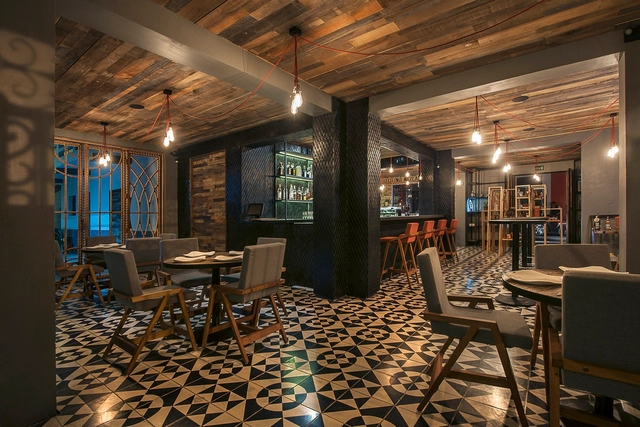
Over the years, interior design has evolved according to the needs that arise, but above all according to the experiences we seek to provoke in the user. In the last two years, we witnessed a radical change and a particular interest in this subject because the pandemic forced us to pay specific attention to the configuration of the places we inhabit. This brought about much more holistic designs that cater to the wellbeing of the user, combining colours, sensory experiences, technology and natural elements that promote health.

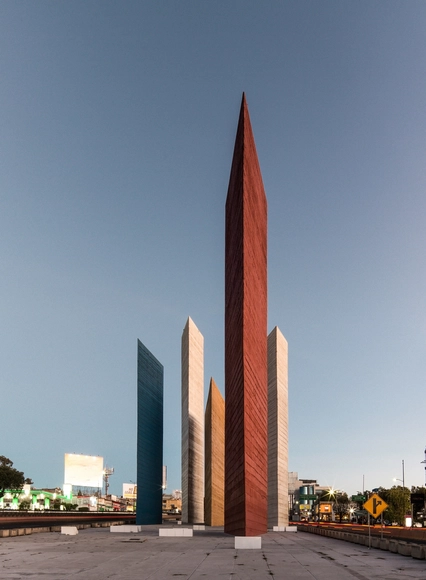
In the context of the ambitious project Satellite City in the outskirts of Mexico City, led by architect Mario Pani in the mid-20th century, Luis Barragán received from Pani the commission to make a fountain in 1958 that would serve as a distinctive motif of the entrance through the main road access to the master plan.
The renowned Mexican architect, together with the sculptor Mathias Goeritz, projected five concrete towers, with a triangular plan and different colors and heights, reaching up to 52 meters (170 feet). The towers are totally sculptural and the authors expected they could stand out viewed even from afar and in motion.

There are several reasons why the Estado de Mexico (a state, not the country) is important not only at the national level but also because of its intrinsic relationship with Mexico City since 59 of its municipalities are considered part of the Metropolitan Area of the Valley of Mexico. In this area, there are a large number of industrial plants. In addition, it houses some of the most visited archaeological sites such as Teotihuacán, Tetzuco, Azcapotzalco, Chalco, and Amaquemecan.

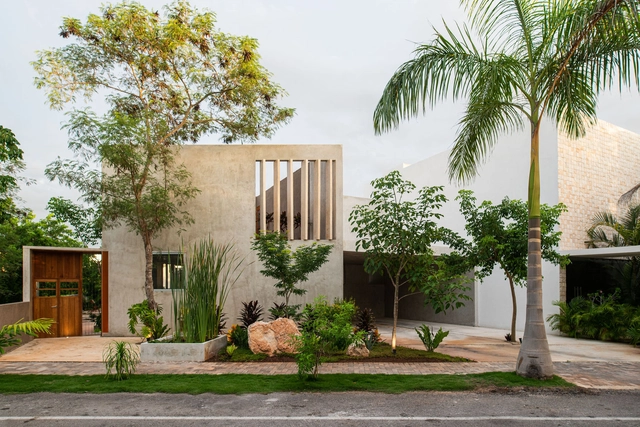
In Yucatan, architects are reviving an ancient Mayan stucco technique for contemporary buildings, merging modern architecture with regional history and culture. The technique is called “chukum,” a term derived from the colloquial name for the Havardia albicans tree native to Mexico. Made with chukum tree bark, the material has several defining qualities that separate it from traditional stucco, including impermeable properties and a natural earthy color. Though chukum initially fell out of use following Spanish conquest of the Maya civilization, it was rediscovered and reemployed by Salvador Reyes Rios of the architecture firm Reyes Rios + Larrain Arquitectos in the late 1990’s, initiating a resurgence of use in the area.

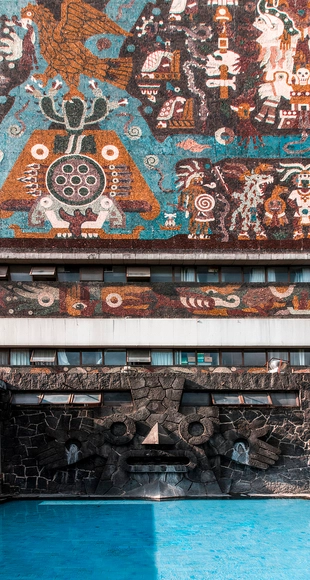
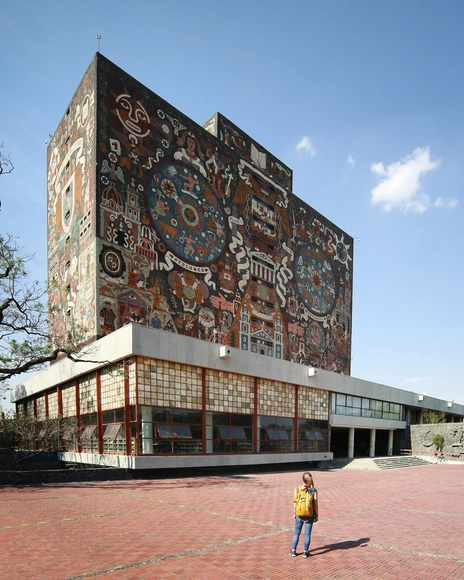
The northern side of the Rectoría tower in the Ciudad Universitaria, the main campus of the National Autonomous University of Mexico, emanates a particular Mexican character. It is a classic example of modern architecture that integrates architecture with sculptural and pictorial elements that denote the university's mission to carry and preserve knowledge, history, and Mexican cultural identity through the ages.
The creation of the UNAM tower's emblem was assigned to Juan O’Gorman, Gustavo Saavedra, and Juan Martínez de Velasco, who later brought in Juan Íñiguez, Rafael Carrasco Puente, and José María Luján as advisors for the project.

The history of Mexican photography has contributed to highlighting Mexico's presence in the world. Photographers like Elsa Medina, Lola Álvarez Bravo, Graciela Iturbide, Maya Goded, and Juan Rulfo have masterfully portrayed the life of the buildings, houses and the streets of a rapidly built, nineteenth-century Mexico.
As a consequence, the contemporary scene of Mexican photography has become a fundamental tool for architecture and has contributed to a better visual understanding of the works that are erected every day.
Photography and architecture are two disciplines that go hand in hand and whose relationship has been reinforced thanks to the digital tools that we currently have. For that reason, we have compiled the work of contemporary Mexican photographers who record our walk through the world we live in and contribute to constructing the image of contemporary Mexico.

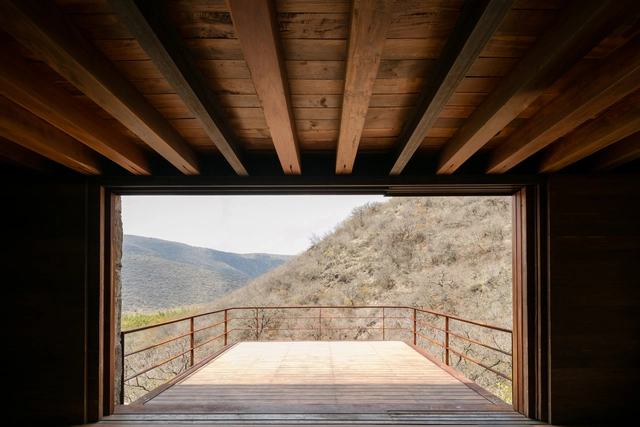
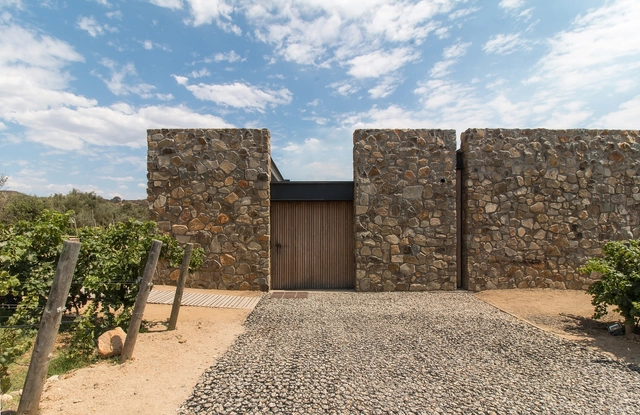
In Baja California, Mexico, the 860 hectares that make up 'Cuatro Cuatros'—a tourism development that for the past ten years has been overseen and designed by Mauricio Rocha and Gabriela Carrillo of Taller de Arquitectura—present an arid and mostly monochromatic landscape interrupted only by stones and bushland.
Vast as the site may seem, only 360 of its hectares will be destined for housing development, of which only 10% can be impacted by construction. The challenge will lay in mitigating the protagonistic stance architecture usually assumes when conquering previously untouched lands, by taking on a presence that disappears into the landscape.