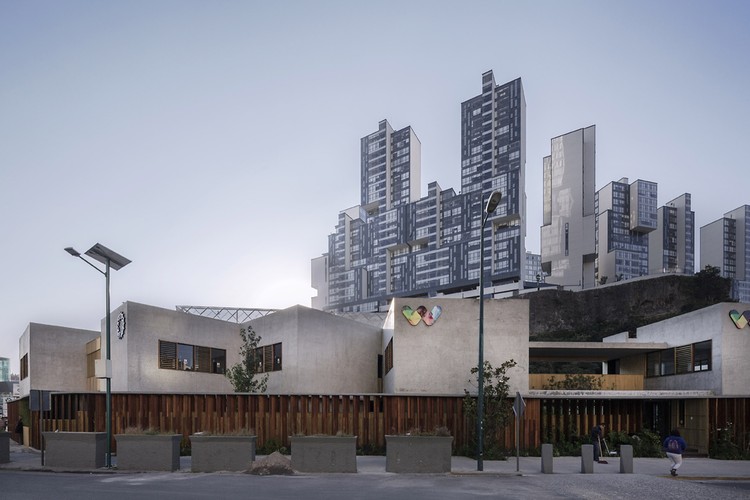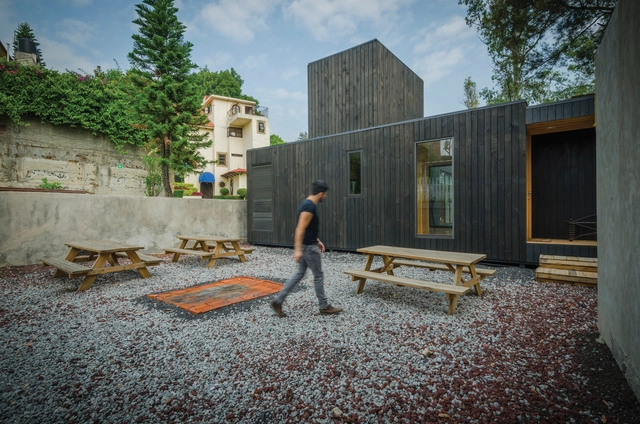


-
Architects: Revolution
- Area: 106 m²
- Year: 2015
-
Manufacturers: Bosch, Escenium HAUS, Gravita, Helvex, Koencamex, +3
-
Professionals: Grupo Dovela


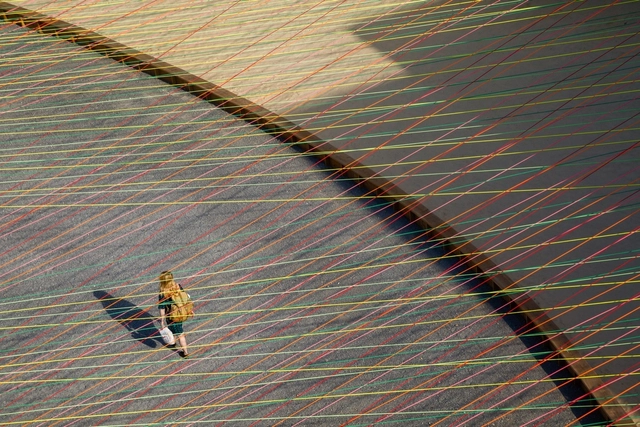
MoMA P.S.1 has named five finalists competing in the 2017 Young Architects Program (YAP).
Now in it’s 17th year, the competition was founded to offer emerging architectural talent the opportunity to design a temporary, outdoor installation within the walls of the P.S.1 courtyard for MoMA’s annual summer “Warm-Up” series. Architects are challenged to develop creative designs that provide shade, seating and water, while working within guidelines that address environmental issues, including sustainability and recycling.

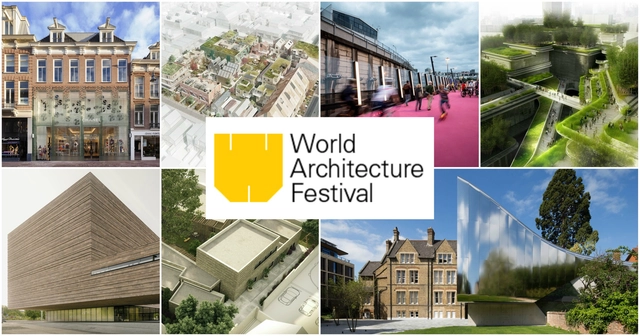
The second group of winners of the World Architecture Festival’s (WAF) 2016 category awards have been announced today on day 2 of the event, held this year in Berlin, Germany.
The 16 Day 2 winners will now go on to compete against the 14 Day 1 winners for the title of 2016 World Building of the Year. The projects will be presented in front of a Super Jury, which includes Kai-Uwe Bergmann (BIG), Louisa Hutton (Sauerbruch Hutton), David Chipperfield, Ole Scheeren, and ArchDaily's co-founder and Editor-in-Chief David Basulto.
Check out the Day 1 winners here and view the Day 2 winners after the break.

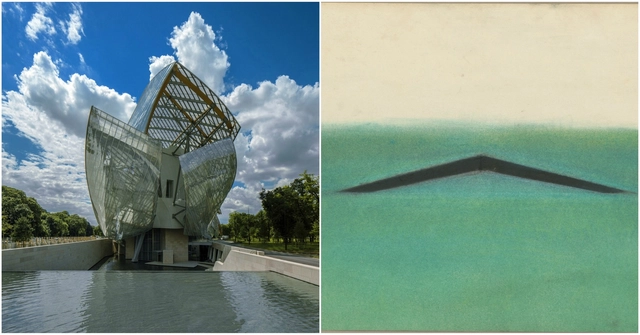
President Obama has named architects Frank Gehry and Maya Lin among the 21 recipients of the Presidential Medal of Freedom, the country’s highest civilian honor. Established in its current decoration in 1963 by President John F. Kennedy, the award is presented to “individuals who have made especially meritorious contributions to the security or national interests of the United States, to world peace, or to cultural or other significant public or private endeavors.”


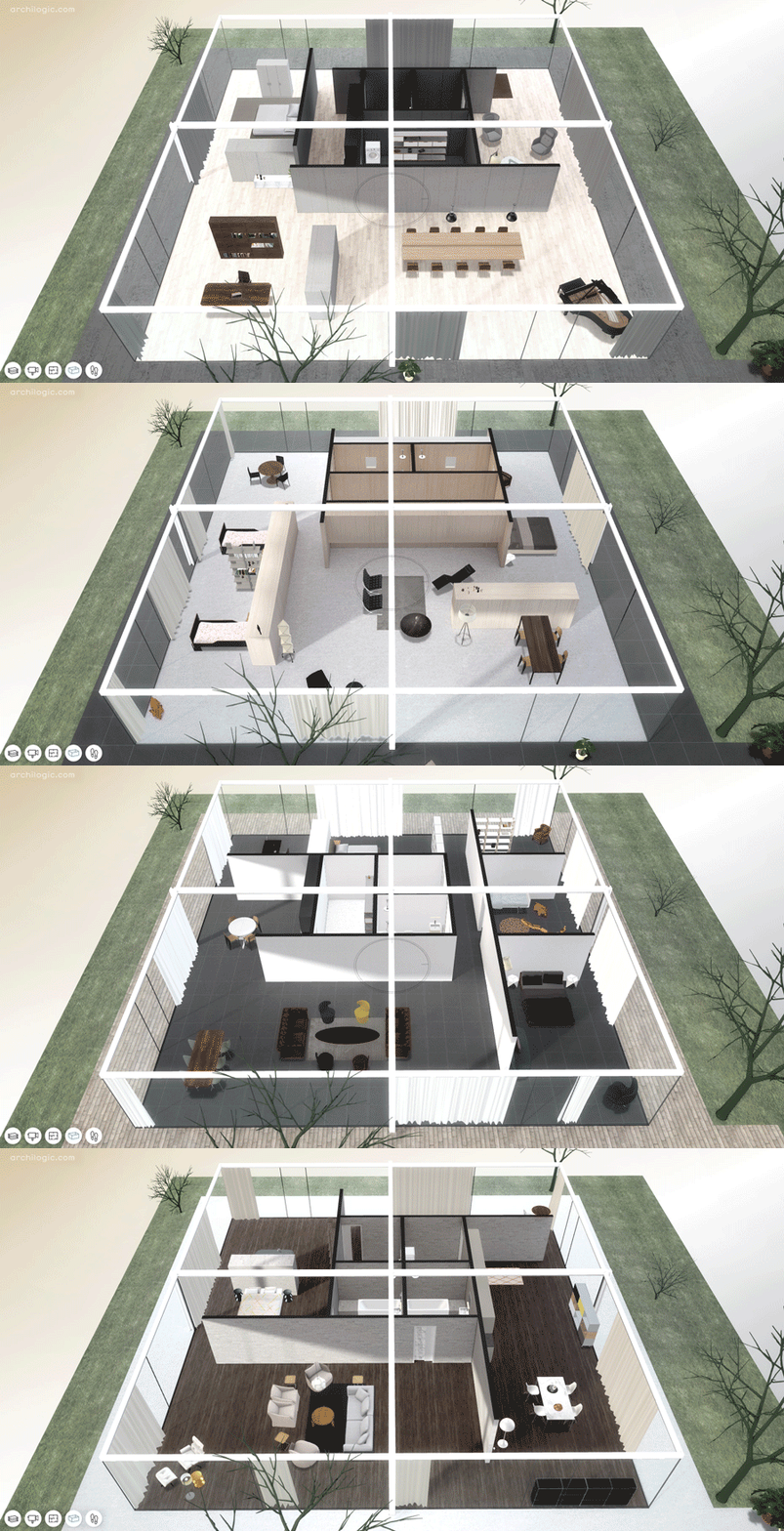
Architecture depends on its time. It is the crystallization of its inner structure, the slow unfolding of its form. – Ludwig Mies van der Rohe
In 1951, Mies van der Rohe designed the Core House, a participative design structure which could be completed by its inhabitants.
This flexible model challenged certain architectural concepts, explored new industrial technologies, and proposed a modular system to improve the quality and affordability of housing.


.jpg?1479243311)


Archifutures Vol. 1: The Museum presents the last chapter of the first Future Architecture cycle and is the first part of a new three-volume field guide to the future of architecture. The collection maps contemporary architectural practice and urban planning, presented through the words and ideas of some of its key players and change-makers. From institutions, activists, thinkers, curators and architects to urban bloggers, polemicists, critics and publishers, these are the people shaping tomorrow’s architecture and cities – and thereby helping to shape our societies of the future as well.







.jpg?1479243345 "© Julien Lanoo")
.jpg?1479243239 "© Julien Lanoo")
.jpg?1479243144 "© Julien Lanoo")
.jpg?1479243009 "© Julien Lanoo")
.jpg?1479243311)