Soon to become the tallest building in Quito, IQON is Bjarke Ingels Group's first project to be built in South America. Currently undergoing construction, the largely residential building is a curved tower with gradually protruding balconies. Encased between the dense city and the park, the self-dubbed "urban tree farm" aims not only to encompass the surrounding views of the volcanoes and nature beyond but also to integrate the landscape within the building itself.
Are architects really turning to real-time rendering for visualization? Epic Games, the creators of Unreal Engine, decided to find out with an independent survey.
The results confirmed what many of us have suspected—real-time rendering is on the rise in architecture, media and entertainment, and manufacturing. But the survey also revealed a few surprising details about real-time rendering and its uses.
A’ Design Award & Competition, the world’s largest and most diffuse international design awards featuring 1,962 Winners from 100 countries in 99 different design disciplines. Among the design world's many awards, the A' Design Award stands out for its exceptional scale and breadth; in 2015, over 1,000 different designs received awards, with all fields of design recognized by the award's 100 different categories. This year's edition is now open for entries; designers can register their submissions here.
There are five different levels of distinction: Platinum, Gold, Silver, Bronze and Iron A’ Design Awards, which are distributed annually in all design disciplines. Designers, companies, and institutions from all countries are invited annually to take part in the open call by nominating their best works, projects, and products for consideration.
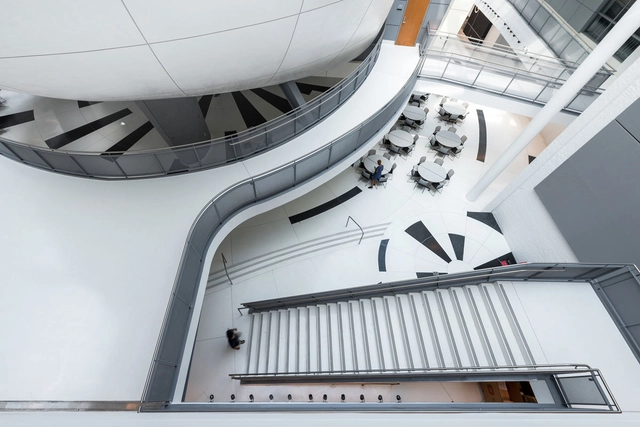
Terrazzo & Marble Supply Companies transformed the Duke Ellington School of the Arts in DC with poured-in-place epoxy terrazzo. [Photo: Courtesy of Terrazzo & Marble Supply Companies]
Terrazzo flooring, with its mosaic style of pieces of marble or granite set in polished concrete or epoxy resin, is known for its flexibility and remarkable durability. So it’s no wonder the method has been around for centuries.
With proper care during installation and use, it’s also possible for terrazzo floors to last a number of decades. “There are terrazzo floors that were installed in the early 1900s that are still nice looking jobs,” says James Bateman, terrazzo division manager of Terrazzo & Marble Supply Companies. Indeed, the style is known to some as ‘forever floors,’ a nod to its history and longevity.
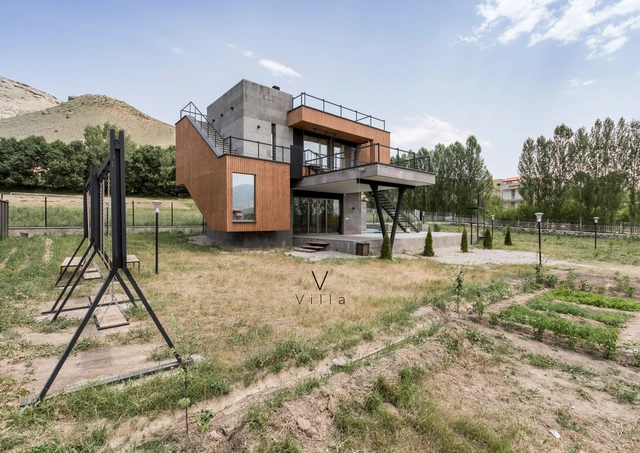
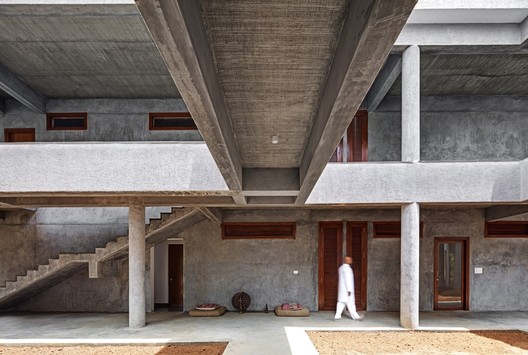
Greatly influenced by the modern movement--and in particular the presence of Le Corbusier--contemporary Indian architecture reflects a mixture of traditional and western references. Using mainly local materials such as brick, concrete and stone, Indian buildings stand out with their high visual impact and a assertive heaviness.
Because of its scarcity, wood is mostly used in details and finishes rather than as main structures. Some of the most successful architects in India have managed to gracefully balance the use of concrete and wood in a gentle gesture that evokes elegance and rough textures.
Here we present some of the best examples of contemporary Indian architecture that have used both concrete and wood in a harmonious and attractive way.
This article was originally published on July 22, 2016. To read the stories behind other celebrated architecture projects, visit our AD Classics section.
The New Museum is the product of a daring vision to establish a radical, politicized center for contemporary art in New York City. With the aim of distinguishing itself from the city’s existing art institutions through a focus on emerging artists, the museum’s name embodies its pioneering spirit. Over the two decades following its foundation in 1977, it gained a strong reputation for its bold artistic program, and eventually outgrew its inconspicuous home in a SoHo loft. Keen to establish a visual presence and to reach a wider audience, in 2003 the Japanese architectural firm SANAA was commissioned to design a dedicated home for the museum. The resulting structure, a stack of rectilinear boxes which tower over the Bowery, would be the first and, thus far, the only purpose-built contemporary art museum in New York City.[1]
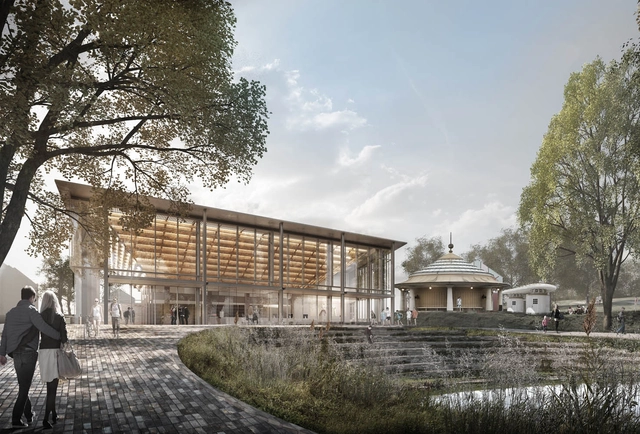
CUBO, a local architecture firm from Aarhus City, Denmark, has designed the main entrance pavilion for the firm's native city which will connect two existing elements of Aarhus - the Botanical Gardens and the Old Town. The building is both inviting and welcoming to residents and visitors, alike, providing the city with a gathering space, meeting point, and information hub.
Both the Botanical Gardens and Old Town are major attractions for visitors, playing an integral role in the city’s international reputation. CUBO’s pavilion seeks to enhance and add to what already exists by sensitively integrating the structure in the existing landscape.
Did you know that tree-lined streets are proven to be beneficial to physical and mental health? So why not include them in health funding? The Nature Conservancy's new research demonstrates the number of reasons why this should be done.
https://www.archdaily.com/903855/cities-should-think-of-trees-as-public-health-infrastructureMayra Rosa
They say one cannot separate art from the artist, or perhaps in this case, the artist from the architect. Arguably one of the most criticized architects, Le Corbusier is often portrayed as cold and controlling. Depicting his more dreamy and humorous nature, the Nasjonalmuseet's exhibition titled, “Le Corbusier by the Sea,” draws upon his memories from his summer travels along the coast of southwest France.
Hosted in Villa Stenersen, one of the National Museum's venues, the exhibition showcases Le Corbusier's work as an artist during the period 1926-36. Not only does the exhibition include fifteen of his reproduced paintings alongside a collection of sketches, but also screens two films from Le Corbusier's own footage of his surrounding views.


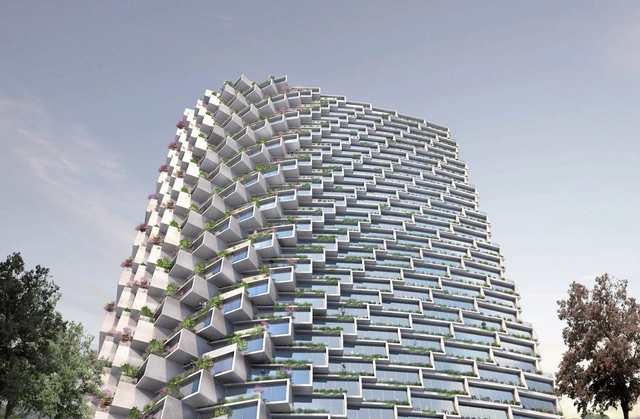
.jpg?1539451458 "Courtesy of Bjarke Ingels Group")
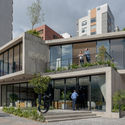


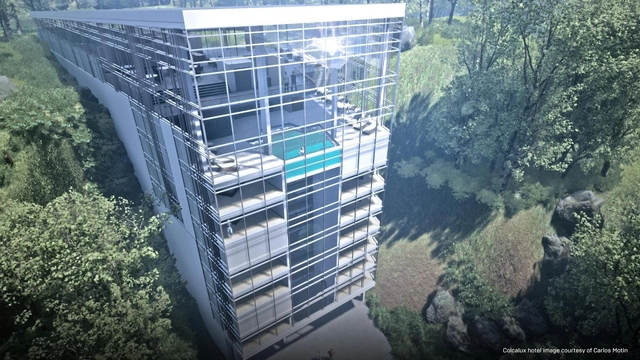

.jpg?1539048505 "Gif 02. Image Courtesy of Iya Turabelidze studio")







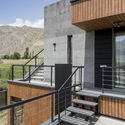
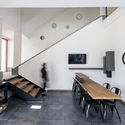
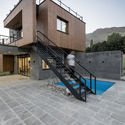



.jpg?1463595741&format=webp&width=640&height=580)
.jpg?1463596013 "© Laurian Ghinitoiu")
.jpg?1463595919 "© Laurian Ghinitoiu")
.jpg?1463596094 "© Laurian Ghinitoiu")
.jpg?1463595878 "© Laurian Ghinitoiu")
.jpg?1463595741)
![[EARNEST CAPE] The Hill where the sky and the sea take a break / JMY architects + PLS Architects - Houses, Door, Facade](https://snoopy.archdaily.com/images/archdaily/media/images/5bc0/2ad7/f197/cc3c/6a00/05eb/slideshow/06.jpg?1539320497&format=webp&width=640&height=580)
![[EARNEST CAPE] The Hill where the sky and the sea take a break / JMY architects + PLS Architects - Houses, Facade](https://images.adsttc.com/media/images/5bc0/2b26/f197/ccec/bc00/0455/thumb_jpg/08.jpg?1539320583 "© Joonhwan Yoon")
![[EARNEST CAPE] The Hill where the sky and the sea take a break / JMY architects + PLS Architects - Houses, Facade](https://images.adsttc.com/media/images/5bc0/2bad/f197/cc3c/6a00/05ee/thumb_jpg/12.jpg?1539320724 "© Joonhwan Yoon")
![[EARNEST CAPE] The Hill where the sky and the sea take a break / JMY architects + PLS Architects - Houses, Table, Chair](https://images.adsttc.com/media/images/5bc0/2b8f/f197/ccec/bc00/0457/thumb_jpg/11.jpg?1539320692 "© Joonhwan Yoon")
![[EARNEST CAPE] The Hill where the sky and the sea take a break / JMY architects + PLS Architects - Houses, Courtyard, Facade, Chair](https://images.adsttc.com/media/images/5bc0/2b03/f197/cc3c/6a00/05ec/thumb_jpg/07.jpg?1539320542 "© Joonhwan Yoon")
![[EARNEST CAPE] The Hill where the sky and the sea take a break / JMY architects + PLS Architects - More Images](https://images.adsttc.com/media/images/5bc0/2ad7/f197/cc3c/6a00/05eb/newsletter/06.jpg?1539320497)