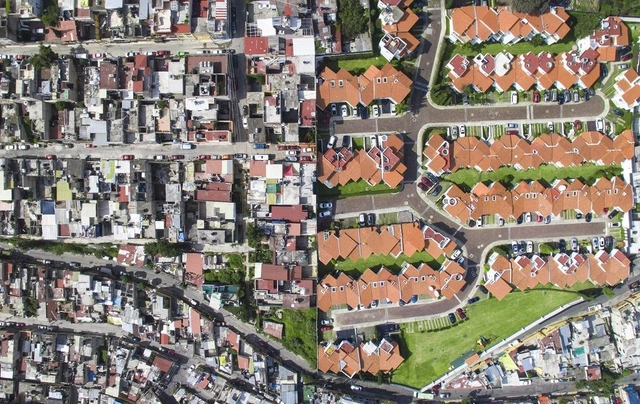
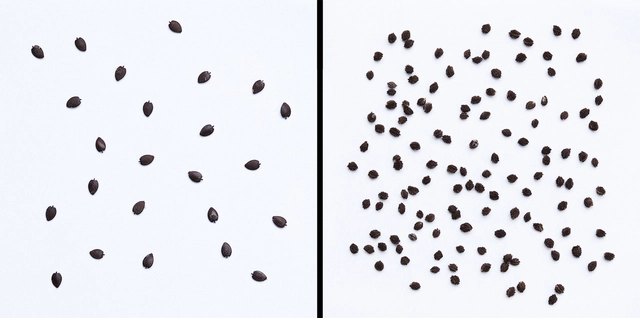
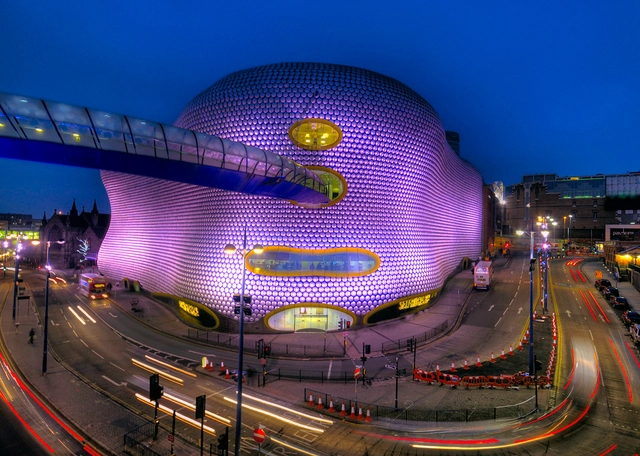
The new Zoomed In virtual photography and architecture festival has launched this week. Running from 21st - 24th of April, the festival brings together a diverse international selection of architectural photographers and cross-disciplinary creatives in a series of online talks and discussions, short film screenings, image galleries, and a charity print sale to raise funds for those most in need during the current pandemic crisis.
Yesterday, on the 20th of April, we passed the cap of 111 days of the pandemic. During this time, we’ve been busy fighting in supermarket aisles over toilet paper in Australia, lining up for marijuana purchases in Amsterdam and boosting gun demand in the USA. We are conscious none of those will help in fighting the virus, but we do it, nonetheless. Beyond the bizarre human psyche, this pandemic unveils interesting trends that will, whether we like it or not, impact on Architecture and Cities.
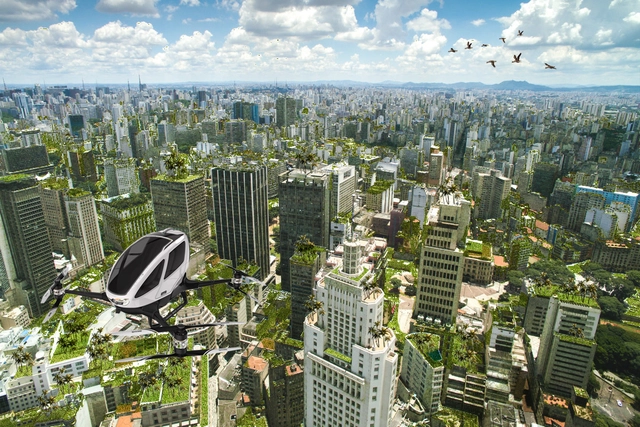
https://www.archdaily.com/937928/introducing-an-illustrated-series-architecture-and-cities-post-virusZaheer Allam, Gaetan Siew and Felix Fokoua
During the academic formation process, beginner architects are educated and trained to develop projects on the most “traditional” software. Several reasons might explain that: the partnerships that these companies usually make with the university labs, the lack of time to learn a new program, or the culture to use the most popular software.
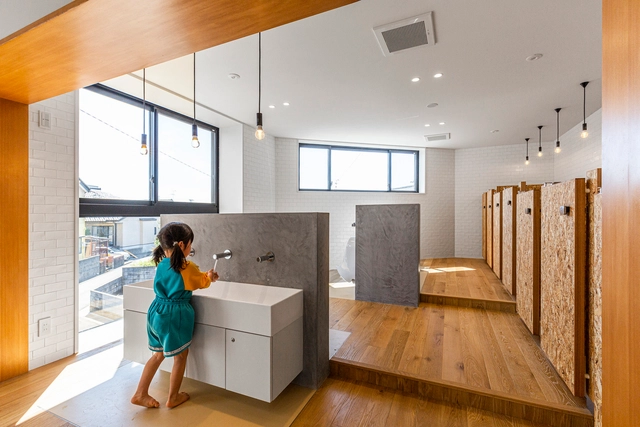
We often use the term accessibility when designing spaces for the elderly or for people with special needs. However, to guarantee effective universal design for children, it is necessary to understand and cater to their specific needs as well, especially through ergonomics, safety, lighting, colors, and some particular accessories. In this article, we will cover the most important parameters to consider when choosing dimensions and materials in public bathrooms for young children.
When discussing indigenous peoples, it always seems like something far from us, something that does not belong to us—relegated to the distant forest, to history, and so on. This segment of the population is often met only with prejudice and stereotypes. Even the term “indigenous culture” is commonly romanticized, even by self-proclaimed experts, whether out of ignorance, lack of access to accurate information, or sheer intellectual laziness. Yet the fact remains: we have always had indigenous peoples among us.
https://www.archdaily.com/1123466/indigenous-peoples-in-urban-spaces-it-was-not-the-village-that-came-to-the-city-but-the-city-that-came-to-the-villageDanielle Klintowitz, Fernanda Correia e Marcos Aguiar
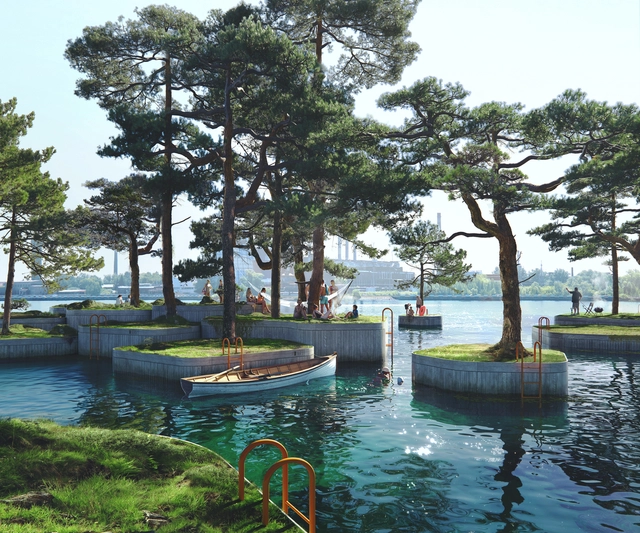
Marshall Blecher & Studio Fokstrot have introduced “wilderness and whimsy”, to the Danish capital by creating a series of floating islands in the city’s harbor. Adding a new archetype to the urban space, the project can be used by boaters, fishermen, kayakers, stargazers, and swimmers.
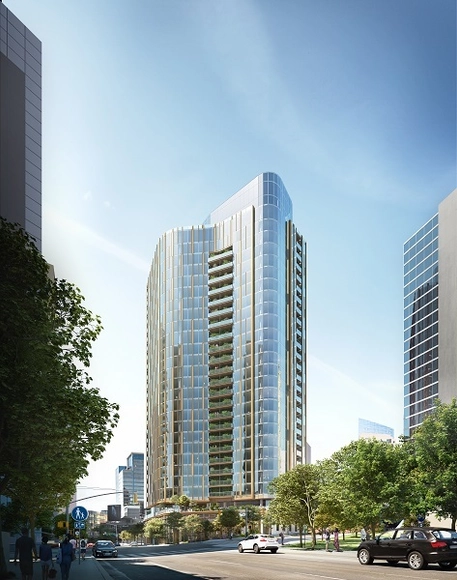
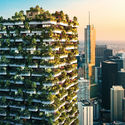
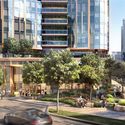
The Rastegar Property Company has announced plans to develop the tallest living wall in North America as part of a 26-story tower in Dallas. The building aims to improve local air quality with over 40,000 plants estimated to capture over 1,600 pounds of carbon dioxide and produce 1,200 pounds of oxygen annually. The development will be located across the street from the Union mixed-use complex.
One of wood's main appeals is its ability to bring visual warmth to a space, making it more welcoming and comfortable. Consequently, architects and interior designers frequently specify this material for flooring and wall cladding in a variety of species, patterns, and tones. However, moving beyond traditional applications, using wood for residential ceilings has become increasingly common. This approach not only enhances the cozy atmosphere and creates a sense of a lowered ceiling, but, above all, significantly improves acoustic comfort.
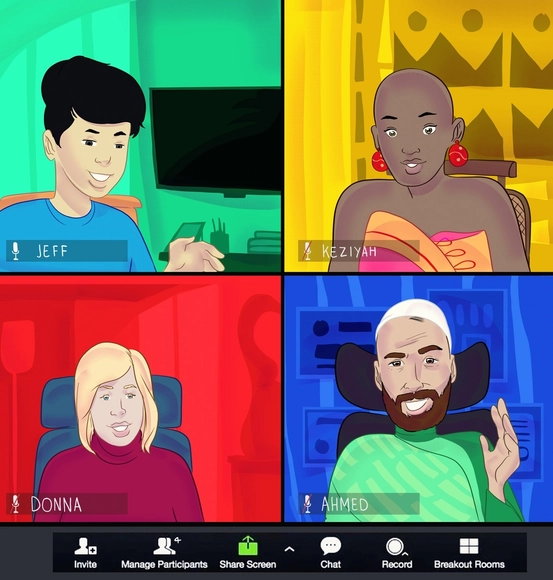
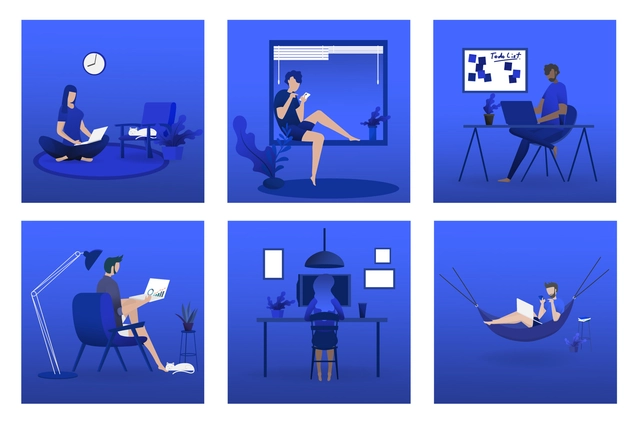
The impact of COVID-19 has disrupted daily life as we know it and caused a shift in technology trends within the workplace. Over recent weeks, businesses have found themselves hastily searching for and implementing temporary solutions to help them deliver an uninterrupted service. These solutions are highlighting the significant role technology plays in helping companies adapt to the situation and maintain daily operations. But what happens once the crisis is over?
Liam Young was once described by the BBC as "the man designing our futures". The Australian-born architect and director has carved a vibrant path through architectural discourse, standing at the intersection of design, technology, and media. A self-described "speculative architect", Young is the co-founder of thinktank Tomorrow's Thoughts Today, using vivid imagery and films to spark conversations about the future of the built environment, and the relationships between humans and machines, bits and atoms, artificial and natural. He also co-runs the Unknown Fields Division, a nomadic research studio that travels the world in search of landscapes that speak to his focus on global flows of materials, technologies, and ideas.
https://www.archdaily.com/936912/interview-liam-young-on-the-future-of-artificial-intelligence-in-architectureNiall Patrick Walsh
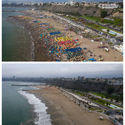
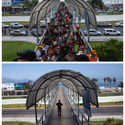
On March 16, in an effort to protect public health and reduce the transmission of COVID-19 in Peru, the country declared a mandatory quarantine. Under this exceptional measure, all residents must remain in their homes until—for the time being—April 26, refraining from going to work and limiting their movement in public spaces. The restructuring of urban life is already striking: streets and public gathering spaces like plazas, parks, and beaches that were once overflowing with people are now completely empty.
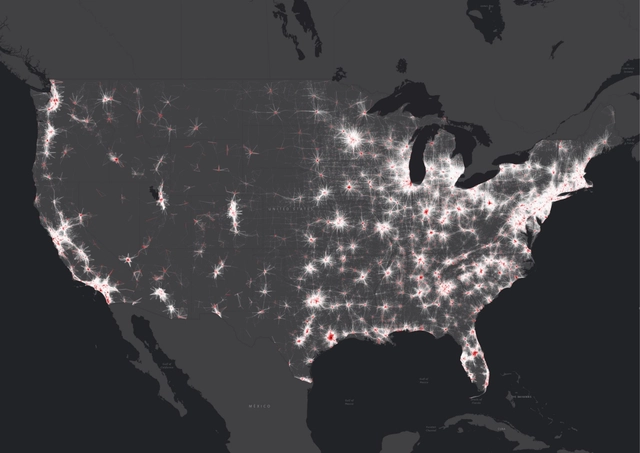
Intro GPS systems and Location Based Services give access to an important amount of data that is currently being used mostly for traffic analysis - but which, if properly processed, could open up infinite possibilities for planning.The access to these Mobility Big Data is no longer a privilege of large cities; on the contrary, it is possible to effectively apply the technologies to increasingly more diverse territories, from mega-regions to contained districts and cities. These data, when retrospectively compared to previously collected ones, lend themselves to multiple applications loosely related to the traffic issue, such as socio-demographic or economical studies. Systematica opens the doors of its laboratory to show us what are the potentials and limits of these tools, starting from a direct experience - a research project, developed in the Los Angeles area.
For the 2019 Shenzhen Biennale of Urbanism\Architecture (UABB), titled "Urban Interactions," (21 December 2019-8 March 2020) ArchDaily is working with the curators of the "Eyes of the City" section to stimulate a discussion on how new technologies might impact architecture and urban life. The contribution below is part of a series of scientific essays selected through the “Eyes of the City” call for papers, launched in preparation of the exhibitions: international scholars were asked to send their reflection in reaction to the statement by the curators Carlo Ratti Associati, Politecnico di Torino and SCUT, which you can read here.
The Midnight Charette is an explicit podcast about design, architecture, and the everyday. Hosted by architectural designers David Lee and Marina Bourderonnet, it features a variety of creative professionals in unscripted conversations that allow for thoughtful takes and personal discussions. A wide array of subjects are covered with honesty and humor: some episodes provide useful tips for designers, while others are project reviews, interviews, or explorations of everyday life and design. The Midnight Charette is also available on iTunes, Spotify, and YouTube.
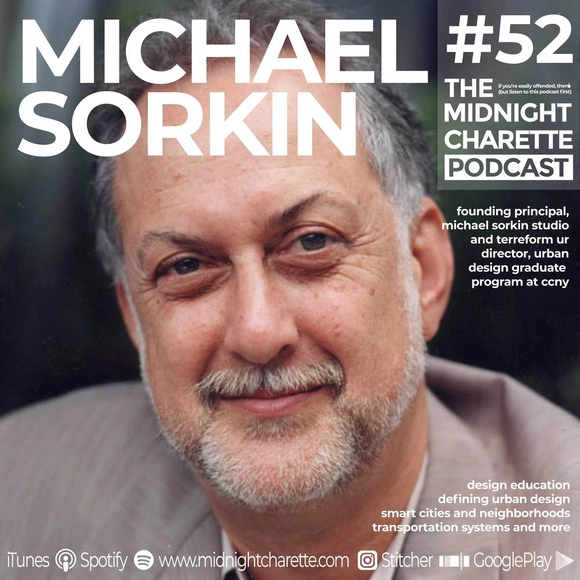
This episode features the conversation between the podcast hosts and Michael Sorkin, who recently died of Coronavirus at the age of 71. The talk discusses neighborhoods, gentrification, smart cities, city development, teaching design and more!
https://www.archdaily.com/937841/michael-sorkin-on-cities-gentrification-and-teachingThe Second Studio Podcast
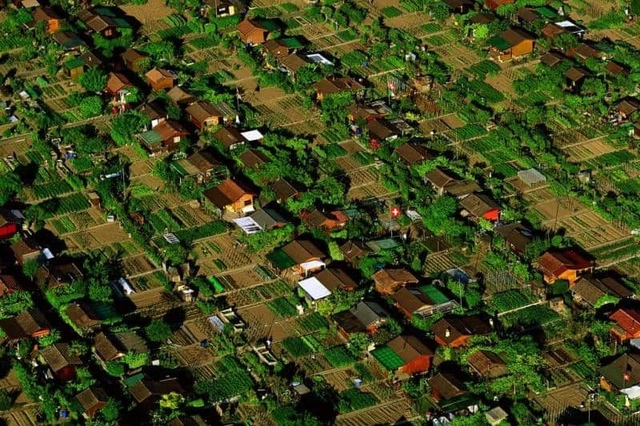
Les Avanchets is a Swiss town where the majority of residents grow their own food in home gardens. Beyond cultivation, trading food is also common practice: those with surplus carrots trade them for cabbage or lemons, ensuring everyone has access to a healthy, diverse, and pesticide-free diet.
In this short video by Louisiana Channel, Junya Ishigami talks about Tokyo and what he sees as the defining traits of the vibrant and diverse metropole. Discussing what he likes about the city, the renowned Japanese architect underlines Tokyo’s polycentrism and explains how being made up of different small town allows the city to preserve its very local characteristics.
Once the period of lockdown and widespread contamination of the epidemic is over, we will no longer be the same. This phrase has been repeated time and again, and indeed, global society will never be the same. Work relations are likely to change, and labor laws may adapt to allow technology to become an ally in employer-employee relations, ultimately yielding a positive impact on mobility, the environment, and energy consumption.
https://www.archdaily.com/1123986/how-the-covid-19-pandemic-will-challenge-us-to-create-new-public-spacesAna Paula Wickert
In this week's Seminar on Culture and Contemporary Reality, organized by Escola da Cidade, Guilherme Wisnik speaks with Ana Luiza Nobre, an architect and professor at PUC-Rio, where she coordinates the Là/Laboratório de Análises Arquitetônicas.
https://www.archdaily.com/1124072/un-common-waiting-conversation-between-guilherme-wisnik-and-ana-luiza-nobreArchDaily Team
The word and the ear, along with the heart, have many paths, many ways, many calendars, and many geographies to find each other. And this struggle for life can be one of them. - Communiqué from the Zapatista Army of National Liberation regarding COVID-19
While governments around the world call for “social distancing” and some of them militarize public space through violence and the shattering of collectivity, the Zapatista Army of National Liberation calls to “raise high the banner of the struggle for humanity,” to not lose human contact, and to keep social struggles alive.
https://www.archdaily.com/1124192/the-pandemic-makes-visible-what-has-always-been-there-inequality-and-individualismMariana Ordoñez y Jesica Amescua
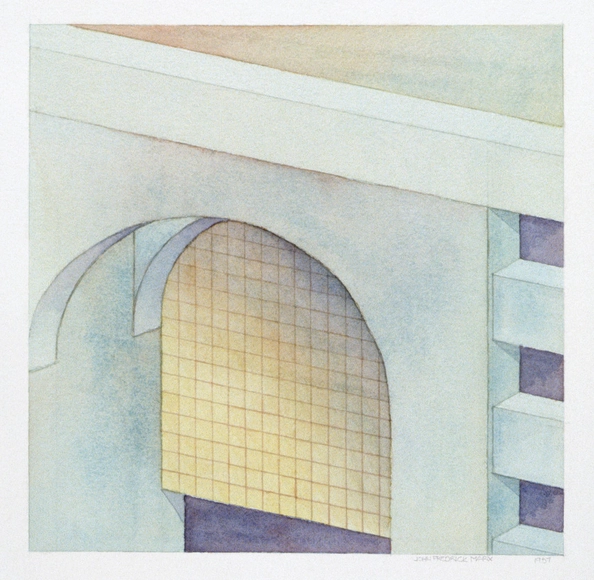
Etudes is a rare thing amongst architecture books. Its subject is neither built nor unbuilt projects but instead imaginary places and abstract compositions by San Francisco architect John Marx. Rendered in delicate watercolours, Marx’s places are dreamlike and akin to the structure and sentiments of his taut poetry that sits alongside pages of his paintings.
Curiously, the quiet streets and vacant landscapes of Marx’s imagination speak to us in an acutely timely fashion as we find ourselves in a new world of empty cities closed for business, a world that feels as if it has come to a standstill.
Hashim Sarkis, the curator of the 17th International Architecture Exhibition organized by La Biennale di Venezia, launched a striking visionary theme at the beginning of this year: “How will we live together?”. This fundamental question finally transcends all disciplines and opens an existential portal for humanity. It does not refer only to humans but all species, the nonhuman organisms as well.
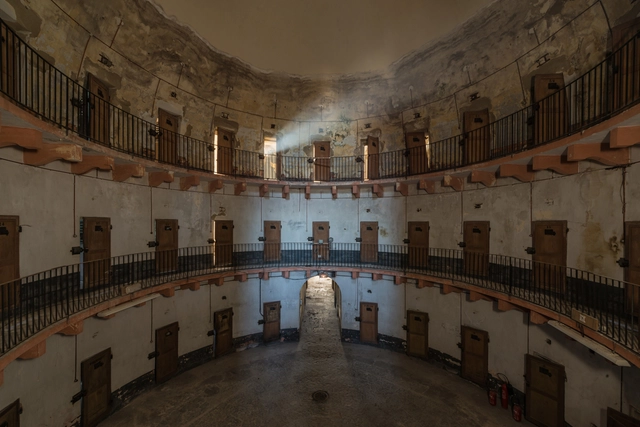
An expression of power and a symbol of surveillance, the panopticon is a notorious architectural concept intended as a disciplinary mechanism. Photographer Romain Veillon shares his images of the Panopticon-inspired prison in Autun, France.
Having lost their sense of purpose, cities are searching for new meanings. Today we rely on digital social networks to access common goods like culture, leisure, and meaningful encounters—but how can we leverage technology to enable the right to the city during a pandemic? We are witnessing a global slowdown in urban development: the emptying of cities in India, the urban exodus in France, and a return to smaller towns and rural areas where there is lower population density and a higher quality of life. What is the city if not the promise of access to the commons it offers?
Radical neofuturist architect Jan Kaplický (18 April 1937 – 14 January 2009) was the son of a sculptor and a botanical illustrator, and appropriately spent his career creating highly sculptural and organic forms. Working with partner Amanda Levete at his suitably-named practice Future Systems, Kaplický was catapulted to fame after his sensationally avant-garde 1999 Lord's Cricket Ground Media Centre and became a truly innovative icon of avant-garde architecture.
When I look at the architecture of Guillermo Acuña, I am quickly reminded of those well-known Chilean wooden houses scattered across the territory—those that mark distant points on the hills and gently blur the edges of the coastline, those that rise lightly and blend with nature, teaching us about material honesty and a connection to the landscape. Those that remind us of where we come from and of what humans create.
This is why we reached out to the office of GAAA for a brief interview, to hear the story behind their inspirations, purposes, explorations, and future vision.
-Alastair-Philip-Wiper.jpg?1587401464)
-Alastair-Philip-Wiper.jpg?1587401452 "Courtesy of Zoomed In Festival")

-Alastair-Philip-Wiper.jpg?1587401464)








_2605.jpg?1587110718&format=webp&width=640&height=580)