In the early hours of January 11, 1967, a polar air mass swept into the country, bringing snow to Mexico City and blanketing the entire capital under a soft, pristine white layer. One day, more than 50 years ago, our urban sprawl woke up covered in white. It was not smog, nor the pollution of an unrelenting beltway; it was pure snow. The last time it snowed in Mexico City was January 11, 1967. That day, schools closed, people went outside to build snowmen and throw snowballs, and emergency services were overwhelmed by the beautiful catastrophe of so much snow.
Since 1996, JSa has operated as a design studio focused on "reconverting, rehabilitating, restoring, compensating, reinserting, reoccupying, and reinhabiting" sites specifically located in the Roma and Condesa neighborhoods of Mexico City. Founded by Javier Sánchez, the studio aims for "architecture to link everyday life from the intimate space, adapting to urbanity and transforming it by weaving cities from their communal areas and the home, the epicenter and reason for existence of metropolises."
Charlas de Terraza is an initiative hosted at the office of OPUS in Medellín. It features conversations that extend beyond architecture and, adapting to the COVID-19 lockdowns, is currently being held virtually. Alongside these talks, there is another initiative dedicated to sketching called Club de Dibujo (Drawing Club). In this session, both formats merged as the Medellín-based practice, along with Alejandro Enriquez from Bogotá, discussed the sketch and its process.
The BIM methodology is based on the comprehensive management of an architectural project throughout all its phases, as well as its entire lifecycle. To achieve this, we rely on a series of software tools that allow us to manage project information more effectively, significantly contributing to the reduction of costs and execution times.
https://www.archdaily.com/1053360/learn-to-manage-your-bim-projects-with-this-comprehensive-autodesk-navisworks-courseGoPillar Academy
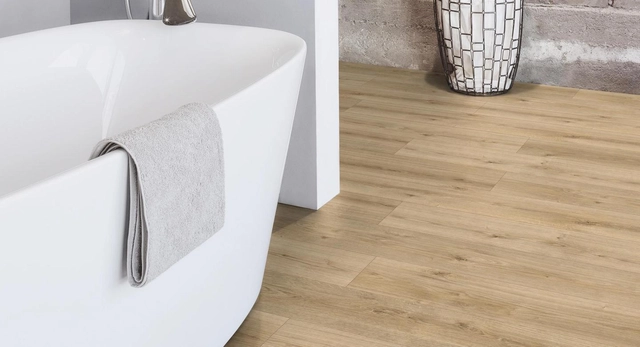
Indoor flooring must not only withstand foot traffic but also resist a range of daily impacts, including contact with cleaning products, waxes, and other liquids. With wood flooring, wear can be even more apparent, as water exposure can rapidly deteriorate its appearance and performance, especially if proper protection and maintenance measures are not taken.
However, new technologies continue to enhance the characteristics of laminate flooring, offering an appearance similar to natural wood while providing high resistance to daily wear and, specifically, moisture.
https://www.archdaily.com/1053453/water-resistant-laminate-flooring-how-it-works-and-design-examplesSponsored Post
Developing a real estate project from scratch is a major challenge, given the significant investment involved and the expectations placed upon it. The purchase of land, its study, design, construction planning, and subsequent stages entail a series of requirements and details that must be considered before taking any action. To determine the viability of a plan, it is essential to conduct a feasibility study—a determining factor for making sound decisions. In this article, developed by the team at Arquigestión, you will find the necessary requirements, as well as key concepts to understand the logic behind this requirement, from the macro to the micro level.
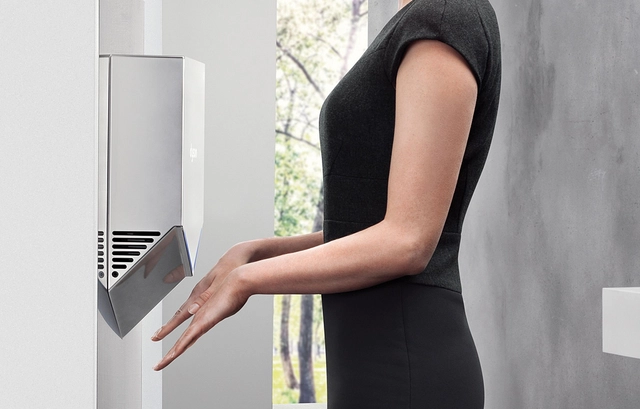
Secador de manos Airblade V. Image Cortesía de CHC
In light of the pandemic we are facing as a society, we have begun to question various habits that we may have normalized for a long time. Consider our methods of greeting: is physical contact truly necessary to establish a greeting? We could look to countries like Japan, where people greet with a bow, or Thailand, with the "Wai"—a greeting performed by inclining the head with palms pressed together—or perhaps even a clap, as is the custom in Zimbabwe.
Physical contact does not only refer to people, but also to the objects we touch daily. One of the primary recommendations for preventing the spread of COVID-19 is hygiene, which is primarily maintained in the bathroom. Yet, how can we use a bathroom without touching equipment that has already been used by someone else? It is almost a contradiction. This question is even more relevant in public restrooms. Consider the typical sequence of actions we perform in such a facility; how many times must we touch an object?
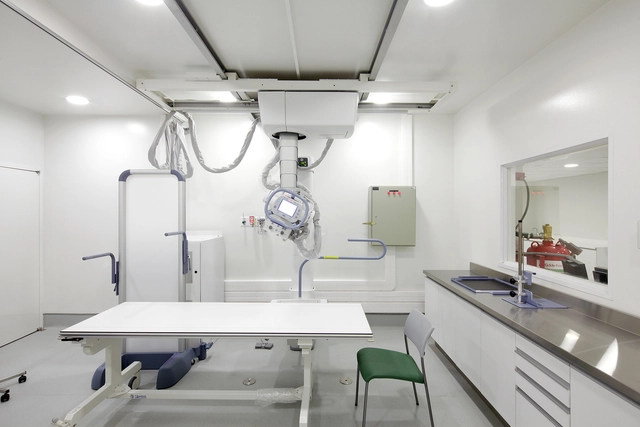
Hospital de La Florida / BBATS Consulting & Projects + Murtinho Raby Arquitectos + Soledad Cordova (Mobiliario). Image Cortesía de Arauco
The emergence and spread of COVID-19 have increased interest in understanding and analyzing the composition of the materials that make up the spaces we inhabit. On an average desk, it is possible to find more than 10 million germs, and nearly 80% of infections occur through contact with them. What material is your workspace, living room, or kitchen furniture made of?
Today, we are paying increasing attention to our daily environment, and it is beneficial to identify materials that allow us to reconcile these new concerns with the functions and aesthetics of the surfaces around us.
The COVID-19 pandemic, which now affects more than 180 countries worldwide, has changed how we relate to everything. Our social and consumption practices are limited, and we have had to rely on digital tools to maintain distance while attempting to remain operational. In light of this new landscape, concepts like "home office" and "e-commerce" are becoming commonplace.
A few weeks ago, we reviewed how architects are adapting to remote work, seeking to maintain adequate production levels from home. It is easy to imagine that the initial stages of the design process can be carried out easily from home, but what happens in the later phases, when the architect must work on-site or select and specify the materials and products necessary for construction?
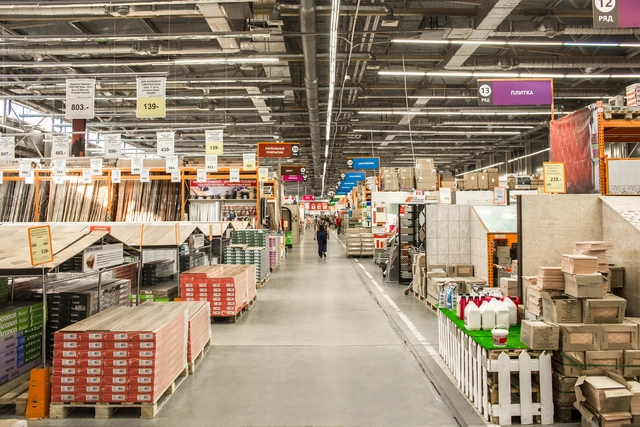
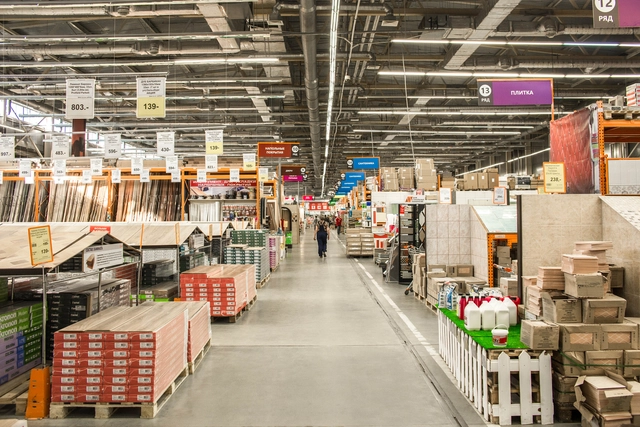
https://www.archdaily.com/1053298/e-commerce-architecture-and-construction-is-it-possible-to-buy-materials-and-products-onlinePola Mora
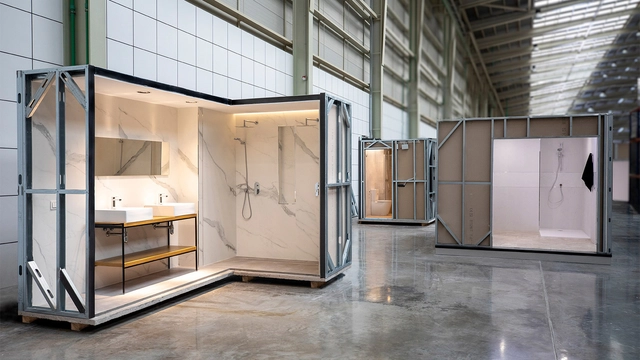
Prefabricated systems have become an effective option for completing projects that require standardized modular solutions, such as hotels, hospitals, residences, and residential buildings. The primary advantages of using ready-made modules are reduced labor time, optimal control, and project traceability. While the functional value of these systems—in terms of their quick and easy execution—is significant, the use of quality materials provides additional value. However, to understand how these modules function and are applied, it is first necessary to understand their origin and process.
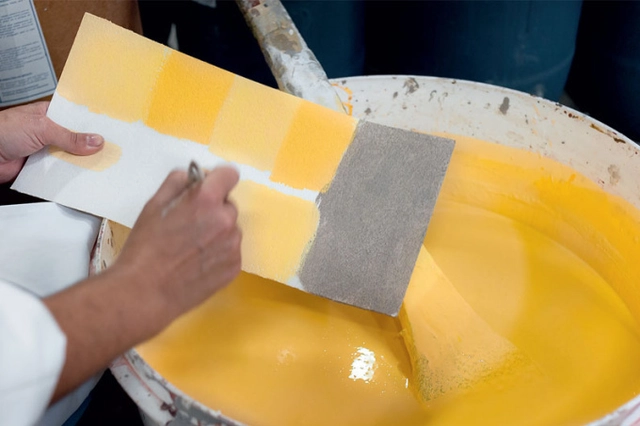
There are various professions that, in our traditional view of work, seem strange or unusual to combine. This is the case for architect Leo Laniado and chemist Osiel Alves Pereira, who joined forces to produce handmade paints with extraordinary results. This leads us to consider the role of interdisciplinary integration in achieving more productive and comprehensive solutions. Is it multidisciplinarity, pluridisciplinarity, or interdisciplinarity? The case of Laniado and Alves demonstrates once again the success that comes from merging skill sets in the professional and, above all, creative spheres.
When describing a place we like, we generally refer to sensations rather than physical aspects. This occurs because space directly influences our emotional state. For this reason, when designing a specific environment, it is important to understand its use and the desired character, which is determined by the sum of various physical elements that form a harmonious whole. Among these components is the cladding, which covers surfaces and is often the only material we perceive. In this article, we will discuss large-format pieces specifically and their impact on space.
Carpentry is the term we have always associated with furniture manufacturing, but as interior design has taken on a more significant role in our daily spaces, the related terminology has diversified. This is why we have begun to hear about thermolaminated furniture, though we may not know exactly what it means. Fundamentally, thermolamination is an industrial process in which a plastic film is adhered to a surface to manufacture highly resistant and durable products, allowing for the design of distinctive, curved pieces.
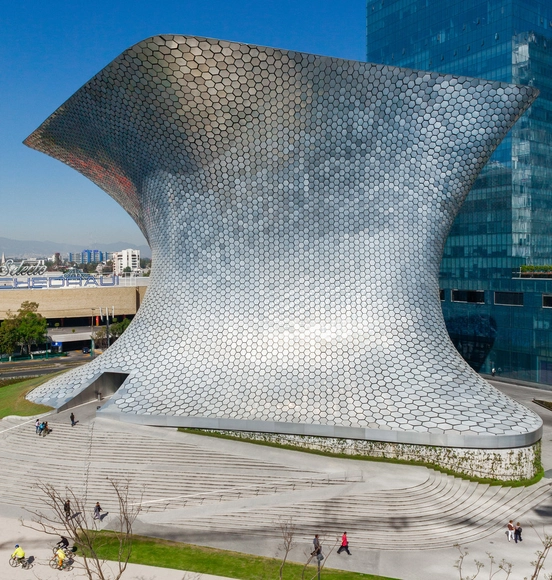
Museo Soumaya / FR-EE / Fernando Romero Enterprise. Image
When constructing a building, it is essential to define the waterproofing method to be used, as this serves to protect the structure from structural failure, ground movement, and water or moisture infiltration. Therefore, whether for a roof, terrace, swimming pool, road, or underground structure, choosing the right solution is necessary. Selecting the correct protective and insulating barrier prevents damage and unforeseen issues, ensuring high durability and strong performance. However, the guarantee of an effective and secure system relies primarily on the integration of solutions that are compatible and adaptable to multiple substrates or complex geometries.
By examining various high-impact international urban projects—using systems developed entirely by Soprema—we will explain why it is important to consider waterproofing as an integrated system rather than a collection of isolated products.
The COVID-19 pandemic, which is currently affecting more than 180 countries worldwide, has fundamentally changed how we interact with everything. Our social and consumption habits are restricted, and we have had to rely on digital tools to maintain distance while attempting to remain operational. In light of this new landscape, concepts such as "home office" and "e-commerce" are becoming commonplace.
A few weeks ago, we examined how architects are adapting to remote work, striving to maintain consistent production from afar. It is easy to see how the initial stages of the design process can be carried out from home, but what happens during the later phases when architects must work on-site, or select and specify the materials and products required for construction?
https://www.archdaily.com/1053290/e-commerce-architecture-and-construction-is-it-possible-to-buy-materials-and-products-onlinePola Mora
The COVID-19 pandemic, which is now affecting more than 180 countries worldwide, has changed how we relate to everything. Our social and consumption practices are limited, and we have had to rely on digital tools to maintain distance while attempting to remain operational. In light of this new landscape, concepts like home office and e-commerce are becoming common.
A few weeks ago, we looked at how architects are adapting to remote work, seeking to maintain adequate production levels from home. It is not hard to imagine that the early stages of the design process can be easily carried out from home, but what happens in the later phases, when the architect must work on-site or select and specify the materials and products necessary for construction?
https://www.archdaily.com/1053295/e-commerce-architecture-and-construction-is-it-possible-to-buy-materials-and-products-onlinePola Mora
There are various ways to remodel interior spaces, and it is not always necessary to break down walls or make structural changes that generate dust, noise, and odors. Sometimes a space can be greatly improved with simple yet significant touches that can be carried out quickly and easily, without the need for skilled labor or excessive expenses.
3M architectural vinyls allow for radical renovations, completely changing the look of a space without producing debris. Thanks to their adhesive technology, they can be applied to walls, ceilings, elevators, furniture, panels, and other existing surfaces, replacing their previous appearance with patterns and textures such as wood, concrete, carbon fiber, marble, solid colors, textiles, and more.
Until a few years ago, the direct relationship between architectural design and the various viruses we live with went largely unnoticed. At 0.00001 millimeters in size—a hundred times smaller than bacteria—their presence is as invisible as it is threatening. Due to the emergence of COVID-19, we are now more aware that their existence and transmission can be controlled through intelligent design decisions and the proper selection of materials.
While not all viruses are harmful to human health, bathrooms can be particularly conducive to the spread of viral pathogens due to their function as spaces for bodily hygiene and waste disposal. Which materials and products can help maintain the hygiene and health of these spaces?
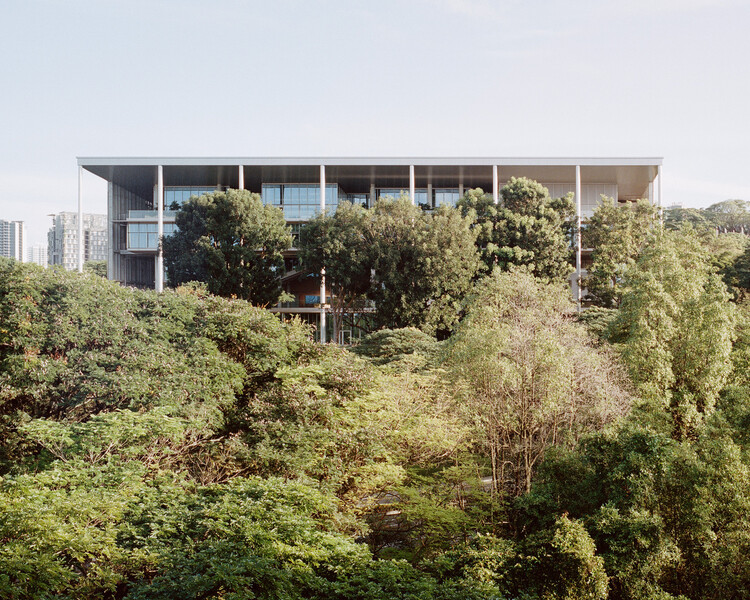
NUS School of Design & Environment / Serie Architects + Multiply Architects + Surbana Jurong. Image Courtesy of Serie Architects + Multiply Architects + Surbana Jurong
This article is part of our new Opinion section, a format for argument-driven essays on critical questions shaping our field.
Before architecture students become authors of space, they are subjected to one. For years, they work inside a building that teaches without announcing itself as a teacher. It organizes their exhaustion, their ambition, their visibility, their solitude, their friendships, their sense of scale, and their relationship to judgment. Long before a student can articulate a position on architecture, the school has already offered one in its implicit built environment.
This is not to suggest that buildings determine architects. The influence is slower and less complete than that. A school building operates more like a hidden curriculum: a spatial discipline that works alongside faculty, syllabi, institutional culture, and student life. It teaches through access and obstruction, program adjacencies, daylight exposures, and scale. It produces habits of attention before it produces explicit beliefs.
This week on the TERRAZA podcast, Nicolás Valencia speaks with Chilean sociologist and Universidad San Sebastián academic Ricardo Greene, editor of the landmark book "Ciudad Fritanga," published by Editorial Bifurcaciones in 2014.
"Ciudad Fritanga" compiles 34 chronicles of non-metropolitan Chilean cities like Arica, Talca, and Punta Arenas through the lens of poets, artists, and writers such as Lina Meruane, Jorge Baradit, Marcelo Mellado, and María José Navia.
"When people write about cities, they write about London, Berlin, and New York. That is the urban chronicle. However, non-metropolitan cities are also cities," Greene comments in this interview.
https://www.archdaily.com/1078822/ricardo-greene-perhaps-boredom-defines-non-metropolitan-citiesArchDaily Team
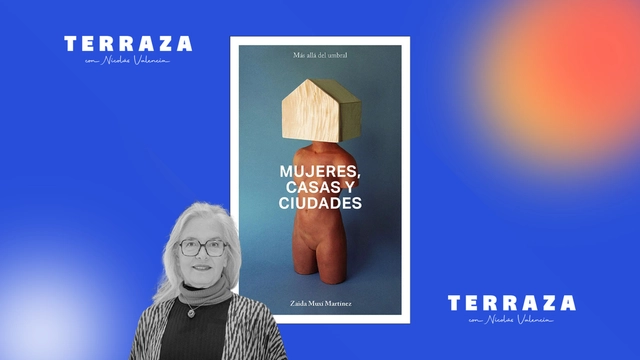
This week on the TERRAZA podcast, Nicolás Valencia speaks with Argentine-Spanish architect Zaida Muxí, author of the book “Mujeres, casas y ciudades” (Women, Houses, and Cities), published by dpr-Barcelona in 2018.
In “Mujeres, casas y ciudades”, Muxí proposes rewriting the history of architecture and urbanism by incorporating the contributions of the many women who have been silenced in mainstream historical accounts.
“If we want to play by market rules, housing will never be a right,” Muxí posits in this interview.
https://www.archdaily.com/1078787/zaida-muxi-no-one-resolves-a-family-life-in-35-square-metersArchDaily Team
The rise of sustainability and the circular economy is transforming the construction industry, driving a growing demand for new specialized roles. Positions such as sustainability managers or circular economy consultants are becoming increasingly common in contemporary projects.
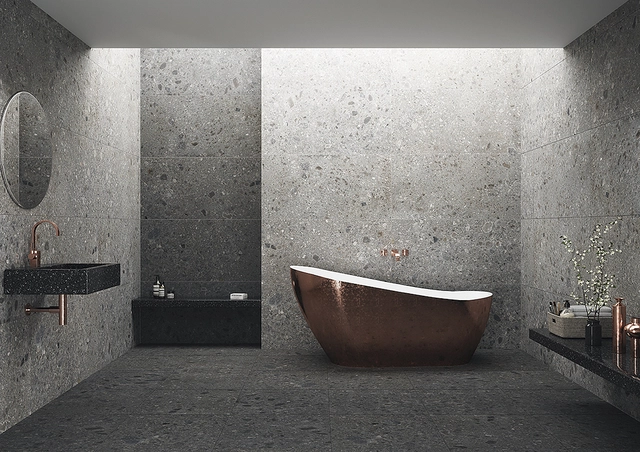
A exclusiva tecnologia Mineral LAB eleva a estampa a um patamar ainda mais sofisticado por conta dos relevos e efeitos surpreendentes. A granilha utilizada neste processo oferece ainda resistência ao escorregamento, sem a aspereza dos produtos convencionais. Image Cortesia de Roca Brasil Cerámica
In 2024, the evolution of porcelain tiles has elevated the tactile experience to a new level, transforming them into true works of art. Produced with mineral texture printing technology, the collections feature striking reliefs in dimensions of 120 x 120 cm, 100 x 200 cm, 120 x 250 cm, 160 x 160 cm, and 160 x 320 cm, designed to awaken all the senses. Behind this advancement is Roca Brasil Cerámica, part of the Mexican LAMOSA Group, leading the Roca Cerâmica and Incepa brands.
"Drinking Caracu is drinking health." This is what read on the massive blank wall of a building in downtown São Paulo on the morning of May 1, 2018. Hidden for decades, the advertisement for the famous beer brand now loomed before a massive heap of concrete, twisted metal, and shattered glass. This was the rubble to which the iconic Wilton Paes de Almeida Building had been reduced—a modernist landmark designed by architect Roger Zmekhol and the subject of the documentary Skin of Glass, directed by his daughter, Denise Zmekhol.
The film transcends traditional architectural documentation by blending a personal narrative with the political complexities of contemporary Brazil, a country shaped by deep inequalities and erased memories. At the heart of the story is the building itself, considered a landmark of Brazilian modern architecture, which collapsed in 2018 after a tragic fire.
.jpg?1579012158&format=webp&width=640&height=580)