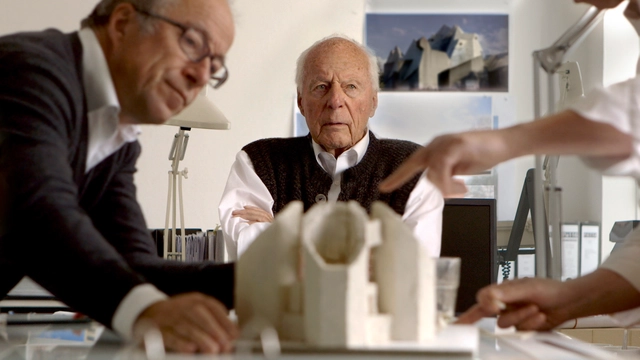
An expert in shell structures and a pioneer of the morphogenesis in the field of architecture and civil engineering, Mutsuro Sasaki is a professor at Tokyo's Hosei University. He is also one of the founders of Sasaki Structural Consultants since 1980 and of SAPS / Sasaki and Partners since 2002. In extending the research work of Antoni Gaudi, Heinz Isler and Frei Otto, Sasaki's work has helped shape contemporary architecture in Japan and other countries. Mutsuro Sasaki is a long-standing structural engineers of Toyo Ito, Sejima and Nishizawa of SANAA, and of Arata Isozaki.
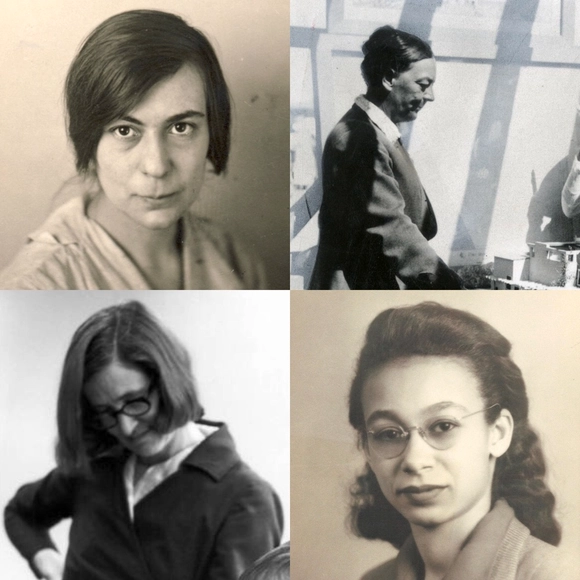
Pioneering Women in American Architecture, (clockwise from top left) Elsa Gidoni, Alice Constance Austin, Georgia Louise Harris Brown, Natalie Griffin de Blois. Courtesy Beverly Willis Architecture Foundation
In conjunction with Archtober and New York Archives Week, the Guggenheim will host its third Wikipedia edit-a-thon—or, #guggathon—to enhance articles related to women in architecture on Wikipedia, the world’s largest source of free knowledge.
"Shanshui City" by Ma Yansong, Lars Muller Publishers
Ma Yansong, Founder and Principle Partner of MAD Architects, will launch his most recent book Shanshui City on October 13th at The Architecture & Design Museum, Los Angeles. The free event will begin with a brief presentation on Shanshui City by Ma Yansong at 7:00 p.m. and will be followed by a conversation with Frances Anderton of KCRW’s DnA: Design and Architecture, and Dean Qingyun Ma from the USC School of Architecture.
Historic preservation activism in New York City did not begin in the 1960s with the fight to save Penn Station and the effort to pass the Landmarks Law—it began in the late 19th century. Little-remembered preservation pioneers like Andrew H. Green and Albert Bard, as well as various women's garden clubs, and patriotic and civic organizations laid the groundwork for the generations of preservationists that would follow. Join us to recount the triumphs, failures, and tactics of these early preservationists, and discuss what they might teach us moving forward.This program delves into the themes of our exhibition Saving Place: 50 Years of New York City Landmarks, on view through January 3.
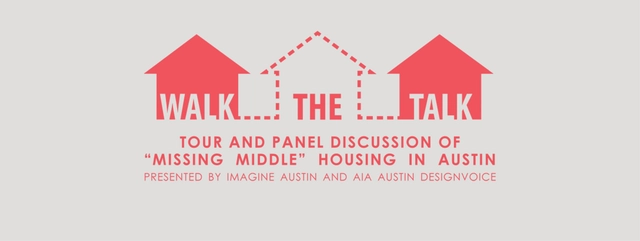
Walk the Talk—A talk and tour about “missing middle” housing in Austin
Walk the Talk—A talk and tour for people interested in learning more about “missing middle” housing in Austin. Join us for a panel discussion and self-guided tour of "missing middle" housing types—such as duplexes, fourplexes, courtyard housing, and accessory dwelling units—in the Blackland and Cherrywood neighborhoods. Our expert panel represents varied perspectives on the subject. After a Q&A session, participants can easily bike or walk to the missing middle sites in the neighborhood. We welcome you to join the conversation!
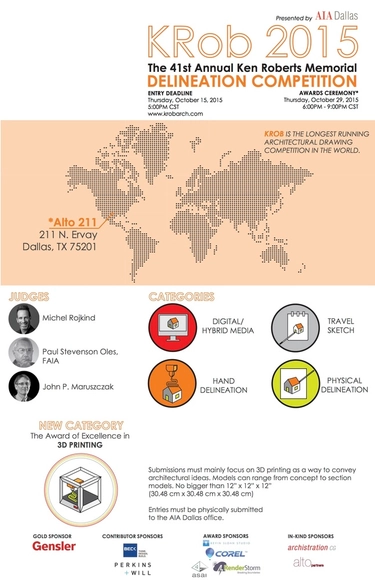
The Dallas Chapter of the American Institute of Architects has announced its 41st Annual Ken Roberts Memorial Delineation Competition. Dubbed “KRob,” it is the longest running architectural drawing competition of its kind.
The competition accepts conceptual or final elevations, sections, perspectives, and renderings, drawn by hand, digitally, or by a combination of both. Additionally, this year’s competition features a new category for 3D printed models.
Light Pavilion, World Nightscapes. Photo Credit: Lighting Planners Associates
In celebration of the International Year of Light in 2015 and the practice's 25th anniversary, Lighting Planners Associates (LPA) is putting up an ambitious show Nightscape 2050, with the exhibition travelling from Berlin to Singapore and then to Hong Kong and Tokyo, from August 2015 to June 2016. Nightscape 2050 is intended to be one of its kind for Light and Lighting, in which visions of the future of lighting and the way LPA imagines to use this light are shared with the visitors.
Drawings from the private collection of Alvin Boyarsky, Chairman of the Architectural Association (AA) from 1971 to 1990, will be on display as part of Drawing Ambience: Alvin Boyarsky and the Architectural Association. Hosted by The Irwin S. Chanin School of Architecture of The Cooper Union from October 13 to November 25, 2015, the free, public exhibit will also feature panel discussions with Nicholas Boyarsky, Joan Ockman, Bernard Tschumi, Anthony Vidler, Michael Webb and Dean Nader Tehrani. Read more about this event and the drawings exhibited after the break.
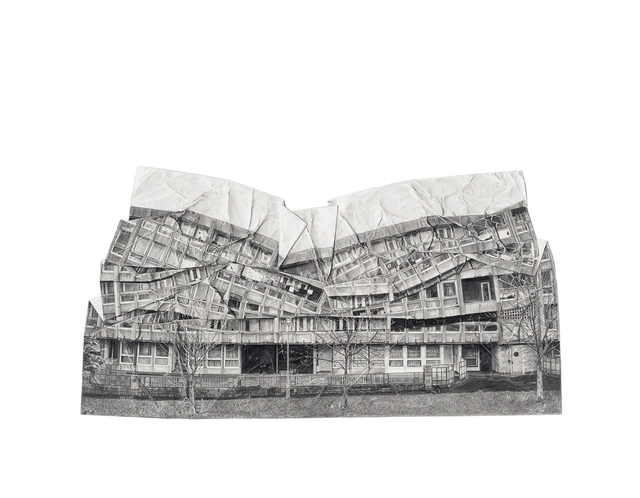
Jessie Brennan A Fall of Ordinariness and Light (2014) Graphite on paper (framed in aluminium), 57.5 x 71.5 cm, commissioned for Progress by the Foundling Museum, 2014
RIBA Bookshop presents the book launch of 'REGENERATION! Conversations, Drawings, Archives & Photographs from Robin Hood Gardens' by Jessie Brennan. The publication contains Brennan’s two series of drawings Conversation Pieces and A Fall of Ordinariness and Light, among other research – including contributions by authors Owen Hatherley and Richard Martin – from Robin Hood Gardens estate in east London.
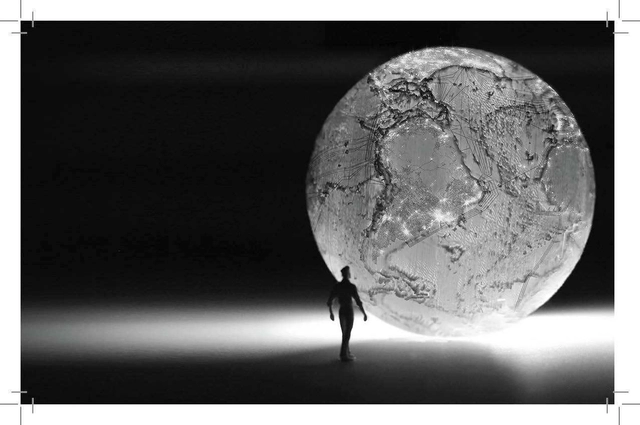
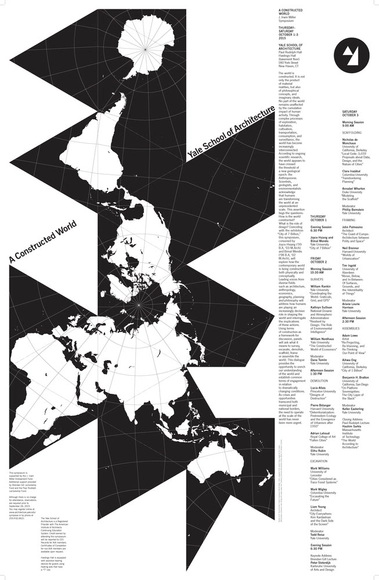
The J. Irwin Miller Symposium, “A Constructed World,” is convened by Joyce Hsiang and Bimal Mendis in conjunction with the exhibition, “City of 7 Billion,” at the Yale School of Architecture. The philosopher and cultural critic, Peter Sloterdijk, will deliver the keynote address, and Hashim Sarkis, Dean of the School of Architecture and Planning at MIT, will deliver the concluding address.
2015 marks the 20th Anniversary of Canstruction Boston. The 2015 theme is "Celebrate 20 years in Boston!" Canstruction Boston is a charity event and exhibition in which teams of Boston-area architects, engineers, contractors, designers and students compete to display colossal sculptures made out of canned goods. After the sculptures are dismantled, all the canned goods will be donated to the Merrimack Valley Food Bank in Lowell, Massachusetts.
Rothschild Tower. Photo by Diana Carta Courtesy Richard Meier & Partners Architects
Richard Meier & Partners is pleased to announce Richard Meier: Process and Vision at Mana Contemporary Chicago in partnership with the inaugural Chicago Architecture Biennial.
Richard Meier’s international body of work is acclaimed for its timeless, classic design from the Museum of Contemporary Art in Barcelona to the Getty Center in Los Angeles to Rome’s Jubilee Church. Each project throughout Richard Meier’s decades of architectural practice has posed its own set of inherent challenges, whether social, environmental, technological, or economical.
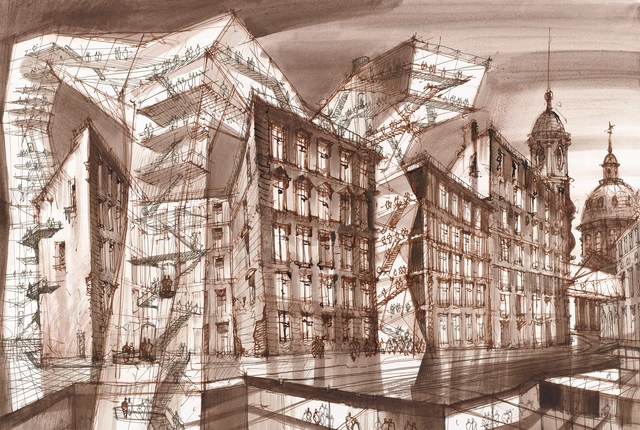
Future Bridges 1. Indian ink, sepia, watercolor on paper, 2014
The harmonial contrast is the harmony of the 21st century: polyphony is meant to be the new language of the contemporary architecture. For several years now, the architect and artist Sergei Tchoban masters this language at its best by reflecting the multiple layers and ambivalent soul of our cities in his architectural drawings. The historical fabric and the present urge towards a significant object-based architecture are melted in fantasy-like perceptions. His hybrid structures of ancient buildings and modern glass towers may also remind of Bach´s Inventions: in a piece with two, three or more parts each of them unfold equally.
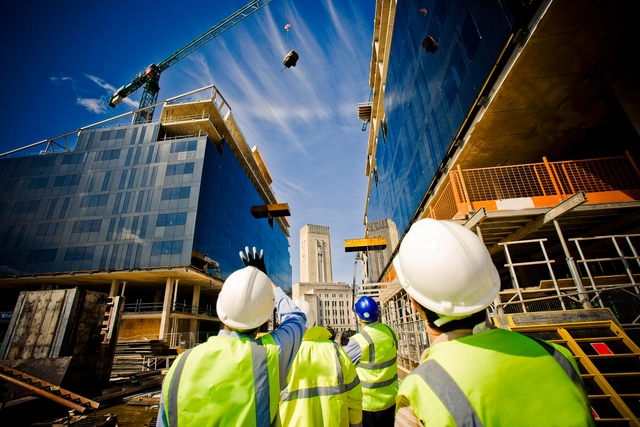
From a review of claims involving innovative design, new materials and value engineering through to the impact of the Insurance Act 2015 and an assessment of the particular difficulties associated with concurrent delay, this conference, chaired by Paul Reed of Hardwicke, examines a range of topical and tricky issues and will appeal to all those who need to keep up to date with all the latest hot topics and big issues.
Videos
'Concrete Love: The Architecture of the Böhms' will open the festival on the 7th October 2015. Image Courtesy of AFFR
It's only logical that Rotterdam, one of Europe's leading cities for architecture and architectural practice, has a biennial film festival. Since its inception in 2000, the city's homage to architectural cinema now claims to be the biggest architectural film festival in the world. Featuring over one hundred international documentaries, feature films and shorts—as well as debates, lectures and seminars—this year's festival plans to "provide a podium for discussing the city and future of spatial development." From cinematic journeys into the world of the illusive Böhm family to Zaha Hadid, Chinese ghost cities to London's Barbican estate, this year's programme circles around the theme of the Global Home.
With the eighth incarnation of the Architecture Film Festival Rotterdam (AFFR) opening next week (running from the 7th - 11th October 2015), we've selected our five top picks from this year's schedule.
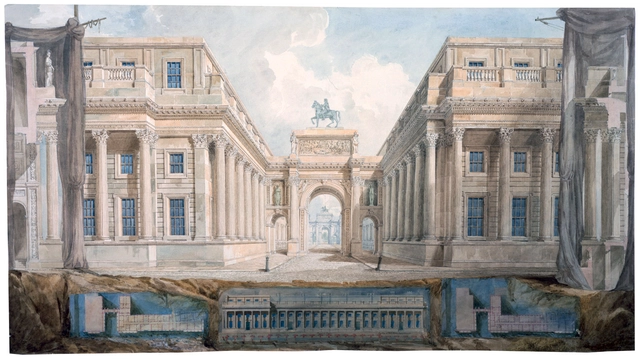
Presentation drawing for the proposed rebuilding of Downing Street with two Triumphal Arches in perspective. Pencil, pen and ink, watercolor & bodycolor ca. 1827
Tchoban Foundation Museum for Architectural Drawing is hosting its second exhibition from Sir John Soane's Museum, showing masterpieces of British Neoclassicism. The exhibition illustrates the ambition of leading British architects of the late 18th century who strove to create new architecture in the Classical tradition that could compete – in terms of public works, private houses, mausolea, interior detail and even furnishings - with the glories of the Ancient World.
Volunteers support a Build It Green project in Queens during last year's Day of Impact. Photo by Sakeenah Saleem, courtesy of AFHny.
This Archtober, join over one hundred architects and design professionals in making an impact in their local communities through AFHny’s annual city-wide service day.
Participants will work alongside some of the region’s leading community-focused organizations through hands-on painting, planting, and rebuilding projects, all of which will improve New York's neighborhoods on both physical and social levels.
The world is constructed. It is the product of material realities, philosophical concepts, and imaginary ideals. No part of the world remains unaffected by the cumulative impact of human activity. Through complex processes of exploration, habitation, cultivation, transportation, consumption, and surveillance, the world has become increasingly interconnected. According to ongoing scientific research, the world appears to have crossed the threshold of a new geological epoch: the Anthropocene. Scientists, geologists, and environmentalists acknowledge that humans are transforming the world at an unprecedented scale. This assertion begs the questions: How is the world constructed? What is the role of design?