The largest private project New York City has seen in over 100 years may also be the smartest. In a recent article on Engadget, Joseph Volpe explores the resilience of high-tech ideas such as clean energy and power during Sandy-style storms. With construction on the platform started, the Culture Shed awaiting approval, and Thomas Heatherwick designing a 75-Million dollar art piece and park – the private project is making incredible headway. But with the technology rapidly evolving, how do investors know the technology won't become obsolete before its even built?
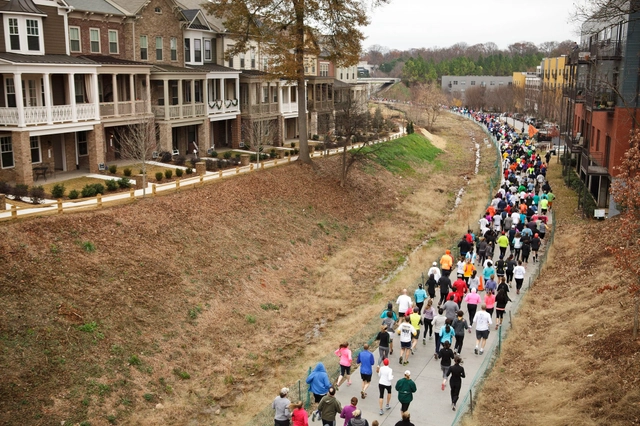
An abandoned twenty-two mile stretch of derelict railroad and industrial sites used to be a thorn in the Atlanta community's side. But with one student's thesis proposal to redevelop these areas into a sustainable network connecting 45 mixed-use neighborhoods, public concern has since turned into excitement. To learn more about the ambitious project, head over to The Atlantic Cities here.
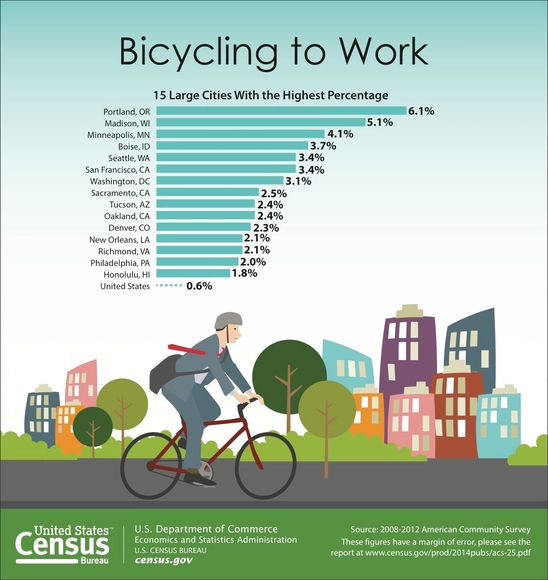
Over the last decade, the amount of bicycle commuters have increased 60 percent in the U.S. As the U.S. Census Bureau reports, this is the largest percentage increase of all commuting modes tracked by the 2000 Census and the 2008-2012 American Community Survey. Along with the study, the Bureau released a new interactive map that allows you to zoom-in and explore the commuting statistics for every neighborhood in the U.S. Find out how to access this map and read some highlights from the report, after the break...
Project Baltia magazine and Yarky Hostel & Space have just announced the Open International Competition for the Design of Summer Residential Unit. Five winning projects will be implemented on the territory of the Hostel by August 2, 2014. The units should enable temporary accommodation for one or two persons. Functions of these units are similar to those of a hotel room.
Competing Utopias is a design collision that should never happen. But somehow, in Los Angeles, in 2014, twenty-five years after the fall of the Berlin Wall, it will.
Norman Foster has been selected alongside artist Hiroshi Sugimoto to receive the inaugural Isamu Noguchi Award. Presented by Motohide Yoshikawa, the ambassador of Japan to the United Nations, the award recognizes “individuals that share Japanese-American artist Isamu Noguchi’s commitment to innovation, global consciousness and Japanese/American exchange.” Watch an ArchDaily interview with Foster, after the break...
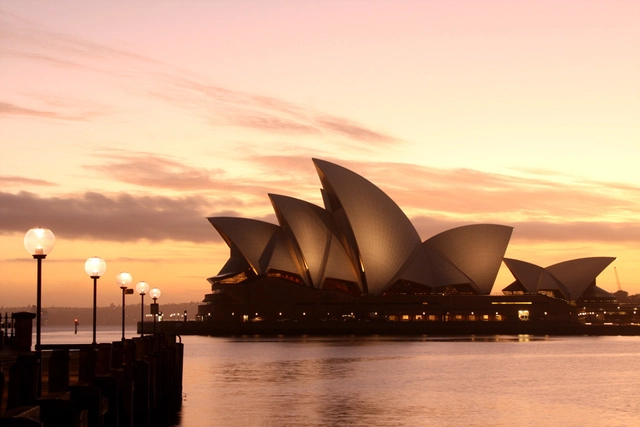
The City of Sydney has requested that 1.6 million square meters of empty commercial and residential space be made available to artists for “creative activities.” The proposed cultural policy offers over 120 ideas in which the space can be used to enhance Sydney’s reputation as a world renowned creative city. “The City is proud to spend more than $34 million each year to support the arts, culture and creative activity in Sydney – but we know it is equally important to create an environment where ideas and imagination can flourish.” More information on the new policy can be found here.
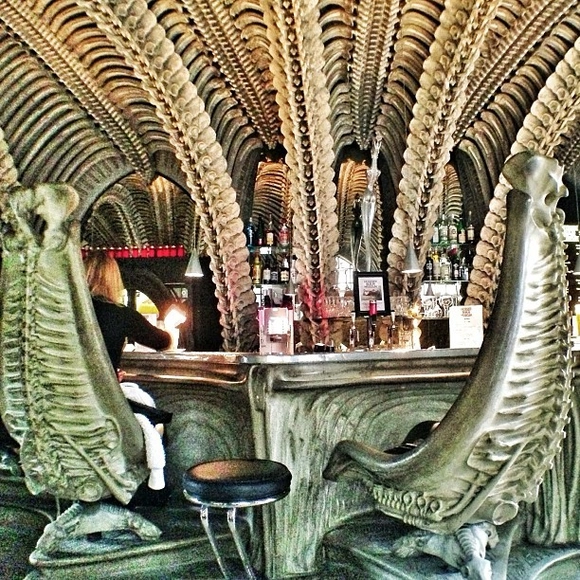
HR Giger, the Swiss artist and designer who inspired and helped craft the visuals for the Ridley Scott film Alien, has died at the age of 74, The Guardian reports. Although he studied architecture and industrial design in Zurich, Giger never entered the profession, but used his spatial know-how to help design dark interiors in both the real and cinematic worlds.
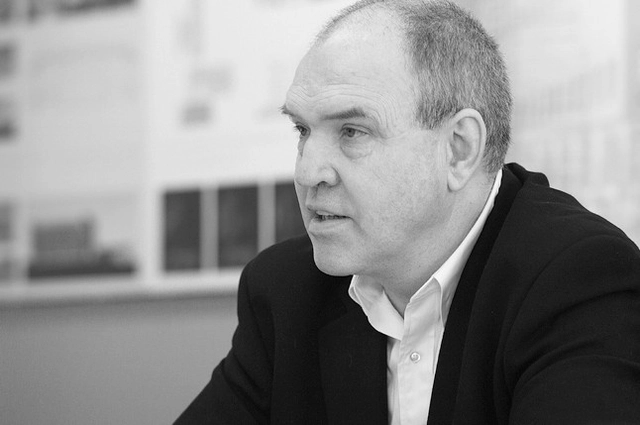
Joe Paxton of the Bartlett School of Architecture, University College London, was awarded the 2014 RIBA Norman Foster Travelling Scholarship for his proposal “Buffer Landscapes 2060.” The £6,000 travel grant will enable him to study the impact of climate change in a number of locations, ultimately to propose some measures that might mitigate the threat of floods, droughts, melting glaciers and rising temperatures. A comment from Foster, after the break...
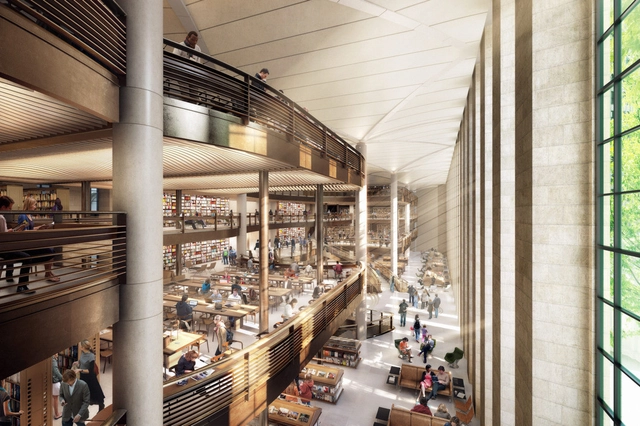
Not gonna happen. Image Courtesy of dbox/Foster + Partners
As we mentioned a few days ago, Norman Foster's controversial New York Public Library renovation was axed before the most current proposal was even revealed. While book worms rejoice over the victory, others are disappointed about the lost opportunity. To read about what could have been, head on over to New York Magazine and read Justin Davidson's thoughts here.
Rumor has it that Constructivist architect Konstantin Melnikov’s Bakhmetevsky bus garage may soon be transformed into Moscow’s prime modern art gallery. An “equivalent to London’s Tate Modern,” as the Calvert Journal describes, the historic 1927 structure has been said to be the most likely location for the new museum, dubbed “Pushkin Modern.”
Apertures reflect a current architectural discourse of digital ecologies, emphasizing the relationship between the natural world and advances in digital technology, which leads to a new type of interactive, organic buildings. The installation focuses on a symbiotic relationship between nature, building morphologies, and material expression.
Rooted in Baumgartner+Uriu’s work and ongoing research, Apertures challenges the notion of an architectural opening as a static object. Moreover, it aims to redefine the DNA of a window both in terms of its appearance and materiality, as well as its nature as an object in continuous flux, responding to its environment through movement or sound. The pavilion and its apertures are designed to physically engage the visitor with the architectural work through sensors and sound feedback loops creating an immersive spatial environment in which the visitor can experience their own biorhythms.
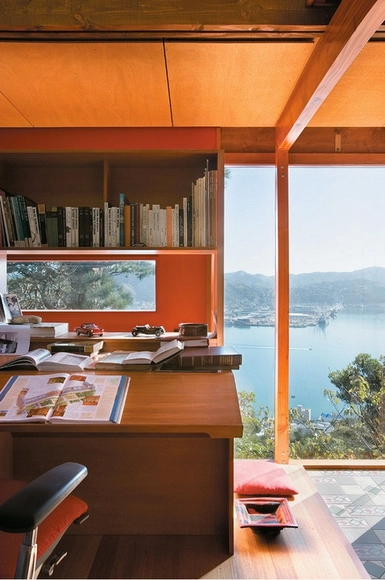
"What makes us New Zealanders different from, say, Australians?" William Toomath, the late modernist architect, asked himself this question at the onset of his career. In this article published by the Australian Design Review, Jack Davies takes a look at Toomath's work and how he helped define New Zealand architecture. To keep reading, click here.
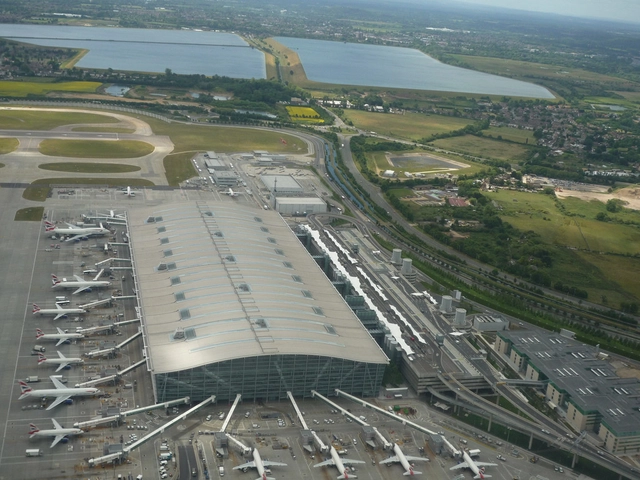
London Mayor Boris Johnson has enlisted the help of three architects, Hawkins\Brown, Rick Mather Architects and Maccreanor Lavington Architects to design a new town on the site of Heathrow Airport. The move is designed to encourage support for Johnson's plan to build a new airport in the Thames Estuary, jokingly dubbed 'Boris Island' by some. If the Estuary Airport were to go ahead it could mean closing Heathrow, currently one of the world's busiest airports, freeing the land up for the new development. You can read more on the story at the Architects' Journal.