1. ArchDaily
  2. Tradition

Tradition: The Latest Architecture and News

Hotels in Mexico: Utilizing Natural Materials and Waste in Contemporary Construction

In the quest to promote a more sustainable construction where the use of natural materials contributes to the transmission of local traditions and cultures, an increasing number of architecture projects are exploring different resources and techniques to address environmental, economic, or social concerns. Understanding the benefits and qualities of materials such as color or texture influences the final experience of those who inhabit, walkthrough, or visit spaces. Therefore, understanding their technical, constructive, aesthetic, and functional properties should be part of the design process from the beginning.

The Time-Defying Nature of Living Architectural Traditions

This article was originally published on Common Edge.

Traditional architecture is perceived as being historical architecture, both by the general public and by design professionals. Put another way, “traditional” = “style.” There’s no awareness of the process of tradition that creates what’s later considered a style. Modernism takes this perception one step further and frames traditional architecture as “not of our time,” and therefore obsolete.

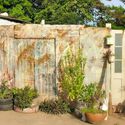
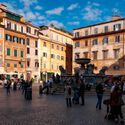
The Time-Defying Nature of Living Architectural Traditions - Image 1 of 4The Time-Defying Nature of Living Architectural Traditions - Image 2 of 4The Time-Defying Nature of Living Architectural Traditions - Image 3 of 4The Time-Defying Nature of Living Architectural Traditions - Image 4 of 4The Time-Defying Nature of Living Architectural Traditions - More Images+ 5

Doha's Architectural History: In Conversation with Péter Tamás Nagy, Curator of "Colors of the City" at Design Doha 2024

Subscriber Access | 

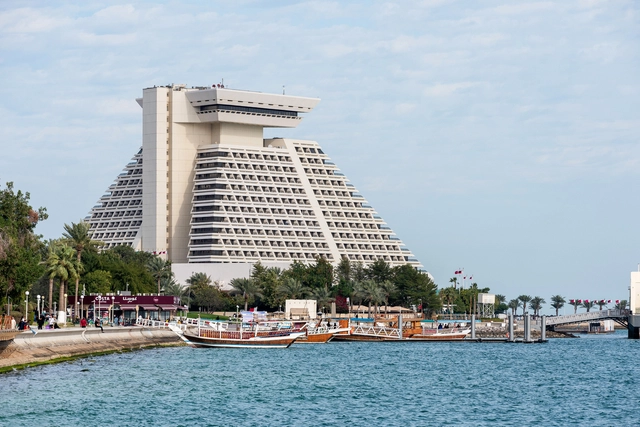
As part of the Design Doha 2024 Biennial, Glenn Adamson and Péter Tamás Nagy present the exhibition “Colors of the City: A Century of Architecture in Doha” investigating the architectural evolution of the capital of Qatar based on multiple global influences that characterize it. Running until March 30, 2024, the exhibition offers a journey through Doha's architectural history featuring various styles such as Classicism, Art Deco, and Modernism, contemplating the Qatari adaptations of these styles developed by architects from Europe, America, the Middle East, and South Asia.

Doha's Architectural History: In Conversation with Péter Tamás Nagy, Curator of "Colors of the City" at Design Doha 2024 - Imagen 1 de 4Doha's Architectural History: In Conversation with Péter Tamás Nagy, Curator of "Colors of the City" at Design Doha 2024 - Imagen 2 de 4Doha's Architectural History: In Conversation with Péter Tamás Nagy, Curator of "Colors of the City" at Design Doha 2024 - Imagen 3 de 4Doha's Architectural History: In Conversation with Péter Tamás Nagy, Curator of "Colors of the City" at Design Doha 2024 - Imagen 4 de 4Doha's Architectural History: In Conversation with Péter Tamás Nagy, Curator of Colors of the City at Design Doha 2024 - More Images+ 47

At the Intersection of Innovation and Tradition: The Talavera Project

Subscriber Access | 

Architecture, understood as a cultural product, is strongly influenced by diverse stimuli that include historical, geographical, and cultural aspects, among others. Together, these elements form a heritage that may (or may not) endure through time. Although architecture tends to adapt to each culture, modeling its traditional techniques according to its context and shaping the surrounding environment, there is no guarantee that the traditional elements in it will endure or remain unchanged over time. This is largely due to the constant evolution of society and technology, which sometimes tends towards universality and the adoption of a common language, rather than one of their own.

Given this scenario, it is essential to explore an approach where innovation and technology do not replace tradition and artisanal production; instead, they arise as a means of exploration towards emerging routes. Adopting novel techniques and innovative materials that are adapted to specific local needs makes it possible to maintain an authentic expression that responds to the demands of the environment. This approach, which could be termed neo-craft, allows for the preservation of a distinct voice that reflects the authenticity of the local context. At the same time, it contributes to a universal perspective, merging the local with the global.
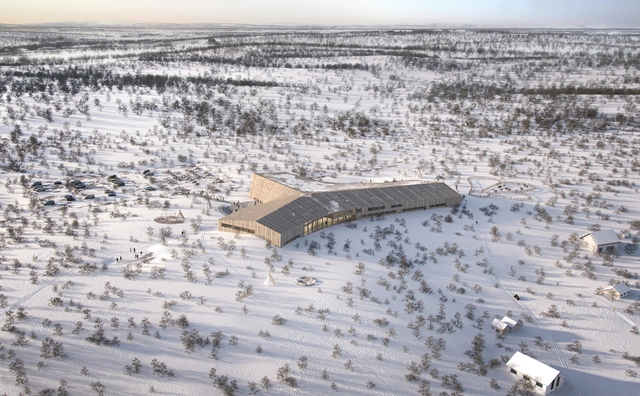
70°N arkitektur, Together with Snøhetta and Artist Joar Nango, Designs a National Theater for the Indigenous Sámi People in Norway

The Sámi National Theater Beaivváš and Sámi High School and Reindeer Husbandry School are two of the most important cultural institutions of Sápmi, a region in northern Norway, Sweden, and Finland traditionally inhabited by the Sámi people. To strengthen the position of the two institutions, a project was initiated in June 2021 to create a shared cultural and educational facility. A design proposal by 70°N arkitektur, in collaboration with Snøhetta and artist and architect Joar Nango, was chosen following a competition. The building, also known as Čoarvemátta, is currently under construction and is expected to be completed by 2024.