1. ArchDaily
  2. Migration

Migration: The Latest Architecture and News

Power, Inequity, and Maps: An Urban Analysis

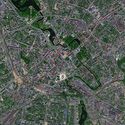
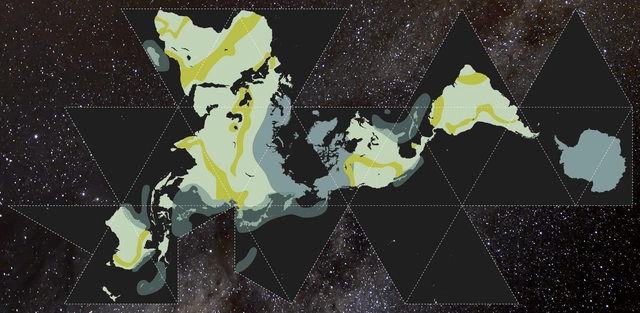
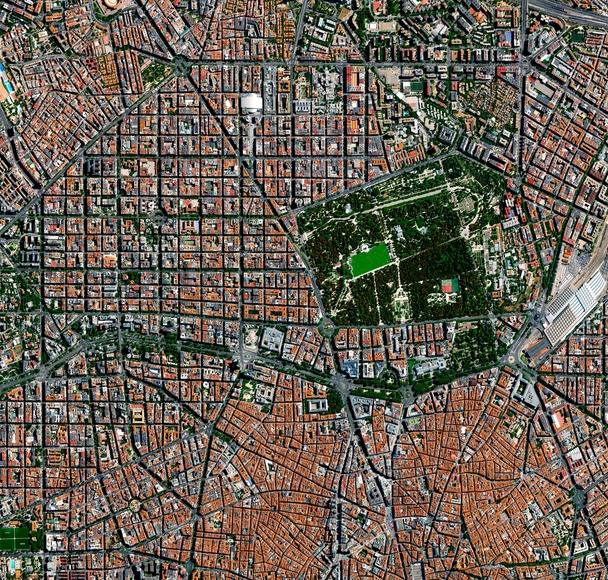
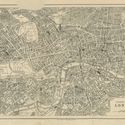
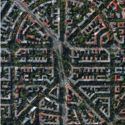
The way our world looks like today is a result of centuries and centuries of human migration, of complex natural phenomena that has resulted in the geographic appearance of the world’s continents today. We understand this world through our lived experiences, but we also understand this world through a two-dimensional man-made invention – maps. Maps define the many contested borders of the world and have been used in an oppressive capacity, in particular places, for example, segmenting off sections of a place from marginalised societal groups.
Power, Inequity, and Maps: An Urban Analysis - Image 1 of 4Power, Inequity, and Maps: An Urban Analysis - Image 2 of 4Power, Inequity, and Maps: An Urban Analysis - Image 3 of 4Power, Inequity, and Maps: An Urban Analysis - Image 4 of 4Power, Inequity, and Maps: An Urban Analysis - More Images+ 4

Invisible Cities: Rethinking the Refugee Crisis Through Design

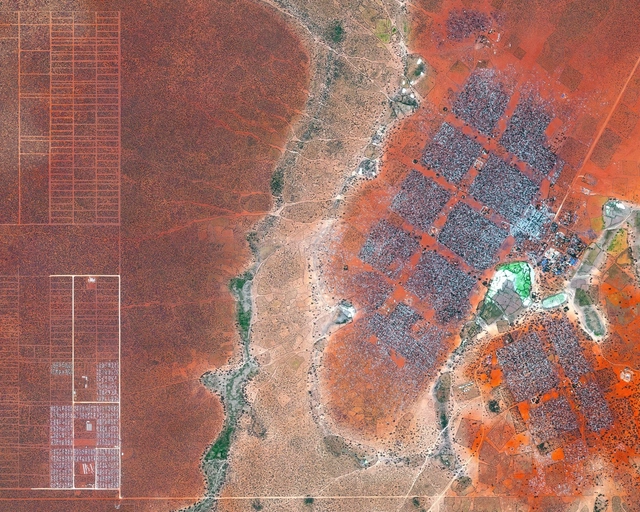
What do Katuma, Hagadera, Dagahaley, Zaatari or Ifo bring to mind? They are truly beautiful names, and could easily belong to Italo Calvino's 55 invisible cities.

But they are not invisible cities, they are informal settlements in Kenya and Jordan, home to between 66,000 and 190,000 refugees, mostly from bordering countries, supposedly temporary camps that half a century later are still with us today. Generally lacking in infrastructure, some have schools and hospitals, and Zaatari even has a circus academy, but for most of the people who live there, they are the only cities they have ever known.

Brain Drain or Brain Gain? How Architecture Has Become a Tool for Migration

Migration across towns, cities, states, countries, and continents is part of everyday life. As we move to seek out new opportunities in our personal and professional lives, our individual choices actually have greater impacts on the large, highly-interconnected socio-economical systems around the globe. Moving from a small farm town into a major metropolis, or from one continent to another comes with more implications than you may think- and architecture, paired with the concept of “Brain Drain”, might be helping to pull the strings behind the scenes, influencing you to go from one place to the next.

Cities Within Cities: Chinatown Around The World

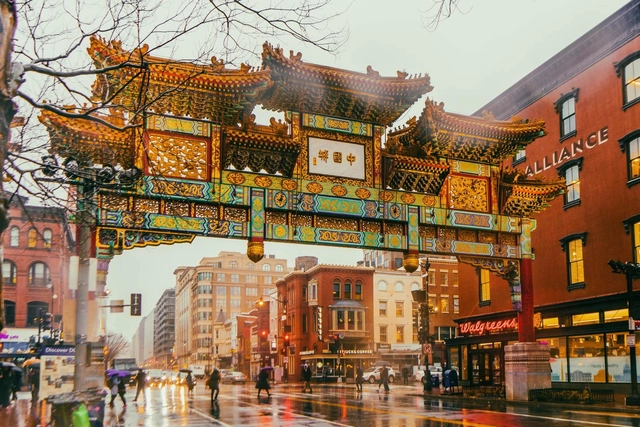
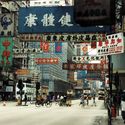
The global landscape of today has been moulded by centuries and centuries of human migration. This movement of people, of individuals and communities travelling far away from their place of origin to eke out better lives for themselves, has seen the evolution of the architectural and urban character of cities – moulded by the diverse influences fuelled by migration. This has meant that around the world, enclaves have popped up in cities, migrants carving out spaces for themselves which have a different character to other areas of a city.

Cities Within Cities: Chinatown Around The World - Image 1 of 4Cities Within Cities: Chinatown Around The World - Image 2 of 4Cities Within Cities: Chinatown Around The World - Image 3 of 4Cities Within Cities: Chinatown Around The World - Image 4 of 4Cities Within Cities: Chinatown Around The World - More Images+ 8

7 National Pavilions at the 2021 Venice Biennale that Explore Migration and its Impact on Built Environments

Several recurring qualities and topics were explored at the 17th Venice Architecture Biennale, answering curator Hashim Sarkis' question of "How Will We Live Together". Sarkis called upon architects “to imagine spaces in which we can generously live together”, spaces that are unbound by spatial or social contracts, and are flexible enough to welcome individuals and make them find a sense of belonging in an entirely different habitat. Unlike decades ago, migration today is no longer considered as relocating from rural areas to cities, where people needed to be in proximity to their workplaces. Technological advancements, new work modules, and most notably the pandemic altered the way people perceive spaces, making it possible to complete at least 85% of day-to-day responsibilities from practically anywhere in the world. What we have learned from previous cases, and what we are observing now, is that the built environment needs to be flexible.

7 National Pavilions at the 2021 Venice Biennale that Explore Migration and its Impact on Built Environments - Image 1 of 47 National Pavilions at the 2021 Venice Biennale that Explore Migration and its Impact on Built Environments - Image 2 of 47 National Pavilions at the 2021 Venice Biennale that Explore Migration and its Impact on Built Environments - Image 3 of 47 National Pavilions at the 2021 Venice Biennale that Explore Migration and its Impact on Built Environments - Image 4 of 47 National Pavilions at the 2021 Venice Biennale that Explore Migration and its Impact on Built Environments - More Images+ 19

Beyond Human-Scale: Designing for Ecosystems, Migration and Machines

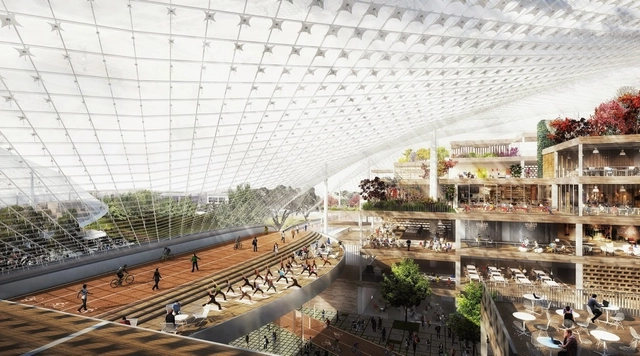
The human scale spans both physical dimensions and sensory perception. Designers create spaces and objects like steps, doorways and chairs that are closely aligned to human measurement and how we see the world. But as we look beyond the human scale, new ideas and typologies emerge that help us rethink how we conceptualize architecture and build for the future.

Beyond Human-Scale: Designing for Ecosystems, Migration and Machines - Image 1 of 4Beyond Human-Scale: Designing for Ecosystems, Migration and Machines - Image 2 of 4Beyond Human-Scale: Designing for Ecosystems, Migration and Machines - Image 3 of 4Beyond Human-Scale: Designing for Ecosystems, Migration and Machines - Image 4 of 4Beyond Human-Scale: Designing for Ecosystems, Migration and Machines - More Images+ 8

Architecture as a Reflection of Migration Between Mexico and the United States

Subscriber Access | 

Architecture as a Reflection of Migration Between Mexico and the United States - Image 1 of 4Architecture as a Reflection of Migration Between Mexico and the United States - Image 2 of 4Architecture as a Reflection of Migration Between Mexico and the United States - Image 3 of 4Architecture as a Reflection of Migration Between Mexico and the United States - Image 4 of 4Architecture as a Reflection of Migration Between Mexico and the United States - More Images+ 14

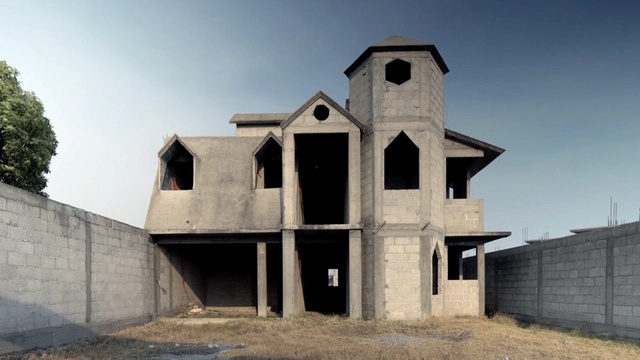
“Abandonment Copies” is a research project created between 2016 and 2018 by artist Sandra Calvo consisting of a film, archives, drawings, interviews, and a video display which was exhibited in the Mexican pavilion during the 2021 Biennial of Venice. The project highlights architecture as a reflection of the migration process between Mexico and the United States, comparing and contrasting the houses where migrants work in the US and the ones they build in Mexico with the remittances they send.

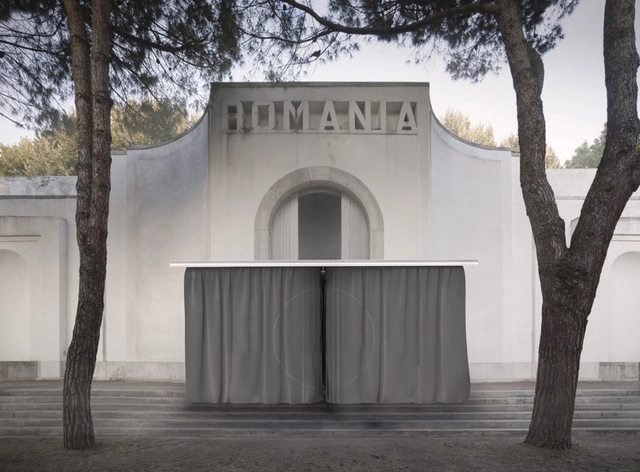
Romanian Pavilion at the 2021 Venice Biennale Explores the Challenges and Opportunities of Mass Migration

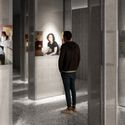
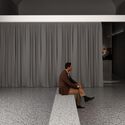
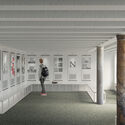
Romania’s contribution to the 17th Venice Architecture Biennale showcases a new perspective on mass migration, a phenomenon with a wide array of causes, ranking high on the international public agenda. Titled Fading Borders and curated by architects Irina Meliță and Ștefan Simion, the exhibition explores the challenges and opportunities of migration and its consequences on the built environment. Using Romania as a study case, where three million people have left the country in the last decade in pursuit of a better life abroad, the curatorial project frames a conversation around the role of architecture in the successful management of the migration phenomenon, as territorial boundaries continue to fade around the globe.

Romanian Pavilion at the 2021 Venice Biennale Explores the Challenges and Opportunities of Mass Migration - Image 1 of 4Romanian Pavilion at the 2021 Venice Biennale Explores the Challenges and Opportunities of Mass Migration - Image 2 of 4Romanian Pavilion at the 2021 Venice Biennale Explores the Challenges and Opportunities of Mass Migration - Image 3 of 4Romanian Pavilion at the 2021 Venice Biennale Explores the Challenges and Opportunities of Mass Migration - Image 4 of 4Romanian Pavilion at the 2021 Venice Biennale Explores the Challenges and Opportunities of Mass Migration - More Images+ 19

What Do Real Estate Trends Tell Us About the Migration Back to Cities?

Subscriber Access | 

Almost one year into the COVID-19 pandemic, life is starting to feel like it might regain its sense of normalcy. With promising vaccines being slowly rolled around the globe, the focus is shifting away from the immediate, and into what the future looks like- including where people want to live. At the beginning of the pandemic, stories all across the media claimed that cities were dead, people were leaving as a permanent measure of safety and well-being, and that the real estate market would experience a long and slow recovery to the boom it had experienced in the pre-pandemic world. But there’s been a shift, and it’s happening fast- people are returning to cities almost as suddenly as they once left them.

Stay, Fight, or Flee: Considering Climate Migration

This article was originally published on Common Edge as "Considering Climate Migration".

Over the past week, I’ve seen at least two large mainstream press articles on climate migration, and as more people seem to be tossing around their next move locale—something between North Dakota and anywhere else with the word “north” it. Often, in a simplified, single-issue flattening of the full-range of shifts happening around us.

Why It's Not Quite Time to Give Up City Living

As the COVID-19 global pandemic has unfolded over the last several months, stories of people cooped up in crowded cities and concerned about their future have anecdotally popped up across the internet. When the virus first arrived, it was common for people to escape to their beach-side homes, or to return to their parent’s house for more space and a sprawling yard.

Carlos García Vázquez: "The Modern Urbanism Has Rediscovered Traditional Cities"

Three years ago, in the wake of the release of his book Theories and History of the Modern City ("Teorías e Historia de la Ciudad Contemporánea", 2016, Editorial Gustavo Gili), we sat down with the author, Carlos García Vázquez, to discuss this complex and "uncertain creature' that is the modern city, focusing on the three categories that define cities today: Metropolis, Megalopolis, and Metapolis.

Based on an analysis of those "who have traditionally led the way in the planning of spaces" (sociologists, historians, and architects), the book illustrates the social, economic, and political forces that, in service to their own agendas, drive the planning, transformation, exploitation, and development of cities. In 120 years, urban centers have transformed from places where "people died from the city" to bastions of personal development and economic prosperity; however, the question remains —have cities really triumphed?

"Yes", says García Vásquez, "but we have paid dearly for it."

Carlos García Vázquez: "The Modern Urbanism Has Rediscovered Traditional Cities" - Image 1 of 4Carlos García Vázquez: "The Modern Urbanism Has Rediscovered Traditional Cities" - Image 2 of 4Carlos García Vázquez: "The Modern Urbanism Has Rediscovered Traditional Cities" - Image 3 of 4Carlos García Vázquez: "The Modern Urbanism Has Rediscovered Traditional Cities" - Image 4 of 4Carlos García Vázquez: The Modern Urbanism Has Rediscovered Traditional Cities - More Images+ 6

Beyond Refugee Housing: 5 Examples of Social Infrastructure for Displaced People

Beyond Refugee Housing: 5 Examples of Social Infrastructure for Displaced People - Image 1 of 4Beyond Refugee Housing: 5 Examples of Social Infrastructure for Displaced People - Image 2 of 4Beyond Refugee Housing: 5 Examples of Social Infrastructure for Displaced People - Image 3 of 4Beyond Refugee Housing: 5 Examples of Social Infrastructure for Displaced People - Image 4 of 4Beyond Refugee Housing: 5 Examples of Social Infrastructure for Displaced People - More Images+ 1

Throughout human history, the movement of populations–in search of food, shelter, or better economic opportunities–has been the norm rather than the exception. Today, however, the world is witnessing unprecedented levels of displacement. The United Nations reports that 68.5 million people are currently displaced from their homes; this includes nearly 25.4 million refugees, over half of whom are under the age of eighteen. With conflicts raging on in countries like Syria and Myanmar, and climate change set to lead to increased sea levels and crop failures, the crisis is increasingly being recognised as one of the foundational challenges of the twenty-first century.

While emergency housing has dominated the discourse surrounding displacement in the architecture industry, it is critical for architects and planners to study and respond to the socio-cultural ramifications of population movements. How do we build cities that are adaptive to the holistic needs of fluid populations? How do we ensure that our communities absorb refugees and migrants into their local social fabric?

This World Refugee Day, let’s take a look at 5 shining examples of social infrastructure from around the world–schools, hospitals, and community spaces–that are specifically directed at serving displaced populations.

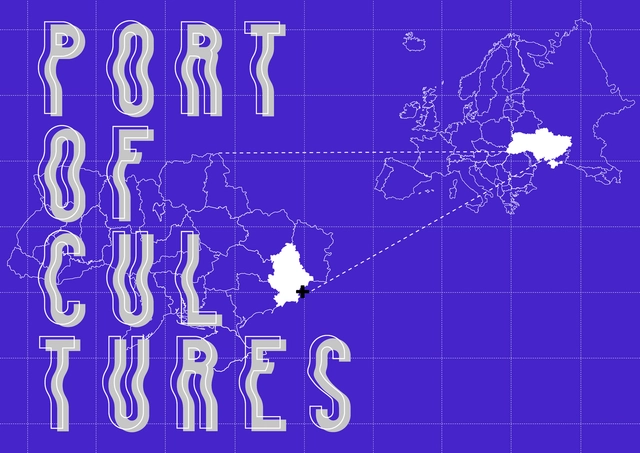
International Competition of Ideas for the multifunctional center, Port of Culture, in Mariupol (UA)

Municipality of Mariupol (UA) invites architects, designers and interdisciplinary teams to submit architectural ideas for a new multifunctional center that will be devoted to the subject of migration, a process that has shaped the city throughout the centuries, becoming an integral part of its identity. The Port of Culture will uncover and explore the less known traits of Mariupol city, and contextualize its local history within larger regional and global processes related to migration.

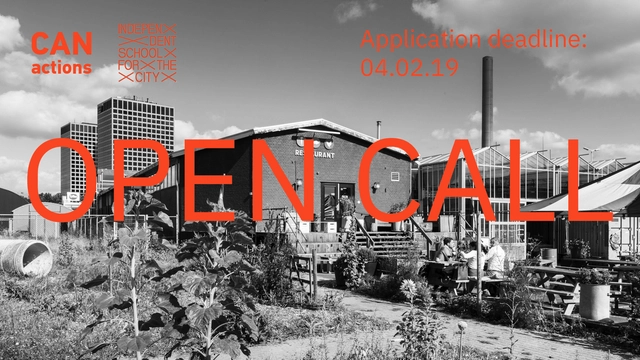
Open Call Spring School 'Borders are for Crossing'

OPEN CALL - SPRING SCHOOL
‘Borders are for Crossing’
18—25 March, 2019

Reimagining Cities in the Face of Climate Change and Migration

Subscriber Access | 

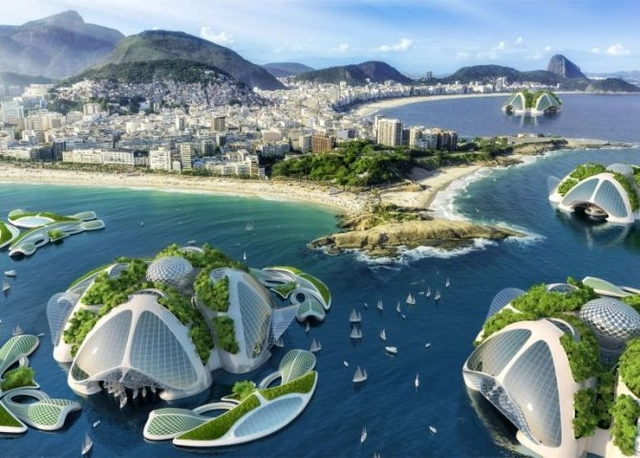
Migration as a result of changing climate has already begun. And while this poses enormous challenges for governments - particularly at a global moment that seems indisposed towards immigration and immigrants - there is also the concern that heritage will inevitably be lost. In places like Scotland, rising sea levels have put ancient sites at risk; the same is the case in island nations in the Pacific. As mounting environmental risks become more inevitable day by day, cities around the world are turning to more resilient forms of architecture and urban planning to combat both short term shocks and longer term pressures as a means of ensuring their future.

Reimagining Cities in the Face of Climate Change and Migration - Image 1 of 4Reimagining Cities in the Face of Climate Change and Migration - Image 2 of 4Reimagining Cities in the Face of Climate Change and Migration - Image 3 of 4Reimagining Cities in the Face of Climate Change and Migration - Image 4 of 4Reimagining Cities in the Face of Climate Change and Migration - More Images+ 6

Modular Installation Provides Temporary Housing For Refugees Beneath Paris Bridge

Modular Installation Provides Temporary Housing For Refugees Beneath Paris Bridge - Imagem 7 de 4
Courtesy of 1week1project

As hundreds of refugees continue to arrive in Paris, France, the city faces an ongoing struggle to find safe and suitable housing for the influx of migrants. As a result, many end up sleeping in underused urban spaces or on the side of the road with almost no access to water, sanitation, and food.

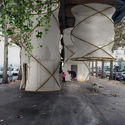
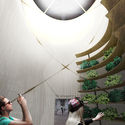
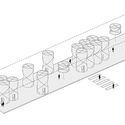
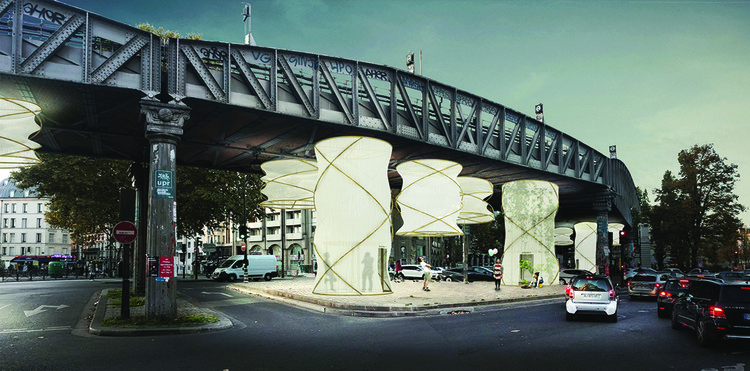
In response, Paris- and Santiago-based firm 1week1project in collaboration with Sophie Picoty unveil their design for a speculative public park titled “Illuminate Paris!” beneath an elevated railway bridge to provide additional support for organizations handling the influx of refugees. This modular “field of experiences” features a series of lantern-like environments forming a canopy along the underside of the bridge that allows for much-need space for migrants who are currently forced to sleep in encampments under similar infrastructure and in parks.

Modular Installation Provides Temporary Housing For Refugees Beneath Paris Bridge - Imagem 1 de 4Modular Installation Provides Temporary Housing For Refugees Beneath Paris Bridge - Imagem 2 de 4Modular Installation Provides Temporary Housing For Refugees Beneath Paris Bridge - Imagem 3 de 4Modular Installation Provides Temporary Housing For Refugees Beneath Paris Bridge - Imagem 4 de 4Modular Installation Provides Temporary Housing For Refugees Beneath Paris Bridge - More Images+ 6

Call for Papers: TAW 2018 International Scientific Conference

An integral and substantial component of TAW 2018, the International Scientific Conference aims at exploring contemporary research activities and design tactics that deal with the topic of co-habitation from different perspectives and within different fields of interest, directly or indirectly related to architecture, city, and landscape. Through the observation of different tactics adopted by researchers and professionals, the hope is to identify new research and design trajectories.