1. ArchDaily
  2. Interviews

Interviews: The Latest Architecture and News

Metaverse vs. Sustainability: How can the Metaverse Help us Deliver Better Designs?

Subscriber Access | 

With the recent Metaverse hype, let's address the elephant in the room! As more and more people dance around the subject of weather or not it is harmful for sustainably-conscious architecture designers to utilize the Metaverse, I decided to interview Oliver Lowrie, a Director at Ackroyd Lowrie, an award-winning London-based architecture practice dedicated to building the cities of the future, who is already using this technology to enhance Ackroyd Lowrie’s low-energy designs.

What Can We Learn About Zero Carbon From Lelé’s Work?

The Zero Carbon policy is intended to create a kind of ecological balance to neutralize greenhouse gas emissions. Several studies report that the construction sector is one of the main responsible for the unbalance in which we find ourselves today, after all, it consumes natural resources on a gigantic scale and still builds buildings that do not collaborate with the maintenance of the environment. Therefore, searching for paths towards a carbon neutral architecture has become fundamental and one of them is learning from past masters, such as the Brazilian architect João Filgueiras Lima, known as Lelé.

What Can We Learn About Zero Carbon From Lelé’s Work? - Image 1 of 4What Can We Learn About Zero Carbon From Lelé’s Work? - Image 2 of 4What Can We Learn About Zero Carbon From Lelé’s Work? - Image 3 of 4What Can We Learn About Zero Carbon From Lelé’s Work? - Image 4 of 4What Can We Learn About Zero Carbon From Lelé’s Work? - More Images+ 8

How To Create a Sustainable Future: Green Levers for the Building and Construction Industry

 | Sponsored Content

Climate change, the scarcity of resources, and urbanisation are hot topics in the building and construction industry. In this context, the importance of sustainability cannot be overemphasised: almost 40% of global CO2 emissions and 36% of global energy usage is associated with building and construction. These figures clearly illustrate the increasing need for more sustainable solutions in the industry. 

Companies that play an active role in the building industry have a responsibility to pave the way toward a more sustainable future. This is why partners like Uponor, one of the leading international providers of solutions that move water for buildings and infrastructure, strive to help customers in Europe to choose the perfect solutions for greener building designs. 

Redesigning the Road to Net Zero: How CO Adaptive Architecture is Breaking New Ground

The climate crisis has reshaped contemporary architecture. Sustainability has become a central guiding force in design, and in turn, architects are rethinking how to build today. For CO Adaptive Architecture, addressing the climate crisis begins with a process oriented practice. Together, Ruth Mandl and Bobby Johnston have created a firm that embodies how a values-based approach can tackle the most pressing issues of our time. The result is elegant and impactful architecture brought to life with poise and finesse.

Redesigning the Road to Net Zero: How CO Adaptive Architecture is Breaking New Ground - Arch Daily InterviewsRedesigning the Road to Net Zero: How CO Adaptive Architecture is Breaking New Ground - Arch Daily InterviewsRedesigning the Road to Net Zero: How CO Adaptive Architecture is Breaking New Ground - Arch Daily InterviewsRedesigning the Road to Net Zero: How CO Adaptive Architecture is Breaking New Ground - Arch Daily InterviewsRedesigning the Road to Net Zero: How CO Adaptive Architecture is Breaking New Ground - More Images+ 4

Can Exterior Green Walls Contribute to a Carbon Neutral Architecture?

Can Exterior Green Walls Contribute to a Carbon Neutral Architecture? - Featured Image
London's Largest "Living Wall" / Gary Grant. Image Courtesy of Green Roof Consultancy and Treebox

A carbon neutral building is achieved when the amount of CO2 emissions is balanced by climate-positive initiatives so that the net carbon footprint over time is zero. Considering their unmatched ability to absorb CO2, planting trees is often viewed as the best carbon offsetting solution. But as cities become denser and the amount of available horizontal space for green areas drastically reduces, architects have been forced to explore other approaches. Therefore, to address these climatic challenges and connect people to nature, exterior green walls have become a rising trend in increasingly vertical cities. Even if there is research to claim that these can positively impact the environment, many question if they can actually contribute to a carbon neutral architecture. Although the answer may be quite complex, there seems to be a consensus: green walls can be effective, but only through good design.

Biotechnology and Green Tech: A New Material World for Sustainable Architecture

Subscriber Access | 
Biotechnology and Green Tech: A New Material World for Sustainable Architecture - Featured Image
Courtesy of The Living. ImageAlive: A New Spatial Contract for Multispecies Architecture by The Living

Advances in biotechnology and material science are opening new material opportunities, with the potential of fundamentally changing the connection between the built environment and the natural world. Building materials and construction account for 11% of greenhouse gas emissions. The AEC industry can contribute to curbing climate change in the following years, and the re-evaluation of commonplace building materials is one of the most critical steps. Bioengineered materials, which grow, produce energy, self-heal, are the next frontier in biology and material science and potentially a path towards a new kind of architecture. Although innovation in these fields is still far away from mainstream commercial use, it promises to dramatically change the image of the built environment.

Biotechnology and Green Tech: A New Material World for Sustainable Architecture - Image 1 of 4Biotechnology and Green Tech: A New Material World for Sustainable Architecture - Image 2 of 4Biotechnology and Green Tech: A New Material World for Sustainable Architecture - Image 3 of 4Biotechnology and Green Tech: A New Material World for Sustainable Architecture - Image 4 of 4Biotechnology and Green Tech: A New Material World for Sustainable Architecture - More Images

Durability and Sustainability Can Be Synonymous: The Example of Bricks

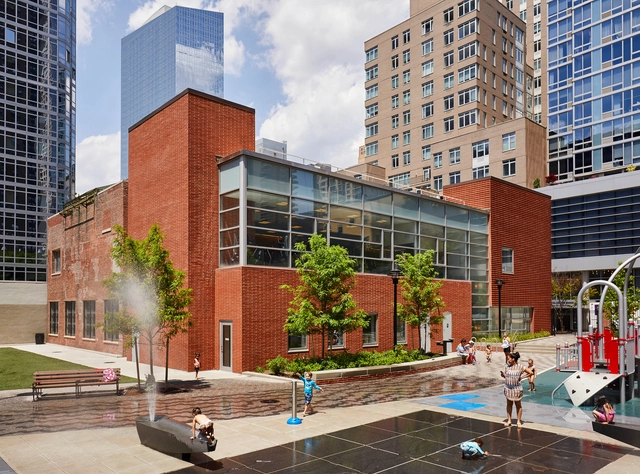
It is crucial to consider the future environmental impact of everything we create. Climate change remains high on the global agenda, and every industry must take part in the goal of reaching Net Zero. One of the more challenging industries concerns construction, which plays a vital role in the process of decarbonization and is constantly encountered with challenges to become greener. Therefore, it demands innovative techniques and development of data to find new and sustainable processes. One solution is to introduce and design both cleaner and more efficient materials. Bricks are a good example, as they can be used in building constructions to ensure a circular process and minimize carbon emissions, being an extremely durable material that can be produced with more sustainable techniques.

Circular Economy in Urban Design: Sustainability and Community Involvement

Circular Economy in Urban Design: Sustainability and Community Involvement - Featured Image
Schoonschip by Space&Matter. Image © Isabel Nabuurs

While circular economy is often discussed in relation to the architectural object through the lens of material recycling, design for disassembly, and material passports, the framework is most fully enacted at the neighbourhood and city scale. Whether it is visions of circular communities that hint at some level of self-sufficiency or policies set in motion by cities, urban-scale projects exemplify the guiding principles of the circular economy, providing a glimpse into what a fully-fledged version of it might look like. The following explores the strategies used in circular urban environments, from architecture and construction materials to energy production, waste management and food production, as well as the processes and operations that govern these designs, providing insights into the conditions that inform circularity. 

Circular Economy in Urban Design: Sustainability and Community Involvement - Image 1 of 4Circular Economy in Urban Design: Sustainability and Community Involvement - Image 2 of 4Circular Economy in Urban Design: Sustainability and Community Involvement - Image 3 of 4Circular Economy in Urban Design: Sustainability and Community Involvement - Image 4 of 4Circular Economy in Urban Design: Sustainability and Community Involvement - More Images+ 1

What Is Ecological Urbanism?

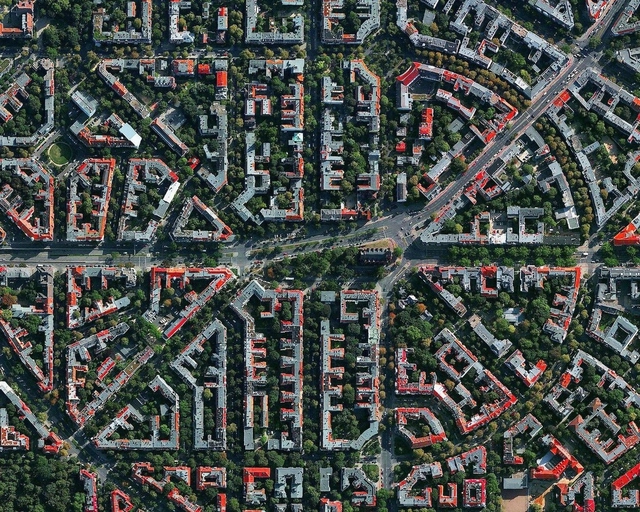
According to the architect and researcher Patrícia Akinaga, ecological urbanism emerged at the end of the 20th century as a strategy to create a paradigm shift with regard to the design of cities. With this, urban projects should be designed from the potential and limitations of existing natural resources. Unlike other previous movements, in ecological urbanism architecture is not the structuring element of the city — the landscape itself is. In other words, green areas should not only exist to beautify spaces, but as true engineering artifacts with the potential to dampen, retain and treat rainwater, for example. With ecological urbanism, urban design becomes defined by the natural elements intrinsic to its fabric.

What Is Ecological Urbanism? - Image 1 of 4What Is Ecological Urbanism? - Image 2 of 4What Is Ecological Urbanism? - Image 3 of 4What Is Ecological Urbanism? - Image 4 of 4What Is Ecological Urbanism? - More Images+ 3

What is Net-Zero Architecture? Terms and Design Strategies

As revolutionary as the construction sector may seem nowadays, it currently accounts for nearly 40% of the world’s carbon dioxide emissions, 11% of which are a result of manufacturing building materials such as steel, cement, and glass. Fast forward a couple of years later, after a life-changing global pandemic and indisputable evidences of climate change, CO2 emissions are still on a rise, reaching a historical maximum in 2020 according to the 2020 Global Status Report for Buildings and Construction. Although a lot of progress has been made through technological advancements, design strategies and concepts, and construction processes, there is still a long way to go to reduce carbon emissions to a minimum or almost zero in the development of built environments.

What is Net-Zero Architecture? Terms and Design Strategies - Image 1 of 4What is Net-Zero Architecture? Terms and Design Strategies - Image 2 of 4What is Net-Zero Architecture? Terms and Design Strategies - Image 3 of 4What is Net-Zero Architecture? Terms and Design Strategies - Image 4 of 4What is Net-Zero Architecture? Terms and Design Strategies - More Images+ 4

"If you Build a House, You Need a Piece of Land": In Conversation with Not Vital

“If you’re a painter, you need a canvas. If you’re a sculptor, you need marble or plaster. And if you build a house, you need a piece of land.” Welcome to the wonderful world of Not Vital, where the Swiss multi-faceted artist shows us his sculpture park, foundation, and castle in this video.

Louisiana Channel meets Not Vital in his studio in Sent, the town in Switzerland where he grew up and one of the places where he still lives. Building places to live have been with him since childhood: “My first work was more related to trying to build a house or a habitat. The first one was when I was only three years old in 1951. There was so much snow that my brother and I built a tunnel,” he says and continues: “I think that it was the first time I realized that I like to build my own habitat. Even though it was much more comfortable to live in the house, I spent the day in the tunnel. I remember the light, the smell of the snow. I just felt great.”
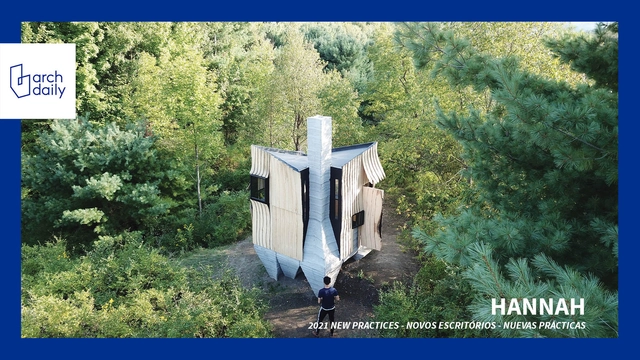
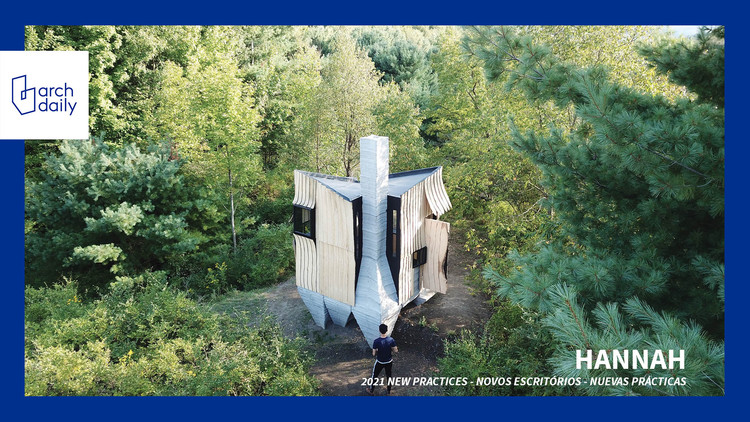
"Robotic Construction Can Help Us Design Better Buildings": An Interview with HANNAH

HANNAH Office is a US-based experimental research and design studio whose work focuses on advancing architecture and contemporary construction practices by examining the possibilities of new digital routines and fabrication technologies. Selected as one of Archdaily's Best New Practices of 2021, HANNAH Office was founded in 2012 by Leslie Lok and Sasa Zivkovic and constitutes a platform for exploring technology and material methods across a variety of scales, from furniture to urbanism in search of new design outcomes.

"Robotic Construction Can Help Us Design Better Buildings": An Interview with HANNAH - Image 1 of 4"Robotic Construction Can Help Us Design Better Buildings": An Interview with HANNAH - Image 2 of 4"Robotic Construction Can Help Us Design Better Buildings": An Interview with HANNAH - Image 3 of 4"Robotic Construction Can Help Us Design Better Buildings": An Interview with HANNAH - Image 4 of 4Robotic Construction Can Help Us Design Better Buildings: An Interview with HANNAH - More Images+ 2

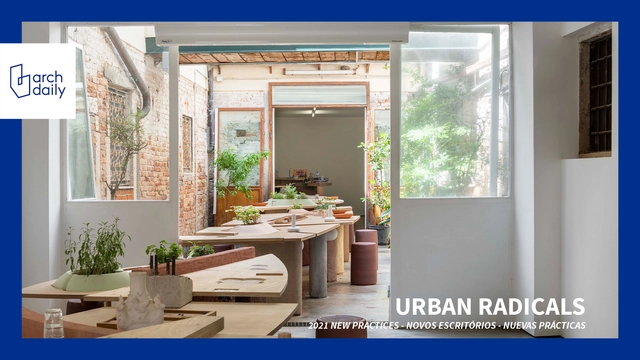
"It is Important to Give Authorship to the Public": An Interview With Urban Radicals

Urban Radicals is a design collective based in London, founded in 2019 by Era Savvides and Athanasios Varnavas. The practice operates at the intersection of multiple disciplines, exploring public space and the notion of collectivity across a variety of scales, contexts and design expressions. One of Archdaily's Best New Practices of 2021, Urban Radicals shrinks and grows organically through the projects, dissolving the boundaries between diverse fields of knowledge and circumventing traditional office structure to integrate a multiplicity of perspectives within architecture.

"It is Important to Give Authorship to the Public": An Interview With Urban Radicals - Image 1 of 4"It is Important to Give Authorship to the Public": An Interview With Urban Radicals - Image 2 of 4"It is Important to Give Authorship to the Public": An Interview With Urban Radicals - Image 3 of 4"It is Important to Give Authorship to the Public": An Interview With Urban Radicals - Image 4 of 4It is Important to Give Authorship to the Public: An Interview With Urban Radicals - More Images+ 13

An Architectural Language Shaped by Sustainability

An Architectural Language Shaped by Sustainability - Featured Image
Taisugar Circular Village / Bio-architecture Formosana. Image © Studio Millspace

With its quantifiable objectives and measurable performance, sustainability often passes as a technological challenge. Its primary language is that of data, equipment, and engineered systems, most often translated into a hyper-technologized layer hidden within a design upholding pre-existing aesthetic norms. As architecture is the image of society at one moment in time, how does the focus on sustainability translate into architectural language, further legitimatizing the efforts to establish an equitable relationship with the environment? Architecture serves as an expression of attitudes, and since sustainability has become a fundamental value, it is worth looking at whether or not it has produced an aesthetic transformation.

An Architectural Language Shaped by Sustainability - Image 1 of 4An Architectural Language Shaped by Sustainability - Image 2 of 4An Architectural Language Shaped by Sustainability - Image 3 of 4An Architectural Language Shaped by Sustainability - Image 4 of 4An Architectural Language Shaped by Sustainability - More Images+ 1

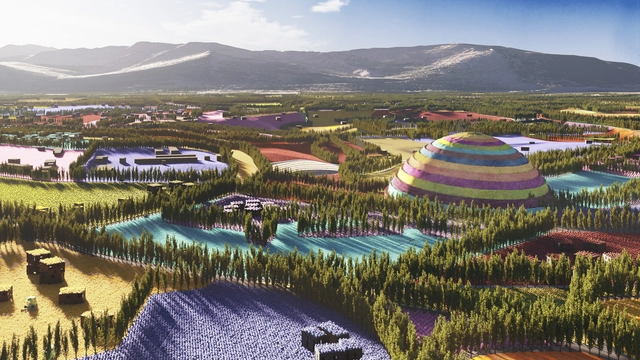
MVRDV Unveils its Vision for a Self-Sufficient Valley in Armenia

MVRDV has been commissioned by the Armenian non-profit organization DAR Foundation for Regional Development and Competitiveness to develop a masterplan that will transform Gagarin Valley's 34,000-hectare area into a more sustainable and ecologically diverse land. With the help of over 10,000 plant species, innovative facilities, and additional 12,000 housing units, the valley is set to become an ideal community for sustainable agriculture and ecotourism.

MVRDV Unveils its Vision for a Self-Sufficient Valley in Armenia - Image 1 of 4MVRDV Unveils its Vision for a Self-Sufficient Valley in Armenia - Featured ImageMVRDV Unveils its Vision for a Self-Sufficient Valley in Armenia - Image 2 of 4MVRDV Unveils its Vision for a Self-Sufficient Valley in Armenia - Image 3 of 4MVRDV Unveils its Vision for a Self-Sufficient Valley in Armenia - More Images+ 16

EU Prioritizes Sustainable Urban Mobility in New Proposals Set to Reduce Transportation Carbon Emissions by 90%

EU Prioritizes Sustainable Urban Mobility in New Proposals Set to Reduce Transportation Carbon Emissions by 90% - Featured Image
Utrecht Central Station / Benthem Crouwel Architects. Image © Jannes Linders

In December, the European Commission adopted several proposals that put the transport sector on track for a 90% reduction in carbon emissions, moving a step further in implementing the European Green Deal. The initiatives seek to increase rail transport, encouraging long-distance and cross-border rail travel, support the roll-out of charging points for electric vehicles and alternative refuelling infrastructure and further develop multimodality.

EU Prioritizes Sustainable Urban Mobility in New Proposals Set to Reduce Transportation Carbon Emissions by 90% - Image 1 of 4EU Prioritizes Sustainable Urban Mobility in New Proposals Set to Reduce Transportation Carbon Emissions by 90% - Image 2 of 4EU Prioritizes Sustainable Urban Mobility in New Proposals Set to Reduce Transportation Carbon Emissions by 90% - Image 3 of 4EU Prioritizes Sustainable Urban Mobility in New Proposals Set to Reduce Transportation Carbon Emissions by 90% - Image 4 of 4EU Prioritizes Sustainable Urban Mobility in New Proposals Set to Reduce Transportation Carbon Emissions by 90% - More Images

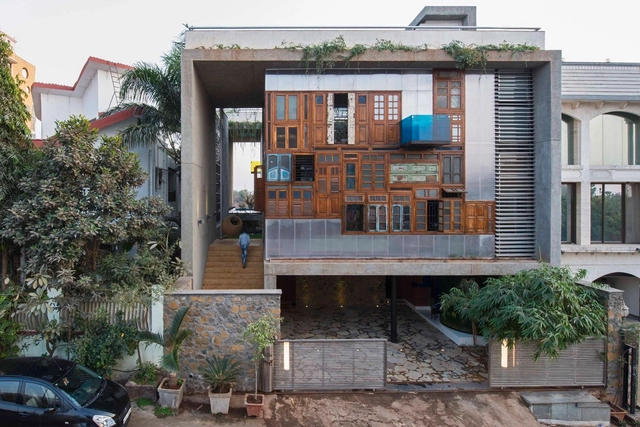
Deconstruct, Do Not Demolish: The Practice of Reuse of Materials in Architecture

Reform and adaptation of spaces represent a significant parcel of projects ordered to architecture firms, and reuse of preexisting structures is not newness. Functions and needs change over time, therefore adaptations are required to meet new demands. However, no matter how much the maintenance of a building is, in most cases, preferred in economic and ecological sense to its demolition and a new construction from the beginning, the logic of the reuse of a space does not usually extend to its parts that become, thus, rubble.

Deconstruct, Do Not Demolish: The Practice of Reuse of Materials in Architecture - Image 1 of 4Deconstruct, Do Not Demolish: The Practice of Reuse of Materials in Architecture - Image 2 of 4Deconstruct, Do Not Demolish: The Practice of Reuse of Materials in Architecture - Image 3 of 4Deconstruct, Do Not Demolish: The Practice of Reuse of Materials in Architecture - Image 4 of 4Deconstruct, Do Not Demolish: The Practice of Reuse of Materials in Architecture - More Images+ 5

Steps Taken in 2021 Towards Decarbonizing the AEC Sector

Steps Taken in 2021 Towards Decarbonizing the AEC Sector - Featured Image
Photo by Danist Soh on Unsplash

The climate crisis has been one of the focal points of 2021, both within political discourse and the architectural field, accompanied by a newfound acknowledgement of the issue's severity. Over the past year, the IPCC report revealed the severe consequences of inaction, while COP26 and G7 summit resulted in an insufficient commitment to immediate and palpable measures. The AEC sector, responsible for a staggering 39% of global greenhouse gases, can bring a significant contribution to curbing climate change and the following looks at the decarbonization efforts of 2021 that target this industry.

Steps Taken in 2021 Towards Decarbonizing the AEC Sector - Image 1 of 4Steps Taken in 2021 Towards Decarbonizing the AEC Sector - Image 2 of 4Steps Taken in 2021 Towards Decarbonizing the AEC Sector - Image 3 of 4Steps Taken in 2021 Towards Decarbonizing the AEC Sector - Image 4 of 4Steps Taken in 2021 Towards Decarbonizing the AEC Sector - More Images+ 2