Smart Cities Paving the Way to a Smart Future

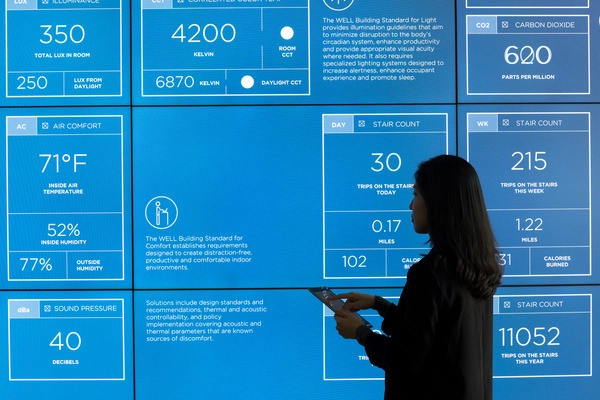
The “smart” movement has gained traction and generated buzz over the last decade, but despite all of the hype, what even is a smart city? The dogma behind its loose definition and goals has been rather elusive, and while some claim that it relies on digitization of all urban aspects, others argue an increase in personal data collection is the sole method for improving urban lifestyles. One person’s digital paradise is perhaps another person’s technophobic doomsday. Extending beyond the mere definition of these cities, what role do designers and researchers play in creating this loosely identified futuristic landscape? As Corbusier once defined a home as a machine for living, it’s time to redefine how our buildings shed their passive exteriors and become the true machines for working that they were always meant to be.


6 Visions of How Artificial Intelligence will Change Architecture

In his book "Life 3.0", MIT professor Max Tegmark says "we are all the guardians of the future of life now as we shape the age of AI." Artificial Intelligence remains a Pandora's Box of possibilities, with the potential to enhance the safety, efficiency, and sustainability of cities, or destroy the potential for humans to work, interact, and live a private life. The question of how Artificial Intelligence will impact the cities of the future has also captured the imagination of architects and designers, and formed a central question to the 2019 Shenzhen Biennale, the world's most visited architecture event.

What it Means to Build Without Bias: Questioning the Role of Gender in Architecture

Which is more male: a stadium or a nursery? Hannah Rozenberg, a recent graduate of the Royal College of Art, says that it’s the former—and she has an algorithm to prove it.

AMO / Rem Koolhaas Presents "Countryside, The Future" at the Guggenheim

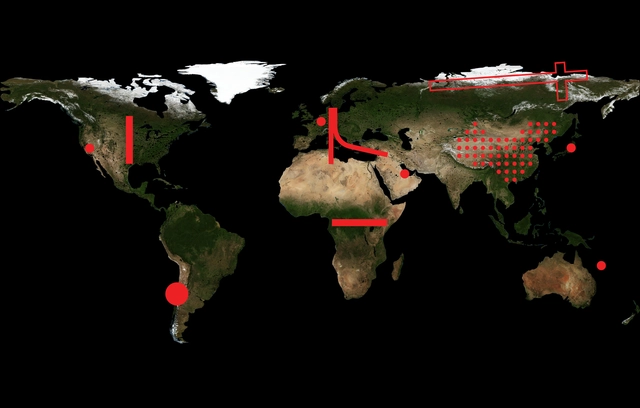
Opening in February 2020, the Solomon R. Guggenheim Museum is showcasing an exhibition by Rem Koolhaas and AMO, the think tank of the Office for Metropolitan Architecture (OMA). Entitled Countryside, The Future the exhibition seeks to investigate urgent environmental, political, and socioeconomic transformations in the nonurban areas.

Educating Designers on Computational Design and Robotics Can Make Architecture and Construction More Sustainable

 | Sponsored Content

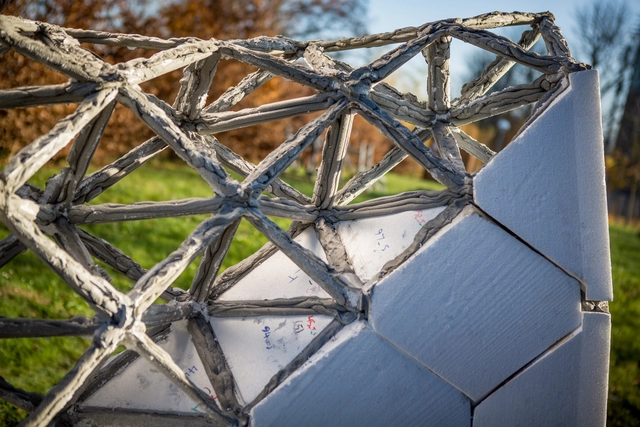
The Advanced Master “Design by Data” program in Computation Design & Robotics for Architecture and Construction was launched in 2016 and is one of the latest programs in innovative professional education at Ecole des Ponts ParisTech. The program was designed to meet the increasing need for the professional sectors of architecture and engineering to combine architectural skills with creative engineering. Design by Data trains professionals to master advanced design tools (coding, algorithmic approach, artificial intelligence) as well as digital manufacturing and design processes (robotics, 3D printing, electronics and mechatronics) and apply them to architectural and construction projects.

Can a Machine Perform the Work of an Architect? A Chat with Jesper Wallgren, Founder of Finch 3D

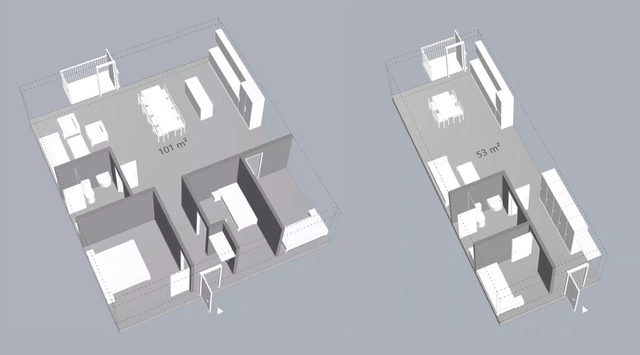
There has been a lot of talk about how automation will affect the way we do architecture, and what our role will be when technologies reach our own desks and work tables. In recent years, while we have seen how robotics and advanced technology are gaining ground in construction and manufacturing, new tools are emerging that promise to automate the design process itself. These would allow us to quickly and easily configure living spaces and their dimensions in the initial stages of a project, using simulations and artificial intelligence.

The New Space Race: 6 Challenges for Extraterrestrial Architecture

Up until now, space architecture has been mainly focused on engineering, centered on projects like orbital space stations or Martian exploration convoys, commissioned by world space agencies such as ESA (Europe) or NASA (USA). But in recent years, an increasingly broader spectrum of professionals (e.g. architects, sociologists) as well as entrepreneurs and investors (not all well intentioned) have joined the challenge of designing extraterrestrial built environments, the new space race of the 21st century.

7 Architectural Considerations that are Shaping Future Cities

By 2050, the world’s population is expected to have exceeded 10 billion people, making overcrowded cities one of the most pressing issues of the present. Data analysis, machine learning, transportation developments, and the rapid development of new social technologies are increasingly changing the needs of people and communities, which will have a direct impact on the issue of overcrowding and on our built environment more largely.

How Will Home Automation Affect our Future?

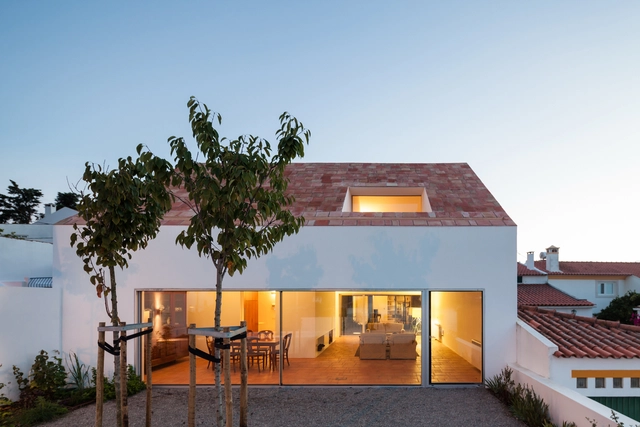
Once restricted to luxury or super-tech buildings, home automation is proving to be an increasingly fundamental and affordable addition to architectural projects, whether to new buildings or renovations. While understanding how they operate can be extremely complex, the primary purpose of technology is to make life simpler, safer, and easier. By definition, home automation seeks to be globally intelligent, functioning as a system that facilitates processes without unnecessarily complicating the user's life. The idea is to connect devices, which in turn connect and talk through a centralized control unit, accessible by computers, tablets, and mobile phones. These include lights, appliances, electrical outlets, and heating and cooling systems, but also alarms, doors, windows, smoke detectors, surveillance cameras, and many other sensors and devices.