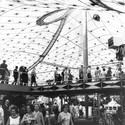
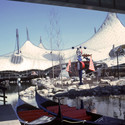
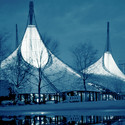
The pivotal turning point in the late Frei Otto’s career – capped by last month’s Pritzker announcement – came nearly fifty years ago at the Expo ’67 World’s Fair in Montreal, Quebec. In collaboration with architect Rolf Gutbrod, Otto was responsible for the exhibition pavilion of the Federal Republic of Germany, a tensile canopy structure that brought his experiments in lightweight architecture to the international stage for the first time. Together with Fuller’sBiosphere and Safdie’sHabitat 67, the German Pavilion was part of the Expo’s late-modern demonstration of the potential of technology, pre-fabrication, and mass production to generate a new humanitarian direction for architecture. This remarkable collection at the Expo was both the zenith of modern meliorism and its tragic swan song; never since has the world seen such a singularly hopeful display of innovative architecture.
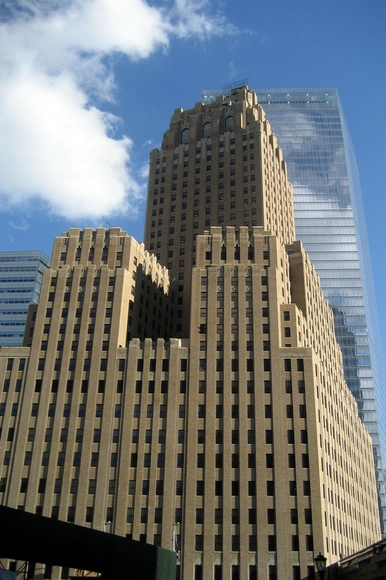
No architect played a greater role in shaping the twentieth century Manhattan skyline than Ralph Thomas Walker, winner of the 1957 AIA Centennial Gold Medal and a man once dubbed “Architect of the Century” by the New York Times. [1] But a late-career ethics scandal involving allegations of stolen contracts by a member of his firm precipitated his retreat from the architecture establishment and his descent into relative obscurity. Only recently has his prolific career been popularly reexamined, spurred by a new monograph and a high-profile exhibit of his work at the eponymous Walker Tower in New York in 2012.
Already one of the simplest ways to share 3-D models around the web, Sketchfab has recently announced a new development that will make it even easier for architecture firms to share their latest work with their fans and students to spread their ideas among their friends: Facebook embed functionality. Simply by pasting the link to your Sketchfab work in a Facebook post, your model is instantly accessible to your friends and fans, and easy to share.



-484.jpg?1429754692&format=webp&width=640&height=580)
-484.jpg?1429754754 "© Duccio Malagamba")
-484.jpg?1429754653 "© Duccio Malagamba")
-484.jpg?1429754705 "© Duccio Malagamba")
-484.jpg?1429754634 "© Duccio Malagamba")
-484.jpg?1429754692)



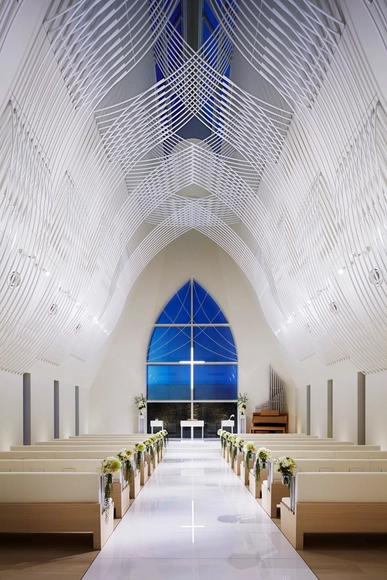


.jpg?1429384111 "© Nacasa & Partners")






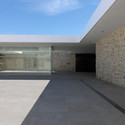
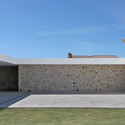
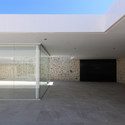
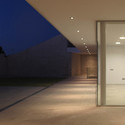


.jpg?1428079441&format=webp&width=640&height=580)
.jpg?1428079772 "© Marcelo Scarpis")
.jpg?1428079632 "© Marcelo Scarpis")
.jpg?1428079686 "© Marcelo Scarpis")
.jpg?1428079611 "© Marcelo Scarpis")
.jpg?1428079441)







.jpg?1426121639&format=webp&width=640&height=580)
.jpg?1426121780 "© Milène Servelle")
.jpg?1426121235 "© Takuji Shimmura")
.jpg?1426121094 "© Takuji Shimmura")
.jpg?1426121416 "© Takuji Shimmura")
.jpg?1426121639)