A survey by CAU/BR conducted in partnership with the Datafolha Institute has revealed new insights into the professional profile of architects and urban planners in Brazil. This is the largest survey conducted in the country since the Census of Architects and Urban Planners in 2012, which was carried out when all professionals registered with the newly created Council of Architecture and Urbanism. "We need precise information to guide CAU's initiatives, both for the entity's planning and to improve communication with professionals," said the president of CAU/BR, Luciano Guimarães.
To expand the Technical Assistance Network for Housing Improvements initiated in São Paulo during the Hands-on Program in Technical Assistance for Social Interest Housing (ATHIS), the non-governmental organization Soluções Urbanas is promoting the Technical Assistance for Housing Improvements Workshop across several Brazilian states. The workshop will be led by Architect and Urban Planner Mariana Estevão.
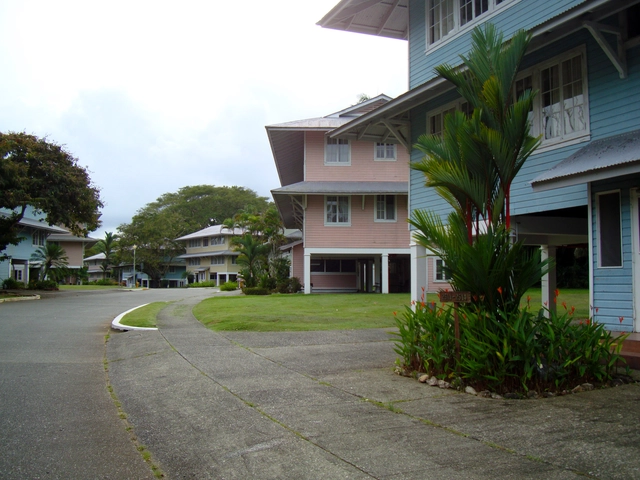
The book Sustainable Tropical Cities, published by the Institute of Tropical Architecture (San José, Costa Rica) in 2006, gathers the conclusions its authors compiled over years of observation and study. Bruno Stagno and Jimena Ugarte, both architects and immigrants enamored with the tropics, aimed to demonstrate the specific characteristics that cities located in the tropical belt possess—or should possess—while introducing an unprecedented topic.
Videos
Screenshot from Drone: así pasan los camiones por el recién inaugurado Paseo del Bajo. Image via Gobierno de Ciudad Autónoma de Buenos Aires Licensed under CC BY 2.5 AR
On Monday, the Paseo del Bajo was officially inaugurated: one of the most highly anticipated—and expensive—infrastructure projects in Buenos Aires in recent years.
The Board of the Alhambra and Generalife announced this on its official Twitter account. According to the director of the Board, Reynaldo Fernández Manzano, the wall was built in 1915 by the architect and conservator of the Alhambra, Modesto Cendoya. The wall was constructed using poor materials that gradually deteriorated over time, and plans were already in place for its demolition and reconstruction. Following the sudden collapse, the Conservation and Protection Service will rebuild it with the original materials in a first phase before undertaking the comprehensive project.
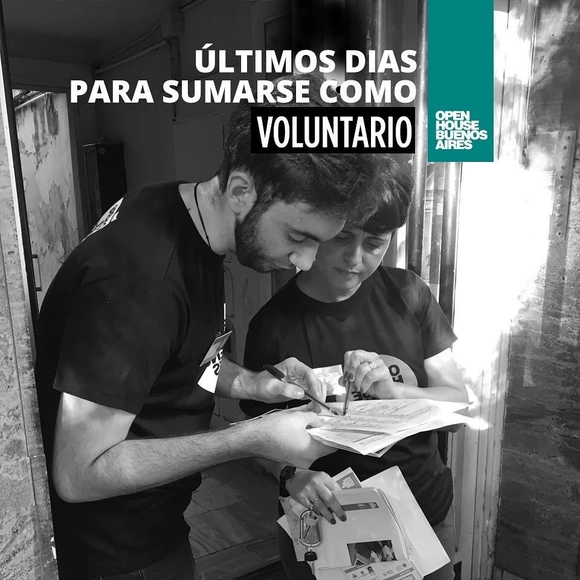
On November 9 and 10, the seventh consecutive edition of Open House will take place in Buenos Aires. This international architecture and urbanism festival highlights works of significant architectural, cultural, and heritage value, opening them to the public to build a bridge between residents, professionals, enthusiasts, and their city. The project's first edition in Buenos Aires was held in 2013, making it the first Latin American city to host the event, which drew 300 volunteers and around 10,000 visitors. This seventh edition is expected to attract approximately 45,000 people.
ArchDaily is working with CityMakers to publish a series of articles, conversations, and interviews with the key figures in urban co-production behind the Barcelona CityMakers Lab 2019, an event taking place from October 14 to 20, 2019.
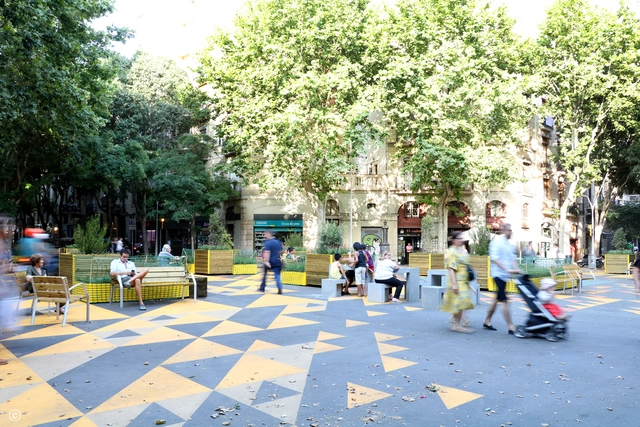
On this occasion, we feature Jokin Santiago Elorriaga, director of Leku Studio, who will lead a masterclass at the Barcelona CityMakers Lab 2019. Jokin is the founding architect of Leku Studio and was responsible for the design and transformation of the Sant Antoni Superblock.
As part of a series of articles developed by Nikos A. Salingaros, David Brain, Andrés M. Duany, Michael W. Mehaffy, and Ernesto Philibert-Petit on the study of social housing in Latin America, this installment reviews examples of design strategies for its construction. Read all previous publications and the new article below.
https://www.archdaily.com/1121071/design-strategies-for-social-housing-in-latin-americaNikos A. Salingaros, David Brain, Andrés M. Duany, Michael W. Mehaffy & Ernesto Philibert-Petit
In an official statement issued on May 8, 2019, the Board of Directors of Real Madrid C.F. decided to award the contract for the remodeling of the Santiago Bernabéu stadium to FCC Construcción. The company is owned by one of the world's most prominent business magnates: Mexican billionaire Carlos Slim, who has been involved in major international projects such as the controversial New International Airport of Mexico.
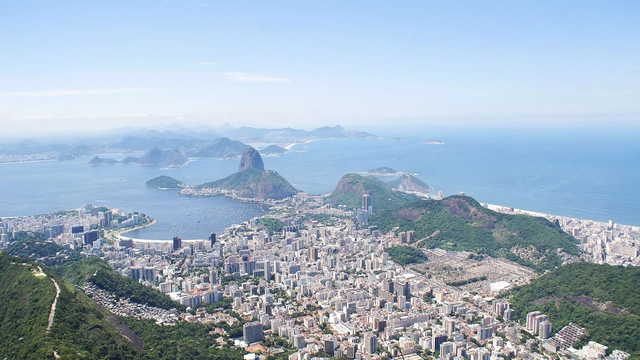
Rio de Janeiro. Photo: Jaime Spaniol, via Unsplash. CC License
In the book “Order Without Design”, Alain Bertaud mentions that indicators are crucial in urban management to give cities a real-time view of what is happening within them. One interesting indicator related to housing affordability is the so-called “Price/Income Ratio.” This is essentially the average home price in a city divided by the average resident's income. It is a highly generic indicator that does not account for differences between properties, such as location, nor does it address rental housing (still a minority in Brazil). Nonetheless, it provides a general overview of housing affordability in a city.
The safety app Malalai, created by architect and urban planner Priscila Gama to make cities and various modes of transportation safer for women, was the main honoree of the GOL Novos Tempos award. The award celebrates initiatives aimed at democratizing mobility.
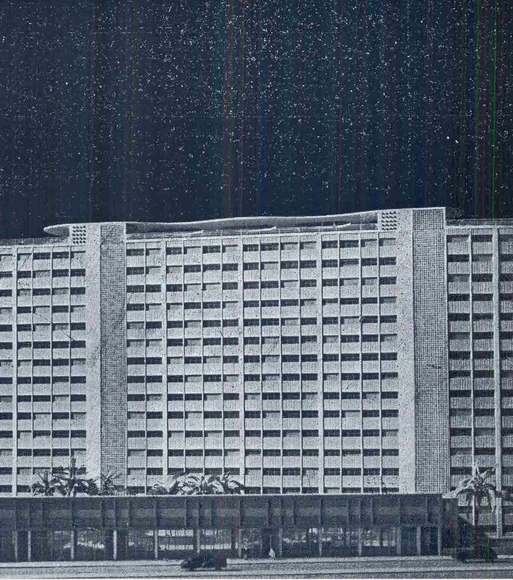
REVISTA ACRÓPOLE. Apartamentos para Industriários. São Paulo, n°119, 1948.. Image Cortesia de PC3 - Pensamento Crítico e Cidade Contemporânea
The Armando de Arruda Pereira Housing Complex, known as the Japurá Building, submitted to the IAPI in 1945 by architect Eduardo Kneese de Mello, stands out as a pioneering experiment in affordable housing in the central area and represents one of the earliest applications of the Corbusian unité d’habitation concept in the country.
https://www.archdaily.com/1121585/pioneering-experiment-in-affordable-housing-in-the-downtown-area-japura-buildingPC3 - Pensamento Crítico e Cidade Contemporânea
Olinda, Pernambuco. Photo: Chico Atanásio/Pref.Olinda, via Flickr. License CC BY 2.0
The Iphan Dictionary of Cultural Heritage is a collaborative work developed by the General Coordination of Documentation and Research of the Department of Articulation and Promotion of Iphan, as well as a research project of Iphan's Professional Master's Program in Cultural Heritage Preservation (PEP/MP). Its goal is to provide the cultural heritage preservation field with a dynamic and critical reference work that, drawing from institutional experience, highlights the fundamental practices, discourses, and concepts that characterize the history of this field in Brazil.
Pedestrian-only area in Copenhagen. Photo: City Clock Magazine/Flickr
Walking is more than just a mechanical movement: it is a daily reclaiming of urban space. It is being active in the urban environment, noticing the city and the details that shape it. However, this choice does not always depend solely on individual willpower; it is also tied to external factors, such as people's physical and social conditions and the presence of infrastructure that enables this choice.
https://www.archdaily.com/1121570/5-cities-that-are-examples-of-walkabilityLara Caccia e Priscila Pacheco
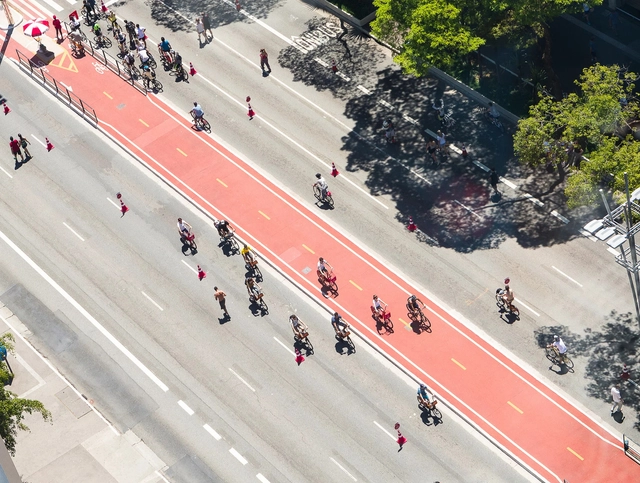
The new São Paulo Cycling Plan, recently presented by Mayor Bruno Covas, outlines the implementation of 173.3 kilometers of new bike lanes and paths in the capital. The proposal, which is part of adjustments to the municipal administration's Target Plan, also includes the upgrading of 310.6 kilometers of existing lanes.
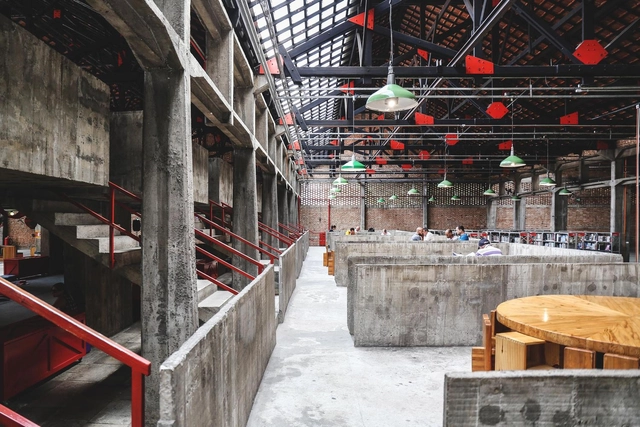
"Tijolo por Tijolo" is a web series about Sesc Pompeia, Lina Bo Bardi's masterpiece. Through very short videos, viewers can explore the history of the Pompeia neighborhood and learn more about the factory that operated on the site before Sesc opened. Additionally, the series covers the repurposing and revitalization of the area and interesting details about the project designed by the Italian-Brazilian architect. In total, there are 11 episodes with exclusive content about the "Citadel of Liberty," containing historical facts, quotes from the architect, and rare photos. Watch all the videos from the series below:
The debate over materiality and how it shapes the spaces housing our entire social dimension lies at the core of architectural discourse. Although architects define a concept, a *parti*, and adhere to a program that can even influence urban life, ultimately it is everyday life and each individual's cultural repertoire that dictate how a place is experienced. The understanding that there are multiple layers in society capable of building invisible walls—which dissolve architectural poetics and unfold into other issues crucial to understanding the system in which we are embedded—is one of the reflections proposed by Nova República, a project created by anthropologist Hélio Menezes and the architects of Cape Town-based Wolff Architects for the São Paulo International Architecture Biennial.
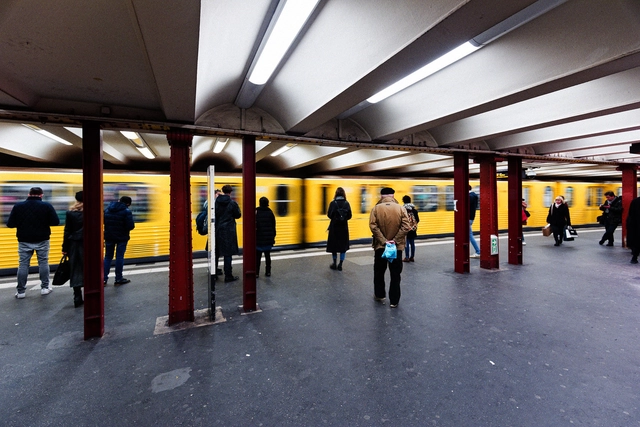
Berlin subway station. Image: Tuomo Lindfors on Visual Hunt / CC BY-NC-SA
Berlin is a global leader in urban mobility, according to the Mobility Futures study by data and consulting firm Kantar, which evaluated major world cities. The German capital topped the mobility ranking due to several factors, most notably more cost-effective travel and easy access to a broad public transit infrastructure network and shared mobility services.
Índia painting a graffiti piece about the bond of motherhood (Personal Archive) / Credit: Personal archive
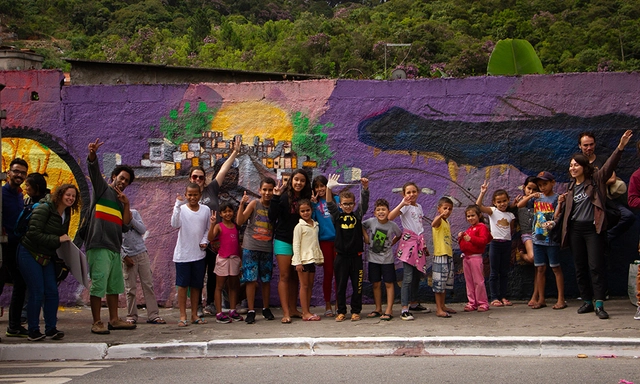
Anyone walking through São Paulo is already accustomed to the colorful walls scattered across the capital. Generally, the graffiti that colors the city's streets is signed by men, and rarely by women. However, this scenario is changing in the city's outskirts. More and more women are bringing art to the streets, balancing motherhood with graffiti.
https://www.archdaily.com/1121418/women-graffiti-artists-occupy-the-walls-of-sao-pauloDanielle Lobato, Erica Pacheko, Ira Romão e Priscila Gomes
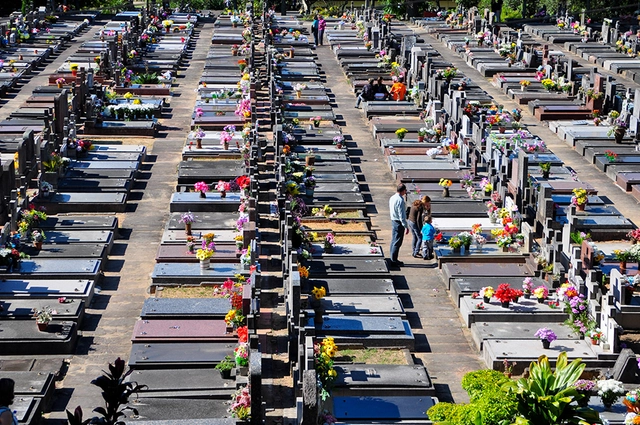
São João Cemetery, Porto Alegre-RS. Image: Lívia Stumpf/Flickr. Via Caos Planejado
“The following day, no one died.” Thus begins the novel Death with Interruptions, by Nobel laureate José Saramago. In it, death suspends its services and, for a time, everyone remains alive in an imaginary country. This masterly metaphor conceived by the Portuguese author, already in his final pairs of shoes, serves as the foundation for discussing the dilemmas and conflicts of the end of life.
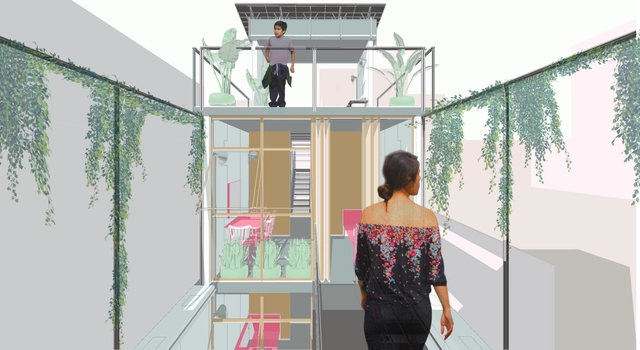
Cortesia de Luiza de Souza Santos, Marcus Barbosa e Gabriel Thomé de Oliveira
The Brazilian student team, comprising Luiza de Souza Santos, Marcus Barbosa, and Gabriel Thomé de Oliveira from UFMG, was awarded an honorable mention in the SkyCity Challenge 2019 international competition, which aimed to "explore sustainable ways of living, working collectively, and having fun." Learn more about their proposal below.
Paraisópolis. Credit: Fernando Stankuns on Visual Hunt / CC BY-NC-SA
In 2018, anyone who passed by an empty lot in the heart of Paraisópolis—São Paulo's second-largest community—on Mondays and Thursdays encountered children with dirt-dusted knees, playing with objects like tires, paper boats, and twigs in endless games. This was the Brincreto project, an initiative by the Coletivo LUB – Laboratório de Urbano de Brincadeiras.
The Passeia, Jardim Nakamura project is a pilot initiative focused on citizen legibility. By leveraging community engagement to build local connections, the project co-created and implemented a neighborhood signage system alongside residents of Jardim Nakamura, located in Jardim Ângela, São Paulo. The project was developed by Instituto COURB and SampaPé!, with financial support from Fundo Casa Cidades. With this proposal, the objective was to foster residents' sense of recognition of their neighborhood, while also ensuring greater comfort and safety for pedestrian mobility, encouraging spatial connection, and promoting the appropriation of local history. In this light, the initiative sought to make the territory easier to read, fostering appreciation for local history and neighborhood actors, while also mapping key locations, walking distances, and the local boundary.
https://www.archdaily.com/1121407/civic-legibility-and-community-engagement-the-passeia-jardim-nakamura-projectCOURB Brasil
Venice is undoubtedly one of the most sought-after destinations in Europe for travelers from around the world. The city boasts attractions in many areas, from gastronomy to art, and naturally, architecture—an art form deeply woven into the city's fabric, most prominently showcased at the Architecture Biennales, held since 1980. Beyond the Biennale, the island has much to offer those interested in exploring places that epitomize the relationship between past and present, the preservation of historical memory, and new technologies serving buildings in constant relation with the water.










.jpg?1548078349&format=webp&width=640&height=580)