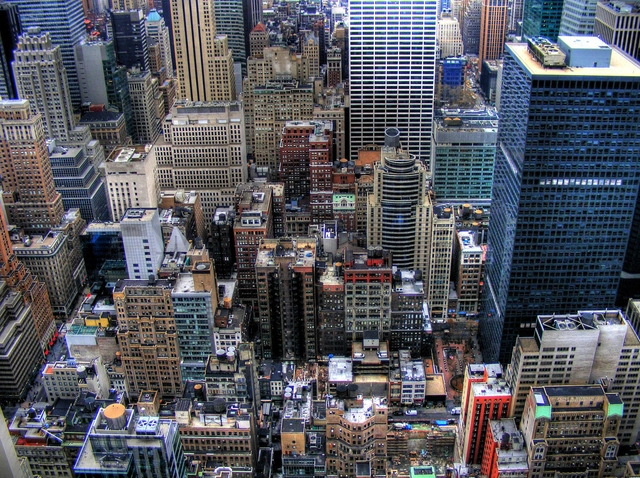
New York. Photo: CJ Isherwood, via Flickr, license CC BY-SA 2.0
The Swiss Federal Institute of Technology in Zurich (ETH Zurich) is offering free online courses on smart cities and future cities. Available through the edX platform, which is shared by institutions worldwide, the courses last ten weeks and are conducted via video.
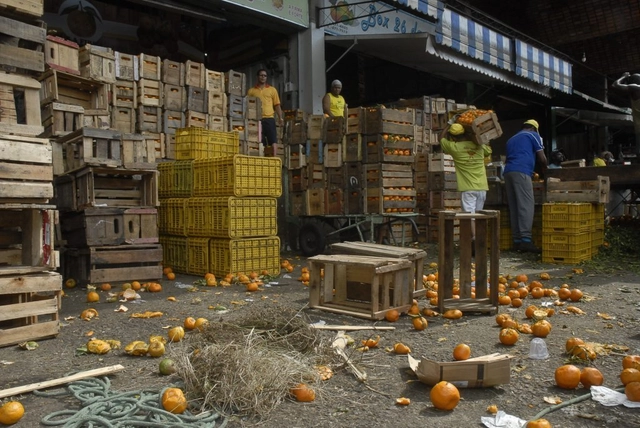
Food waste is a concern for the FAO. Image: EBC, via UN/FAO
The United Nations, through its Food and Agriculture Organization (FAO), launched a publication this month focusing on strategies to integrate nutrition policies into urban planning. The document highlights best practices in reducing food waste, promoting healthy diets, and strengthening local production chains.
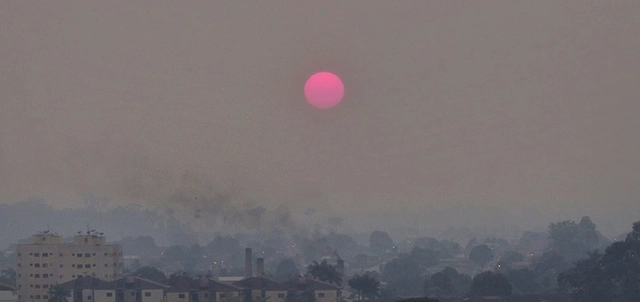
Smoke in Porto Velho, Rondônia, at dawn. Photo: Renata Silva/Personal Archive
Since the beginning of the month, thousands of fire outbreaks have been recorded in Brazil's northern states, spreading through Acre, Rondônia, Mato Grosso, and Mato Grosso do Sul, and reaching the triple border of Brazil, Bolivia, and Paraguay. According to the National Institute for Space Research (INPE), the country is experiencing its worst wave of wildfires in five years.
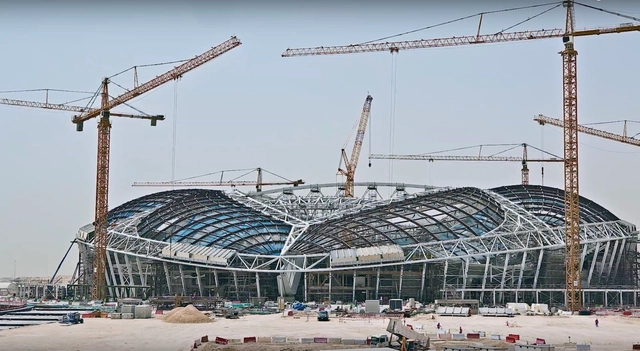
Construção do estádio Al Wakrah. Image Cortesia de Supreme Committee for Delivery and Legacy’
The year is 2010. As the first Arab country selected to host the 2022 FIFA World Cup, Qatar is already ramping up its preparations to host this highly anticipated and costly event 12 years down the line. Extensive construction and reconstruction efforts are being launched, targeting not only the facilities directly demanded by FIFA, but also, more broadly, the urban infrastructure systems of the country's major cities.
The search for the ideal city has always permeated human history, constituting a utopia pursued by rulers, artists, philosophers, and, in more recent history, by us, urban planners. Since the 19th century, various models of ideal cities have been proposed—and, at times, built—ranging from Howard's garden cities to mechanized, radial, and walking cities (like those of the Archigram group), to nomadic ones like Constant Nieuwenhuis's New Babylon, and modernist cities, among others.
Infinito Vão: Brasil, the series of talks taking place on March 22 and 23 at IMS, is an extension of the program of activities for the exhibition of the same name, currently on view until April 28 at Casa da Arquitectura in Matosinhos, Portugal.
Curated by Fernando Serapião, Guilherme Wisnik, and Nuno Sampaio, Infinito Vão: Brasil will bring together architects, photographers, and cultural managers over two days for a series of talks and debates on the history of Brazilian architecture, its influence on daily and cultural life, and the connections it builds with other artistic expressions.
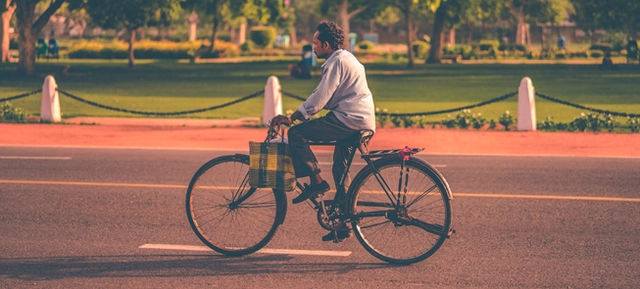
When driving alongside a bike lane, it is hard to escape comments like “it’s always empty,” “it takes away space from cars,” or “businesses lose customers.” But is there any truth to these claims? Here are some of the most common myths about bike lanes – and the reality behind them.
“Writing is like a city, for which words are a thousand gates.” - Walter Benjamin
No roads or maps lead to them. Yet, many of the cities imagined in literature feel more tangible than real ones, capturing the human imagination with their fantastical sparks. The rich geographical, cultural, and social detail of cities like the famous Macondo, from One Hundred Years of Solitude, frequently places a magnifying glass over the relationship between territory and its inhabitants.
Primeiro lugar. Image Cortesia de Prefeitura de Ribeirão Preto
Organized by the Municipality of Ribeirão Preto last October, the competition for the city's Administrative Center has concluded with the selection of three winning projects and two honorable mentions. Discover the selected projects below:
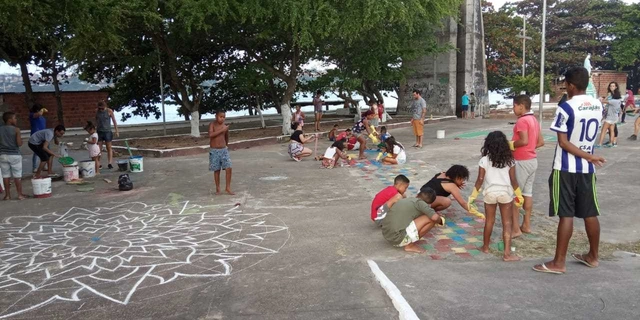
As a result of three months of training in local engagement within the pioneering COURB Ambassadors Program, mobilizers from various Brazilian cities promoted actions in their territories. Aiming for the collaborative construction of inclusive cities, the Articulation Journey—a highly collaborative effort—took place between August and September and featured three types of actions: roundtables, territorial interventions, and collective proposals. The ambassadors mapped and engaged more than 150 institutions in the program, including city halls, universities, collectives, businesses, and organizations.
https://www.archdaily.com/1122586/three-ways-to-activate-urban-space-courb-articulation-journeyCOURB Brasil
Economic and urban processes are known to drive major modifications in the urban structure. In light of the events of January 25, 2019, with the collapse of the Brumadinho dam, it is clear that environmental negligence by major mining corporations also has the power to produce profound consequences and alter the ways in which people inhabit and utilize the territory.
https://www.archdaily.com/1122572/the-importance-of-the-urban-planner-in-territorial-intervention-the-case-of-marianaAryane Diaz e Sérgio Lessa
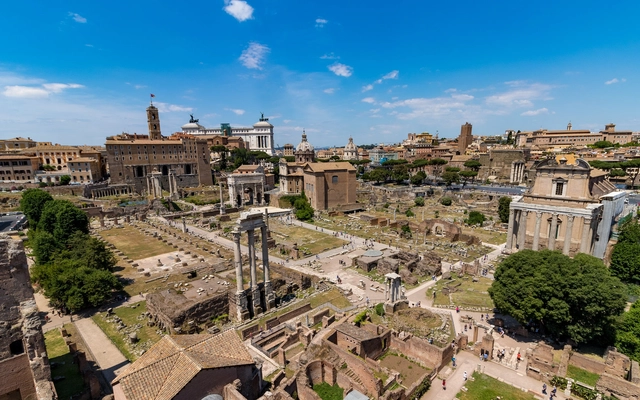
Ruins of the Roman Forum. Photo: hl_1001 on Visual Hunt / CC BY-NC
Metropolis is a word derived from the Greek metropolis, a combination of meter (mother or womb) and polis (city). Thus, the metropolis is the mother city, the most important within a context where several interconnected cities depend on one another to fully function. In most cases, metropolises feature conurbations of multiple urban clusters.
https://www.archdaily.com/1122579/what-does-ancient-rome-have-to-teach-brazilian-metropolisesPaulo Sa Vale
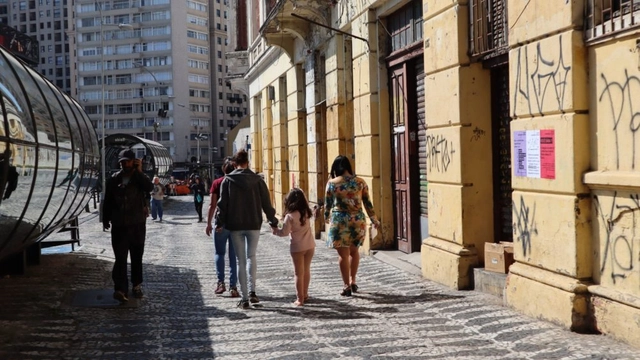
Have you already crossed the street out of fear today? As a woman, what is your greatest fear when walking down the street? How would you feel safer? With the goal of reflecting on how we can plan more egalitarian cities for everyone, the firm amb ateliê, in partnership with architects Fernanda Linero and Beatriz Teixeira, launched this initiative across various neighborhoods in Curitiba. The project ci.da.de; substantivo feminino (city; feminine noun) is part of the 3rd Biennial Architecture Exhibition for Curitiba.
In May of this year, *The Guardian* recommended in its style guide that journalists and contributors heighten their language when discussing climate change or global warming. Now, the British newspaper announced, it is a climate crisis, emergency, or climate breakdown.
https://www.archdaily.com/1122551/climate-crisis-and-the-right-to-the-cityTama Savaget e Henrique Frota
Growth Acceleration Program (PAC). Via: VisualHunt / CC BY-NC-SA
The Government of the State of São Paulo has established the Nossa Casa housing program, which aims to stimulate private investment in social interest housing geared toward low-income populations. The program came into effect through Decree No. 64,388 of August 14 of this year.
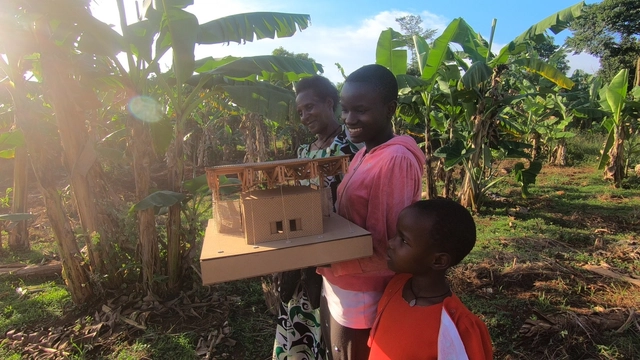
The **A Casa de Jajja **project explores the relationship between affection and architecture as an emancipatory practice. It grew out of research developed as Mariana Montag’s graduation thesis at the School of Architecture and Urbanism of Mackenzie Presbyterian University. This connection of affection emerged through her involvement in the School Project in Kikajjo, a rural village in Uganda, East Africa. There, Mariana met Jajja Imaculate, a strong and faithful 75-year-old woman, grandmother to Rose and Gift. Together, they designed and discussed what a house would look like—a home whose architecture not only shelters Jajja but also serves as an emancipatory practice challenging gender roles, with the construction process conducted through capacity-building workshops for women.
The exhibition “Organic Rational” on the work of architect Pedro Ramalho, curated by Nuno Brandão Costa and drawing on his archive recently donated to Casa da Arquitectura, is on view at the Gallery of Casa da Arquitectura – Portuguese Centre for Architecture, in Matosinhos, until September 8.
https://www.archdaily.com/1122613/organic-rational-pedro-ramalho-exhibition-at-casa-da-arquitecturaPedro Vada
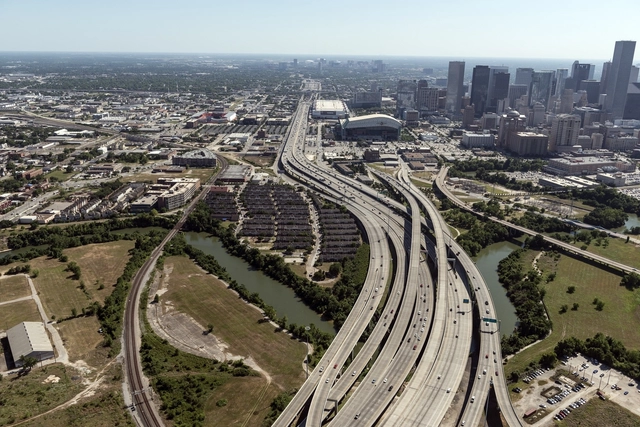
Aerial view of Houston. Courtesy of Caos Planejado
While conventional American urbanism is known to drive excessive sprawl, it is worth remembering that, ultimately, the true extent of a city's horizontal expansion lies far beyond the reach of urban planning controls.
A team of professionals from the Housing Company of the Federal District (CODHAB/DF) has launched a crowdfunding campaign for the publication series “Experiências em Arquitetura Social” (Experiences in Social Architecture). The books compile architecture and urban planning projects designed to improve the quality of housing design and construction in the Federal District.
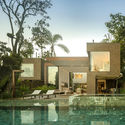
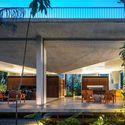
In architectural discourse, much is discussed regarding the influence of the site where a building is situated, whether through the incorporation of surrounding elements during the design process, or through the negation or overcoming of its undesirable characteristics. Some situations make this negotiation more evident than others, especially when the natural environment is dominant. In these cases, one constantly observes the tension between natural preexistence and human intervention, as well as the possible ways to achieve harmony between the two.
The School of Architecture and Urbanism of the Federal University of Juiz de Fora (UFJF) has announced the results of the national competition for its new headquarters building. The winning team consists of architects Bruno Eduardo Nakaguma Gondo, Carlos Eduardo Murgel Miller, Eduardo Saguas Miller, and Felipe Fuchs, from São Paulo.
Romano Guerra Editora has launched a crowdfunding campaign on Catarse to reissue the celebrated book RINO LEVI – arquitetura e cidade. Based on Renato Anelli's doctoral dissertation, the book features iconographic research by a team led by Abilio Guerra and is filled with photography by Nelson Kon.
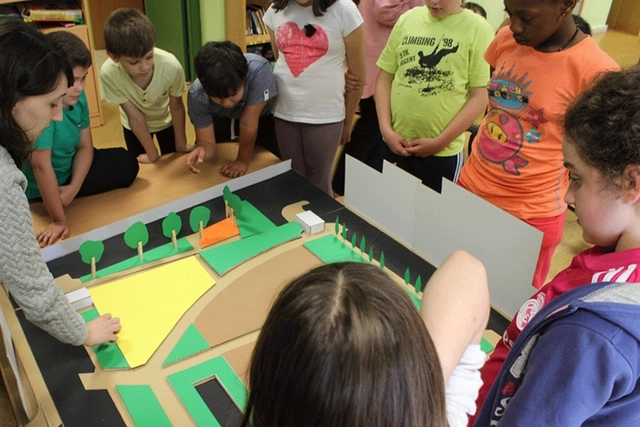
Projeto “Arquitetura para Crianças”, realizado na Galícia, Espanha. Image Cortesia de CAU/BR
The Urban and Environmental Policy Commission (CPUA) of CAU/BR will produce supplemental educational materials on architecture and urbanism for elementary and middle school classrooms. Developed in partnership with Pistache Editorial, the project aims to bring urban planning discussions into schools to help build better cities in the future. The goal is to foster students' critical perspective on the urban environment, helping them understand the city as a space with multiple historical layers.
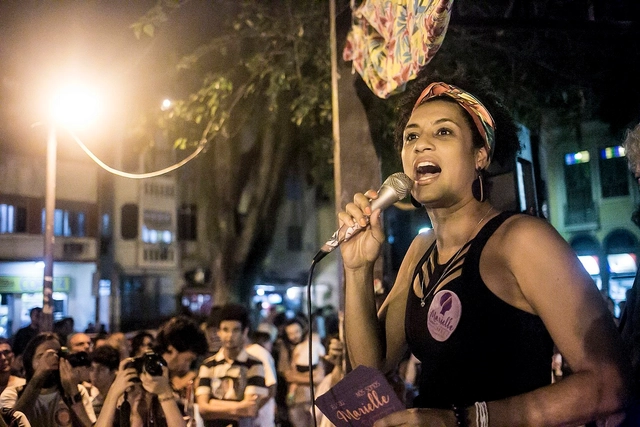
Today marks one year since the brutal assassination of Rio de Janeiro sociologist and city councilwoman Marielle Franco. The week before her death, Marielle took part in a series of debates organized by CAU/RJ called "Architecture - Feminine Noun," aimed at strengthening mobilizations for International Women's Day.
https://www.archdaily.com/1122060/watch-marielle-franco-in-the-debate-architecture-feminine-nounPedro Vada



.jpg?1554907489&format=webp&width=640&height=580)

.jpg?1560957484&format=webp&width=640&height=580)
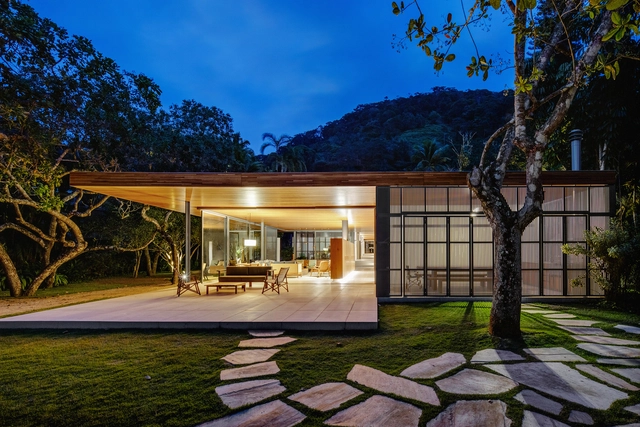
.jpg?1562845563 "House in Prumirim Beach / brro arquitetos. Image: © André Scarpa")