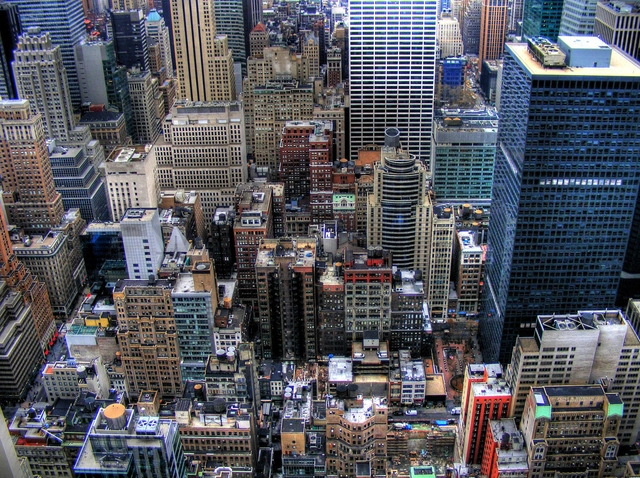
New York. Photo: CJ Isherwood, via Flickr, license CC BY-SA 2.0
The Swiss Federal Institute of Technology in Zurich (ETH Zurich) is offering free online courses on smart cities and future cities. Available through the edX platform, which is shared by institutions worldwide, the courses last ten weeks and are conducted via video.
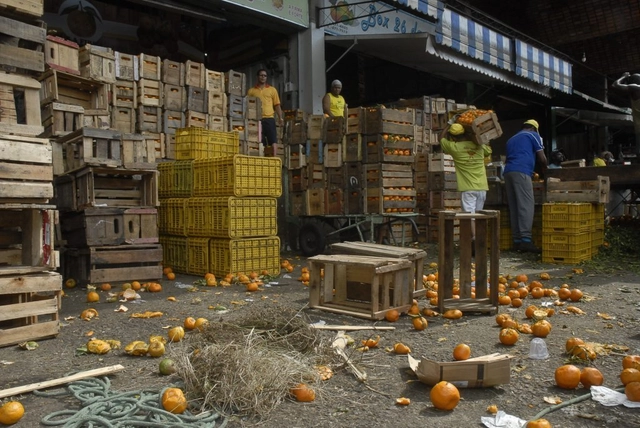
Food waste is a concern for the FAO. Image: EBC, via UN/FAO
The United Nations, through its Food and Agriculture Organization (FAO), launched a publication this month focusing on strategies to integrate nutrition policies into urban planning. The document highlights best practices in reducing food waste, promoting healthy diets, and strengthening local production chains.
The city in the construction of the environment: "A place for strangers" or a place that only ceases to be neutral and abstract when painted by each of us? Image by Paulo Pacheco
There is perhaps no concept so generic and comprehensive, yet at once so impersonal and difficult to reach consensus on, as that of the environment (focusing on the United Nations Conference's own definition of environment—the environment as the set of physical, chemical, biological, and social components capable of causing direct or indirect effects, in the short or long term, on living beings and human activities—we immediately find that establishing a stable, common, and assertive conceptual foundation is highly difficult to achieve, let alone universally recognize...)
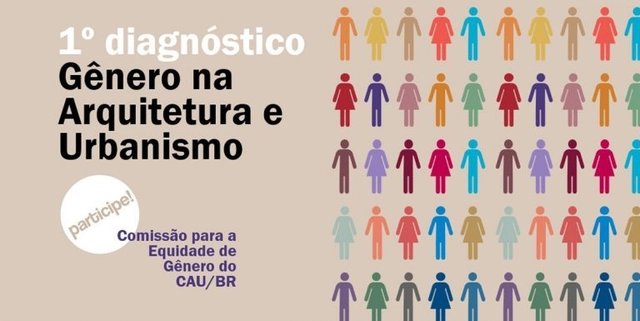
The Council of Architecture and Urbanism of Brazil, through its Commission for Gender Equity (CTEG), has launched a public survey to collectively build a women's agenda aimed at overcoming challenges in the practice of architecture and urbanism.
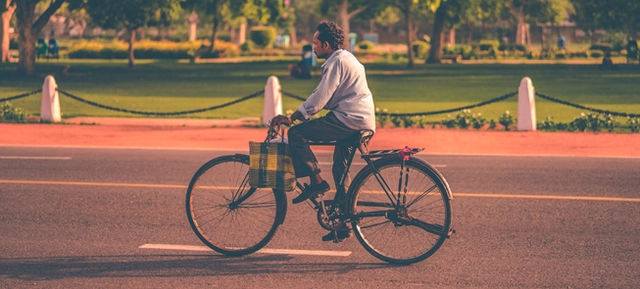
When driving alongside a bike lane, it is hard to escape comments like “it’s always empty,” “it takes away space from cars,” or “businesses lose customers.” But is there any truth to these claims? Here are some of the most common myths about bike lanes – and the reality behind them.
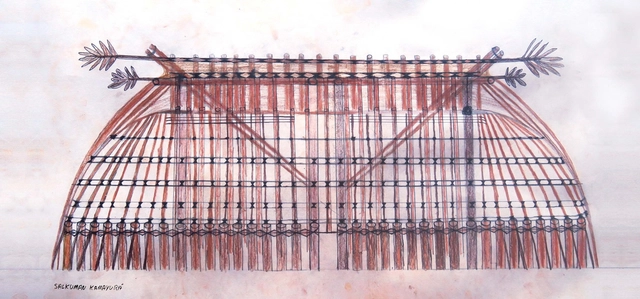
In July 2019, the habita-cidade Platform [1] organized the "Ways of Dwelling: Traditional Architectures" Travel-Workshop, which brought students and professors to the Ypawu Village in Kamayurá territory, in the Upper Xingu. The general objective of the "Ways of Dwelling" Travel-Workshops is to foster constructive reflection on the diverse forms of human habitat across the planet. This year, responding to a request from Kamayurá master builders to produce a manual on local architecture, the Travel-Workshop was designed so that the visiting group could support this important endeavor. The idea for the Kamayurá Architecture Manual was first proposed by Kanawayuri L. Marcello Kamaiurá (a local leader) to architect Clarissa Morgenroth (a graduate of Escola da Cidade) and theater director Cibele Forjaz. Escola da Cidade was then invited to join the project, which was taken on by the habita-cidade Platform, an initiative linked to the *lato sensu* postgraduate program "Housing and City."
https://www.archdaily.com/1122239/kamayura-architecture-manualLuis Octavio de Faria e Silva
Image: Ivo Gonçalves – Prefeitura de Porto Alegre/Flickr, license CC BY-NC-SA 2.0
The Master Plan is the basic instrument for defining a municipality's development model. It establishes guidelines and strategies for executing plans, programs, and projects, seeking to emphasize public participation as well as economic, social, and environmental sustainability. Yet, its influence on the city goes far beyond what is commonly imagined: it ultimately dictates the volume and form of every new building.
On December 15, we celebrate "Architect's Day." While this date is an opportunity for celebrations and tributes to the profession, it also serves as an occasion to reflect on what the practice of architecture and urbanism in Brazil is—and what it could be. At this time of year, it is also common to take stock of the past and look toward the future. Therefore, let us take this opportunity to reflect on our professional practice and our role as architects, asking: "Where were you in December 2017, and what were you doing then?"
https://www.archdaily.com/1122382/whom-do-architecture-and-urbanism-serveFelipe Moreira e Vitor Nisida
The construction industry drives considerable economic activity worldwide, generating countless jobs and substantial revenue. At the same time, it also carries significant negative impacts, ranging from the depletion of natural resources to high levels of waste generation during both construction and demolition phases. To put this in perspective, in Brazil, Construction and Demolition Waste (CDW) is estimated to account for 61% of all waste generated, while household waste represents 28% [1].
Women in architecture, contemporary production in the Global South, theory and history, buildtech, new materials, recycling in construction—2019 was a year rich in investigations and reflections that approached architecture from a variety of perspectives. Fulfilling our mission to make ArchDaily a source of tools and inspiration not only for professionals and students but also for anyone interested in architecture, we published hundreds of articles on topics as diverse as the perspectives on the built environment.
Courtesy of United Nations Development Programme (UNDP)
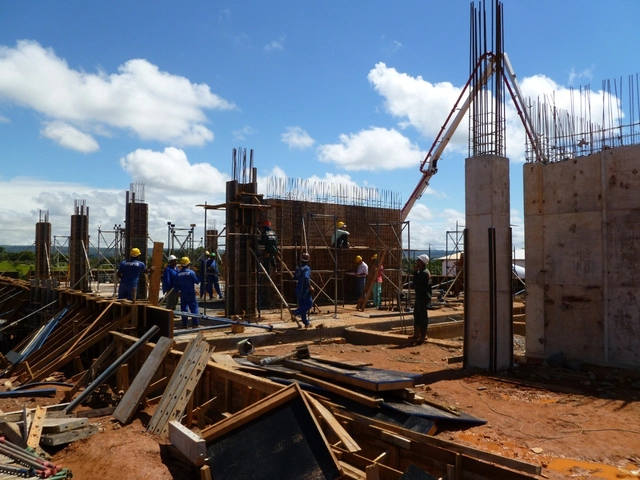
Growing concern over the use of natural resources in architecture has drawn increasing attention from professionals and researchers, pointing toward a future where architects must not only design but also facilitate the decommissioning and recycling of buildings. Against this backdrop, raising awareness about water waste on construction sites has become a major priority—an issue addressed in a recently launched guide by the São Paulo State Construction Industry Association (SindusCon-SP), Caixa Econômica Federal, and the United Nations Development Programme (UNDP).
Shared electric scooters are also coming to Brazilian cities, and seven of them already have specific regulations. Photo: Portland Bureau of Transportation/Flickr
The use of shared e-scooters as a mode of transportation has emerged as one of the major revolutions in urban mobility in recent years. Since launching in September 2017 in the United States, e-scooters quickly became a phenomenon and, within less than two years, a reality in several major cities worldwide.
https://www.archdaily.com/1122413/the-rules-for-using-electric-scooters-in-seven-brazilian-citiesGuillermo Petzhold e Francisco Pasqual
Aerial view of Paulista Avenue. Illustrative image. Photo by Gabriel Ramos via Unsplash
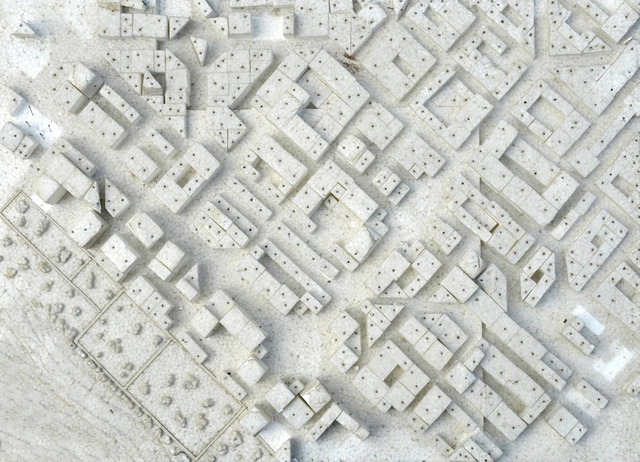
The city of São Paulo is the first in South America to freely release laser-scanned data covering its entire territory. The files are available for download on the GeoSampa Portal. The technology, known as LiDAR (Light Detection and Ranging), goes beyond standard satellite imagery or aerial photography to provide a high-resolution geometric representation of a city. Consequently, it offers a much more accurate and detailed model of the mapped area.
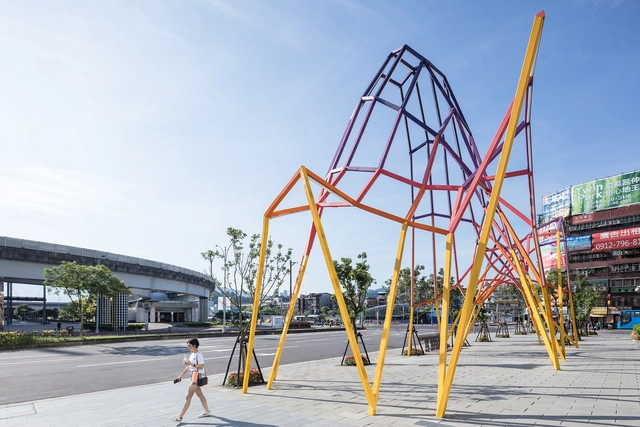
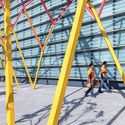
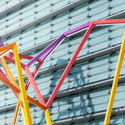
NAPPE is a permanent art installation designed by Portuguese studio FAHR 021.3 and built next to the Nangang Exhibition Center, in a redeveloped area of Taipei, Taiwan. Drawing on the country's culture and geography, NAPPE is inspired by Jade Mountain, the island's highest peak and a symbol of purity, honesty, and national values. The outdoor pavilion seeks to draw citizens into a new urban experience.
The adaptability of architectural professionals in Brazil is indisputable. Confronted in recent years with crises of various kinds that have hindered the execution of work and, perhaps even worse, immersed in a structure that systematically undervalues the profession, the professional, and the project, the vast diversity and high quality of current production is remarkable.
Videos
Katsushika Hokusai - Gaifū kaisei - Public Domain. Image via Wikipedia
Escola da Cidade has shared with us a lecture series on Japanese Architecture and Culture, which is part of the Estúdio Deriva program. This series features the following lectures: "Ambience Without Hierarchy: SANAA and Electronic Music" with Guilherme Wisnik, "Contemporary Japanese Culture" with Gabriel Kogan, "The Professional Practice of Japanese Architects" with Lourenço Gimenes, "A Graphical Analysis of Toyo Ito's Mediatheques" with Marina Lacerda, "Destroy to Build: The Impact of Tokyo's Reconstruction Plans in Akira" with Beatriz Oliveira, "Jidai no nagare, the Flow of Eras: Japanese Wood Joinery" with Heloisa Ikeda, and "The Tōkaidō Road: Travel, Woodblock Prints, and Cities of the Tokugawa Period (1603-1868)" with Fernanda Sakano. Watch all the lectures here.
https://www.archdaily.com/1122348/japanese-architecture-in-7-lessonsPedro Vada
Videos
Goetheanum im Winter von Osten. Image Cortesia de Trienal de Arquitectura de Lisboa
Within the scope of The Poetics of Reason, this year's Lisbon Architecture Triennale explores the nexus between Agriculture and Architecture, two complementary fields that emerged around 10,000 years ago during the Neolithic Revolution and, later, in the Anthropocene. Given the current environmental crisis, the core hypothesis of the exhibition Taking the Country's Side: Agriculture and Architecture, curated by Sébastien Marot, is that no consistent thinking can develop in the future of either discipline unless they are once again allied and fundamentally reconsidered together.
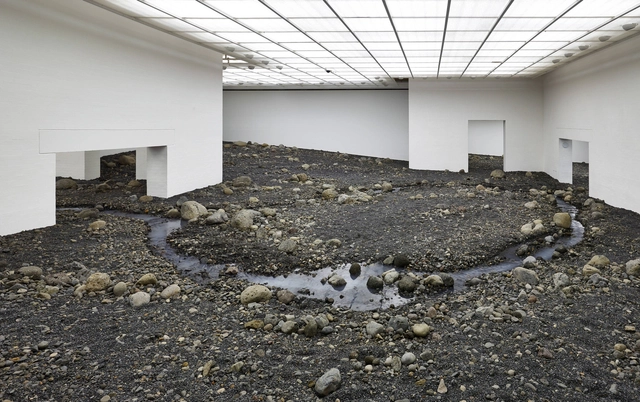
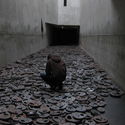
Riverbed exhibition by artist Olafur Eliasson. Courtesy of Louisiana Museum of Modern Art
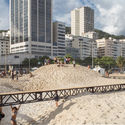
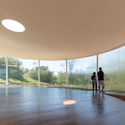
When thinking of galleries, museums, and exhibition spaces in general, the image of an enclosed, well-lit room with white walls and a neutral floor—likely made of wood—commonly comes to mind. The notion of designing exhibition spaces as "pure" environments, whether to focus on the artwork itself or to facilitate the rotation of exhibitions, has perhaps been the dominant guiding principle in the creation of these spaces over the last few decades. However, just as art transforms space, space can also be a transformative agent for art. This shifting perspective gave rise to artistic productions conceived for specific venues, widely known as site-specific installations.
The CAU/BR is studying new rules for issuing Technical Responsibility Records (RRT) and Technical Collection Certificates (CAT) by architects and urban planners. The Professional Practice Commission, which is presenting the proposal to the public, aims to improve the registration system to protect both architects and their clients regarding the technical responsibility of architecture and urbanism services.
Green roofs retain rainwater, reducing flooding and stress on sewer systems. Photo: Kathleen Phillips/AgriLife Today
More than 600 million people lack access to clean drinking water. Droughts affect over 35 million every year. And by 2050, 1.3 billion people will live in flood-prone areas. Many believe that building dams, water treatment plants, and other built infrastructure are the only solutions to these challenges—but that is only because the many benefits of natural (or green) infrastructure have not been considered.
https://www.archdaily.com/1122313/debunking-myths-5-things-you-need-to-know-about-natural-infrastructureSuzanne Ozment e Irene Rehberger Bescos
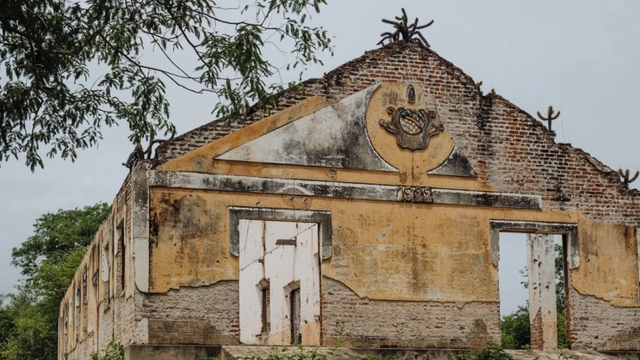
Ruins of the concentration camp in Senador Pompeu mark the struggle against hunger and the 1932 drought. Photo: Gustavo Gomes/EBC. Image via Haus
The year 1932 is a milestone in the history of Céará. One of the worst droughts ever recorded devastated the sertão, leading to scenes already immortalized in classics of Brazilian literature—such as Vidas Secas by Graciliano Ramos and O Quinze by Rachel de Queiroz: drought refugees forced to leave their homes to escape hunger and misery.
In highly urbanized areas, high land costs and competition for access to urban infrastructure make semi-detached buildings a common sight, particularly in residential zones. Almost always built along an axis of symmetry, they form pairs or rows of multiple homes which, besides lowering construction and design costs, optimize land use.
Here, we select ten Brazilian semi-detached houses that showcase different design strategies for addressing urban constraints.
Applications are now open for the 6th Instituto Tomie Ohtake AkzoNobel Architecture Prize. The initiative continues to map contemporary architectural production by highlighting, for the sixth consecutive year, significant projects built in the current Brazilian landscape that demonstrate a commitment to their site and sustainability, as well as design and constructive inventiveness.
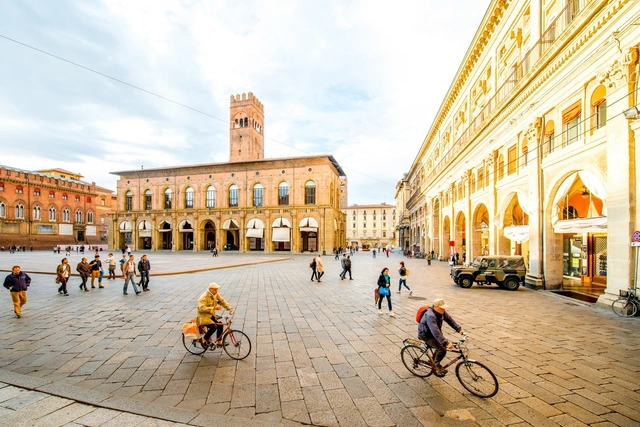
One of Italy's most important culinary hubs, Bologna is aiming to encourage its residents to adopt cycling, public transit, or simply walking as their primary means of transportation—leaving their cars at home. To achieve this, the city has launched an incentive program.



.jpg?1557928245 "Cortesia de Santa Luzia")






_-_Google_Art_Project.jpg?1558383794&format=webp&width=640&height=580)
.jpg?1569333854&format=webp&width=640&height=580)


.jpg?1549028134 "© Alessandro Guimarães")