ArchDaily is the most visited architecture website in the world. It is an experiment in the field of documentation, discussion and dissemination of the main themes of architecture and urbanism. Today we are happy to announce that our team is continuing to grow!
We are looking for new and talented curators. Are you passionate about architecture and the internet? Then this opportunity could be yours!
https://www.archdaily.com/924740/be-part-of-archdaily-we-are-looking-for-our-next-projects-curatorArchDaily Team
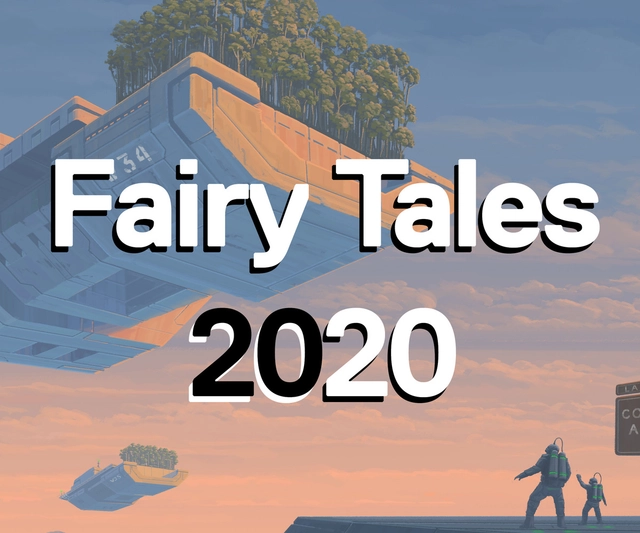
For the last 6 years, the Fairy Tales competition has captured the imagination of designers and architects around the world. Last year's record breaking competition drew entries from over 60 countries, making the competition once again the largest annual architecture competition in the world. For the seventh year of the competition, Blank Space is proud to partner with ArchDaily, Archinect, and Bustler.
The BLL Awards for Architecture & Design comes from “Bringing light to life” which is the slogan of VELUX world brand for roof windows, which distribute daylight and fresh air into buildings through the roof. The idea of the Awards is to popularize good architecture, from architects and designers across countries in the CEE (Central and Eastern Europe) region, which demonstrates the effective distribution of daylight into buildings and the utilization of the space under the roof elements. It is a platform to showcase the work and products of architects and designers to a global audience. This year is the 6th edition of the BLL Awards, and is now open for entries. Seven countries from the CEE region are included – Bulgaria, Bosnia and Herzegovina, Romania, Serbia, Macedonia, Montenegro, and Turkey.
Last quarter, Tesla delivered 95,000 electric cars to customers from around the world. Needless to say, the electric car revolution is coming at a rapid pace as people around the world choose to buy an electric vehicle instead of a gas car.
The question then becomes, what will happen to all the gas stations? There are over 130,000 gas stations in the US alone and many are family-run small businesses who don't have endless resources to prepare for the coming tectonic shift.
Madanfo Project and Radefoundation announce a call for entries for the "Timeabu Kindergarten" Architecture Competition. The competition aims to create a place where the youngest children of Timeabu can take classes.
The competition is open to candidates both students of professionals of architecture, design, engineering, or people involved to design or construction projects, from all around the world.
“eSports have joined the big leagues”, a research from Goldman Sachs wrote in a recent report about the new subsection of the video game industry. They estimate that the monthly size of competitive eSports gamers, 167 million as of year-end 2018, will hit 276 million by 2022, basing their forecast on a New Zoo survey. Out of 7700 million world population estimated 2400 million people are playing some form of games in digital media as per a report by Statista.
Buildings are often designed aspiring for their long lives. With our modern-day construction materials, the average lifespan of a building can be considered as 40-50 years. However, what happens when a building dies and what if it becomes defunct before that?
Buildings when clubbed together form a locality which in turn add up to build a city. Proper functioning of any such building becomes an asset to a city. Contrarily, a defunct building is eventually a liability to a city.
Technological boost embarks our lifestyle enhancement. With this change, if a building cannot cater to the changing need of the society, it gets abandoned even before its physical death.
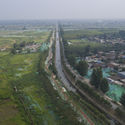
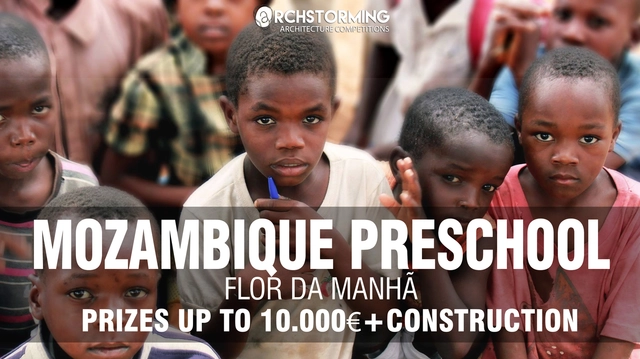
In the current competition, we will help Assa, a Mozambican teacher, build a center for children with disabilities and affected by social exclusion, with the help of the Estamos Juntos Initiative and the NGO Somos del Mundo. The winning proposal will be built. The school will be located in a plot between the cities of Xai-Xai and Chongoene, approximately 1 km away of the road that connects them.
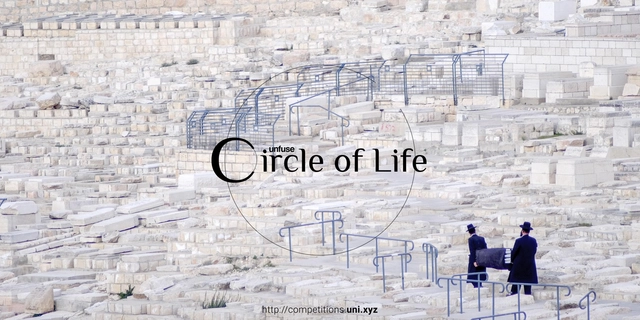
The story of birth and demise began to weave when humans started reading the stars and celestial bodies. Socio-cultural phenomena and language paved the path for religion and beliefs. Each religion had a new chronicle associated, that tapped our emotions. Infrastructures and spaces to perform these rituals were built, and held positions of great sanctity and significance in the society. Tombs, Pyramids, temples, all kinds of structures were constructed, and often formed the heart of a city or civilization.
50 years ago, on July 20, 1969, Neil Armstrong became the first man to step on the moon. Upon landing, the first words that he quoted were “That's one small step for man, one giant leap for mankind.” True to his words, the world has never seen back since and new dimensions of space explorations were open following that day. Every space mission has always inspired humanity to think beyond and, this marvelous feat has been the pinnacle of those.
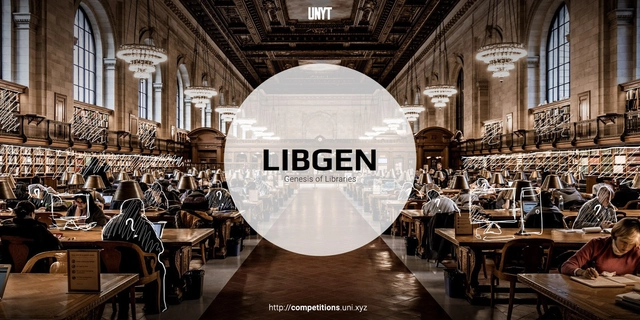
The world that we see today is closer than ever before. Knowledge which was earlier stored via books has now been transferred to the digital medium. It is accessible to the world, making the process of acquiring this knowledge i.e. learning, simpler. An avenue to self-educate and learn was initiated by need of a public space that made knowledge accessible to all with books. The concept of libraries initiated with this idea, by making learning accessible to all. It banked on the idea of gathering a wide spectrum of knowledge in one space, open to enable self-learning.
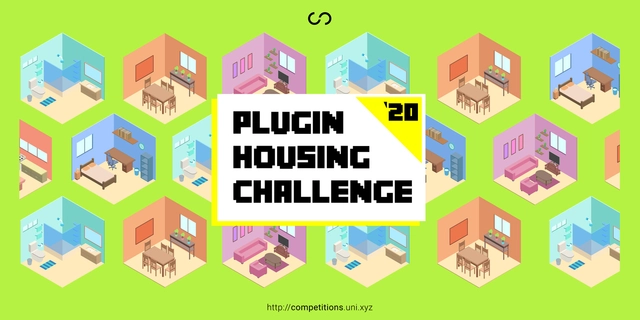
Humankind has lived and worked primarily in rural areas. But now, more than half of the globe's population, will be living in towns and cities. The number of urban dwellers is rising, reaching almost 32% of total world population, and 68% by 2050. It is estimated that 900 million urban dwellers and over one billion rural people now live in overcrowded and poor quality housing without adequate provision for water, sanitation, drainage or the collection of household waste. Even renting affordable houses in the world's largest cities is impossible and people have to resort to long commute hours to reach their workplace. A remedy for such conditions is required on a large scale that tackles with the issue of housing for low income groups residing in urban areas. A possible long-term solution would be to design compact housing units that are affordable for construction as well as usage. Compact Housing can also be referred to as micro or capsule housing. This concept has been derived from the necessity of providing a shelter along with basic facilities for its users. It is a small, self-contained, single or double occupancy unit, typically in urban crowded areas.
There are moments in history when a confluence of ideas, people, and broader cultural and technological forces creates a spark. Sometimes the spark amounts to nothing more than a flicker. But if conditions are right, it can erupt into a dazzling, brilliant light that, while burning for only a brief moment, changes the world around it.
The Bauhaus was one of these – a place that despite the economic turmoil and cultural conservatism of the world around it, offered a truly radical, international and optimistic vision of the future. The origins of the Bauhaus lie in the late 19th century, in anxieties about the soullessness of modern manufacturing, and fears about art's loss of social relevance. The Bauhaus aimed to reunite fine art and functional design (applied arts), creating practical objects with the soul of design. The effect was eventually design good design was made accessible to people at an effective price.
The subject of the competition is architectural, urban, technological, or product design that is capable of dynamic interaction with its social, natural, or built surroundings. The main focus of the competition is on solutions developed through a process of changes and adjustments. Achieving such a goal requires an interdisciplinary approach that often goes beyond typical solutions. The winning projects from the previous editions often took advantages from disciplines such as robotics, mechanics, digital fabrication, biodesign and biofabrication, computational design, materials science, bioarchitecture, social sciences, industrial design, mobility, and more. The participants are free to decide the project’s location, scale, size, and program. In 2019, the Laka Competition ‘Architecture that Reacts’ celebrates its fifth edition!
How do designers think? How do they visually communicate complex ideas? What strategies do they employ to make a positive impact on the built environment? How does design change the way people see and experience the world?
https://www.archdaily.com/910758/design-your-summer-uc-berkeleys-college-of-environmental-design-is-now-accepting-applicationsSponsored Post
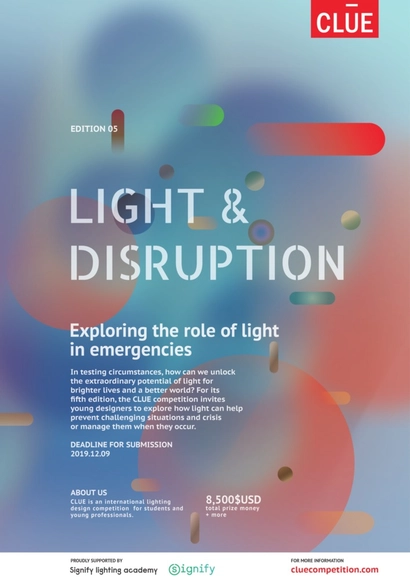
EDITION 05: In the modern world, complexity and uncertainty seem ever-present. How do we maintain relative order and a sense of calm? We rely on the power of interconnectivity. When different systems, processes, and people work seamlessly in conjunction with one another, this is when our towns and cities flourish. But what happens when something goes wrong?
Conflict, disruption and environmental changes can leave us vulnerable, but we're never entirely powerless. This forms the challenge of CLUE edition 05: to explore how light can help to prevent challenging situations and crisis or manage emergencies when they occur. In testing circumstances, how can we unlock the extraordinary potential of light for brighter lives and a better world?
During an incident or emergency, it's understandable that confusion, disorientation and even panic are likely responses. That's' why, in this edition, we are asking young students and professionals to imagine the ways in which lighting can make a difference - big or small.
We encourage contributors to think of prevention - how illumination can help to anticipate and address problems before they even start - as well as the way in which it might assist during an incident. How can light help the people affected by a crisis? What role can it play in aiding emergency responders? And how can it help in the aftermath of an incident?
The particular situation you want to tackle is entirely up to you. What can you bring to the table?
TIMELINE: • CLUE 05 COMPETITION LAUNCH January 15, 2019
• DEADLINE FOR QUESTIONS November 25, 2019
• DEADLINE FOR REGISTRATION December 8, 2019, 23:59 (GMT-5)
• DEADLINE FOR PROJECT SUBMITTAL December 9, 2019, 23:59 (GMT-5)
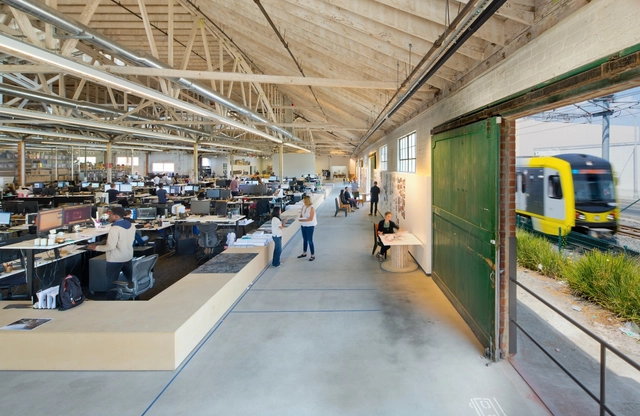
Join Rios Clementi Hale Studios and Cal Poly Tech for an investigation of virtual reality in architecture on Sunday, December 9 at the Rios Clementi Hale Studios offices.
.jpg?1613264611&format=webp&width=640&height=580)







.jpg?1549309617&format=webp&width=640&height=580)