A student in Reyhanlı. Photographer: Kiyarash Borna
Introduction
In 2019, the 2nd edition of Building 4Humanity Design Competition (B4H-DC) aims to address the notion of having architecture as a social and cultural facility, by seeking design ideas that would contribute towards the social inclusion and integration of Syrian war refugees in the Turkish border city of Reyhanlı. The competition has two separate categories: it welcomes submissions from students and recent graduates, as well as experienced professionals.
Micro Housing 2019 Architecture Competition invites you to rethink and reimagine the idea of urban dwellings and come up with inventive solutions to the persistent issues of space crunch and growing population in our cities.
Since the beginning of time, a HOME has continued to be an entity that is intimate to all living beings on the planet. Apart from being a physical shelter for humans and their daily lives, a home forms a distinct, intimate connection with its users.
Today, across the globe, we are experiencing a rise in densely populated urban areas, along with a lack of land resources to provide sufficient housing for the masses. This phenomenon has given rise to a new movement of Micro-Housing; one that commands the idea of simple but inventive living in today’s urban areas.
Ideasforward wants to give young creative people from around the world the opportunity to express new ideas of future societies through theirinnovative and visionary proposals. We are an experimental platform seeking progressive ideas that reflect on emerging themes. We want to break mental borders and put all the visions on the table. Here, you can try an experiment, everything is possible!
YAC - Young Architects Competitions launches “Sport Citadel”, a competition of ideas aiming to design a sport citadel near Turin, in one of the largest sport districts in Europe. A cash prize of € 20,000 will be awarded to winners selected by a well-renowned jury made of, among the others, Dang Qun (MAD Architects), Hitoshi Abe, Peter Eisenman, Andrea Maffei.
https://www.archdaily.com/919663/call-for-submissions-sport-citadelSponsored Post
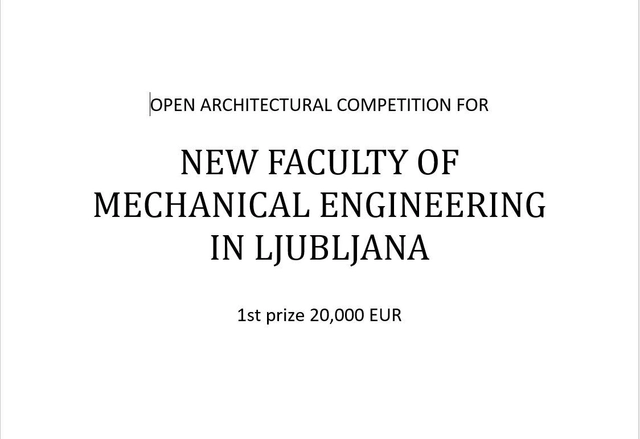
PURPOSE OF THE COMPETITION The subject of the competition is the architectural design of the building of the Faculty of Mechanical Engineering (UL FS) in the area marked EUP RD 358, within the framework of the University Center Brdo (OPPN 65). The area under consideration is located in the western part of the city of Ljubljana, at the northern foot of Rožnik hill, which ends on the west side of the Trail of Remembrance and Comradeship (PST). The building of the Faculty of Mechanical Engineering is placed in a narrower area determined on the basis of a preliminary urban competition for the building of the Faculty of Mechanical Engineering and the Faculty of Pharmacy. The subject of the competition is also the external arrangement of the wider competition area of the two faculties, which in certain parts exceeds the ownership boundaries.
After the great success of its first edition, YACademy is glad to announce that the registration for the course in ARCHITECTURE FOR WELLNESS are now open!
115 hours of lessons, a 30-hour workshop, lectures and placement opportunities in internationally-renowned architectural firms like SIMONE MICHELI ARCHITECTURAL HERO - PARTISANS - TNE ARCHITECTS - CARLOS MARTINEZ ARCHITEKTEN - ANDREA MAFFEI ARCHITECTS - ALBERTO APOSTOLI
115 hours of lessons, a 30-hour workshop, lectures and placement opportunities in internationally-renowned architectural firms like SIMONE MICHELI ARCHITECTURAL HERO - PARTISANS - TNE ARCHITECTS - CARLOS MARTINEZ ARCHITEKTEN - ANDREA MAFFEI ARCHITECTS - ALBERTO APOSTOLI
Videos
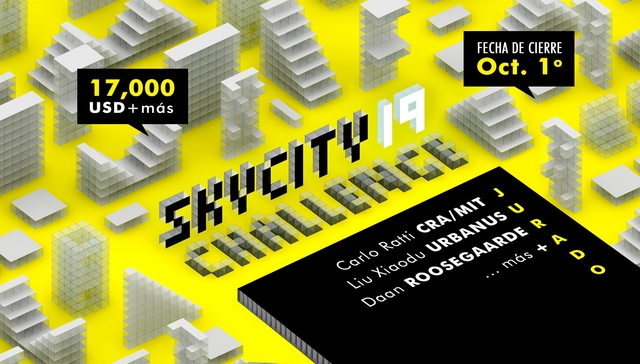
Enter the SkyCity Challenge 19. Open call for every part in the world.
After successful completion of our first challenge SkyCity again, is pleased to invite architects, designers, artists, engineers to take part in the SkyCity Challenge 19, THE FUTURE OF HOUSING. The current ways of building are affecting the environment we are living in, they are limited and outdated. We believe with the modern technology available, we are able to create far more sophisticated homes that could revolutionize the future of housing.
Videos
SkyCity Challenge: $17,000 USD in prizes and a one-month residency at our facilities in Changsha, China.
Following a successful competition in our first challenge last year, SkyCity is pleased to invite architects, designers, artists, engineers, scientists, restoration experts, digital nomads, craftspeople, and anyone with big ideas from around the world to participate in the SkyCity Challenge 2019: The Future of Housing. Current construction methods are impacting the environment in which we live, relying on limited resources and outdated building practices. We believe that with today's technology, we can create much more sophisticated housing that can revolutionize the future.
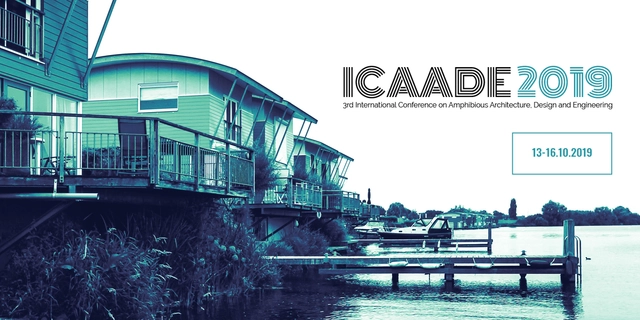
The International Conference on Amphibious Architecture, Design and Engineering (ICAADE) 2019 will bring together researchers, practitioners, authorities, students, NGOs, communities, and investors to discuss amphibious construction. Amphibious construction allows otherwise-ordinary structures to temporarily float in-place when flooding occurs.
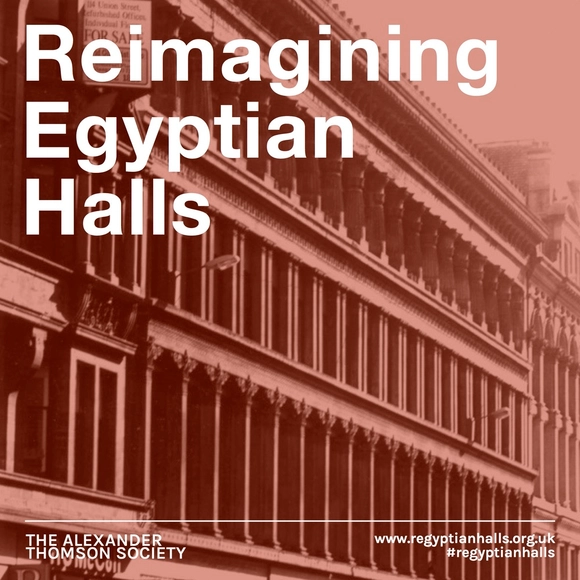
The objective of the completion is to invite innovative, imaginative and purposeful design solutions for the reuse of the A-listed Egyptian Halls, a warehouse building completed in 1872 on Union Street, Glasgow by the celebrated, nineteenth-century architect Alexander Thomson (1817-1875).
Videos
Architecture of the Future is the biggest European architecture conference on emerging technologies. Kyiv, Ukraine, October 9-11, 2019
The biggest European architecture conference on emerging technologies. The best architects from all over the world. Only 3 days in Kyiv, Ukraine. October 9-11, 2019.
Videos
High-rise building at the railway station Friedrichstraße, Berlin-Mitte Perspective view 1921 Charcoal on tracing paper 109,9 x 77,5 cm
With this exhibition of drawings by Hans Poelzig, the Museum for Architectural Drawing in cooperation with the Architecture Museum of the Technical University Berlin present the work of an architect who, with Walter Gropius, Bruno Taut, Mies van der Rohe and Peter Behrens, was undoubtedly one of the most important German architects of the first half of the 20th century. His oeuvre was diverse as his personality was colourful: in parallel with his architecture, he painted and created stage designs and film sets. He was director of the School of Art and Design in Breslau and later taught at the Technical High School of Charlottenburg, Berlin.
How does our built environment affect us? This major exhibition spanning two galleries examines the positive and negative influence buildings have on our health and wellbeing. From Dickensian London to the bold experiments of postwar urban planners, and from healing spaces for cancer patients to the role architecture can play in global healthcare provision, we look anew at the buildings that surround and shape us.
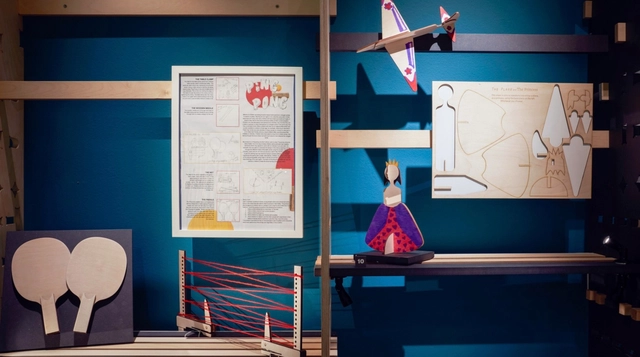
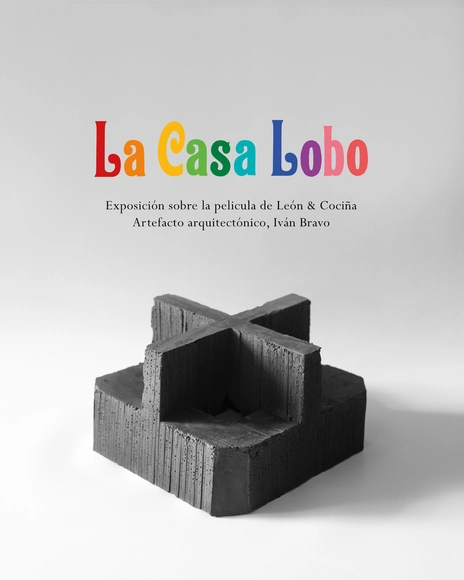
The Wolf House is a stop-motion feature film project developed by artists Cristóbal León and Joaquín Cociña, which premiered at the 68th Berlinale.
It tells the story of María, a young woman who takes refuge in a house in southern Chile after escaping from a German colony...
Against this backdrop, and following six years of production, an exhibition is opening at the Centro Cultural GAM just days before the film's public release. The show combines elements of the film's art with an architectural installation.
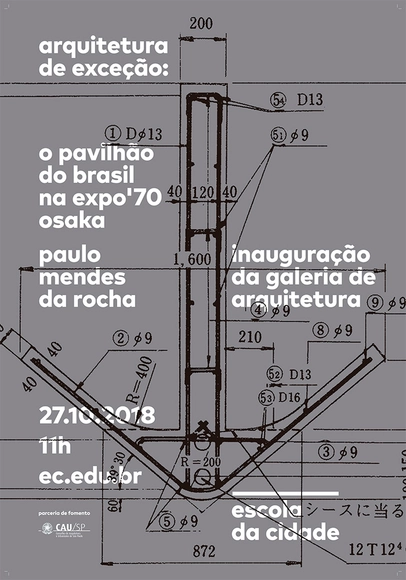
Titled “Exceptional Architecture – The Brazil Pavilion at Expo ’70 Osaka,” the exhibition introduces the public to little-known aspects of this important work by Paulo Mendes da Rocha.
HOUSING: WHAT’S NEXT? FROM THINKING THE UNIT TO BUILDING THE CITY
During the twentieth century the world population increased at a higher rate than at any other period in time, from around 1.5 billion people in 1900 to nearly 7 billion today. Facing these figures, it is impossible not to think about what we have done to accommodate this population, or rather, what all these people have done to obtain housing. Figures indicate that although we have been able to build large quantities of houses, and have begun to cover the quantitative deficit, today the great challenge is to improve the quality of the existing housing stock. At a time in which this effervescent population growth persists–particularly in the geographical regions of the Global South and in emerging economies–the question is how do we change the paradigm and start thinking about housing in relation to the quality of the urban fabric to build better cities.


.jpg?1561559147&format=webp&width=640&height=580)