The city architect of Antwerp, Christian Rapp, organises an international urban design competition on the future development of Linkeroever (the Left Bank). The Left Bank is an exceptional part of Antwerp. It is an urban district, born from a patchwork of plans that were only partially executed. Today, high-rise housing blocks are situated next to villas and zones for recreation. A major asset of Linkeroever is the open and green character. On the other hand it is a residential area with few mixed use. Recently, Linkeroever has been given renewed attention thanks to projects such as Regatta, IGLO-Europark, masterplan Sint-Anneke, etc. However, a general framework ensuring the connection between these and future projects does not exist.
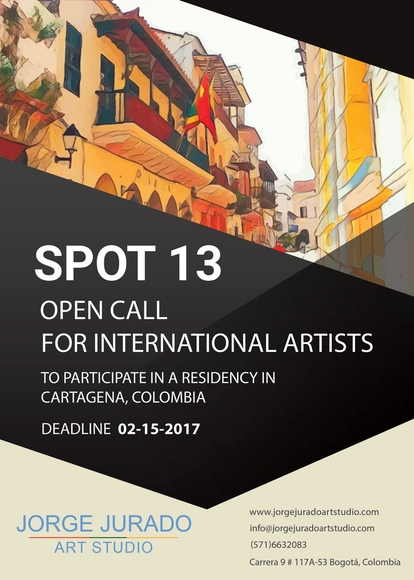
The artist residency SPOT 13 offers the opportunity to artists from all the world to access the artistic and cultural scene in Cartagena, known by its human heritage (UNESCO) and main cultural and touristic district of Colombia. Cartagena has been the center of Colombian tourism and represents one of the main Colombian cultural heritage from colonial Spanish times.
The Urban Futures Studio proudly presents the Post-Fossil City Contest. We are calling on artists, designers, architects, urbanists, authors, photographers, filmmakers and all-around creative thinkers to imagine a city that is no longer reliant on fossil fuels. Proposals in any shape or form are welcome: from illustrations, 3D models and essays to videos, products and interventions.
From reTHINKING competitions are happy to announce our new competition: “Living the collective” It is a competition which pretends to create a collective space, where the domestic space is as important as the urban space.
Enter the New York Affordable Housing Challenge architecture competition now! US $6,000 worth of prize money! Closing date for registration: FEBRUARY 23, 2017
In the words of Bill de Blasio, New Yorkers have a “crisis of affordability” on their hands. This is a crisis built upon the success that the city has had in recent decades. These years have made the city safer, and more appealing, for people from all over the world to come and start businesses, studies, and their lives. This has put a huge strain on housing stock, and has led to New Yorkers having to spend increasing amounts to cover their housing expenses and have made entire neighbourhoods unaffordable.
The AAP Firm of the Year Award recognizes the excellence of inspiring and innovative architecture, interior, and landscape design firms around the globe. The Firm of the Year Award honors the total body of work of small, medium, and large companies in their own categories based on firm size and area of expertise. The AAP team and jury have created the most comprehensive award structure that ensures that firm resources and specialization are taken into consideration.
Shelter Global is pleased to invite architects, planners, students, engineers, designers, thinkers, NGOs and organizations from all over the world to take part in the 2017 Dencity Competition.
Videos
satellite view of Paljassare Peninsula area
Tallinn Architecture Biennale 2017 have announced the TAB 2017 Vision Competition, offering architects, scientists and artists the chance to define a new urbanity of the Paljassaare Peninsula in Tallinn in the era when no ecosystem is unaffected by human action. The deadline for the one-stage international competition is 25th of April 2017.
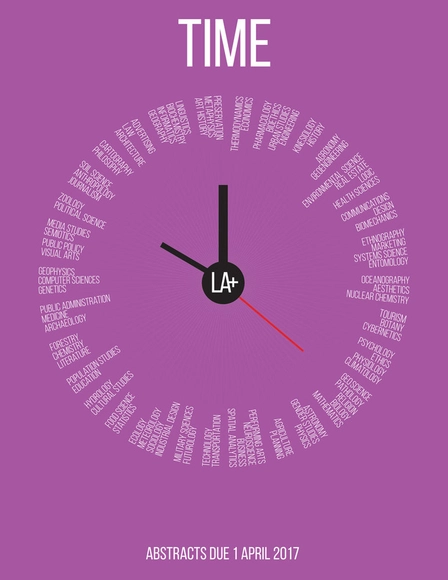
Time is ticking. That’s what it does. Or at least that’s how we represent what we don’t understand. For physics, time is a byproduct of so called space-time, elastic goo created at the very moment that something came from nothing; the moment eternity stopped and the universe began. For geology, time is 4.5 billion years of compression and catastrophe. For biology time is 3.5 billion years of diversification and now the urgency of the sixth extinction. For anthropology time is 150 thousand years since mitochondrial Eve walked out of the rift valley in Ethiopia. For historians, time begins with Herodotus (484 BC) and ends, or rather doesn’t, with Fukuyama’s The End of History. For architecture time is ruination. For landscape architecture time is ephemerality, entropy, and growth. For all of us time is running out. In this issue of LA+ we invite speculations on the question of time from all relevant disciplines.
London - literature's labyrinth of 'lost souls' is one of the favorite settings for writers/poets/scientists/thinkers and intelligentsia, who have nurtured the city into the greatest hub of intellectual revolution. One of the greatest living cities of the planet, London has had the biggest global influence on the socio-economic and cultural landscape of the world. London has been the influence and subject of various literary figures like Shakespeare, Keats, Milton, Byron, Dickens, Newton, Arthur Doyle, George Bernard Shaw, PB Shelley, Chaucer, Virginia Woolf, JK Rowling etc. to name a few. It has been the greatest hub for the development of arts, science, and the great English Literature.
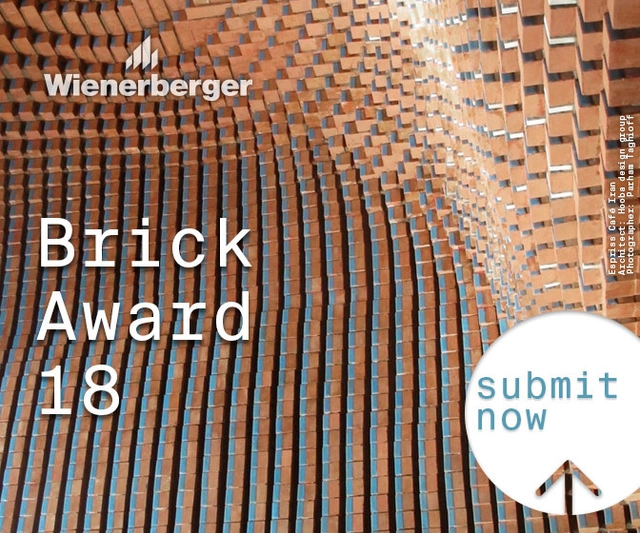
The Wienerberger Brick Award is a biannual architectural award for outstanding modern and innovative brick architecture. In 2018, this internationally established award will take place for the eighth time and is now open for submissions. Architecture critics, journalists and architects themselves can submit projects online until 20th April 2017. The official Brick Award ceremony will take place in Vienna in spring 2018.
The Award acknowledges modern and innovative brick buildings that show the varied and diverse ways brick can be used in contemporary architecture. At the same time, the award and the accompanying book, give people with an interest in architecture and experts an overview of current developments and trends in international brick architecture with its remarkable range of applications.
Videos
Pedro Ignacio Alonso and Hugo Palmarola, Archaeology of Things Larger Than Earth. Film, 2m 30s. Exhibited at the 3rd Istanbul Design Biennial, 2016. Compiled, edited and produced by Jose Hernandez. Copyrights: Pedro Ignacio Alonso and Hugo Palmarola, 2016.
The 2017 Visiting School to Chile aims at studying from architectural, urban, and territorial perspectives, a series of infrastructures that since the 1960s have been installed in Rapa Nui (Easter Island) because of its extraordinary strategic location in the South Pacific Ocean. These include satellite tracking equipment, seismology and GPS tools, and radio-nuclear detection instruments that came to define global technological projects in the island. In particular, the workshop will focus its attention in the Mataveri Airport which – being the remotest runway in the world – was paved in the 1960s by the United States for the installation of a (currently abandoned) strategic base and extended again by NASA in the 1980s to become emergency landing for space shuttles. The island, in opposition to usual associations to isolation, was instead expedient for the setting of larger technological networks.
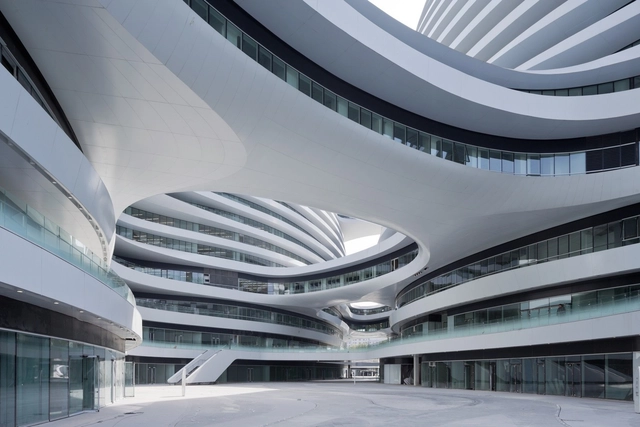
As we open to a new year, we would like to take a moment and remember one of the most significant lives lost in 2016: Iraqi-born British Pritzker Prize winner Zaha Hadid. While the narrative of Zaha’s trailblazing accomplishments are well-known, architect Rana Hadid celebrates her aunt’s memory from a uniquely poignant perspective in this new piece for the Guardian. Recounting Zaha’s early artistic prowess, fierce ambition, and earnest personality, Rana describes her as “the incredibly warm and generous Zaha who showed us we could do anything we wanted if we worked at it hard enough.”
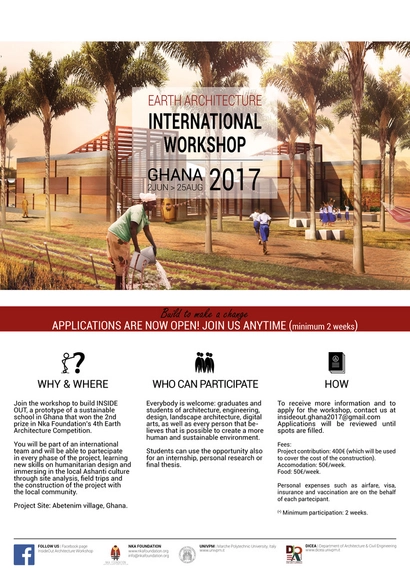
We are happy to announce InsideOut Earth Architecture International Workshop, that will take place from June 2nd to August 25th 2017 in Abetenim, Ghana.
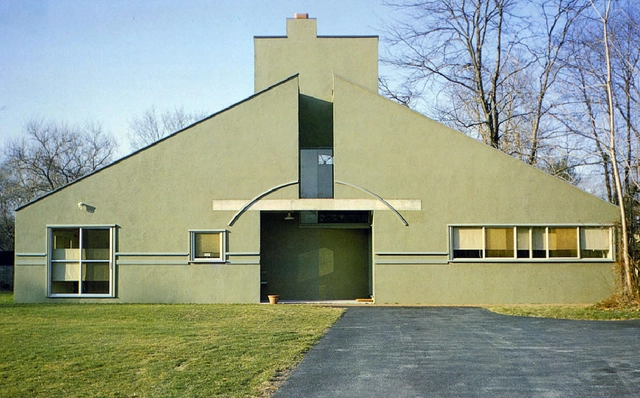
The Architectural Review has recently published an article celebrating the 50th anniversary of Robert Venturi’s book, Complexity and Contradiction in Architecture, which is regarded as one of the most important writings about architecture since Le Corbusier’s Vers une Architecture. In the article, Martino Stierli—Chief Curator of Architecture and Design at the Museum of Modern Art—delves into the significance of Venturi’s work, the motivation behind it, its continuing impact, and more. Read the full article at the Architectural Review, here.
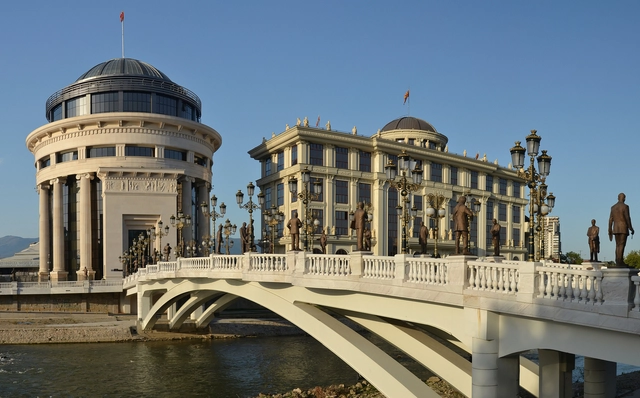
After the earthquake in Skopje in 1963, a slew of foreign architects worked to change the capital into an architecturally dynamic urban landscape. Now, that vision may be obsolete. In Architects of Modernist Skopje Decry Retrograde Remodel, Bojan Blazhevski investigates the overwhelming number of buildings enduring "Skopje 2014" — a remodeling of existing buildings in the capital city. More than 20 modernist buildings have already been made over. Described as "kitsch" by a hostel manager in the city, the project, which aims to draw in more tourists and regain historical elements, has culminated in a neo-classical display. The imitation buildings, however, have produced controversy, with opinions divided on the aesthetic quality of the project.