
“I came to the conclusion that recovery from Great East Japan Earthquake should be compared to Japan’s recovery from the World War II.” —Yoshiharu Tsukamoto, Co-founder, Atelier Bow-Wow and member of ArchiAid
“I came to the conclusion that recovery from Great East Japan Earthquake should be compared to Japan’s recovery from the World War II.” —Yoshiharu Tsukamoto, Co-founder, Atelier Bow-Wow and member of ArchiAid

After the great success of last year’s Summer School in Aarhus, we are hosting another summer camp this year in Lemvig under the title “Landscape as Character.”
The CAFx Summer School 2017 will focus on the temporal nature and character of the Danish landscape. With reference to the 17 UN goals for a better world, we will shed light on the future, present, and past of the magnificent sceneries that make up Western Jutland.

The competition for the “Fritz-Höger-Preis 2017 für Backstein-Architektur” started on 30th January 2017. The internationally renowned prize for excellence in brick architecture will be awarded by the “Initiative Bauen mit Backstein” and will once again be supported by the BDA “Bund Deutscher Architekten” (German association of architects).
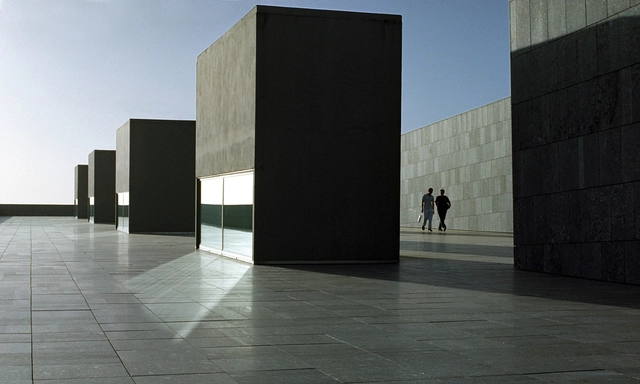
Rediscover a natural, unique and original material, with multiple applications for current architecture and design immovable over time, granite is a jewel of nature capable of providing exclusivity to any contemporary construction or finish. Its wide range of varieties and the incorporation of new cutting technologies and those giving a surface finish, provide us with infinite design possibilities.
Its character, beauty, high strength and excellent durability make it quite a unique material. It is undoubtedly the most advantageous architectural option in contrast to other types of products:
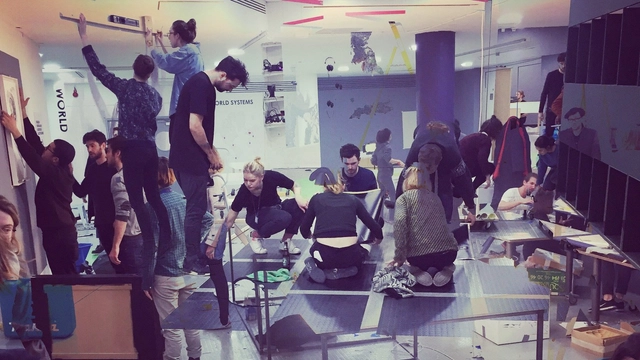
The Royal College of Art School of Architecture has launched two new MA programs: City Design and Environmental Architecture. Here, Dr. Adrian Lahoud, Dean of the School of Architecture at the RCA, explains more:
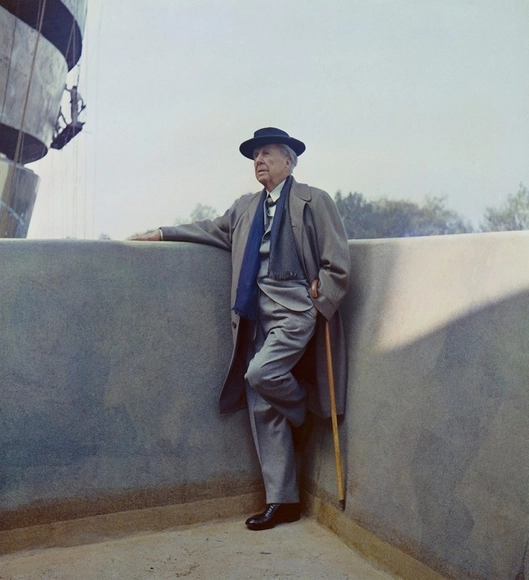
The Guggenheim celebrates Frank Lloyd Wright’s 150th birth year kicking off on Thursday, June 8, Wright’s 150th birthday, with a special reduced admission of $1.50. Visitors will be treated to free birthday cupcakes in the Guggenheim’s newly renovated Cafe 3, which will feature large-scale, rarely seen photographs of the museum during its construction. An actor-historian portraying Frank Lloyd Wright will be on-site engaging with visitors between 9 am and 1 pm.

Frank Lloyd Wright (1867-1959) revolutionized American architecture through his innovative treatment of space, light, and materials. America’s best-known architect of the 20th century, Wright-designed buildings and structures continue to thrill and inspire.
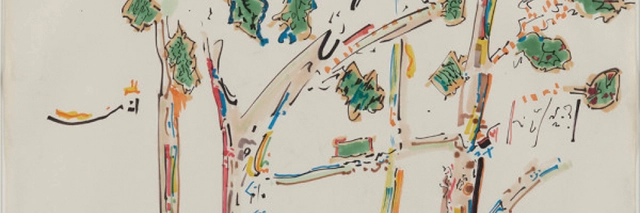
Gordon Matta-Clark (1943-1978) is one of the most influential artists of the 1970s, whose work has continued to be a noted influence of both architects and visual artists since. SPLITTING, CUTTING, WRITING, DRAWING, EATING…GORDON MATTA-CLARK surveys the constructive and destructive verbs that defined his relation to art and architecture, featuring correspondence, drawings, photographs, notebooks, and films related to the artist's key projects, drawn from the archive of the Canadian Centre for Architecture, Montréal. Along with his major building cuts from 1973 to 1978, in which laboriously cut holes into floors of abandoned or disused buildings, including A W-Hole House, Conical Intersect, Day's End, and Splitting (1974), the exhibition also explores his interest in metabolic and cooking processes, including his restaurant Food (1971); his play with language and the syntax of voids, gaps, and abandoned spaces; and the use of drawing as a mode of thinking through space.The exhibition will focus on these social and creative aspects of Matta-Clark´s conception of architecture, or as he put it, "making space without building it."
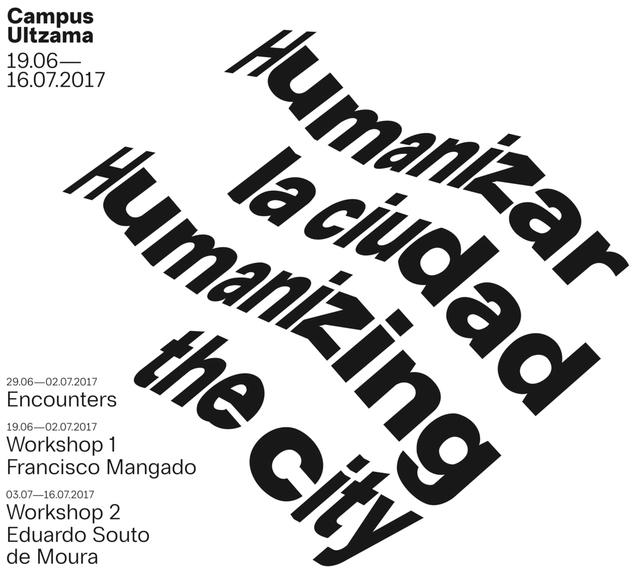
The Summer School will be held in two parts. Students will work with three professors in developing a single project based on the program set. The idea is to give the students the opportunity to work in a set-up resembling that of a real-life practice tasked with a commission, under the supervision of the professors. Emphasis will be on “with,” rather than on “for,” simulating the intensity and efficiency of team work in an architectural office as well as the journey through the various phases of a project, from design to execution.
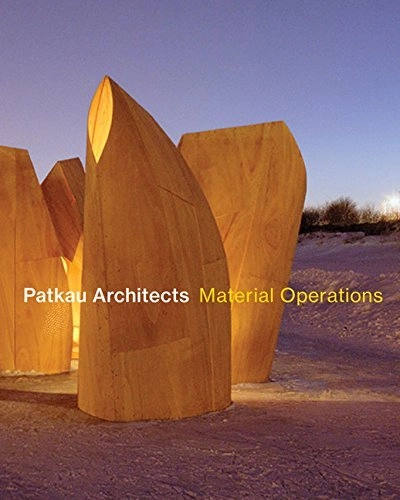
Experimenting directly with materials--bending and breaking them, feeling their texture, mass, and strength--provides a depth of understanding beyond simple visual observations. Patkau Architects’ innovative approach to design and purposeful use of materials provide a refreshed and expanded perspective on the possible.

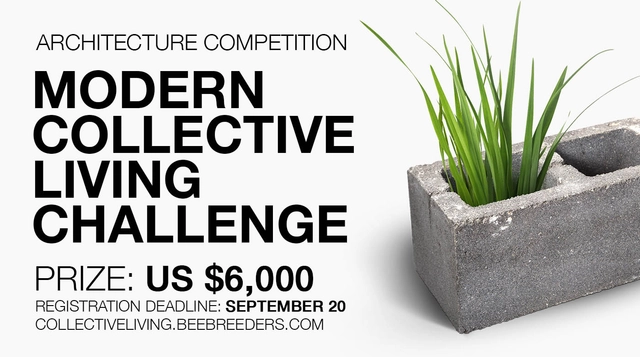
The Modern Collective Living Challenge is part of the Bee Breeders Global Housing Crisis competition series. For this architecture competition, participants are tasked with envisioning new forms of accessible housing for relocated farmers in rural China.
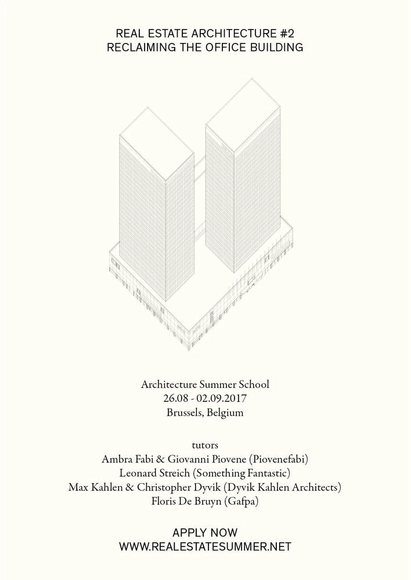
The international Summer School will take place in Brussels from from August 26th to September 2nd. Forty students and recently graduated architects will be invited to rethink the future of the office buildings, products of the real estate boom of the 1960s. Participants will be led by four talented architects: Piovenefabi (Milan), Gafpa (Ghent), Something Fantastic (Berlin) and Dyvik Kahlen (London).

Merging expert knowledge of timber construction with cutting-edge robotic fabrication technologies we will explore the creative potential of prototyping complex and large-scale timber structures with digital tools resulting in the construction of a roof structure for the temporary foundry building for the Hooke Park Campus.
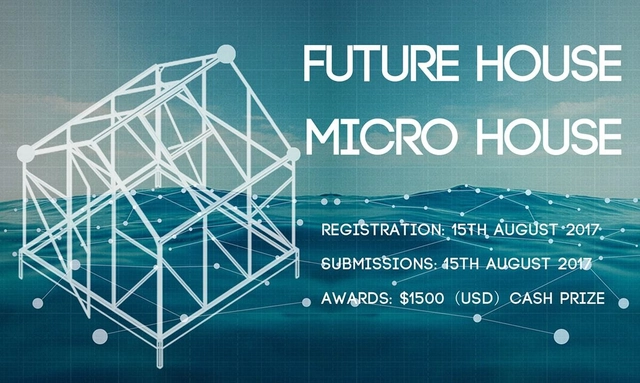
“Less is only more where more is no good.” — Frank Lloyd Wright, American architect.
Not everyone aspires to live in a big house — some aspire to do quite the opposite. With a new generation entering the workforce with higher debts and lower wage expectations and another generation retiring on limited incomes with little savings, many people are seeking alternative living arrangements beyond the basements of family members. Micro houses are becoming a new national infatuation as housing costs continue to rise and people scramble to find more affordable housing. Popular shows on cable television also extol the virtues of living in a limited space.

The Dutch use cycling in combination with trains to connect regions. Other nations are using cycling to make historical city centres liveable again. But what if cycling became the key organizing principle for urban growth and the design of new buildings? See how the most connected future cities will be those that put cycling before walking and public transport and see why such cities would not only be healthy and green, but fairer and more accessible than the cities we know. This is a book for all those shaping cities and buildings (designers, planners, students, advocates, etcetera) who sense a bigger potential for cycling. Dr. Steven Fleming is an architectural theorist and historian and a leading international figure in bicycle urbanism.

This publication focuses on the shift from building for construction’s sake to that of building for progress. After decades of extraordinary development and urbanization, Chinese cities have arrived at a stage of ‘New Normal’. Urban development is now shifting from quantity-driven to quality-driven, with art and culture as a tasty topping for countless developments. It examines the future of (Chinese) cities as a ‘testimony from the battleground’, and how their current metamorphosis can impact cities worldwide – especially in the Global South. The key argument is: China has developed a very appealing urban model. Could this be a blueprint for cities worldwide, like the Italian city was once a blueprint for the Northern European city?
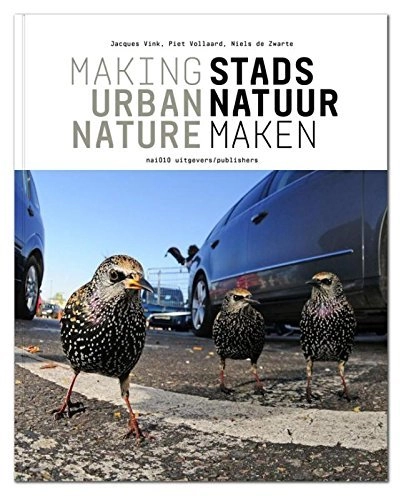
Description via Amazon. The city is a rich habitat of great biodiversity. Many animal and plant species are now more common in cities than in rural areas. However, urban nature is fragile, and threatened by the tendency of planners and policymakers to see the city exclusively as a habitat for people. Nature-inclusive design, which considers nature an integral part of the urban organism and an important part of a city’s quality of life (for human and nonhuman residents), is a pioneer practice that has only recently started to become part of urban planning. Making Urban Nature is an inspirational book of examples about nature-inclusive designing in European cities. Simultaneously utopian and pragmatic, it discusses the unique nature of urban habitats and calls for the purposeful integration of nature in the designs of buildings and urban outdoor spaces, while offering practical examples and design suggestions.