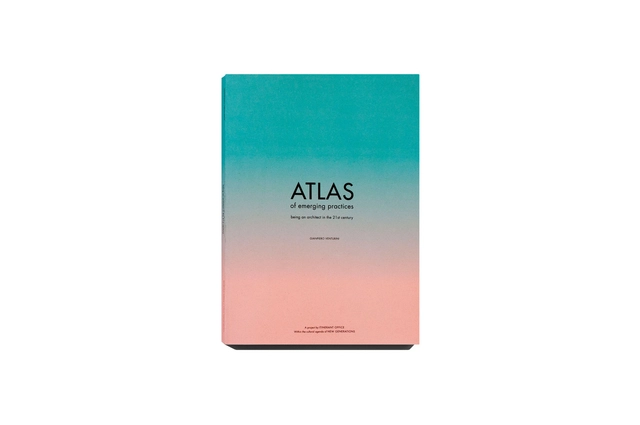
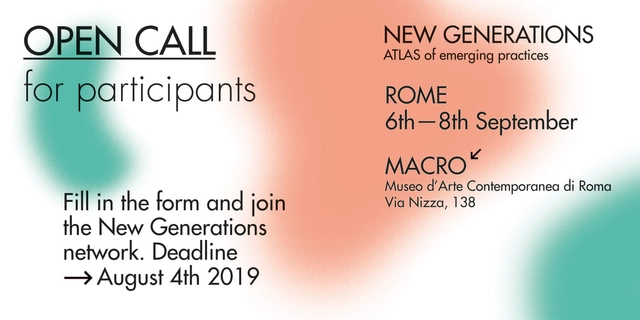
“ATLAS of emerging practices” is a publication that provides an overview of the state of the architect’s profession, analysing themes, trends, projects, and methods that characterise the professional practice, and understanding this discipline through the research carried out with a selection of emerging architectural practices in the European territory.
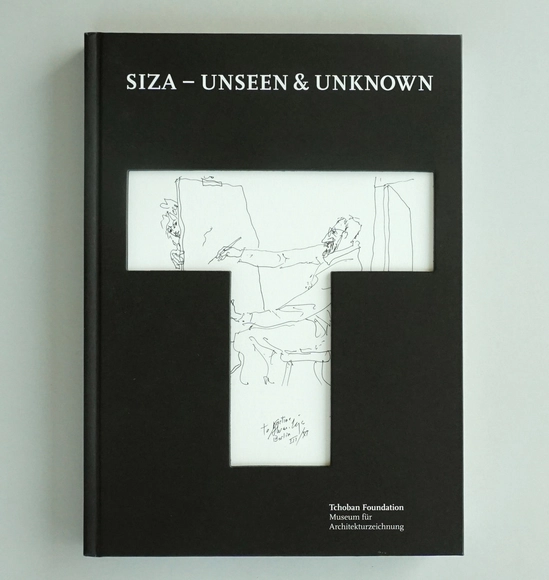
Álvaro Siza was born in 1933, on the same year that the Bauhaus closed its doors. He is perhaps the last living modernist or, at the very least, the most significant voice to carry out the unfinished modernist project all the way into the 21st century. 'Siza – Unseen & Unknown' showcases this continuity through 100 sketches, as well as its contradictions. These drawings are from his most personal archive, in addition to small collections of close friends and family. Hence, they focus not only on the professional legacy but also on the familial one, where Maria Antónia Siza (1940–1973) takes centre stage. His wife will draw him, he will draw her and the loving embrace of the human body will be transversal to architecture, art, life. In many ways, the Bernini folds of Maria Antónia’s clothes and hair develop in Siza’s own ink lines and this anthropomorphic research goes on long after her death at just thirty two years old. Those bodies will grow increasingly more abstract, like the Venus de Milo, losing its limbs and becoming something more.
The Competition “inHAUS LAB – Design your modular house” is an initiative of Casas inHAUS that was created to promote creativity and innovation in Architecture. It aims to promote new ways of doing architecture among students and recent graduates from all architecture colleges and other related disciplines, rewarding those who stand out for their creativity in the search for new modular housing solutions.
The 2019 "Innovative Application Competition for Global Additive Manufacturing" is sponsored by the People's Government of Fengtai District of Beijing Municipality and the Beijing Municipal Commission of Science and Technology. Under the theme of IN(3D) NOVATION, the competition will feature the scaled application and industrialization prospect of 3D printing in six fields, aerospace engineering, automotive design and manufacturing, digital orthopedics, urban landscape and architecture, consumer goods upgrades - shoes, and the museum cultural innovation. Last year, we hosted the 1st Innovative Application Competition for Global Additive Manufacturing successfully and 36 international teams demonstrated the technological innovation of 3D printing in four application fields.
In the context of the World Architecture Festival 2019, edgeallies, a brand owned by edgearch: Ahmed Abdulaziz Zaidan Consulting Architects has signed off a 4 years participation to the World Architecture Festival as main exhibitor as well as main sponsor for the first Engineering Prize category: For collaborative design by architects and structural engineers.
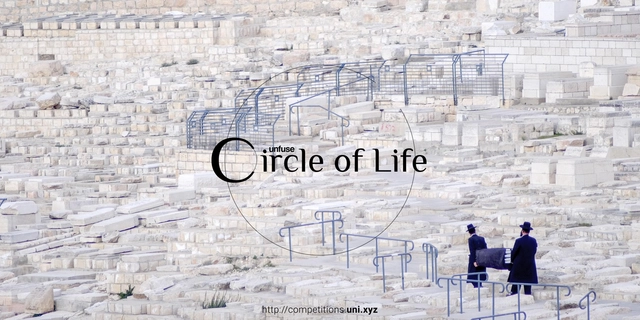
The story of birth and demise began to weave when humans started reading the stars and celestial bodies. Socio-cultural phenomena and language paved the path for religion and beliefs. Each religion had a new chronicle associated, that tapped our emotions. Infrastructures and spaces to perform these rituals were built, and held positions of great sanctity and significance in the society. Tombs, Pyramids, temples, all kinds of structures were constructed, and often formed the heart of a city or civilization.
Open Call for New Generations, ATLAS of emerging practices.
New Generations is a project by Itinerant Office created with the aim of building a European platform for young students and architectural firms, a network based on collaboration and cultural exchange. Since 2013, New Generations has involved more than 300 emerging practices in workshops, round tables, exhibitions, and international festivals.
Marking the centenary of the Bauhaus’s founding, the Bauhaus-Archiv / Museum für Gestaltung’s exhibition at the Berlinische Galerie is presenting famous, familiar and forgotten Bauhaus originals and recounting the history behind the objects: Who is the woman sitting on the tubular-steel chair? Does the Haus am Horn have a secret twin? Why have the tea infusers which were created as prototypes for industrial production always remained one-of-a-kind pieces? The exhibition sheds light on how unique work and series, remake and original are inseparably linked in the history of the Bauhaus. Around 1,000 Bauhaus originals from the Bauhaus-Archiv’s collection will be on display, as well as exceptional loans from international collections and contemporary artistic positions.
For the second year running, the ambitious architecture festival takes place in the center of Russia, in Siberia, Krasnoyarsk. Teams from different parts of the country will be competing with each other in building the best installation.
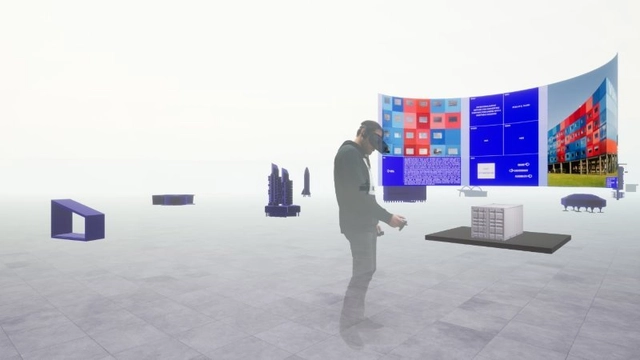
The project presents a collection of buildings and building systems significant in the historical evolution of modular and prefabricated architecture. The contents are shown in a virtual reality environment, through VR headset kits, which transport the audience to a 20x20m virtual space filled with panels and architectural models.
50 years ago, on July 20, 1969, Neil Armstrong became the first man to step on the moon. Upon landing, the first words that he quoted were “That's one small step for man, one giant leap for mankind.” True to his words, the world has never seen back since and new dimensions of space explorations were open following that day. Every space mission has always inspired humanity to think beyond and, this marvelous feat has been the pinnacle of those.
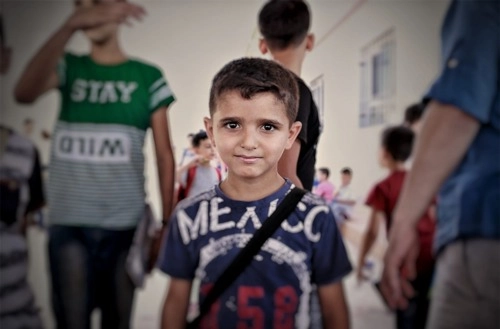
A student in Reyhanlı. Photographer: Kiyarash Borna
Introduction
In 2019, the 2nd edition of Building 4Humanity Design Competition (B4H-DC) aims to address the notion of having architecture as a social and cultural facility, by seeking design ideas that would contribute towards the social inclusion and integration of Syrian war refugees in the Turkish border city of Reyhanlı. The competition has two separate categories: it welcomes submissions from students and recent graduates, as well as experienced professionals.
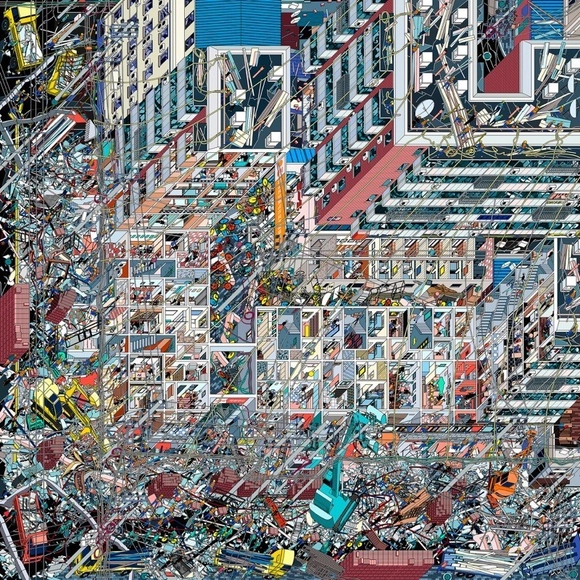
Li Han, ‘The Samsara of Building No. 42 on Dirty Street’, overall winner of the 2018 Architecture Drawing Prize
The Architecture Drawing Prize is an international competition that celebrates the art and skill of architectural drawing. Now in its third year, the prize is curated by Make Architects, Sir John Soane’s Museum and the World Architecture Festival.
In the spirit of many great architects of the past, from Palladio and John Soane to Le Corbusier and Cedric Price, it’s an ideal platform for reflecting on and exploring how drawing continues to advance the art of architecture today.
Micro Housing 2019 Architecture Competition invites you to rethink and reimagine the idea of urban dwellings and come up with inventive solutions to the persistent issues of space crunch and growing population in our cities.
Since the beginning of time, a HOME has continued to be an entity that is intimate to all living beings on the planet. Apart from being a physical shelter for humans and their daily lives, a home forms a distinct, intimate connection with its users.
Today, across the globe, we are experiencing a rise in densely populated urban areas, along with a lack of land resources to provide sufficient housing for the masses. This phenomenon has given rise to a new movement of Micro-Housing; one that commands the idea of simple but inventive living in today’s urban areas.
The world that we see today is closer than ever before. Knowledge which was earlier stored via books has now been transferred to the digital medium. It is accessible to the world, making the process of acquiring this knowledge i.e. learning, simpler. An avenue to self-educate and learn was initiated by need of a public space that made knowledge accessible to all with books. The concept of libraries initiated with this idea, by making learning accessible to all. It banked on the idea of gathering a wide spectrum of knowledge in one space, open to enable self-learning.
LIVING IN THE CITY The Ministry of Housing Land Planning and Environment through the Directorate of Housing (DINAVI) and the Faculty of Architecture, Design, and Urbanism (FADU) through the Housing Committee come together to organize a competition of proposals open to students, teachers, and professionals in general. The entries should develop project-ideas conceived as alternatives and innovations to the current ways of management, design, and construction of urban housing in Uruguay.
The AERIAL FUTURES: Living Laboratories Symposium examines the confluence of urban elements within the airport landscape—transportation, commerce, public space and technological interfaces—and how Asian airports introduce alternatives for life in transit.