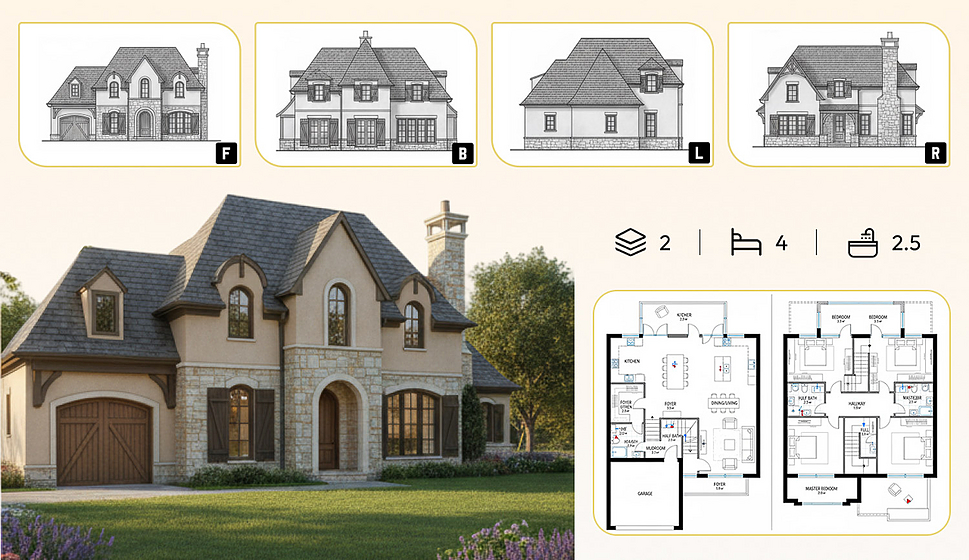
This guide covers a workflow that moves from project parameters to generated floor plans, 3D perspective views, exterior design exploration, and site context visualization, using AI tools in place of preliminary CAD and rendering work.
This guide covers a workflow that moves from project parameters to generated floor plans, 3D perspective views, exterior design exploration, and site context visualization, using AI tools in place of preliminary CAD and rendering work.
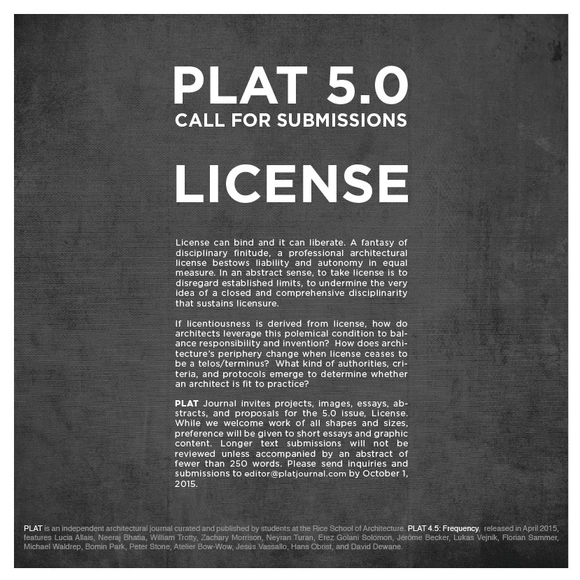
License can bind and it can liberate. A fantasy of disciplinary finitude, a professional architectural license bestows liability and autonomy in equal measure. In an abstract sense, to take license is to disregard established limits, to undermine the very idea of a closed and comprehensive disciplinarity that sustains licensure.
If licentiousness is derived from license, how do architects leverage this polemical condition to balance - or not - responsibility and invention? How does architecture's periphery change when license ceases to be a telos/terminus? What kind of authorities, criteria, and protocols emerge to determine whether an architect is fit to practice?
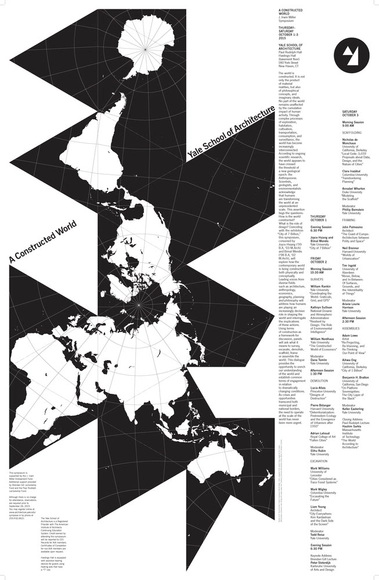
The J. Irwin Miller Symposium, “A Constructed World,” from October 1-3, 2015 is convened by Joyce Hsiang and Bimal Mendis in conjunction with the exhibition, “City of 7 Billion,” at the Yale School of Architecture. The symposium brings together leading voices across multiple disciplines, with the keynote by the philosopher Peter Sloterdijk and closing address by Hashim Sarkis, and includes: Lucia Allais, Pierre Bélanger, Phillip Bernstein, Benjamin Bratton, Nicholas de Monchaux, Keller Easterling, Ariane Lourie Harrison, Tim Ingold, Clara Irazábal, Adrian Lahoud, Adam Lowe, Aihwa Ong, John Palmesino, Neil Brenner, William Rankin, Todd Reisz, Elihu Rubin, Kathryn Sullivan, Dana Tomlin, Annabel Wharton, Mark Wigley, Mark Williams and Liam Young.

An award-winning anthropological case study by designer Stephen Fan, SUB URBANISMS explores the controversial conversion of suburban single-family homes into multi-family communities by immigrant Chinese casino workers in Connecticut. Addressing the norms, cultural values, and public policies that determine how most Americans live, the exhibition juxtaposes immigrant cultural beliefs and pragmatism with suburban American social, aesthetic, and financial codes. With a regional focus and global reach, it also provides insight into the long-term effects of 9/11 on the New York Chinatown service industry as a significant factor behind the influx of Chinese labor seeking employment at the region's casinos, and the formation of this satellite suburban Chinatown. With creative implications for the future of housing design and habitation in response to cultural, social, and ecological challenges, SUB URBANISMS offers a powerful inquiry into the ways in which culture shapes our lives and homes.

Alternative energy also known as renewable energy is an energy source that can not be destroyed from human use, it is an energy harnessed. Renewable energy is considered to be one of the pivotal ‘wedges’ that can combat global warming and stabilize the climate, through the reduction of carbon dioxide emissions.
The world has a critical necessity to search for alternative and renewable energy and the importance of its technologies have been growing significantly. For several important reasons, this is extremely important for the future of our society.

For their most ambitious exhibition to date – artist duo DABSMYLA presents Before and Further, a 4,000 square foot installation takeover of a stand-alone 1930 built Spanish Revival workplace building, located on the Modernica factory property. DABSMYLA have fully transformed its interior and exterior with their newest paintings, sculptures, installations and exclusive furnishings from limited-edition fiberglass shell chairs and hand painted ceramics to custom-built lighting installations, all designed and created exclusively for their collaboration with Modernica. The already rich history of this building and Modernica create a fitting compliment for DABSMYLA’s spectacular experience. This long awaited solo show will be the follow up to their tremendous work in designing the logo and set of the 2015 MTV Movie Awards. This exhibition closes their already very busy year, which includes an enormous private showcase in New York City and having painted numerous murals worldwide.
_Ronald_Tilleman_20130916-0033.jpg?1443101122&format=webp&width=640&height=580)
The Royal Institute of British Architects (RIBA) have announced fourteen 2016 RIBA Honorary Fellowships (of whom two are in partnership) and eight International Fellowships which will be awarded at an event on the 1st February 2016, alongside the recently announced RIBA Royal Gold Medal. RIBA Honorary Fellowships are awarded annually to people who have made "a particular contribution to architecture in its broadest sense," be it in the fields of architecture, construction, media, education, or the arts.

This is the first design exhibition that incorporates three generations of Iranian architects in one event to design and build chairs.
A chair, as an object, lies somewhere on the scale between interior architecture and a product. It can be made by anyone as a response to the primary need for “a place to sit.” But, on the other hand, a professional designer can create a structure to respond to human needs, using a comprehensive framework, technology and geometry.
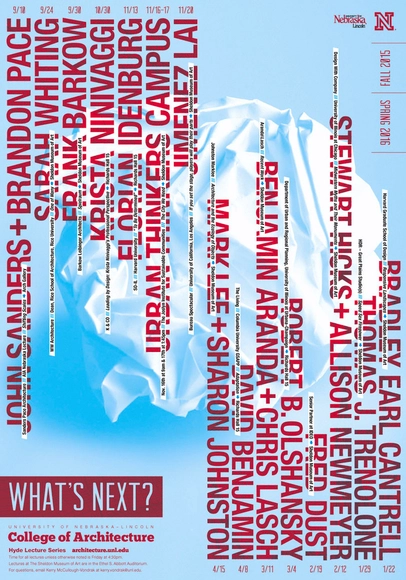
2015/2016 Hyde Lecture Series opens another exciting chapter for the design disciplines as speakers take a fresh, in-depth look at What’s Next.
The College of Architecture’s Hyde Lecture Series is a long-standing, endowed public program. Each year the College hosts compelling speakers in the fields of architecture, interior design, landscape architecture and planning that enrich the ongoing dialog around agendas which are paramount to the design disciplines and our graduates.

The AIA|DC Emerging Architects Committee (AIA|DC EAC) has partnered with Price Modern, a national furniture solutions dealer, to announce its inaugural RE-Form Competition. RE-Form aims to bridge the boundaries of the design industry and promote a multidisciplinary dialogue towards design solutions. Through an industry-wide design competition, RE-Form helps widen the definition of design work creative professionals do throughout the country. The design competition launches nationally through AIA|DC EAC’s online platforms on August 31st 2015, with entries due on October 19th 2015. Award winners will be announced at a gala reception at Washington, D.C.’s District Architecture Center (DAC) on November 12, 2015. Winning entries will be showcased at DAC’s gallery space and online via Architect Magazine.

The theme of Parallelism in Architecture and Computing Techniques (PACT) 2016 explores the relations between computational design software in architecture, organizational and global, ever-changing and pervasive contexts. This conference looks at how the new trends of architectural technologies and computational thinking can adapt to increase the ability in finding a complex digital fabrication, augmented reality, and intelligent environment. PACT 2016 is organized by The University of East London (UEL), in collaboration with the International Experts for Research Enrichment and Knowledge Exchange (IEREK) institution.

Niche Tactics: Generative Relationships between Architecture and Site (Routledge 2015), the first book by architecture's Edgar A. Tafel Assistant Professor Caroline O'Donnell, explores architecture's relationship with site and its ecological analogue: the relationship between an organism and its environment.

"ONE ARCHITECTURE WEEK is an annual international festival for architecture, which will have its next edition in September 18th-27th 2015 in Plovdiv. Launched in 2008 as a two-day conference under the name SOFIA ARCHITECTURE WEEK, the event expanded into a more than a week-long meeting and idea exchange platform for architecture, interior design, landscape and urban environment. Through stimulating a broad professional and public debate the festival aims at initiating sustainable social and architectural practices. The diverse and intense program features presentations, exhibitions, discussions, workshops, screenings and urban interventions as well as architectural workshops for the youngest.
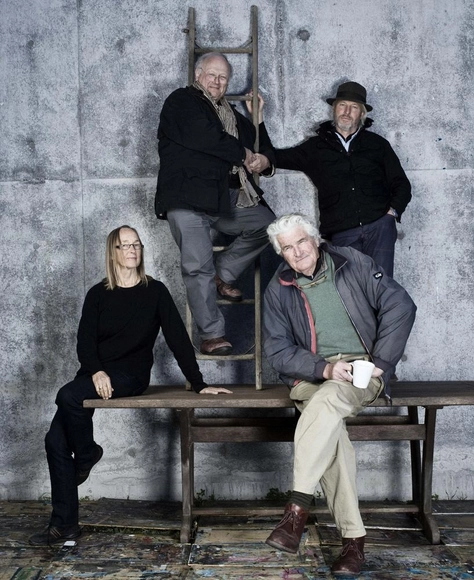
The Glenn Murcutt Architecture Master Class (GMMC) in Australia has become a major annual event on the international architecture calendar. Started in 2001, architects and senior students from over 75 nations around the world have now travelled to Australia to participate in the two-week residential studio based program. Students will have the opportunity to work with four tutors - all Gold Medallists of the Australian Institute of Architects: Glenn Murcutt (1992), Richard Leplastrier (1999), Brit Andresen (first female recipient 2002) and Peter Stutchbury (2015).

DesignPhiladelphia, a signature event of the Philadelphia Center for Architecture, is the oldest design event of its kind in the country and annually showcases the work of over 400 practicing architects, designers, and creative professionals. This year’s Festival kicks off on the evening of October 7, and events run from October 8-16. Experience design in unexpected ways through approximately 100 exhibitions, workshops, demonstrations, tours, talks, and events held in venues across the city. Learn about wide-ranging topics, including architecture, urban planning, landscape, graphic, multi-media, product, furniture design, fashion, and the like.
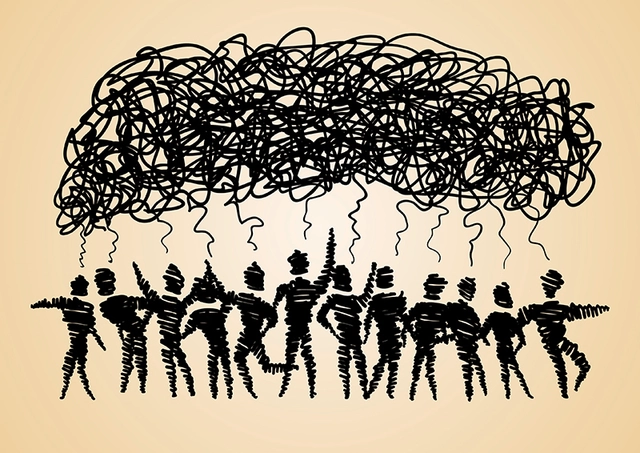
It's no secret that the unique specificities of the architectural profession can lead to a lot of jargon. In fact for many non-experts, the opaque nature of architectural language can be one of the most significant barriers to taking part in a discussion about their local environment. But why this juxtaposition between regular and professional speech? If we wish to make the architecture profession less homogenous, shouldn't we conceptualize a new way of talking about architecture? That's why we want to hear from our readers: which words do architects use too much? And what are the wider effects of this language, both inside and outside of the architecture profession?
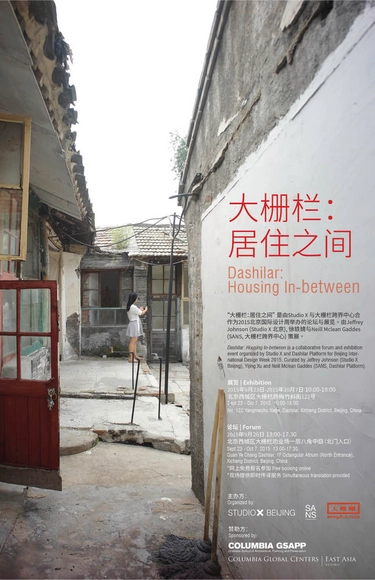
Dashilar: Housing In-between is a collaborative forum and exhibition event organized by Studio X and Dashilar Platform for Beijing International Design Week 2015. Curated by Jeffrey Johnson (Studio X Beijing), Yijing Xu and Neill Mclean Gaddes (SANS, Dashilar Platform) with support from Columbia University GSAPP, Dashilar Platform and Beijing International Design Week.
‘Housing’ is a basic human necessity and has always been a critical subject of discussion around the world. With growing awareness of the gross inequalities created by neoliberal economies, significant attention has been placed recently on the housing conditions of those less privileged and marginalized.
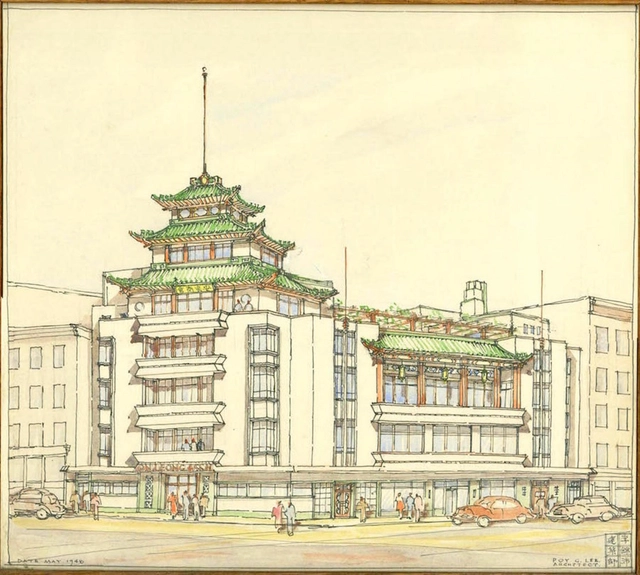
In this survey exhibition, architectural historian Kerri Culhane documents and explores Poy Gum Lee’s (1900-1968) nearly 50-year long career in both China and New York and examines Lee’s modernist influence in New York Chinatown. This project will result in the first-ever comprehensive list of Lee’s projects in New York. Lee’s hand is visible in the major civic architecture of Chinatown post 1945, which blends stylistically Chinese details with modern technologies and materials. Lee was the architectural consultant for the Chinese Consolidated Benevolent Association’s building on Mott Street (1959) and the On Leong Tong Merchant’s Association at Mott & Canal Street (1948-50) – the most prominent Chinese modern building in Chinatown. Among his highly visible commissions, Lee designed the Chinese-American WWII Monument in Kimlau Square (1962), a modernist take on a traditional Chinese pailou, or ceremonial gate; the Lee Family Association (ca. 1950); and the Pagoda Theatre (1963, demolished).
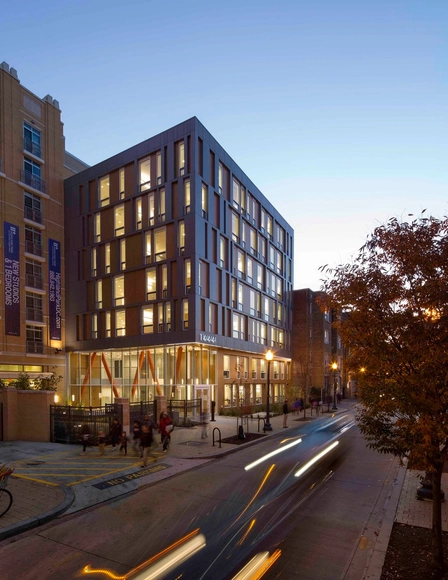
The 2016 Berkeley Prize is now open. Open to all undergraduate architecture students, the essay competition "strives to show architects-in-training that the smallest act of building has global implications: that design can and does play a major role in the social, cultural, and psychological life of both the individual and society at large." This year's competition theme is "Sheltering Those in Need: Architects Confront Homelessness." All initial submissions are due November 1, 2015. Essay semifinalists will be given the opportunity to apply for a travel fellowship. All the details, here.