The 'From Villa to Cell' international workshop and symposium will be held at the Pontificia Universidad Católica de Chile's Faculty of Architecture, Design and Urban Studies from April 2 to April 20. This workshop focuses on social and collective housing, understood not only as relevant to the city but as an inherently architectural problem. 'From Villa to Cell' will historically examine housing solutions in Santiago, Chile, contrasting them with international projects.
CIELO FALSO is a transdisciplinary series organized by the Faculty of Architecture, Design, and Construction at UDLA. It serves as a content platform centered around various guests from diverse disciplinary fields, including sound, graphic design, architecture, visual arts, poetry, and digital animation. This forum for debate, discussion, and conversation promotes and fosters future interdisciplinary intersections incubated within our academic space.
On Saturday, July 7, 2018, at 12:00 PM, a site visit will be held as part of the Architecture and Landscape Ideas Competition for the San Borja Walkways and Surroundings. The meeting point is at Plaza del Pedregal, next to the Unimarc supermarket located at the San Borja Walkways (Universidad Católica Metro station). The site visit is not mandatory for competition entry and is intended for teams that need to visit the site to develop their proposals.
The Discrete Structures workshop aims to explore the development of 1:1 material organizations, constrained by the design of geometrically discrete components. During the activity, participants will be introduced to parametric design tools and digital fabrication. The four-day workshop will culminate in the construction of a timber installation on the final day.
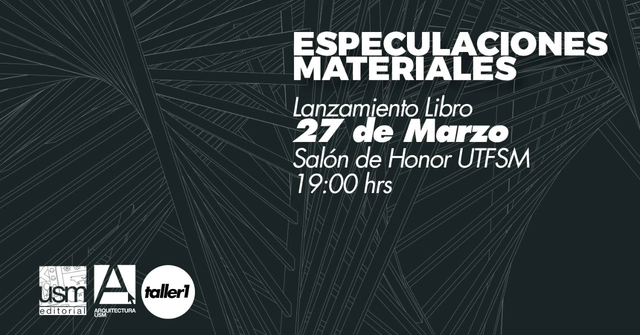
The community is invited to the launch of the book Material Speculations: Materiality Exercises from the UTFSM Introduction to Architecture Workshop, presented by the core faculty team alongside guest architect Verónica Arcos.
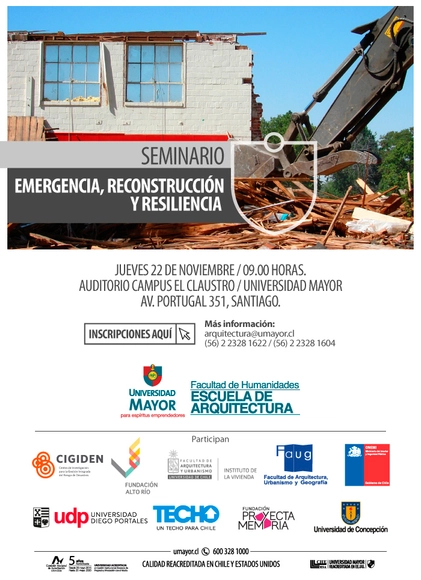
Emergency, Reconstruction, and Resilience Seminar Program. U. Mayor
The School of Architecture at Universidad Mayor cordially invites you to the seminar "Emergency, Reconstruction, and Resilience," to be held on Thursday, November 22, from 9:00 AM to 7:00 PM at the El Claustro Campus Auditorium, Av. Portugal 351, Santiago. The event is free with prior registration.
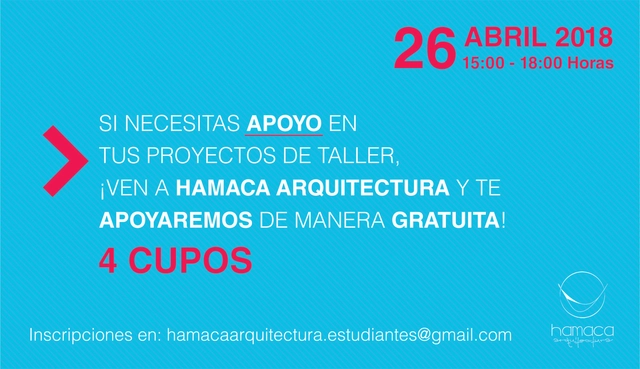
Image created by the hamaca arquitectura technical team
The team at Hamaca Arquitectura invites architecture students to the second season of their studio mentorship sessions. To participate, students must register for this initiative, which aims to improve undergraduate studio projects.
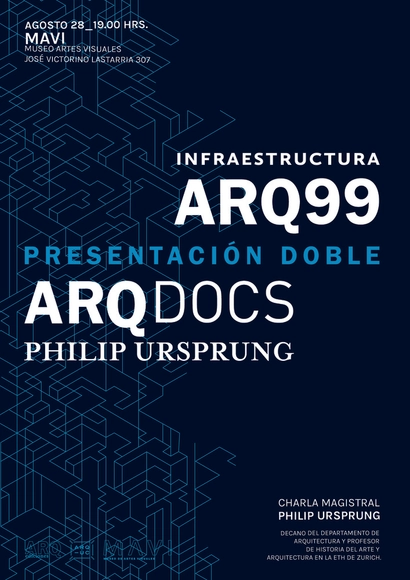
On Tuesday, August 28, the Museo de Artes Visuales (MAVI) will host the launch of ARQ magazine issue 99: Infrastructures, alongside the latest edition of the ARQDOCS series. The event will feature a keynote lecture by the author, Philip Ursprung, Chair of the Department of Architecture and Professor of the History of Art and Architecture at ETH Zurich.
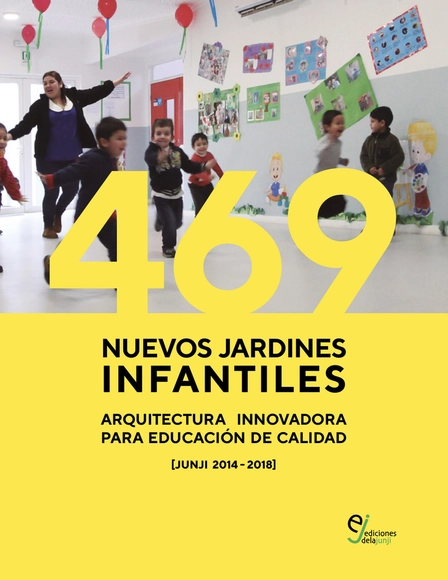
On Tuesday, February 27, at 11:30 AM, JUNJI will present the book "469 New Kindergartens: Innovative Architecture for Quality Education" in the main hall of the Centro Cultural Palacio La Moneda. From that day through Friday, March 2, a photography exhibition featuring 53 of these architectural works will also be on display.
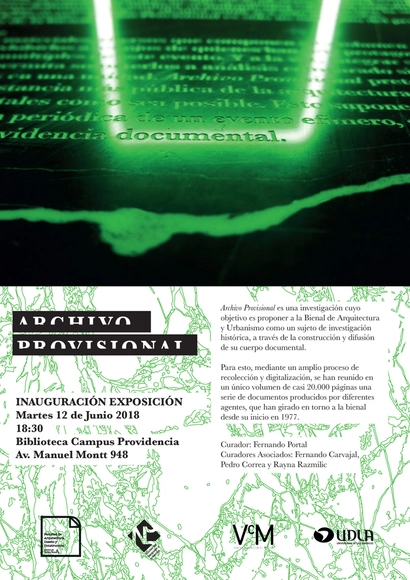
The "Archivo Provisional" (Provisional Archive) exhibition initiates a research process centered on the Chilean Architecture and Urbanism Biennial. The exhibition aims to build a documentary body based on the architecture biennial—allowing it to be understood as a subject of historical research—and to share this documentation with both general and specialized audiences. It views the act of exhibiting as the construction of common goods for collective research into the intersection of architecture and the public sphere.
School of Architecture, San Sebastián University [EA USS]
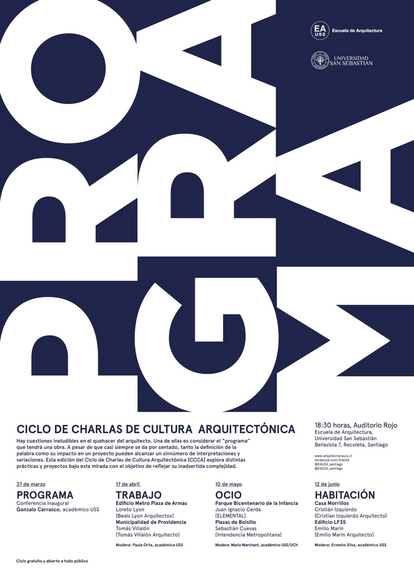
There are unavoidable issues in architectural practice. One of these is considering the "program" a project will have. Although it is almost always taken for granted, both the definition of the word and its impact on a project can lead to countless interpretations and variations. This edition of the Architectural Culture Lecture Series [CCCA] explores various practices and projects through this lens, aiming to reflect their overlooked complexity.
You are invited to the launch of our new book, "Tribunales. Sobre una Teoría Moderna." This publication examines the Tribunales building, also known as Tucapel, based on work produced during the final cycle of Proyecto Móvil. Under the title "Tucapel," this initiative established a dialogue between the building and the artists invited to exhibit.
In a context shaped by neoliberal policies, urban design in Santiago, Chile, has been progressively limited to private, internalized spaces. Specifically, through the shopping mall model, which, rather than serving as a suburban solution, has transformed into a vehicle for developing central, pre-equipped areas. Urban shopping malls are large-scale consumption artifacts that not only aggregate a significant amount of infrastructure, programs, and services to meet daily demands, but also represent a "real" opportunity to create urban spaces with a spatial and symbolic richness unavailable elsewhere in the city. However, this complexity comes at the expense of the urban experience. Housing, understood as the center of domesticity, has lost its fundamental relationship with the city and today is merely an isolated component of urban design, the result of an undifferentiated proliferation of housing units, buildings, and blocks that serve no function other than accommodation.
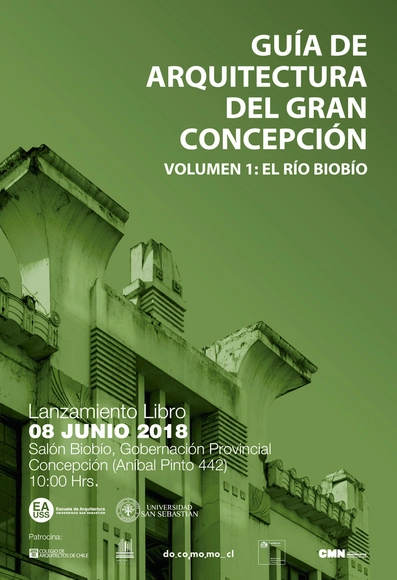
The School of Architecture at Universidad San Sebastián, Concepción campus, presents the first Architecture Guide of Greater Concepción. Volume 1: The Biobío River.
The launch of the book ART-quitectura will take place on November 20th. This is the 14th work by architect Luis Alonso, founding partner of the firm Alonso, Balaguer y Arquitectos Asociados—one of the most international and prolific Spanish architecture firms today—in which he showcases 10 of his projects developed across different countries.
The project consists of a scientific event and a symposium involving Japanese and Chilean participants on a topic of mutual interest. Both Japan and Chile face significant natural disasters—such as climate change, earthquakes, and tsunamis—that profoundly impact their built environments, cities, urban planning, collective memory, and society. The project focuses on a specific case study: the 2010 earthquake and subsequent tsunami in the Greater Concepción area.