Book cover and organizer - Images courtesy of Rio Books Editora
The Niemeyer Institute presents a new book organized by its board member, architect and urban planner Leila Marques, with the collaboration of Simone Feigelson and Denise Vogel. The book features 67 invited authors—masters and doctors from various scientific fields beyond architecture and urbanism, including engineering, law, tourism, biology, administration, communications, international relations, anthropology, history, geography, landscape architecture, economics, and the arts—who present 50 essays across nearly 300 pages published by Rio Books.
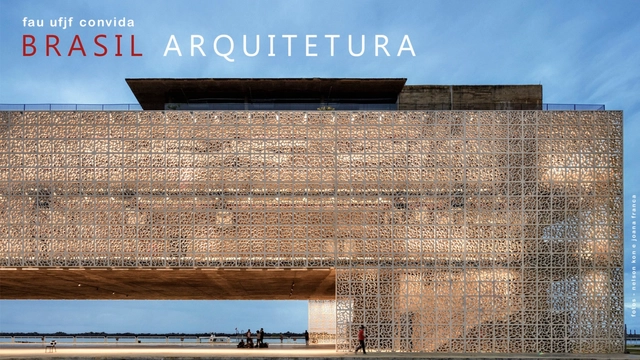
Image produced by the doCACAU organization. It features a photograph of the Cais do Sertão Museum in Recife, along with event information.
Promoted by the Academic Center of the Architecture and Urbanism program at UFJF (CACAU UFJF), the doCACAU audiovisual program aims to democratize architectural education for the community, integrating cultural and social knowledge as a means of extending learning beyond the university walls. The program includes internal initiatives focused on audiovisual production and architectural dialogues, which are also published on the Academic Center's media channels.
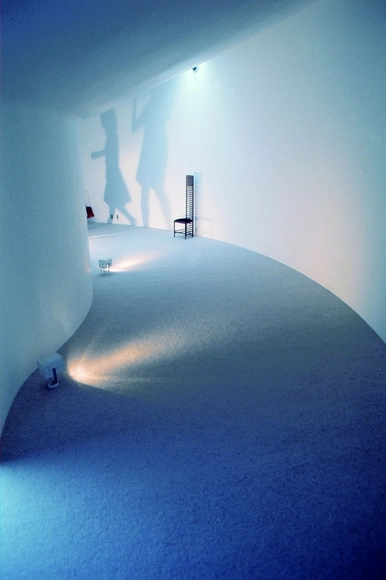
Form and void are inseparable concepts in Japanese culture. This course proposes an analysis of selected architectural works, supported by the aesthetic notion of Ma, to explore different conceptions of space-time in Japan. The course aims to present the conceptual, spatial, and material aspects of these projects to foster an understanding of the potential relationships between form and void, as well as to approach the void as a form of potential rather than an absence. The course is intended for anyone interested in architecture and Japan in general.
The Urbanism in Bahia Seminar - urbBA[21], in its 11th edition, proposes a discussion on the city and care.
The Urbanism in Bahia Seminar - urbBA[21], organized by the Lugar Comum Research Group (UFBA), proposes a discussion on the city and care in its 11th edition.
Videos
Poster developed by the event organizers. Image courtesy of Architect Malu Borja and Al Borde.
We invite everyone to the third meeting of the event "Latin American Conversations: Design Processes," organized by the extension project "Design Processes of Contemporary Women Architects," coordinated by Professor Ana Gabriela Godinho Lima, in partnership with the "Arqtetatlas" collective. The event will take place on Thursday, October 28, at 6:30 PM, featuring Ecuadorian architect Malu Borja.
Videos
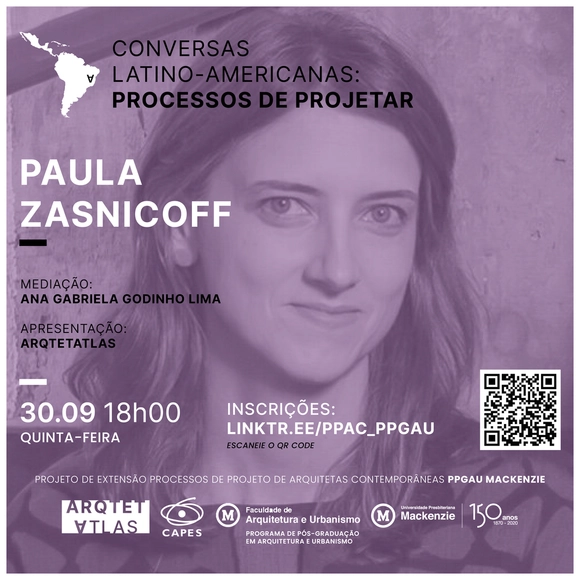
Poster developed by the event organizers. Image courtesy of Architect Paula Zasnicoff
We invite everyone to the second meeting of the event "Latin American Conversations: Design Processes," organized by the extension project "Design Processes of Contemporary Architects," coordinated by Prof. Ana Gabriela Godinho Lima, in partnership with the collective "Arqtetatlas." The event will take place on Thursday, September 30, at 6:00 PM, featuring architect Paula Zasnicoff.
The IAB 2021 Awards – Centennial Edition marks a new chapter in the long-standing tradition of recognizing and honoring architecture and urbanism, as promoted by the IAB and its various departments throughout its history.
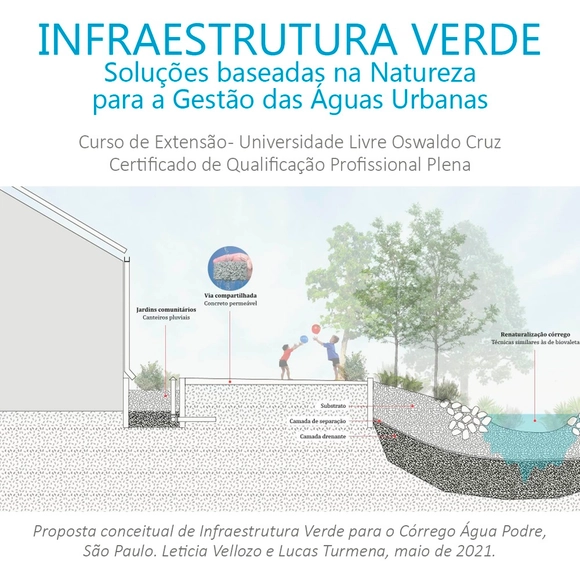
Green Infrastructure is a landscape planning and design method based on creating a network of blue-green landscapes (vegetation and water systems) that perform infrastructural functions while providing ecosystem services to cities. In green infrastructure, design is conceived based on the biogeophysical potential and limitations of the landscape, and water management is carried out through Nature-Based Solutions (NbS) such as rain gardens, bioswales, vegetated infiltration basins, and wetlands, which adapt existing infrastructure to the hydrological cycle and other ecological processes.
The Continuing Education Program of the Rio de Janeiro Department of the Institute of Architects of Brazil was created to share diverse knowledge and perspectives on the contemporary city—essential raw material for building cities that are more inclusive, accessible, socially just, and economically vibrant and sustainable.
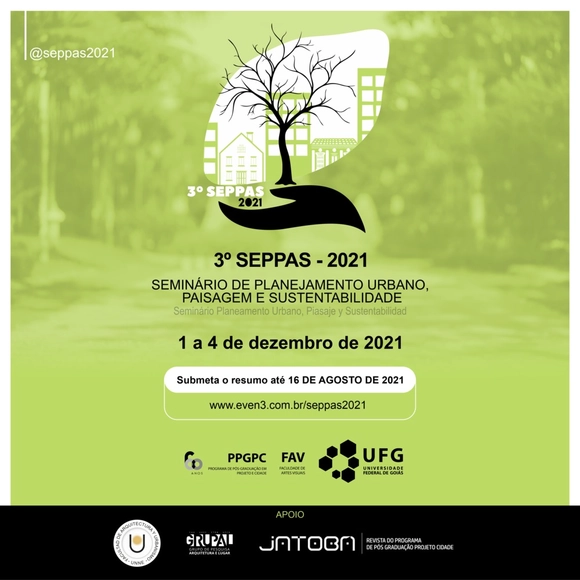
SEPPAS 2021 Event, submit your paper by August 16th.
Now in its third edition, SEPPAS will take place from December 1 to 4, 2021. The event will be held entirely online, featuring lectures and debates with professors, researchers, academics, renowned professionals, and members of the public across various fields of expertise. The event is organized by the Graduate Program in Project and City at the Faculty of Visual Arts of the Federal University of Goiás, with support from the Universidad Nacional del Nordeste (Argentina), the Grupal.UFCG research group, and Revista Jatobá.
The postgraduate program in "Parametric Design in Architecture" aims to foster the development of technical skills and cognitive strategies, enabling students to create design methods using programming languages. Through a practical and theoretical approach, the program seeks to equip students with the skills necessary to apply knowledge and techniques of parametric modeling, focusing on material behavior simulation, form-finding processes, and form generation and optimization.
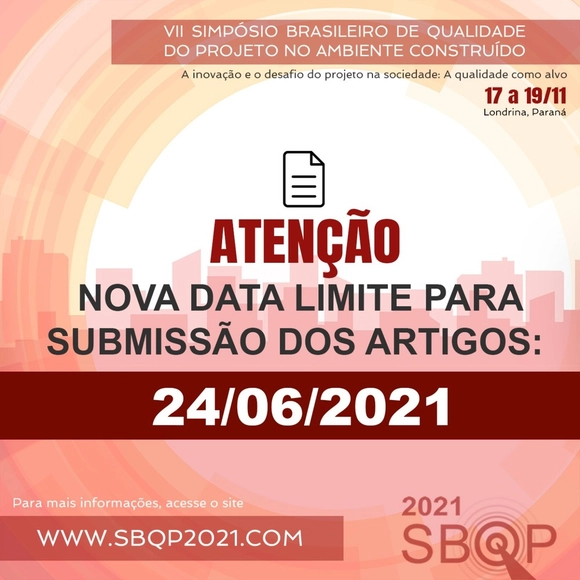
The Brazilian Symposium on Design Quality in the Built Environment, promoted by the Working Group of the National Association of Technology in the Built Environment, has sought since its first edition to discuss possibilities and solutions for analyzing key issues related to design, featuring research that explores the widest possible range of reflections and alternatives regarding quality in the built environment.
Discover the 30 Nominees for the 2021 CAU/DF Seal - Brasília Architecture
In this edition, in addition to the superquadra blocks, public and private schools participated. The public—building managers, condominium administrators, residents, and other interested parties—was also able to submit nominations online. All nominations were reviewed by the CAU/DF Temporary Heritage Commission between August and early November, resulting in the selection of 30 buildings that stood out for their historical value, the well-maintained state of their facades, outdoor areas, pilotis, and other analytical criteria.

![Toward an art of cultivating and enacting hope in cities - urbBA[21] - Featured Image](https://snoopy.archdaily.com/images/archdaily/media/images/617a/ddcf/f91c/815a/6200/002a/slideshow/open-uri20211028-31407-3j56mn.jpg?1635442110&format=webp&width=640&height=580)