Credits: Lucas Figueiredo Baisch and Bernardo de Borba Razera
The XIV ENEPEA - National Meeting on Landscape Teaching in Architecture and Urbanism Schools in Brazil will take place at the Federal University of Santa Maria, Central Campus, in Santa Maria, RS, from October 2 to 6, 2018, incorporating the XIII Quapá-SEL Colloquium as a pre-event on October 1 and 2, 2018.
The invention of new machines and design tools, alongside environmental urgencies and the human occupation of both existing and future built spaces, is driving new opportunities to conceive and produce the imagined building and city.
The event will take place at Sesc Avenida Paulista with an educational activity. Free of charge.
The second title in the series presents the city as a place for gathering and play; the event will take place at Sesc Avenida Paulista and includes an educational activity. Free admission.
Cover of the book "Acácio Gil Borsoi: Modern Architectural Production in Teresina"
The Federal University of Piauí Press (EdUFPI), in partnership with the Teresina Municipal Government, is hosting the launch of the book "Acácio Gil Borsoi: produção arquitetônica moderna em Teresina" on October 30, 2018, at 6:00 PM, at the Clube dos Diários, in downtown Teresina, Piauí.
The Foundation building during its construction, c. 1955 - FAAP collection
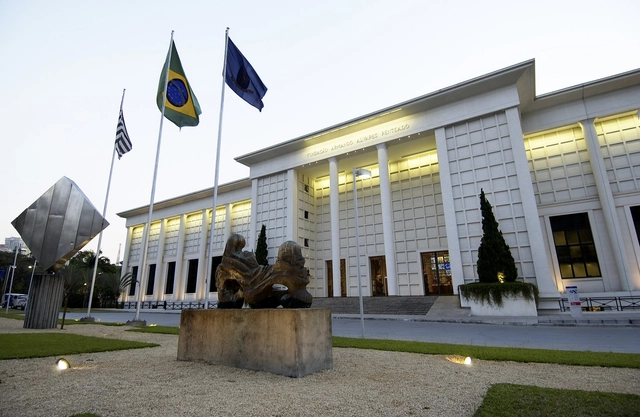
The headquarters building of the Armando Alvares Penteado Foundation (FAAP) is the subject of the latest exhibition at MAB-FAAP. The show highlights the work of the French architect Auguste Perret, one of the most significant figures in architecture during the first half of the 20th century.
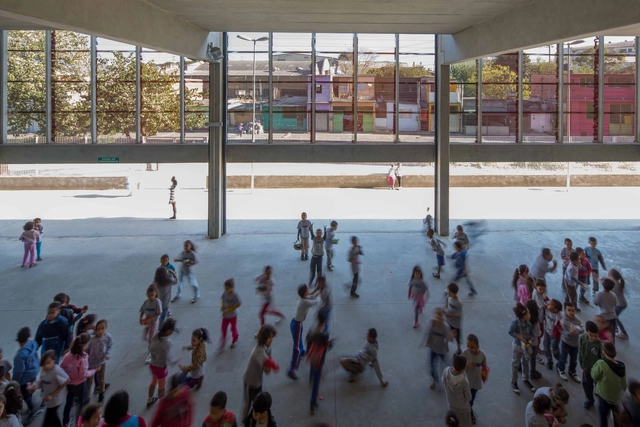
The exhibition addresses the trajectory of the FDE and reflects on the history of public school architecture in São Paulo by presenting the most significant projects from each period
The exhibition "Public School Architecture in São Paulo 1890–2017" celebrates the 30th anniversary of the Foundation for Educational Development (FDE).
EstereoEnsaios São Paulo is a film-essay that revives the spirit of the "City Symphony" films of the silent era within the 21st-century digital stereographic context. The film is composed as a musical symphony intended to engage in a dialogue with the 1929 film São Paulo, Sinfonia da Metrópole.
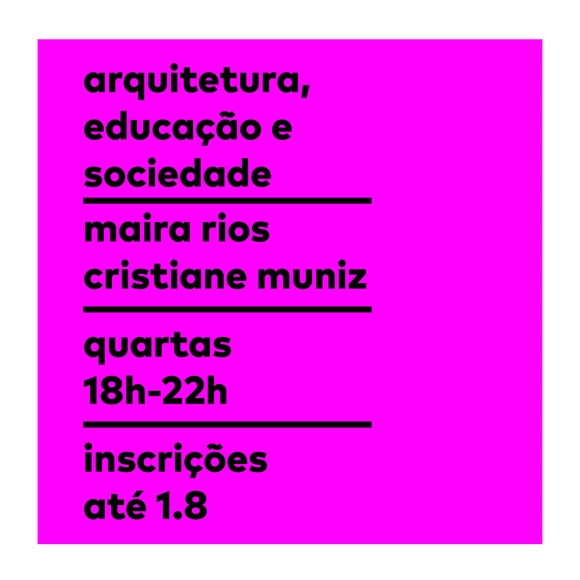
Collective Drawing Class takes place on 08/28. Registration open. Free.
Escola da Cidade – Faculty of Architecture and Urbanism is hosting the second edition of its "Portas Abertas" (Open Doors) program, which features a series of activities designed for prospective students interested in pursuing a degree in Architecture and Urbanism. Launched in 2017, the program aims to provide students with the opportunity to experience the school firsthand, explore its facilities, and interact with faculty and current students.
São Judas University (USJT), attentive to the need for an integrated vision regarding the development of projects and interventions in central areas, invites you to an international seminar aimed at providing a critical perspective on the territorial transformation processes currently underway in Latin American cities.
The sidewalk is the most democratic area of our home—we don't always remember this, but it is indeed part of our home, our building, and we believe it can be a space that goes beyond mere circulation. We view the sidewalk as a place for social interaction, tolerance, and respect for others, where we must engage with people of all genders, races, religions, ages, and social, physical, and mental conditions. In other words, it is a space where the full exercise of citizenship takes place.
FAAP facade in São Paulo - photo by Fernando Silveira
The Armando Alvares Penteado Foundation (FAAP) is hosting the "Reciprocal Timber Structures" workshop from May 2 to 11. The workshop will be led by Swiss architect and designer Udo Thönnissen, who has authored several books and articles on the subject.
The 2nd Science, Technology, and Society Symposium, to be held at UNILA/Foz do Iguaçu on May 24th and 25th, focuses on the geopolitics of knowledge, dependency, and coloniality in Latin America. In other words, the symposium aims to bring Latin American Thought on Science, Technology, and Society (PLACTS) closer to the decolonial perspective, viewing it as a theoretical expression created by the South and for the South, specifically addressing issues most relevant to Latin America. Decolonial thought understands the world through its interiorities, geographical space, and dissident bodies, serving as a powerful critique of Western modernity and its inherent colonial violence, as well as the coloniality of power and knowledge.