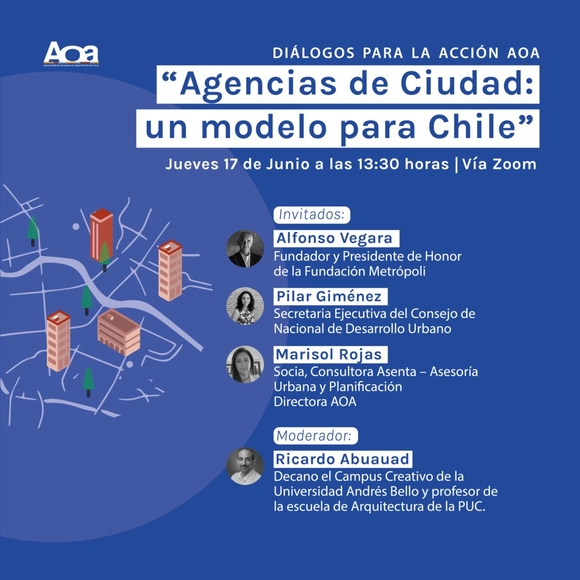
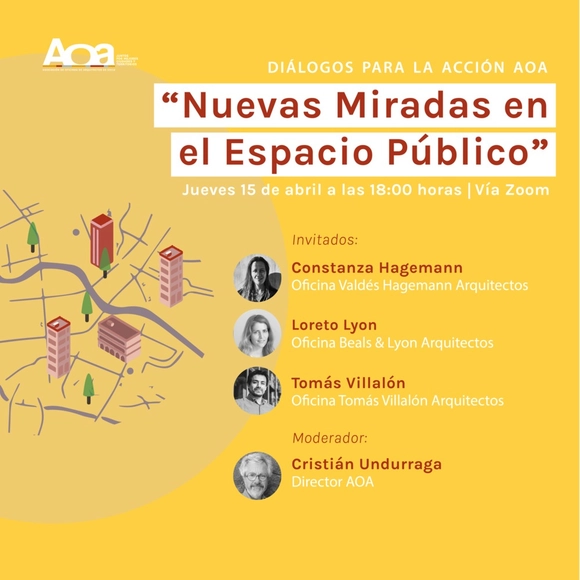
In these times of change, the AOA proposes an optimistic approach to the challenges facing cities and their citizens in both local and global contexts. We aim to highlight existing opportunities for positive change during and after crises, fostering more resilient cities in both the immediate and long term.
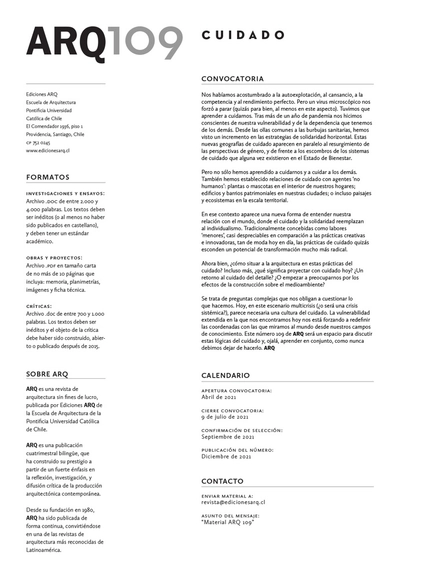
The launch of the first 2021 issue of ARQ magazine, 20/21, will take place on June 8 at 6:00 PM. The event will feature commentary from architects and researchers Fabrizio Gallanti (Fig Projects) and Alejandro Hernández (Arquine), as well as architect and curator Florencia Alvarez.
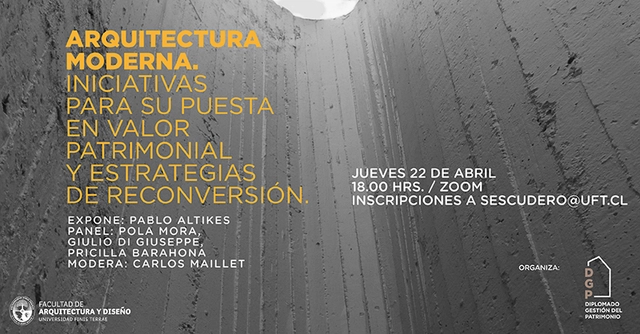
This panel discussion, organized by the Faculty of Architecture and Design at Universidad Finis Terrae, will feature Pola Mora, Head of Community and Partnerships at ArchDaily; Giulio Di Giuseppe, MSc in Architecture Heritage and Architecture (TU Delft) and Founding Partner of Forma Colectiva; and Pricilla Barahona, Vice President of the Centro Latinoamericano del Vitral Foundation (CLAV) and member of the Chilean Committee of the International Council on Monuments and Sites (ICOMOS CHILE).
"We had become accustomed to self-exploitation, exhaustion, competition, and perfect performance. However, a microscopic virus forced us to stop (perhaps for the better, at least in this regard). We had to learn to care for ourselves. After more than a year of the pandemic, we became aware of our vulnerability and our dependence on others... we have not only learned to care for ourselves and others, but we have also established relationships of care with 'non-human' agents: plants or pets within our homes; heritage buildings and neighborhoods in our cities; or even landscapes and ecosystems on a territorial scale.
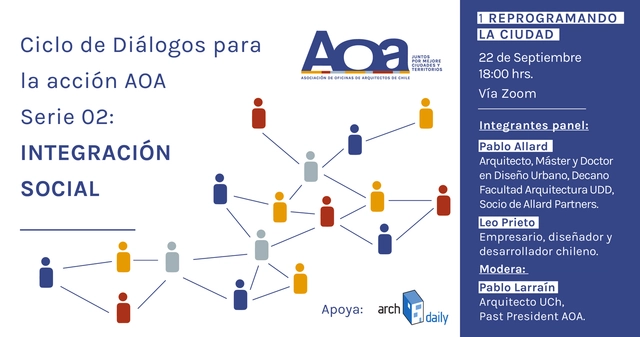
In times of change, the AOA proposes an optimistic approach to the challenges facing the city and its citizens within both local and global contexts. We are highlighting existing opportunities for positive change during and after crisis situations, thereby promoting more resilient cities in both the short and long term.
A group of experts will discuss heritage preservation and its future, focusing on the bill currently under debate in Chile to amend Law No. 17.288. The talk, titled "Heritage Management: Resilient Past/Sustainable Future," is hosted by the Faculty of Architecture and Design at Universidad Finis Terrae and will take place on Tuesday, March 30, at 6:00 PM via Zoom.
With an architecture that focuses on social transformation and community building, Giancarlo Mazzanti has established himself as one of the leading Colombian architects today. He will discuss his work and architectural vision in the lecture "Six Strategies for a More Participatory Architecture" this coming Friday, March 26, at 12:00 PM (Chile time). This event will mark the start of the academic year at the Universidad Finis Terrae School of Architecture. The lecture is free and open to the public and will be held via Zoom.
Aiming to transform times of crisis into opportunities to discover new ways of overcoming emerging challenges, the Association of Architecture Offices (AOA), through its Associates and Services committee, has organized the "Dialogues for Action" series. This series is designed to provide members and interested parties with an opportunity to discuss current issues related to the city.
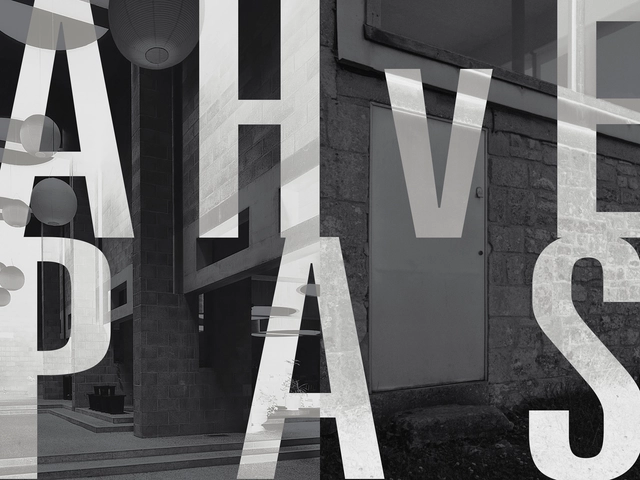
The School of Architecture at Universidad Finis Terrae will host the symposium "Between Van Eycks and Smithsons: Theoretical Convergences, Practical Divergences. Thresholds, Steps, Transitions," which seeks to delve into the specific conditions of the architectural works of Aldo and Hannie van Eyck and Peter and Alison Smithson, and to debate their conceptual issues.
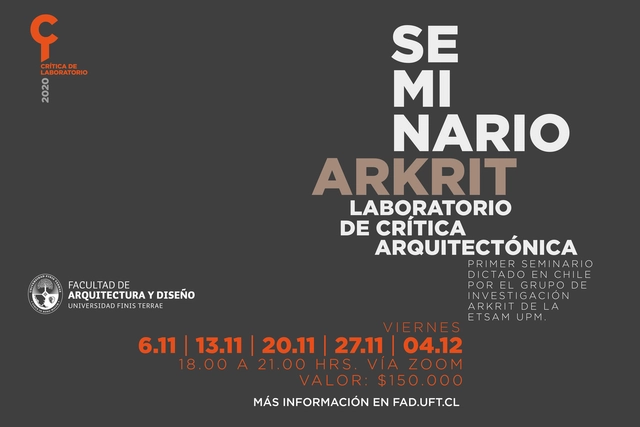
Starting in November, the Faculty of Architecture and Design at Universidad Finis Terrae will host the "Architectural Criticism Laboratory" seminar. The program will be led by the ARKRIT Research Group, established in 2008 at ETSAM, which focuses on developing architectural criticism as a methodological foundation for design. In their work, the critical exercise serves as the primary driver of the design process, to the point where criticism and design can become indistinguishable.
The School of Architecture of the Universidad Finis Terrae (Chile) is pleased to announce the Between Van Eycks and Smithsons Symposium: Theoretical Convergences, Practical Divergences. Thresholds, Doorsteps, Transitions, seeking to delve into specific conditions of the architectural works of Aldo and Hannie van Eyck and Alison and Peter Smithson, and to discuss their broad conceptual problems.
In these times of change, AOA proposes an optimistic approach to the challenges facing cities and their citizens in both local and global contexts. By identifying existing opportunities for positive change in the wake of a crisis, we aim to promote more resilient cities, both in the immediate term and for the future.
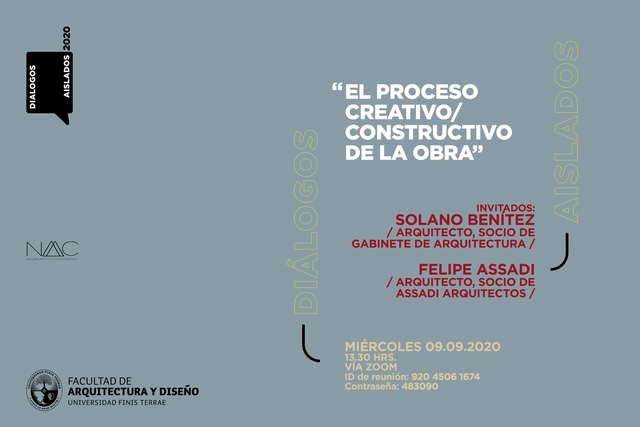
Renowned Paraguayan architect Solano Benítez will be the guest for “Diálogos aislados” (Isolated Dialogues), a series organized by the School of Architecture at Universidad Finis Terrae, held every Wednesday via Zoom.
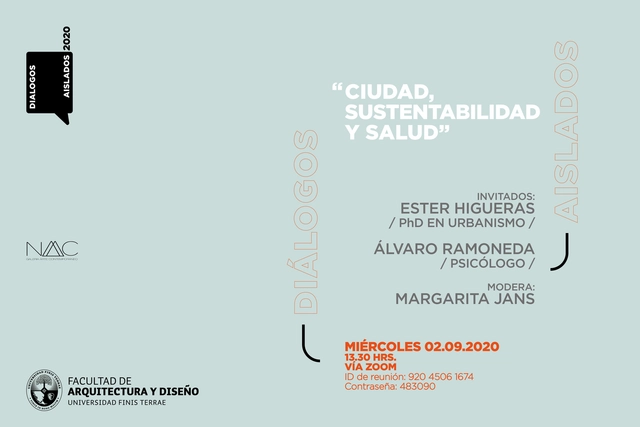
The "Isolated Dialogues" series from the Universidad Finis Terrae School of Architecture—held every Wednesday to address various topics from the perspective of isolation—will focus on "City, Sustainability, and Health" on September 2nd, within the context of the pandemic and the sustainable development that cities demand.
During the pandemic, the School of Architecture at Universidad Finis Terrae has hosted the "Isolated Dialogues" lecture series, in which professionals from various fields discuss art, music, design, architecture, urbanism, and creative processes, among other topics, through the lens of confinement.
Héctor Esrawe is a leading figure in contemporary furniture and interior design in Latin America. From his studio, Esrawe, based in Mexico City, he develops everything from furniture and objects to interiors, architecture, public space installations, and museography.