LabCidade at FAUUSP has conducted several studies on methods for mapping COVID-19 across São Paulo.
Victor Delaqua holds a Master's degree from FAUUSP (São Paulo). He is an architect and urban planner from UFSC (Florianópolis) and studied at the Polytechnic University of Valencia. A contributor to ArchDaily since 2012, he is the Head of Newsletters. Professionally, he also works in exhibition and set design.
LabCidade at FAUUSP has conducted several studies on methods for mapping COVID-19 across São Paulo.
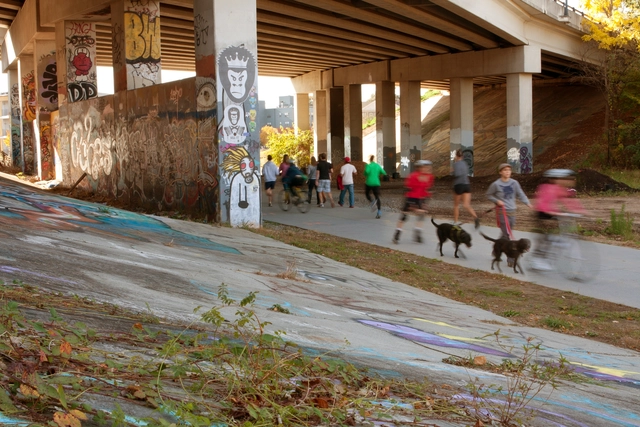
Today is World Bicycle Day, celebrated for the diverse social, economic, and environmental benefits that this mode of transport and recreation offers. By establishing this day, the UN recognizes the contribution of cycling to the Sustainable Development Goals, including the creation of more sustainable cities and communities. This perspective gains even greater relevance during and after the pandemic. When exploring healthy ways to move around the city, active mobility stands out as a highly feasible, short-term alternative—one that goes beyond bike lanes to encompass the well-being of the citizen as a whole.
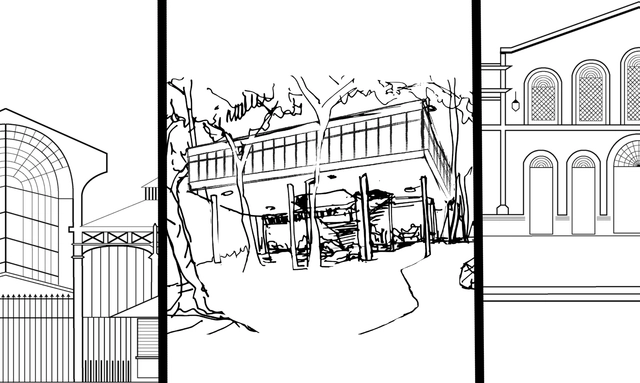
Pé na Estrada is an outreach project of the School of Architecture and Urbanism at the University of Brasília, active since 2011 as an extracurricular activity. Its primary goal is to organize and promote study trips across Brazilian cities. However, due to the COVID-19 pandemic, the project had to adapt to social distancing, launching new heritage education initiatives and encouraging alternative ways of experiencing spaces studied in the classroom to expand the knowledge and creative vocabulary of both students and the community.
.jpg?1589983962&format=webp&width=640&height=580)
While MASP is closed in accordance with World Health Organization guidelines, you can still explore the museum's collection through Google Arts & Culture or via its #maspemcasa digital programming.

50 years ago Clarice Lispector already pointed out how difficult it was to unveil Brasilia: "the two architects did not think of building beautiful, it would be easy; they raised their amazement, and left the amazement unexplained". This year the capital turned 60, and still remains intriguing for scholars, students, and anyone who allows themselves to explore it better. In order to understand the daily life that exists there, we invited six professionals- in the field of architecture and urbanism - who live in the city, to share their visions with us and bring a few more layers that help to build an interpretation of utopia and reality that Brasília currently represents.
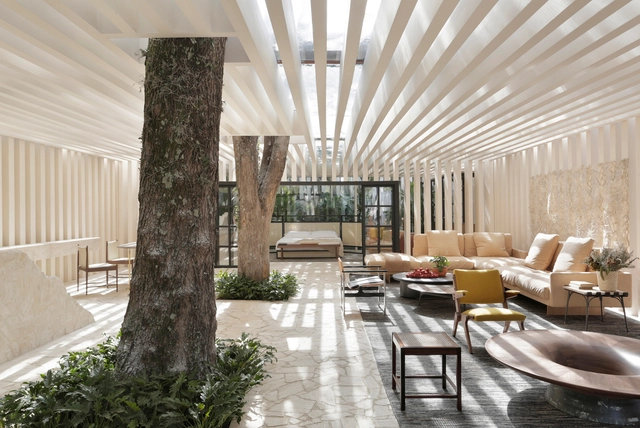
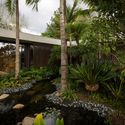
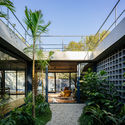
Introducing elements of nature - such as water, vegetation, natural light, stones or even the use of wood - into interior design can provide richer and more complex compositions in the built environment. In these landscaping projects, the textures, silhouettes and, especially, the generated sensations, can establish new relationships of well-being and comfort for the user.
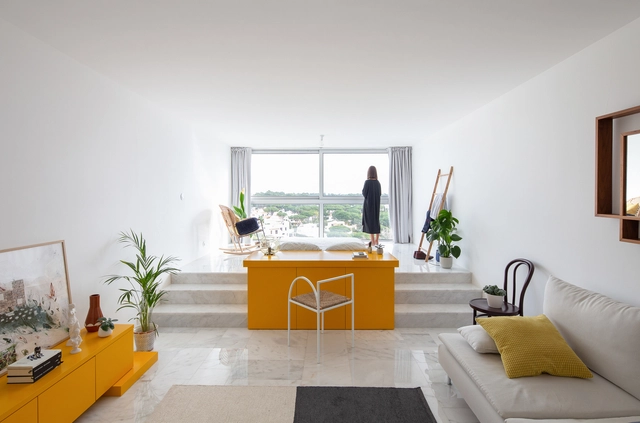
Designing small spaces is a challenge that is common for architects because of the increase in urban densities and smaller spaces dedicated to homes and apartments. For Portuguese architects, dealing with the small scale and its details is something already established in their project thinking, given the way they transform the compartmentalized plans of secular buildings through rehabilitation and refurbishment that provide a contemporary and functional atmosphere to their inhabitants. We gathered ten projects, using photographs and plans, as a few examples of this Portuguese talent.
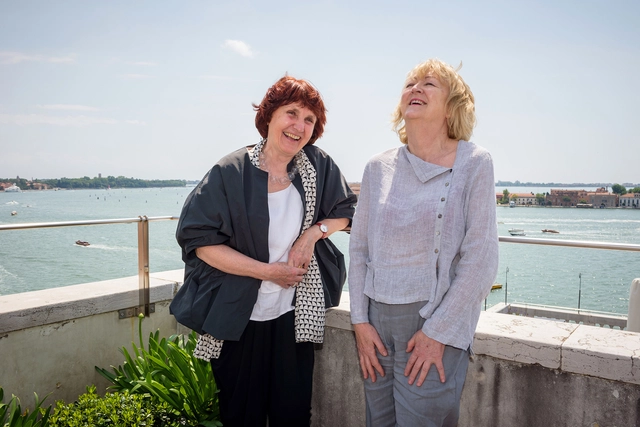
Yvonne Farrell and Shelley McNamara, co-founders of Grafton Architects, were awarded the 2020 Pritzker Architecture Prize. Earlier this year, they also received the Royal Institute of British Architects (RIBA) Gold Medal, becoming the first pair of women to jointly receive the honor.
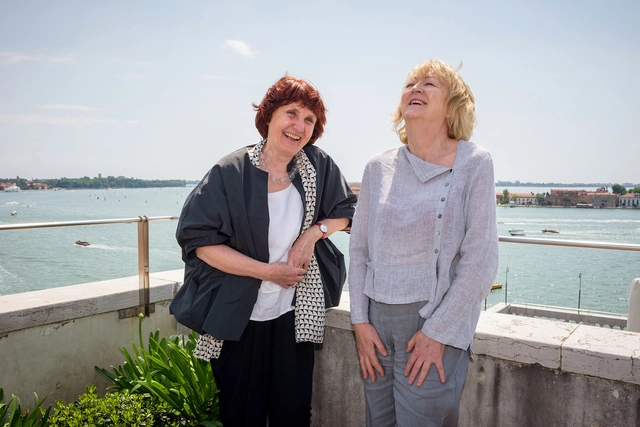
Yesterday Yvonne Farrell and Shelley McNamara, co-founders of Grafton Architects, received the 2020 Pritzker Prize. The first women to be jointly recognized for the award also received the Royal Gold Medal 2020 from RIBA earlier this year.
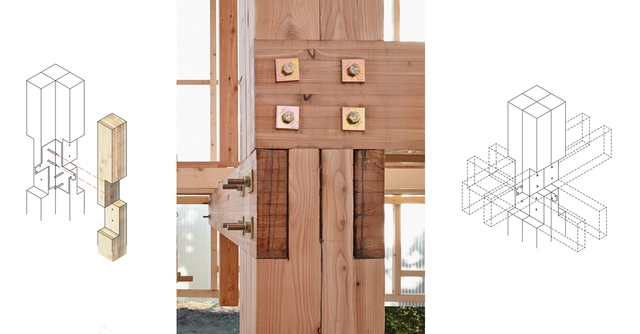
Kengo Kuma's architecture can be defined by its respect to Japanese constructive traditions and alignment with its context. Internationally recognized, the architect is known mainly for his wooden (or mixed) structures, which arise from a simple pattern of assembly and, which through different intersections and angles, generate a complex whole. The representations created by his team bring very specific details, ranging from didactic isometrics to complex parametric drawings. We have gathered details of five inspiring projects by Kengo Kuma that use wood.

Stairs often become a fundamental element of a project. Beyond resolving vertical circulation, they can take on a sculptural role within the space and serve other functions, such as creating seating areas, bringing necessary light to other levels, acting as storage, and offering new perspectives of the architecture itself as one moves through it. Since addressing this component is not always an easy task—often requiring creative solutions balanced with user safety—we have selected 15 staircases designed by Brazilian architects to serve as inspiration for your next project.
.jpg?1578439538&format=webp&width=640&height=580)
Last year, the samba school Unidos da Tijuca announced the theme for its 2020 parade at the Marquês de Sapucaí: "Architecture and Urbanism." The choice was inspired by the unprecedented title Rio de Janeiro received from UNESCO as the World Capital of Architecture, as well as the city's selection to host the World Congress of Architects—an event organized by the International Union of Architects (UIA) that is expected to draw around 15,000 professionals this July. In addition to honoring architects and urban planners, the school will bring critical issues facing the field to the parade, such as the right to the city, the construction industry's role in the climate crisis, heritage preservation, and even ancestral architectural knowledge.

At the end of each year, we launch a call for submissions for graduation thesis projects from our readers in Portuguese-speaking countries. Through this, we aim to select the projects we find most interesting in order to share inspiring perspectives and discussions with our entire audience.
In this edition, we received 333 proposals from all over Brazil and several Portuguese cities. The selection of these projects is based on those we consider best presented, visually compelling, and whose theme we find thought-provoking and timely for a graduation thesis. More than simply delivering a satisfactory design, we believe that a final graduation project—by condensing the student's efforts during a transition period from academia to professional life (while, it is important to note, still being part of the academic journey)—must raise questions and spark discussion about the proposed theme.
It is worth noting that several submissions did not follow the guidelines and were either disqualified or provided insufficient material for evaluation.
Below is our selection* of the 32 best final graduation projects from Portuguese-speaking countries, accompanied by descriptions provided by their authors.

Designing the spatial quality of public space and allocating its program for the population is one of the greatest challenges for architects and urban planners. Urban developments, parks, and plazas are some of the interventions these professionals encounter when creating places for democratic use—spaces that often become symbols of the city. To illustrate these projects, we have gathered ten Brazilian examples that explore different contexts and scales.
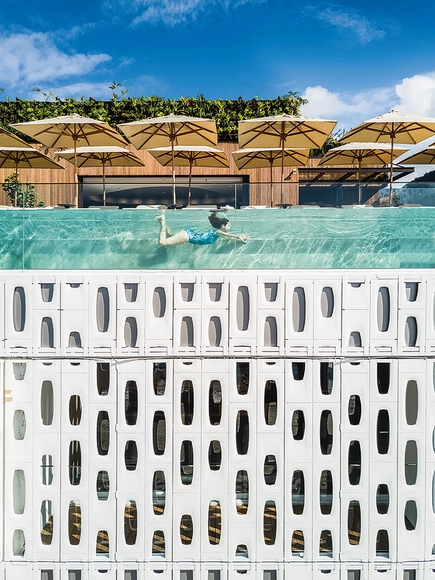
Unlike when they were seen merely as spaces for sleeping and showering, today hotels must enhance the travel experience to attract guests and offer a competitive edge against direct rivals or even new lodging models like Airbnb. Consequently, beyond room quality, leisure areas, restaurants, landscape, and architecture are key factors in the success of a development.
In countries like Brazil, which feature diverse landscapes and a varied population, one encounters a wide range of solutions when designing hotels. For this reason, we have gathered ten national examples where architecture stands out, lending a unique identity to each of these buildings.

After at least five years of study, the time comes for architecture and urban planning students to complete their final graduation projects—often referred to as thesis, graduation, or capstone projects. In choosing their topic, students highlight civil, urban, or theoretical proposals that are highly relevant to fostering discussions about the future of our cities, the built environment, urban infrastructure, mobility, and many other topics essential to evolving the way we inhabit space.
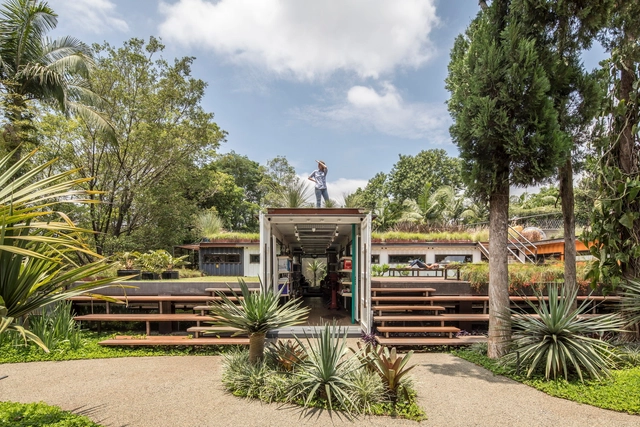
The landscape around the built environment can make all the difference in a project. Natural elements that are integrated into architecture or designed to compose it make a huge difference in the way we experience space. Therefore, designing landscape projects is no simple task. To bring some references for compositions with nature and other elements that help to configure a place, we have gathered fifteen contemporary Brazilian projects that explore simple solutions and the ones that expose the exuberance of the country's tropical flora.
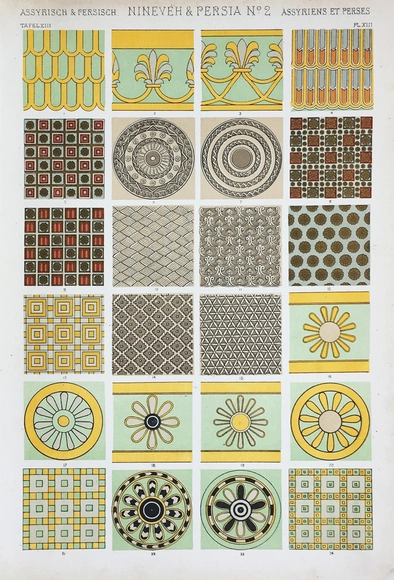
In 1856б Owen Jones released the book The Grammar of Ornament in which he presented a compilation of visual languages adopted by the most diverse cultures - made from the author's explorations in places such as Greece, Egypt, Constantinople and India. The work reflects how Victorians examined international art and design by placing Britain at the center of the debate in order to establish "general principles" that promoted a certain system of different styles through their own perspectives. At the time, the publication was a major editorial success and influenced everything from William Morris (from the Arts and Crafts movement) to modernist architects Louis Sullivan and Frank Lloyd Wright. However, in 2019, Priya Khanchandani and Sam Jacob re-read Jones's work and demonstrated not only the colonizing aspects of his point of view, but also proposed a reinvention of these visual systems and patterns in accordance with contemporary times.