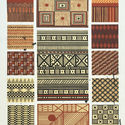
In 1856б Owen Jones released the book The Grammar of Ornament in which he presented a compilation of visual languages adopted by the most diverse cultures - made from the author's explorations in places such as Greece, Egypt, Constantinople and India. The work reflects how Victorians examined international art and design by placing Britain at the center of the debate in order to establish "general principles" that promoted a certain system of different styles through their own perspectives. At the time, the publication was a major editorial success and influenced everything from William Morris (from the Arts and Crafts movement) to modernist architects Louis Sullivan and Frank Lloyd Wright. However, in 2019, Priya Khanchandani and Sam Jacob re-read Jones's work and demonstrated not only the colonizing aspects of his point of view, but also proposed a reinvention of these visual systems and patterns in accordance with contemporary times.


Published during British imperialism, the book levels stories and cultures through its categorizations and derogatory language about nations that were colonized by European countries. Khanchandani adds that "Jones’ book of patterns was created at the height of the British Empire, when many of the cultures and nations that he reflects on - from the ‘Hindoos’ to the pejoratively named ‘Savage Tribes’ - were read from a Eurocentric perspective. In the process they were reduced to rigid categories that denied them their own subjectivity."


Through this restlessness emerges Pattern as Politics, which forms part of the exhibition What is Ornament? of the Lisbon Architecture Triennale. The project invites 15 contemporary architects, designers and artists to rethink the standards canon created by British architect Owen Jones in the early 19th century. The proposal was curated by Priya Khanchandani and Sam Jacob to reinterpret and decolonize the imagery of the pattern from a more plural perspective.
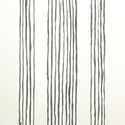
The exhibition encourages new readings that reconsider and challenge the cultural boundaries imposed by Jones' standards from a contemporary point of view. The eclectic responses on display were handled by contributors from around the world - from China and South Africa to Brazil and Bangladesh - and range from two-dimensional A3 pieces, animation and textiles. The architects, designers and artists involved were: Adam Nathaniel Furman, Arthur Mamou-Mani, Faissal El-Malak, Farshid Moussavi Architects, Gustavo Utrabo, Lubna Chowdhary, Lulu Li, Marina Tabassum Architects, Na Kim, OMMX, Pablo Bronstein, Raqs Media Collective, Rana Begum, Sinta Tantra and Sumayya Vally.


Jacob states that the "project attempts to remarry the decorative and symbolic strands of pattern making. And in doing this aims to reveal that politics, as much as pleasure is central to the design of pattern" revealing the importance of commissioning new work that artistically defies the existing canon.
The 15 contemporary works are arranged alongside 10 original plates from The Grammar of Ornament. The background of the canvas is a wallpaper adorned with coded patterns that were used on security envelopes designed to send confidential information in the mail, symbolizing the process of "decoding" Jones' work by the featured artists.
Collectively, the works form a carmen figuratum (a pattern-based poem) that simultaneously interrogates history and the canon, proposing new ways and meanings for ornaments in visual practice.


CREDITS
Pattern as Politics
Lisbon Architecture Triennale - What is Ornament?
Location: Culturgest - CGD Foundation
Saturday, October 5 - Sunday, December 1, 2019