Former Content Editor for ArchDaily.co, Architect and passionate for scale models. Exporting Colombian architectural scene to the world.
Intagram @sumyaro
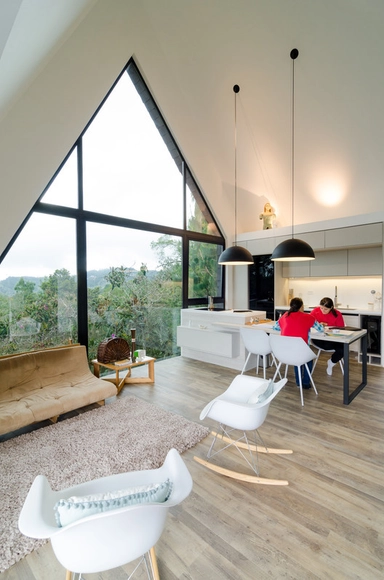
Within residential spaces, architects choose to give more or less prominence to certain areas of the program, depending on client preferences. While some prefer to prioritize more intimate spaces, others lean toward social areas—with the kitchen being a primary example.
Although the pragmatic function of a kitchen is to serve as a space for preparing food, there are few homes where it does not also double as a gathering place. Even in traditional dwellings like the Mapuche *ruka*, a central hearth is used both for cooking and for heating, conceptually evoking the same welcoming atmosphere as integrated urban kitchens. Today, fire is managed through stoves—with a strong modern shift toward induction cooktops for their safety and precise temperature control. Nevertheless, the core domestic principle remains the same, and contemporary architecture has allowed the kitchen to once again integrate seamlessly with daily activities and social zones.
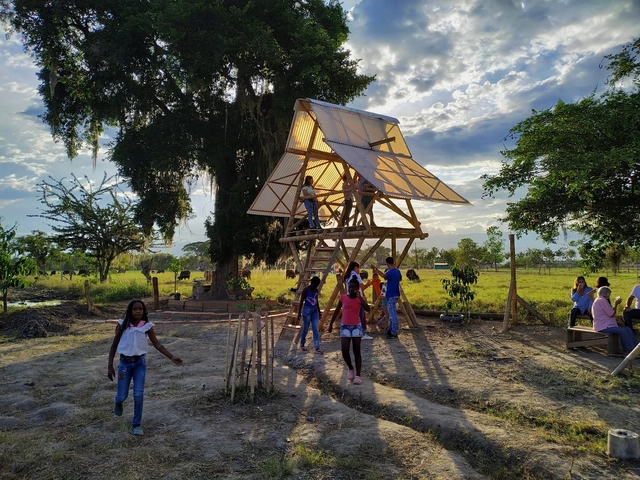
At a time when we only have room for immediate priorities, many designers in our discipline work detached from the actual context where their projects will be built. Yet, some still dedicate the time and passion to experience these realities firsthand and build hand-in-hand with the users.
Below, you can explore the interviews conducted with these renowned figures of the Colombian architectural scene, several of whom were winners or received honorable mentions at the XXVII BICAU.
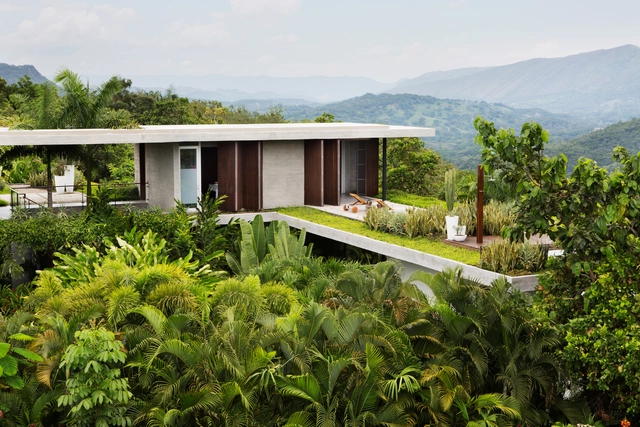
Colombia boasts an immense variety of thermal zones that create breathtaking landscapes and dreamlike natural environments. Its flora and fauna vary distinctly depending on region, altitude, and humidity. For architectural practices designing Colombian homes, the natural context is a constant source of inspiration, ranging from incorporating vegetation as interior architectural elements to framing nearby landscapes. When designing spatial perception—whether from within or without—nature is an undeniable component of these projects.
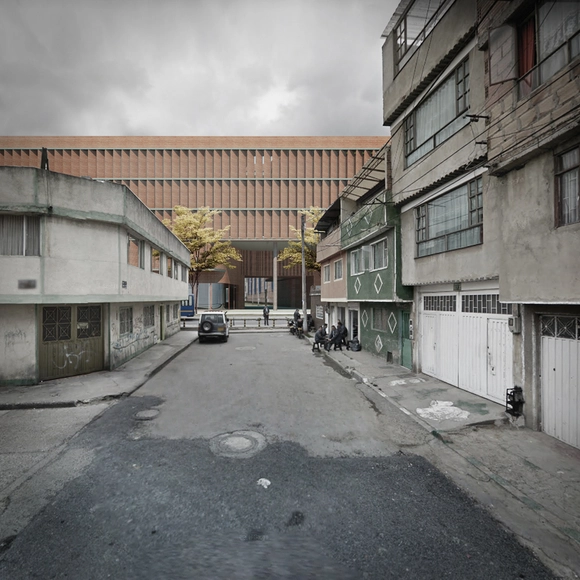
The year 2019 was one of the most prolific for public design competitions in Bogotá, particularly within the education sector. Recently, the results of the public architectural preliminary design competition for the Hipotecho School were announced, with the winning proposal submitted by the joint team of AR-AR (Martínez Arquitectura) + Fiallo Atelier + MEC arquitectura.
If we could travel back in time one hundred years and organize an ideas competition to visualize what Bogota would look like in 2020, the proposals would be far from the reality of the urban landscape experienced today in the Colombian capital. Back then, little was known about the events that would later shape history, such as the Bogotazo, which led to the rebuilding or remodeling of most of the buildings that served as architectural landmarks of previous centuries.
The uncertainty of a distant future is perpetual. Yet, this does not stop the imagination from creating utopian or dystopian scenarios of that urban dimension for 2120. This was the main goal of the rendering competition organized by the Student Collective of the Colombian Society of Architects (CESCA) of the Bogota and Cundinamarca chapter.
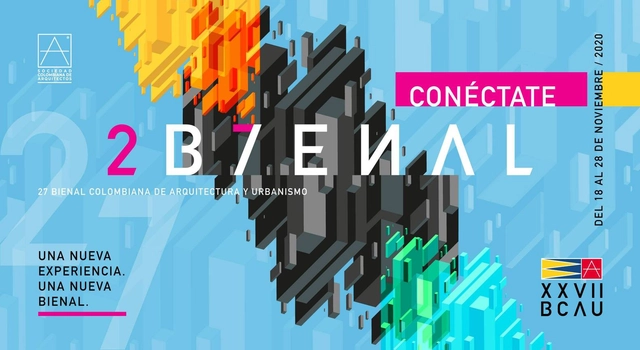
For the first time, the Colombian Biennial of Architecture and Urbanism, organized by the Colombian Society of Architects (SCA), will be held virtually. In its 27th edition, over ten days, more than 60 lectures, 9 panels, and 4 forums will be available. Explore the full schedule of the main room below. Meanwhile, the parallel room will showcase the Biennial's finalist projects.
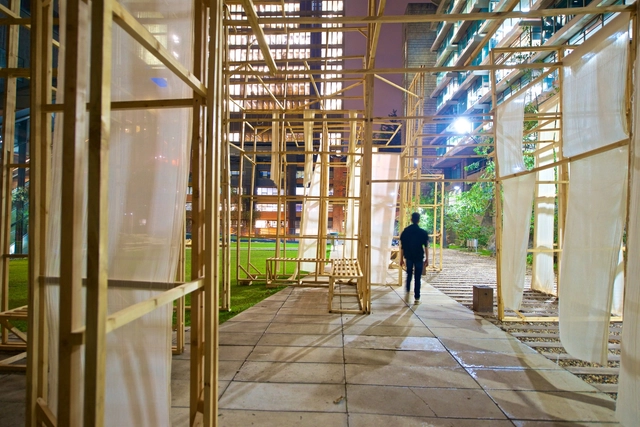
Cortesía de Facultad de Arquitectura y Diseño de la Pontificia Universidad Javeriana
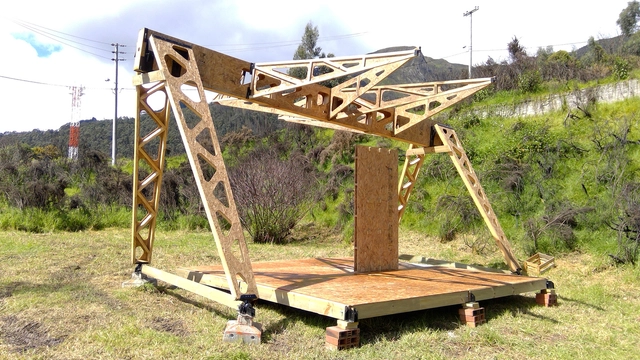
Academic architectural practice must push students and faculty toward constant adaptation and exploration. First-semester students at the Pontificia Universidad Javeriana built an intervention of ephemeral architecture using wood as a structural material in the arts building (prior to the state of emergency). This gave future architects the academic experience of hands-on construction during their very first semester in the department.
Avance Red Bridge Par, colaboración con con LOLA y L+CC. Image Cortesía de Taller Architects
Following the conversation ArchDaily hosted on Instagram Live during the quarantine with Pablo Forero, one of the founders of Taller Architects (formerly Taller 301), we present this interview, in which he discusses the principles and approaches of this young practice based in Bogotá and Amsterdam.
The Superintendency of Industry and Commerce has granted a utility patent for the invention "Multifunctional Self-Supporting Modular Roof System" to professors Camilo Ayala García and Christiaan Job Nieman Janssen, from the design department, and Diego Alejandro Velándia Rayo, from the architecture department, at the Faculty of Architecture and Design of the Universidad de los Andes.
In the daily routine of our conventional workday, we are influenced by many distractions that affect productivity, which have already become routine. However, now that we no longer lose time commuting and are restricted to activities we can do at home, we manage our time with more holistic priorities.
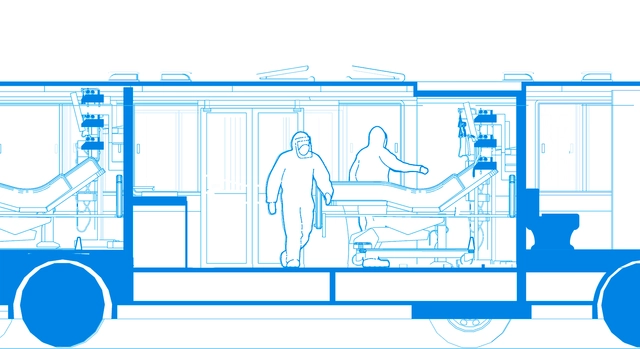
The Bogotá-based firm 57Uno focuses its practice on sustainability and has now channeled its creativity toward resilience and adaptability through Arquitectura en Tránsito (Architecture in Transit). This proposal aims to address the health emergency caused by COVID-19 by repurposing decommissioned buses from one of the primary contributors to poor air quality in the Colombian capital.
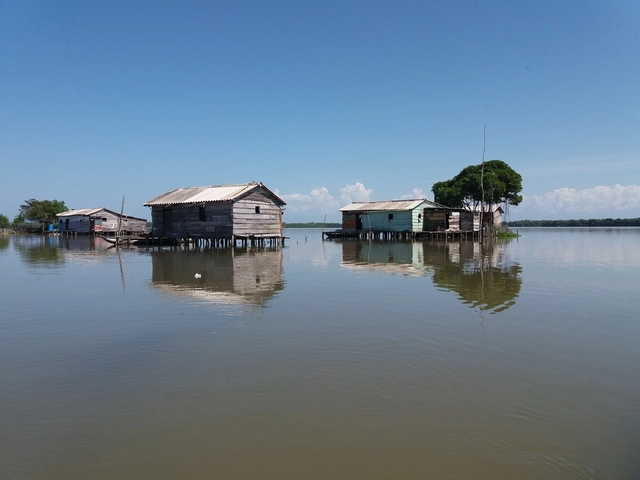
Stilt settlements have existed throughout the world wherever populations sustain their lives through constant interaction with water. In Colombia, the settlements of the Ciénaga Grande de Santa Marta, in the department of Magdalena, are a local benchmark that has endured since pre-Hispanic times. Today, these are informal dwellings, unrecognized in the official land registry. The Pontificia Universidad Javeriana and AGRA have shared their research, compiled in a book that supports the documented formalization of these dwellings using architectural representation standards, specifically by identifying the typologies of Nueva Venecia.
The third generation of the Bogotá-based firm Bermudez Arquitectos spoke with ArchDaily during the quarantine, discussing various aspects of their practice, their contributions to academia, and the challenges of working in a studio with a family legacy. Read the transcript of the Instagram Live below.
Lockdown and preventive isolation have exposed the obsolescence of models that fail to meet contemporary needs, whether in housing, public space, or rural areas. The Colombian Society of Architects took action, bringing together its regional representatives and professionals from other related fields to rethink social behavior within territories, cities, and housing.
_13.46.17.jpg?1606762006&format=webp&width=640&height=580)