Romullo Baratto is an architect with a PhD from FAUUSP and Managing Editor of ArchDaily. He previously coordinated the editorial team of the 11th São Paulo Architecture Biennial and served as Managing Editor of ArchDaily Brasil, where he led the platform to win the FNA Award—the first time the honor was granted to a media outlet. He collaborated on the editing of the book "Concrete Jungle", published by gestalten, and has curated architecture exhibitions in Brazil, Chile, Denmark, and Italy, as well as delivered lectures and moderated debates in Spain, the United States, and Portugal. His doctoral thesis investigates the urban landscapes of São Paulo through cinema. His work spans academic research and editorial practice, communicating architecture through texts, interviews, lectures, curatorship, and photography. Follow him on Instagram @romullobf.
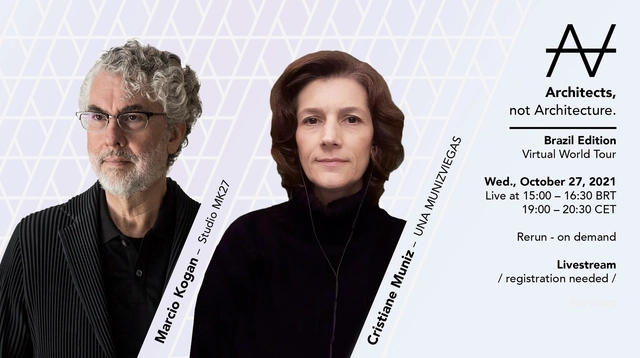
Following an incredible response to the first Virtual World Tour during the peak of the pandemic between late 2020 and early 2021, the organization Architects, not Architecture has decided to continue its global digital approach to connecting the architectural community. From October to December 2021, AnA will host events featuring prominent figures in global architecture.
This year, the tour will visit Hong Kong, Brazil, Japan, the United States, and Turkey. In each location, two architects will be invited to share their personal stories and the events that have shaped their careers. On October 27, the tour stops in São Paulo, featuring Marcio Kogan and Cristiane Muniz.
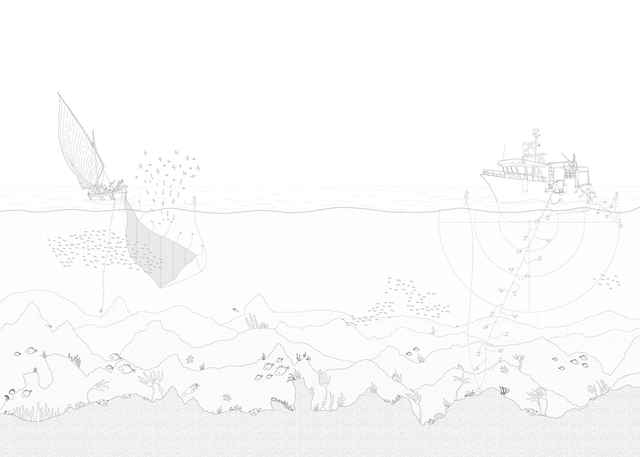
What can a cod offer to architecture? Or rather, what lessons about the environment and human settlements can we learn from the history of fishing? This unlikely question lies at the heart of the book Arquitetura do Bacalhau, by André Tavares and Diego Inglez de Souza, published by Dafne Editora and recently released in Brazil.
In the following interview, we speak with Tavares about the infrastructures linked to cod fishing and their relationship with territory, labor, and architectural production. Through an original approach—connecting architecture, ecology, fish physiology, and industrial history—, the authors propose a reading of the built environment anchored in the ecosystems that sustain it. Far from being a nostalgic look at the past, the research points to the urgency of rethinking architecture in the context of ongoing environmental transformations, showing how human constructions shape and are shaped by natural marine ecosystems.
We are pleased to announce the finalist projects for the ArchDaily Brasil 2025 Building of the Year Award. Following two weeks of nominations, the projects that received the most votes were selected from hundreds of works built in Portuguese-speaking countries. Our jury, comprised of thousands of readers, once again played a fundamental role in curating this selection, resulting in a shortlist of 15 remarkable projects.
From today until April 9 at 11:59 PM (GMT-3), you can vote once a day for the finalists—exemplary representations of contemporary Lusophone architecture. The winners will be announced on April 10.
The Tomie Ohtake Institute and AkzoNobel continue to map contemporary architectural production, highlighting, for the seventh consecutive year, significant projects built within the current Brazilian landscape. The relationship to the urban context, the commitment to the site and sustainability, as well as design and construction inventiveness, are the core criteria guiding the 7th Tomie Ohtake Institute AkzoNobel Architecture Prize.
Slate 1 CAU+Plural, composed entirely of women architects and urban planners, received 11,568 votes in the election for CAU/SP, held on October 15. The election, which recorded the highest turnout of architects and urban planners in the history of the Council of Architecture and Urbanism of São Paulo, marked the first time a single slate garnered nearly 40% of the valid votes.
In an unprecedented achievement, the slate secured the majority of seats in the Council, winning 49 plenary seats. Out of 77 total seats, 52 will be occupied exclusively by women. Thanks to this strategy, the next term will see a 77% female composition—with 54 titular members and 66 alternates, respectively. This effectively reverses the previous composition, where 76% of the state council was represented by men.
The Inter-American Development Bank (IDB) recently published a practical guide for sustainable buildings, public spaces, and construction sites in Brazil. Authored by Esperanza González-Mahecha, Livia Minoja, Lucas Rosse Caldas, and Clémentine Tribouillard, the publication aims to simplify access for public and private managers to practical information on how to incorporate sustainability elements into projects, whether buildings (such as housing or public facilities) or public spaces.
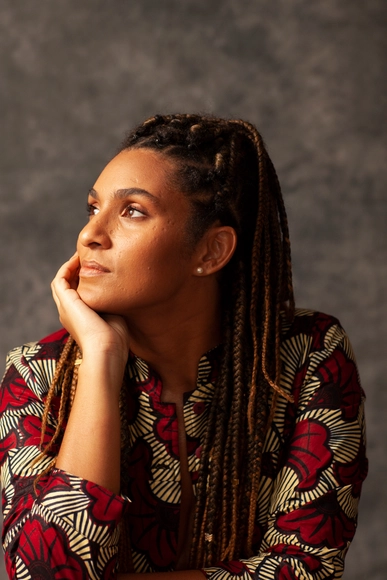
Architect Gabriela de Matos, creator of the Arquitetas Negras project, was named Architect of the Year by the Rio de Janeiro Department of the Institute of Architects of Brazil (IAB-RJ). Alongside her, IAB-RJ also honored the Oswaldo Cruz Foundation (Fiocruz) during an online event held this week to announce the winners of the 58th Annual Awards and the 37th Architect of Tomorrow Award.
Dedicated to exploring the intersection of race, gender, architecture, and the city, Gabriela highlighted in her speech the importance of recognizing that "although the field of architecture and urbanism is still elitist and racist, it is precisely the training of architects and urban planners who view architecture as a social tool that can help bridge the gaps and inequalities in our society."
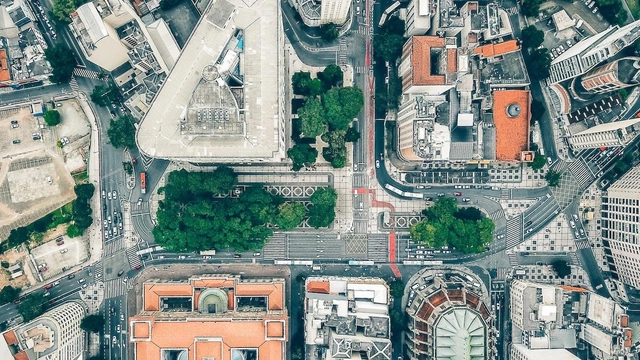
Aerial view of part of downtown São Paulo. Photo by Sergio Souza, via Unsplash
The City of São Paulo has just released 3D cartography for the entire city on the GeoSampa Portal. The new tool allows users to visualize buildings, trees, infrastructure, and other geometries in 3D directly on the map. The data is also available for download.
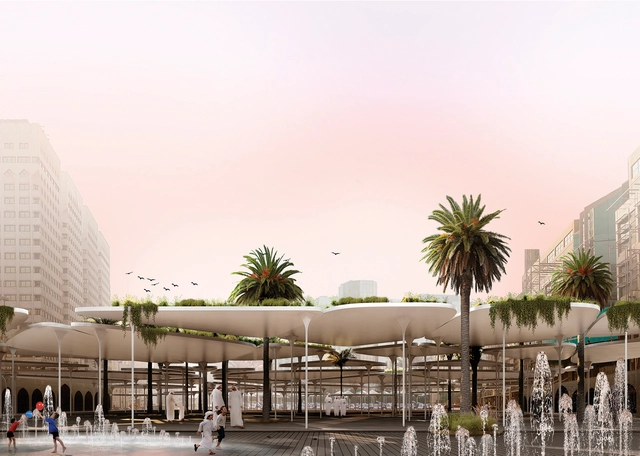
Brazilian architecture firm Estúdio Leonardo Zanatta has received an honorable mention in the international competition "Cool Abu Dhabi," which challenged participants to design creative solutions to tackle climate change and mitigate the urban heat island effect in Abu Dhabi. Titled Abu Dhabi Skins - (Bio)Reactive Urbanscape, the proposal is the only selection from the Americas.
The Porto Alegre-based firm 0E1 Arquitetos has launched an e-book to help professionals design their new home workspaces. The Home Office Guide is a digital publication featuring tips to improve remote work environments, created to raise funds for local charities.
Earlier this month, the Observatory of Innovations for Sustainable Cities was launched. The project aims to gather information, proposals, and concrete examples of municipal initiatives and public policies that help improve people's quality of life and strengthen the environment. The initiative is a partnership between the Ministry of Science, Technology, and Innovations (MCTI), the United Nations Environment Programme (UNEP), and the Center for Strategic Studies and Management (CGEE).
Fachada do pavilhão de Yolana Lemos. Image Cortesia de Cabana de Arte
Still largely overlooked by the international media, Angola's contemporary architectural production faces, much like many of its African neighbors, social and economic realities that do not favor its dissemination. When the typical challenges of architecture are compounded by others stemming from an intense process of neocolonialism, taking good ideas off the drawing board and actually building them becomes a formidable task. Stretching the relationship between the physical and the digital, the Angolan collective Banga turns to virtual space to bring to life projects that blend architecture, sensory experiences, and art.
The archive of more than 40 years of professional activity by architect João Luís Carrilho da Graça will be integrated into Casa da Arquitectura, reinforcing the national scope of the institution's collection. The signing ceremony will take place this Saturday, February 15, at 3:30 p.m., at the CA Archive premises.
Sítio Roberto Burle Marx. Photo by Halley Pacheco de Oliveira, via Wikipedia. CC BY-SA 3.0 license.
On Wednesday, September 9, the book Patrimônio Arquitetônico Brasil – Portugal will be launched. This activity is part of the 7th FIPA - International Forum on Architectural Heritage Brazil – Portugal and will be broadcast online.
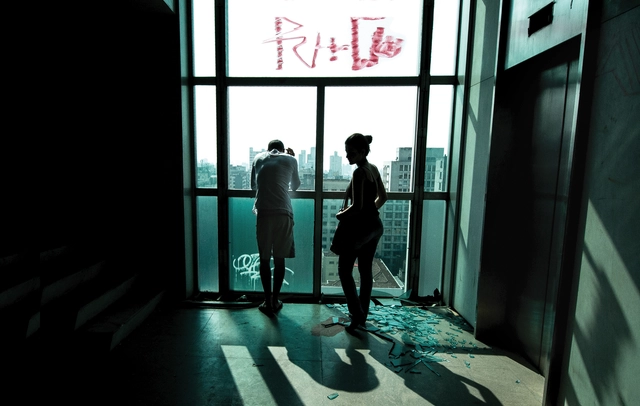
"Drinking Caracu is drinking health." This is what read on the massive blank wall of a building in downtown São Paulo on the morning of May 1, 2018. Hidden for decades, the advertisement for the famous beer brand now loomed before a massive heap of concrete, twisted metal, and shattered glass. This was the rubble to which the iconic Wilton Paes de Almeida Building had been reduced—a modernist landmark designed by architect Roger Zmekhol and the subject of the documentary Skin of Glass, directed by his daughter, Denise Zmekhol.
The film transcends traditional architectural documentation by blending a personal narrative with the political complexities of contemporary Brazil, a country shaped by deep inequalities and erased memories. At the heart of the story is the building itself, considered a landmark of Brazilian modern architecture, which collapsed in 2018 after a tragic fire.
No País dos Arquitectos is a podcast created by Sara Nunes, who also runs the architectural film production company Building Pictures. The podcast aims to profile the professionals, projects, and stories behind landmark contemporary Portuguese architecture. With just over 10 million inhabitants, Portugal is a highly intriguing country in this professional field, and its architectural output far exceeds what its small population and territorial scale might suggest.
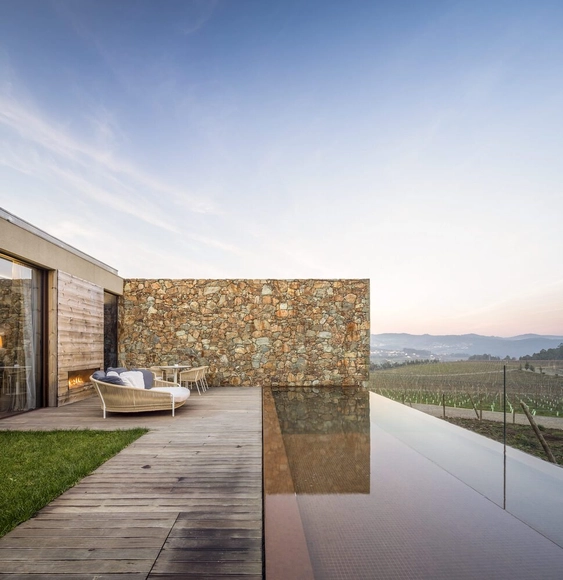
In this episode of the sixth season, Sara talks with architect Fernando Coelho of the firm FCC Arquitectura about the Monverde Rural Hotel project, located in Quinta da Lixa. Listen to the conversation and read an excerpt of the interview below.
Doing more with less is an urgent architectural imperative. This is especially true in our recent global context, where environmental concerns are compounded by economic and social crises in various parts of the world. Within this landscape, the firm Branco Del Rio Arquitectos has been developing its practice since its founding in Coimbra in 2014. Established during a period of instability in Portugal, the office is the result of Paula del Rio and João Branco's pursuit of a simple architecture that seeks to address contemporary demands as objectively as possible.
In less than ten years of activity, the firm has garnered competition awards and international recognition, and was recently selected as one of ArchDaily's Best New Practices of 2023. We had the opportunity to speak with the architects about their experience with architectural rehabilitation, their collective housing projects, and their practice characterized by an economy of means.




.jpg?1603823358 "Cortesia de Leonardo Zanatta")
.jpg?1603823343 "Cortesia de Leonardo Zanatta")