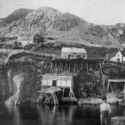
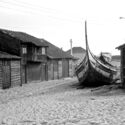
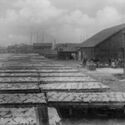
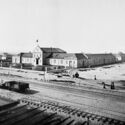
What can a cod offer to architecture? Or rather, what lessons about the environment and human settlements can we learn from the history of fishing? This unlikely question lies at the heart of the book Arquitetura do Bacalhau, by André Tavares and Diego Inglez de Souza, published by Dafne Editora and recently released in Brazil.
In the following interview, we speak with Tavares about the infrastructures linked to cod fishing and their relationship with territory, labor, and architectural production. Through an original approach—connecting architecture, ecology, fish physiology, and industrial history—, the authors propose a reading of the built environment anchored in the ecosystems that sustain it. Far from being a nostalgic look at the past, the research points to the urgency of rethinking architecture in the context of ongoing environmental transformations, showing how human constructions shape and are shaped by natural marine ecosystems.